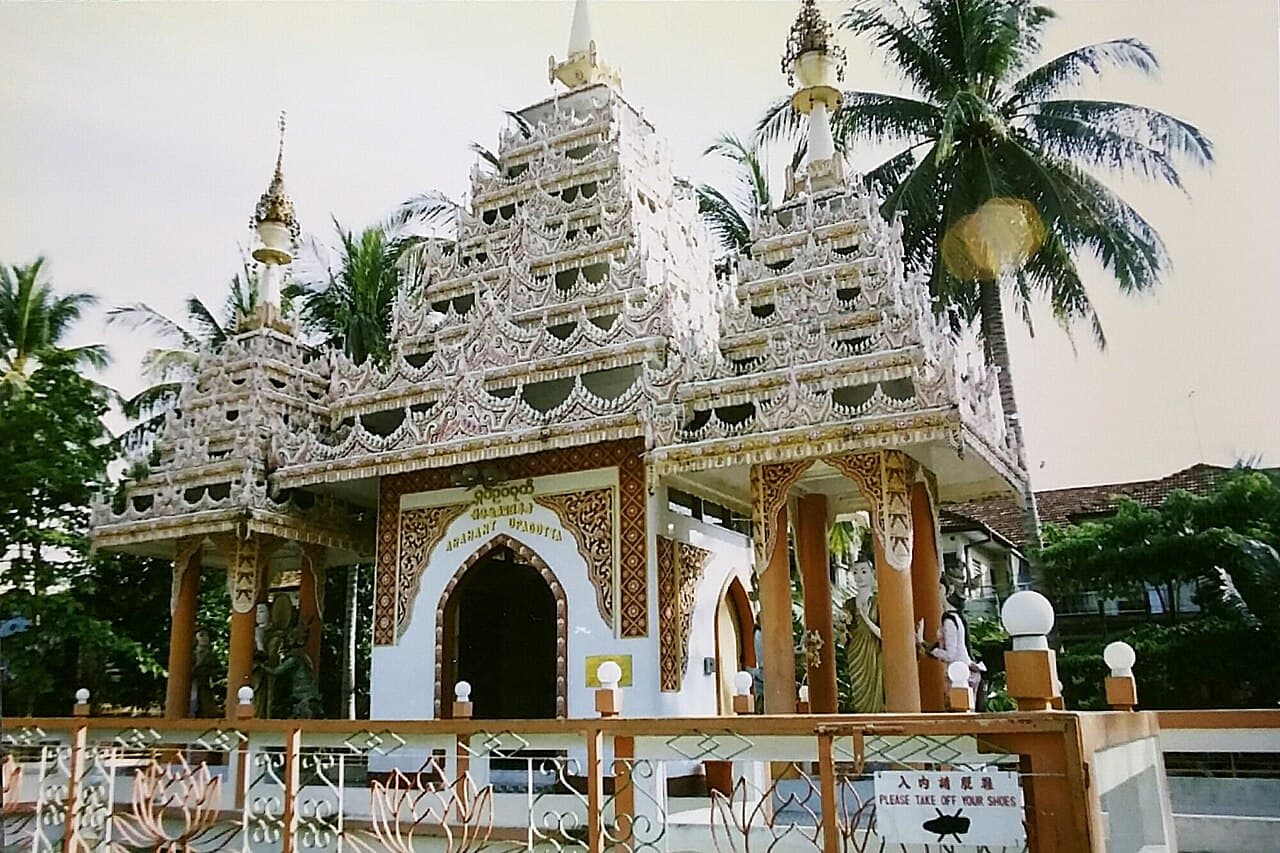
Dharmikarama Burmese Temple
George Town
Daily 6am-6pm
Free (donations welcome)
30–45 minutes standalone; 60–75 minutes combined with Wat Chayamangkalaram
Morning light (8–10am) illuminates the golden stupa from the east; soft, even light for interior photography of the prayer hall
No official guided tours; English information panels at key points in the complex
What is Dharmikarama Burmese Temple?
Dharmikarama Burmese Temple is the only Burmese Buddhist temple in Penang, founded in 1803 on land granted by the colonial authority. It features a golden tiered stupa, a reclining Buddha in the Parinirvana posture, ornate Burmese teak carvings, and a bodhi tree said to descend from the original tree at Bodh Gaya. Entry is free. It sits directly opposite Wat Chayamangkalaram — most visitors do both temples in a single 45-minute stop.
Photos5 photos
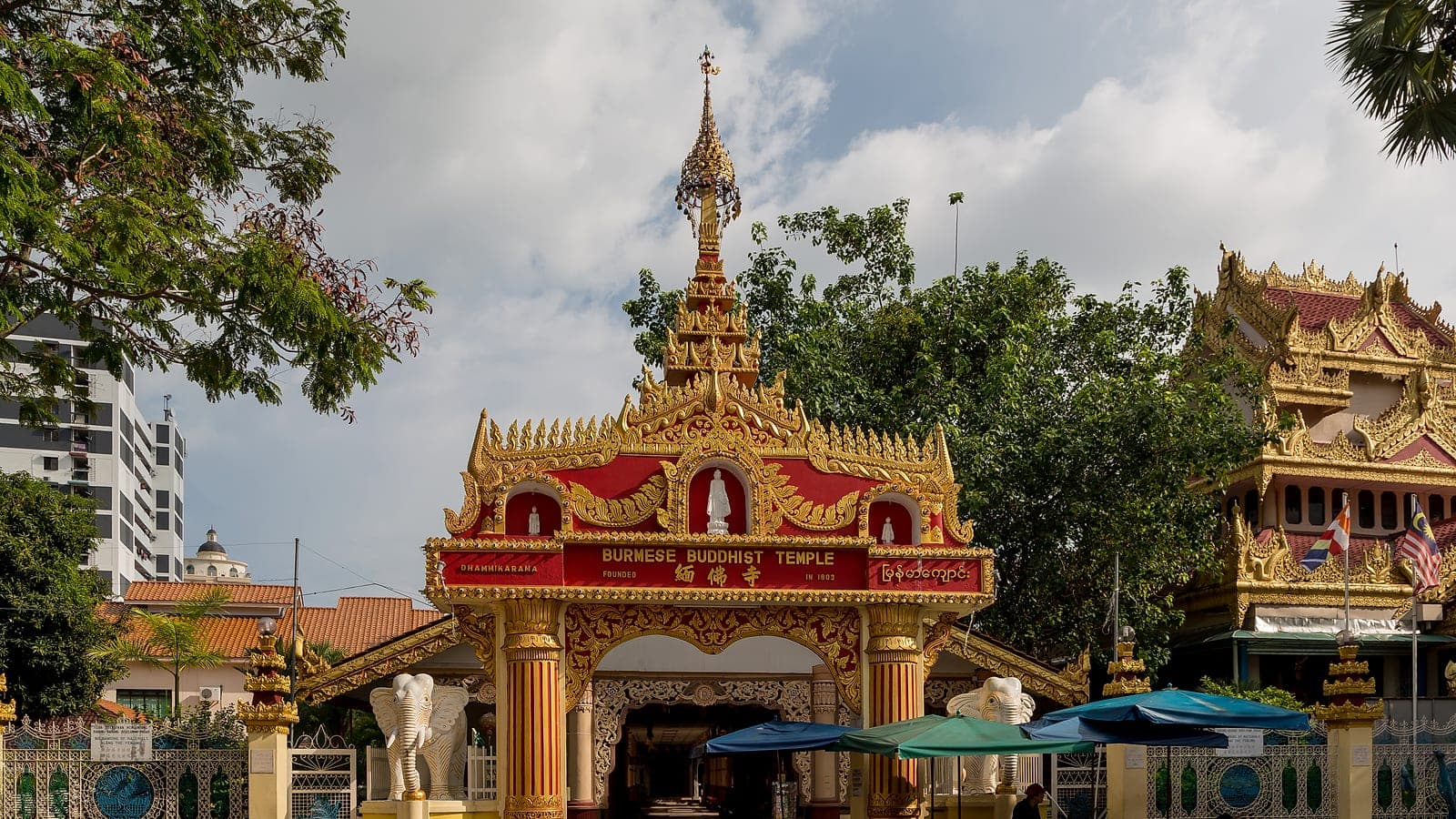
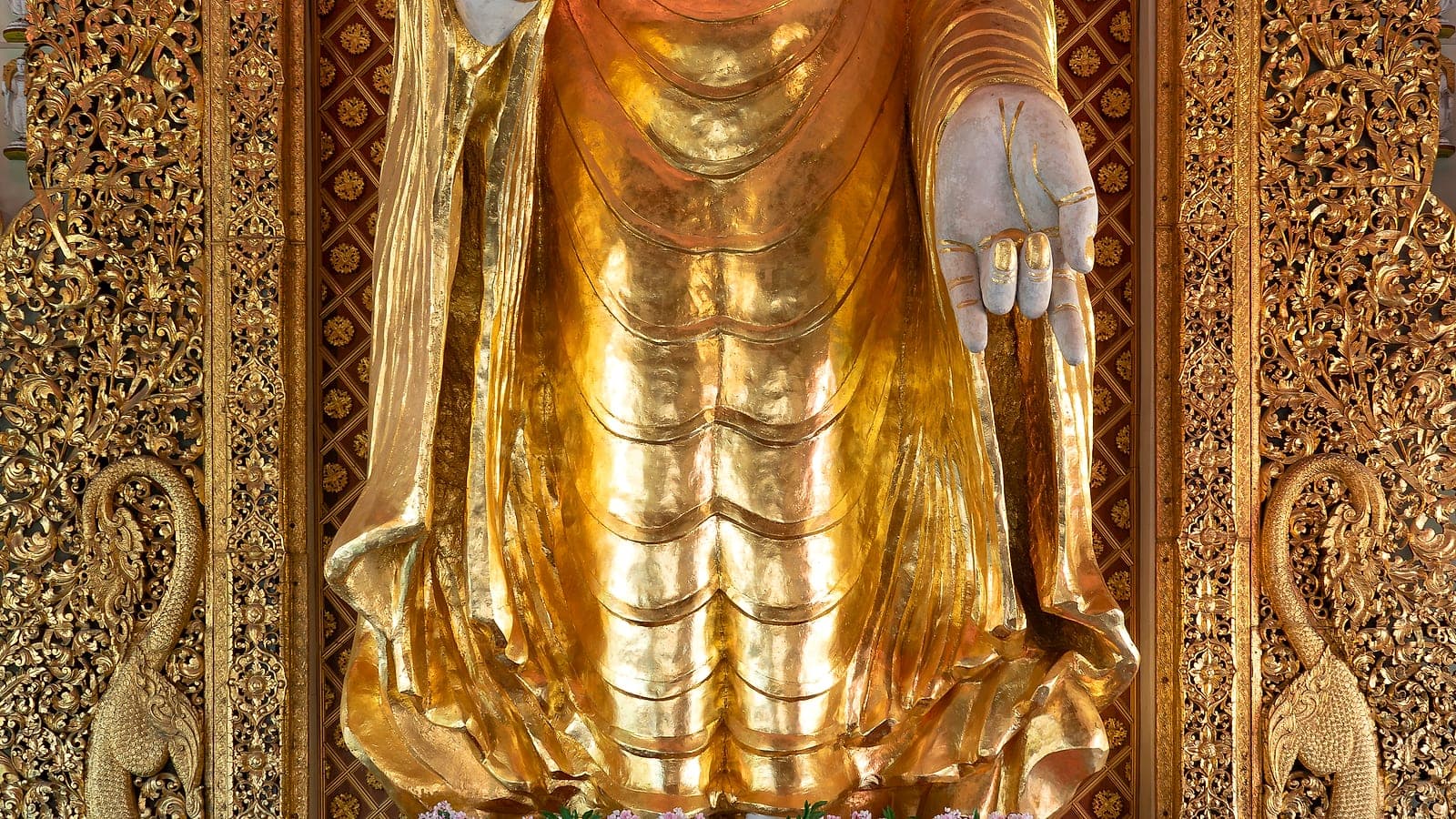
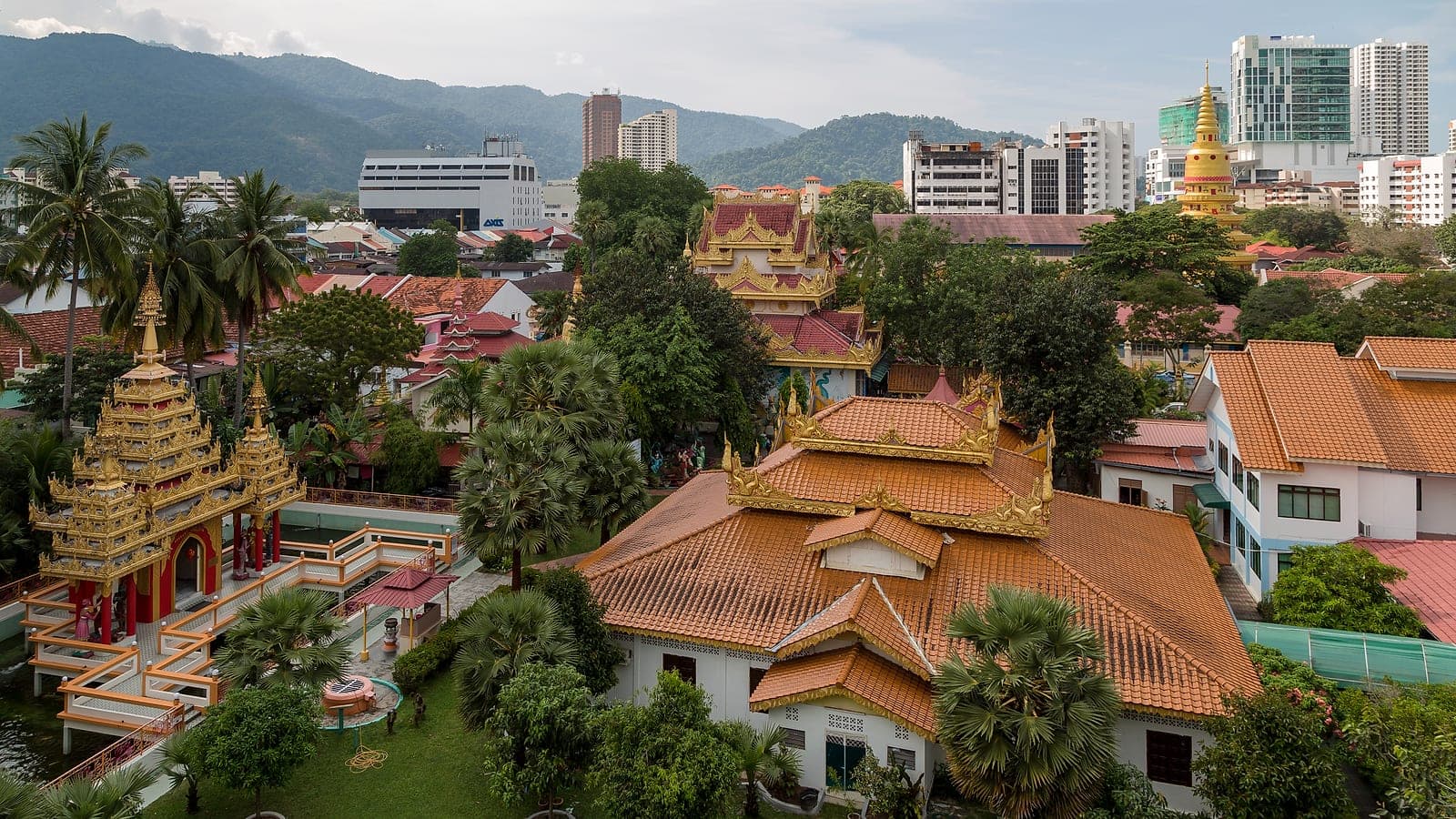
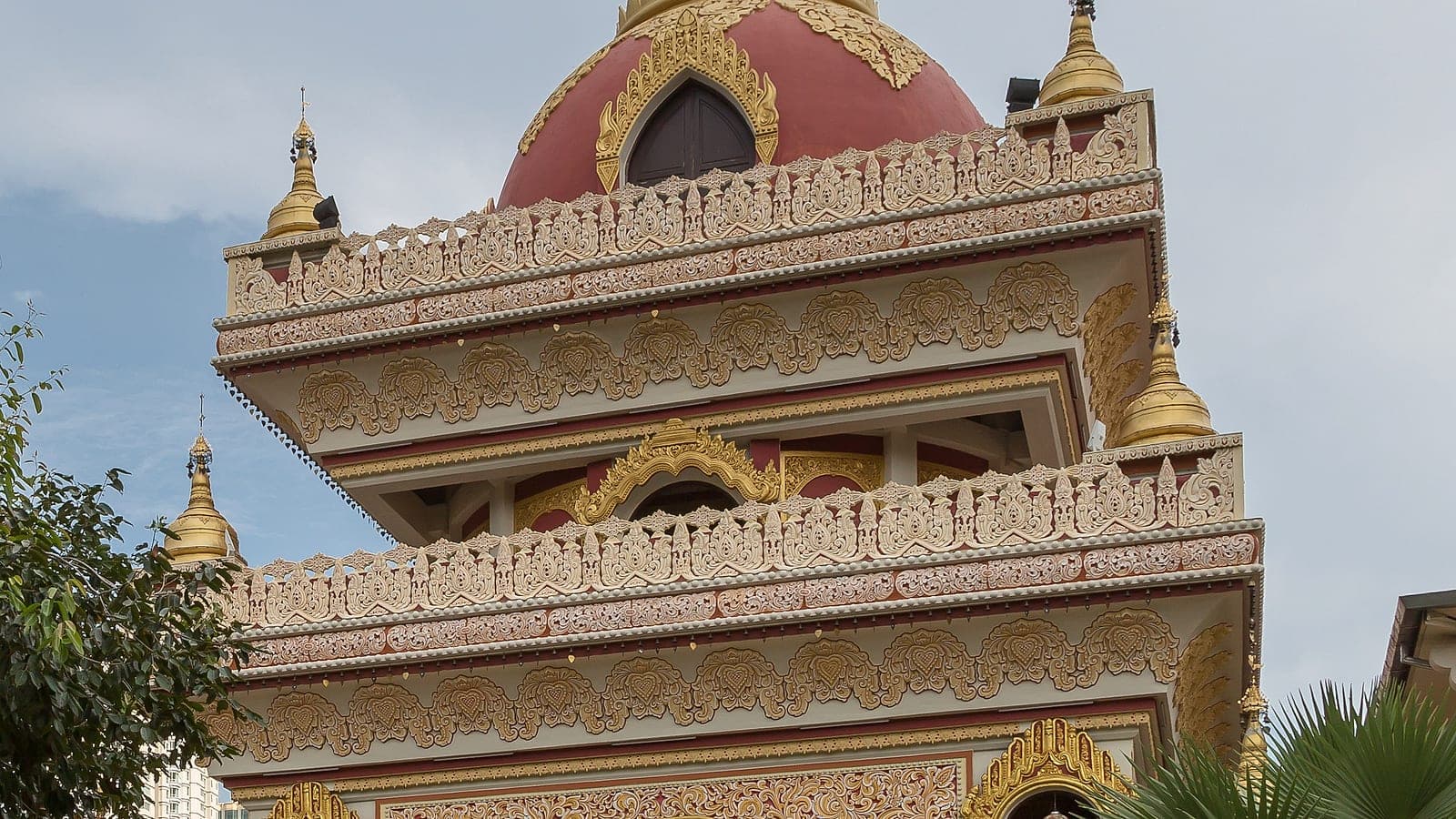
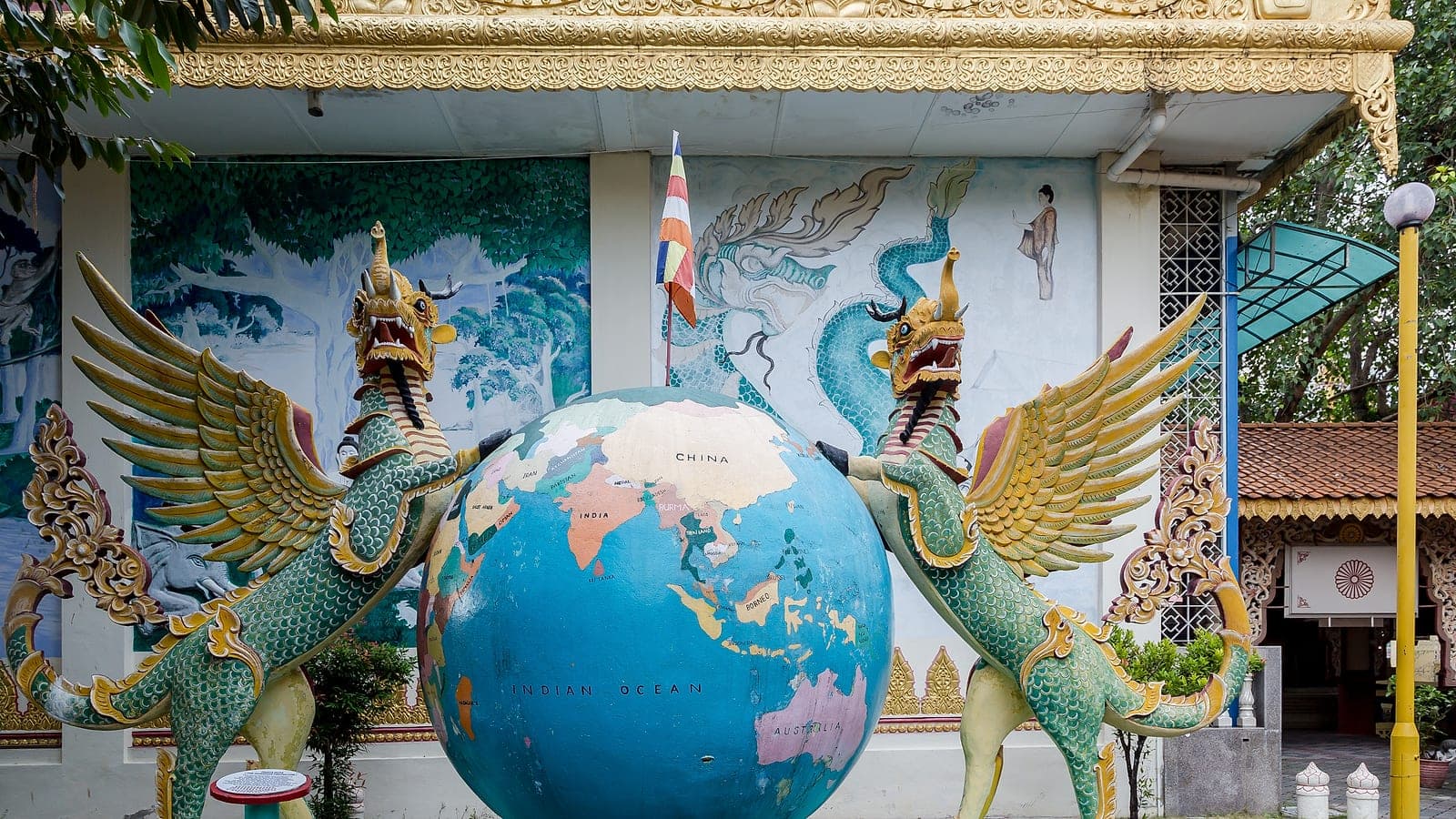
The Dhammikarama Burmese Temple, Penang's only Burmese Buddhist temple
CEphoto, Uwe Aranas / Wikimedia Commons (CC BY-SA 3.0)
Cross the road from Wat Chayamangkalaram and everything changes. The Thai temple is gold and elaborate, its forecourt busy with tourists photographing the 33-metre reclining Buddha. Dharmikarama, directly opposite on Jalan Burma, operates at a different register — quieter, more worn at the edges, the air carrying incense and the sound of an electric fan in the prayer hall. A resident monk moves between shrine rooms. The bodhi tree in the courtyard has grown enormous, its trunk wrapped in offering cloth, its roots beginning to lift the pavement stones.
This contrast is the point. Two Theravada Buddhist traditions planted themselves on the same street in colonial Penang within 40 years of each other, each building in the architectural vocabulary of its home culture. The result is an accidental open-air museum of Southeast Asian religious architecture compressed into a single block. Dharmikarama, the older of the two, was already established here before the Thai community arrived. That longevity shows in the fabric of the place — it has the settled, unperformed quality of a religious site that has always been in use.
History
Read the full history of Dharmikarama Burmese Temple
Dharmikarama Burmese Temple was founded in 1803, making it one of the earliest non-European religious sites established in colonial Penang. The land was granted by the Prince of Wales Island colonial authority to a Burmese merchant, part of the British colonial policy of accommodating the diverse communities settling in the new trading port. The Burmese community had arrived in Penang as traders and craftspeople, settling on what became Burmah Road — a street name that preserves the demographic geography of early colonial George Town. The temple follows the Theravada Buddhist tradition, the same school as Thai Buddhism, though the architectural and cultural expression is distinctly Burmese. The golden tiered stupa visible from the street dates from later construction phases but follows the traditional pyathat form of Burmese religious architecture. The bodhi tree in the courtyard is said to have been grown from a cutting of the original Bodhi tree at Bodh Gaya, India, where Siddhartha Gautama attained enlightenment — a lineage of cuttings that several Buddhist temples across Asia claim.
Photography Guide
- Best time
- Morning light (8–10am) illuminates the golden stupa from the east; soft, even light for interior photography of the prayer hall
- Best position
- Shoot the stupa from the courtyard with the bodhi tree framing the left edge; inside the prayer hall, position the reclining Buddha against the mural backdrop
- What's allowed
- Photography throughout. Flash is not welcome in active prayer areas. Be discreet around worshippers.
Tips
- Flash is generally not welcome in active prayer areas — use available light or raise ISO
- The bodhi tree is a strong compositional anchor — shoot from low angle to show its scale against the stupa
- Across the road, Wat Chayamangkalaram's reclining Buddha requires permission inside the main hall but exteriors are freely photographable
- Architectural contrast shots: stand at the road boundary and capture both temple facades in a single frame to illustrate the Thai–Burmese pairing
- Morning light is significantly better than afternoon — the stupa faces roughly east and catches direct sun before noon
Plan Your Visit
Before your visit
Penang Botanic Gardens is a 10-minute drive; morning visit to the gardens pairs well with the temple circuit before midday heat
After your visit
Thai Buddhist temple directly across Jalan Burma — 33m reclining Buddha, one of the largest in Southeast Asia. Standard paired visit; takes 2 minutes to cross the road.
Travel times are approximate.
Map & Directions
Insider Tips
- •Visit together with Wat Chayamangkalaram directly across the road for a temple double
- •Dress modestly - cover shoulders and knees (sarongs available to borrow)
- •The temple is much quieter than Kek Lok Si, offering a more contemplative experience
- •Look for the bodhi tree in the courtyard, grown from a cutting of the original in India
- •The murals inside the prayer hall depict the life of Buddha in Burmese artistic style
Frequently Asked Questions
Is Dharmikarama Burmese Temple the oldest temple in Penang?
It is one of the earliest, founded in 1803 — among the first generation of non-European religious sites established in colonial Penang. The Sri Mahamariamman Temple on Queen Street is comparable in age. The Burmese temple predates the Thai Wat Chayamangkalaram directly across the road by 42 years.
Do I need to dress modestly to enter?
Yes. Cover shoulders and knees — this is an active place of worship, not a tourist site. Sarongs may be available to borrow at the entrance. Remove shoes before entering the main prayer hall.
What is the difference between this temple and Wat Chayamangkalaram across the road?
Both are Theravada Buddhist temples, but Dharmikarama follows Burmese tradition (founded 1803) and Wat Chayamangkalaram follows Thai tradition (founded 1845). The architectural vocabularies are distinct: Burmese tiered stupa versus Thai chedi form, different decorative programmes, different artistic traditions. Wat Chayamangkalaram is larger and more visited; Dharmikarama is quieter and older.
Is the bodhi tree in the courtyard genuinely from Bodh Gaya?
The temple tradition holds that it was grown from a cutting of the sacred Bodhi tree at Bodh Gaya, India, where the Buddha attained enlightenment. Several Buddhist temples across Asia make similar claims about their bodhi trees, tracing a lineage of cuttings. The claim cannot be independently verified but reflects the temple's aspiration to connect with the original site of Buddhism's founding.
How long should I allow for a visit?
30–45 minutes is enough to walk the compound, view the main prayer hall, stupa, bodhi tree, and merit pond. Add 30 minutes for Wat Chayamangkalaram across the road. Most visitors do the pair in under 90 minutes total.