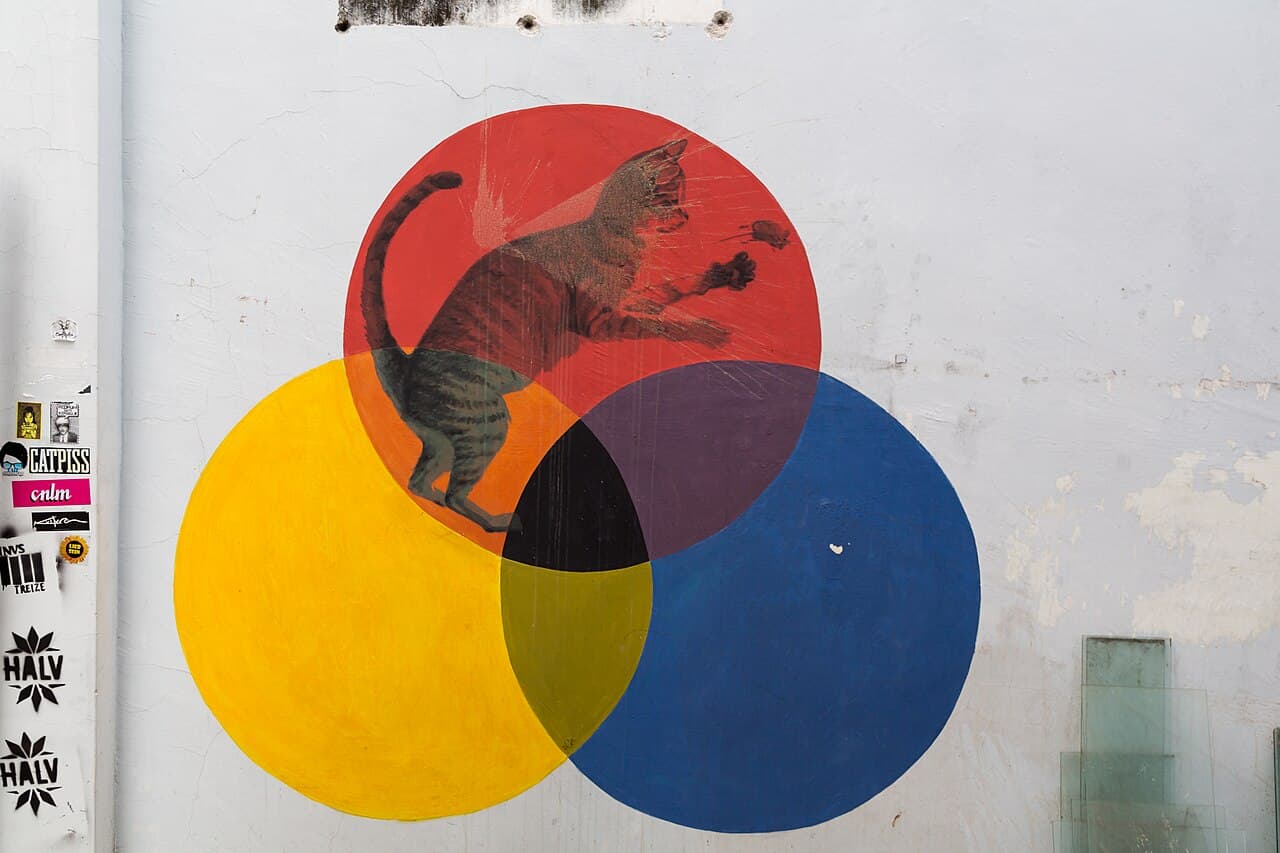
George Town Street Art
George Town
Outdoor; viewable 24/7 (best in daylight)
Free
1.5–3 hours depending on pace
Before 9am on a weekday when the light is warm from the east and the streets are empty enough to photograph murals without crowds in frame
Self-guided (map available free at tourist info centres)
What is George Town Street Art?
George Town's street art trail spans the historic core with over 50 murals and steel-rod caricature installations across the UNESCO heritage zone. The trail began in 2012 when Lithuanian artist Ernest Zacharevic painted six site-specific works for the George Town Festival — his "Children on a Bicycle" on Armenian Street became Penang's most-photographed image. Entry is free; the art is outdoors on public streets and viewable 24 hours.
Photos5 photos
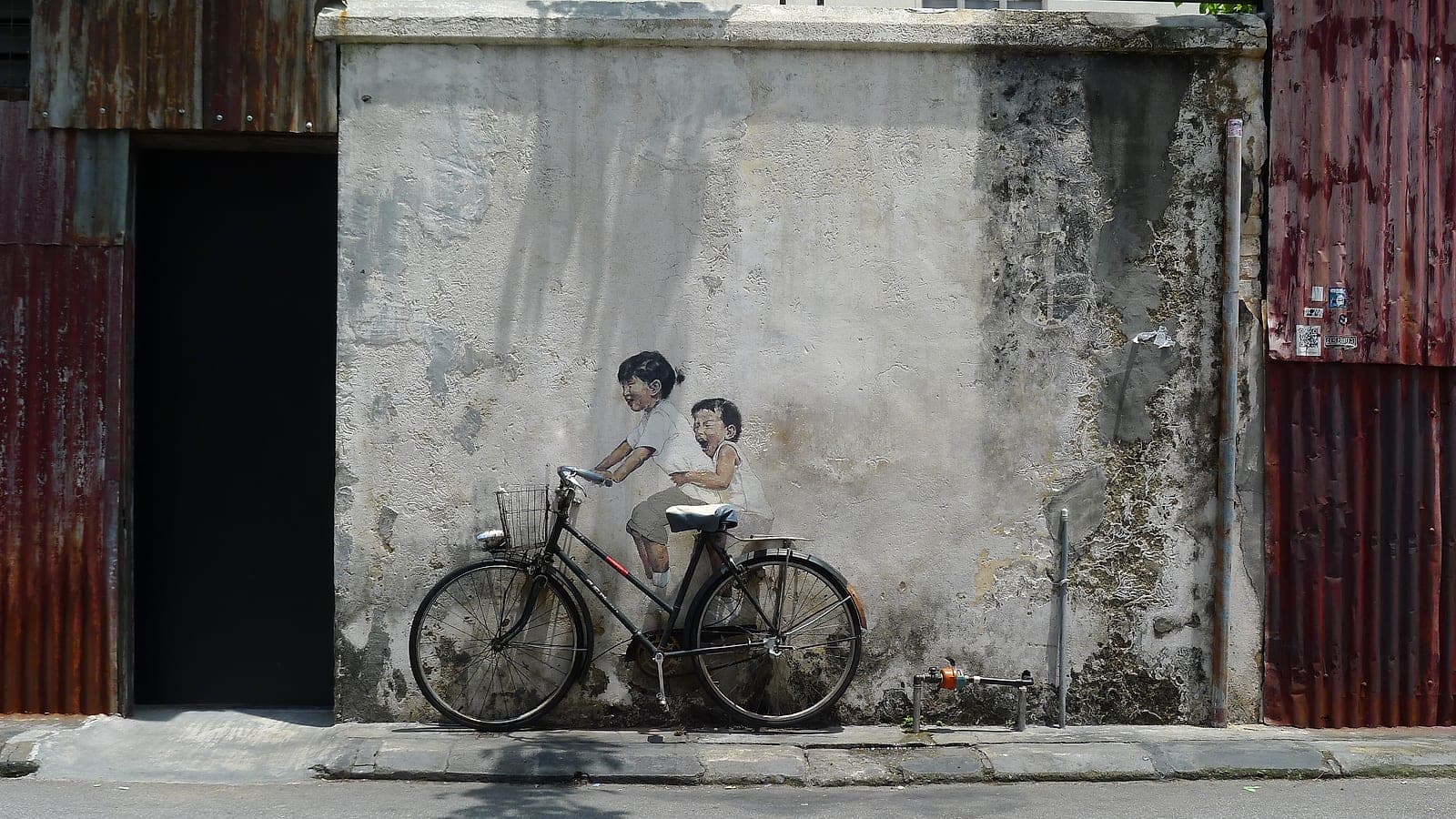
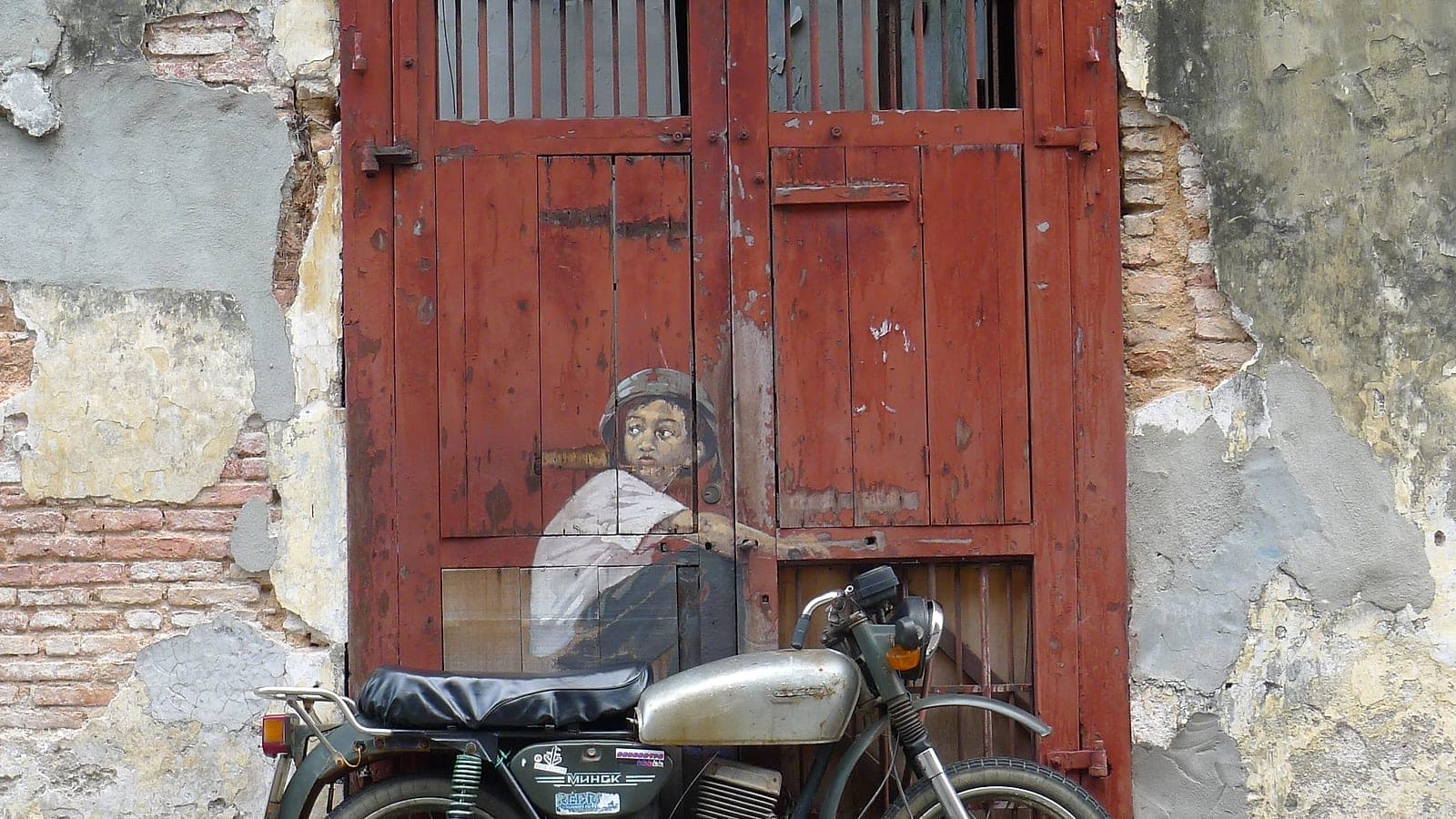
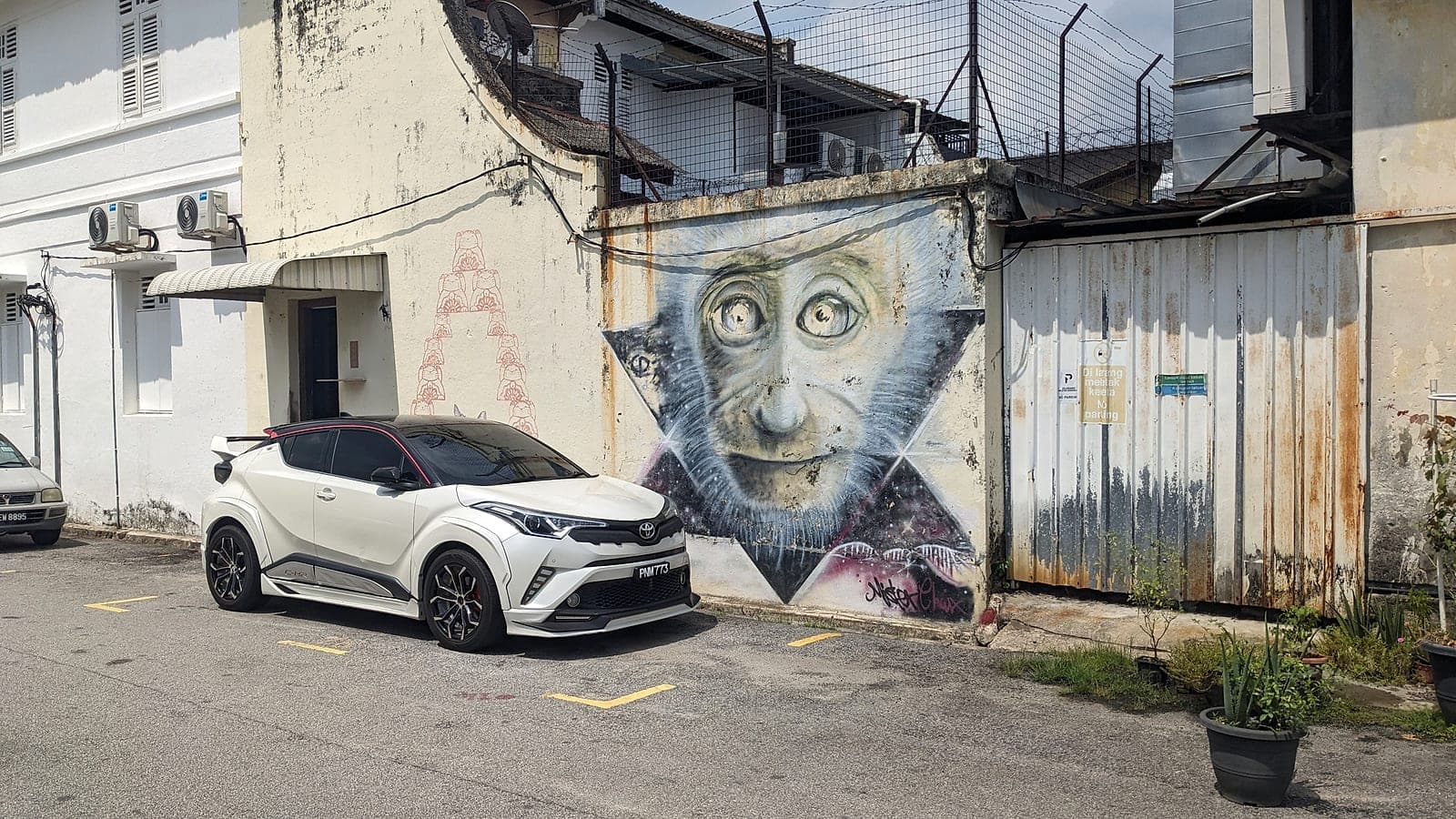
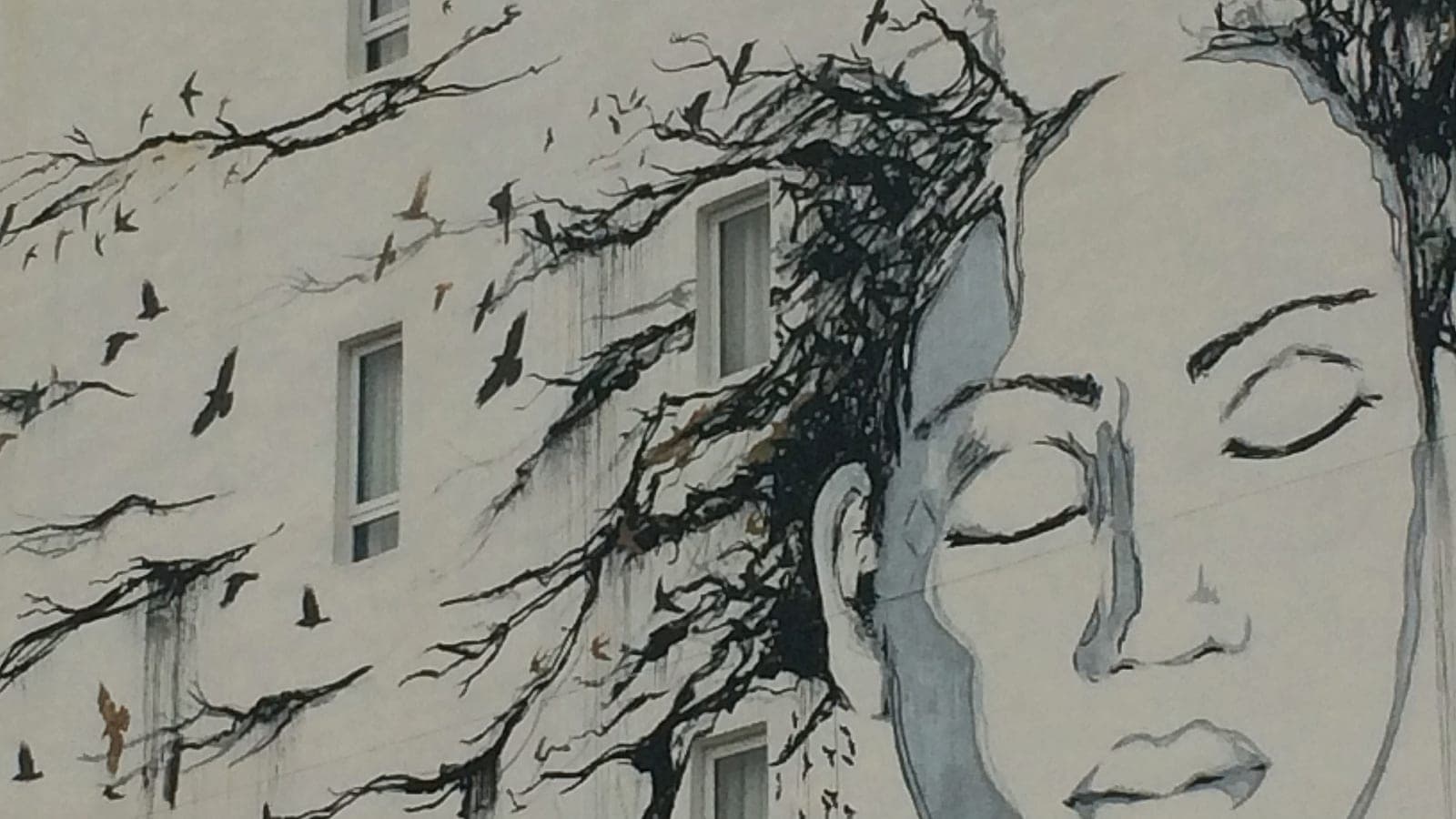
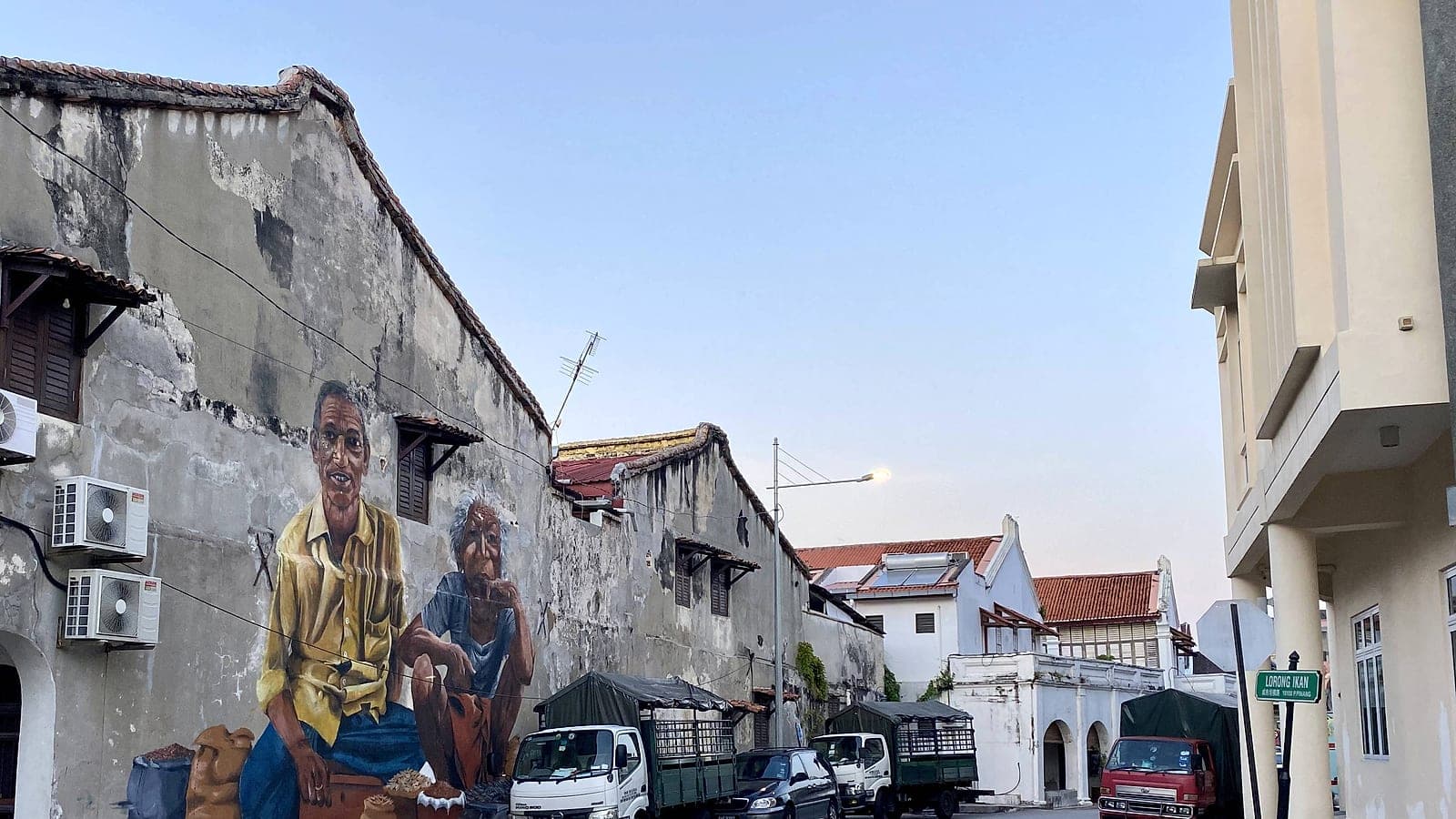
'Little Children on a Bicycle', Ernest Zacharevic's best-known mural
Azreey / Wikimedia Commons (CC BY-SA 3.0)
George Town had street art before 2012 — the clan-house walls, the painted shopfronts, the hand-lettered signs that had accumulated over a century of dense immigrant life. But it did not have a trail until Ernest Zacharevic arrived for the George Town Festival and painted six murals directly onto heritage buildings, each one responding to the specific texture of its location. The children on the bicycle on Armenian Street were positioned so that the real bicycle attached to the wall initially confused passers-by as to whether it was a real child riding it. The works landed in a city that was mid-rediscovery, four years into UNESCO World Heritage listing, and the combination ignited something.
The trail has since grown to over 50 works, mixing large-scale murals with the simpler steel-rod caricatures installed by local artist Louis Gan. The rod caricatures retell scenes from Penang's Chinese immigrant history — a hawker pushing a cart, a trishaw rider, a kopitiam owner — and are found on walls throughout the Armenian Street corridor and beyond. The interaction between art and architecture is the key to the trail's appeal: these are not works hung in a gallery but interventions in a living city, and the city talks back with peeling plaster, monsoon stains, and the occasional fresh coat of paint on the building behind.
History
Read the full history of George Town Street Art
Street art as a tradition predates the 2012 trail in George Town — clan associations painted their addresses and founding dates in elaborate calligraphy, and Peranakan merchants decorated shopfront panels with painted scenes. But institutional recognition of this decorative tradition was largely absent until the UNESCO World Heritage listing in 2008 created new interest in the heritage zone's built environment.
The George Town Festival, established by Think City in 2010, commissioned Ernest Zacharevic for the 2012 edition. Zacharevic had recently completed similar site-specific work in Lithuania and was drawn by the layered history of Penang's buildings. The resulting six murals — each painted in conversation with its specific location, using window frames, doors, and architectural details as compositional elements — were an immediate phenomenon. Within months, the "Children on a Bicycle" mural had appeared in international travel media and become one of the most-photographed images in Malaysia.
The George Town Festival and Zacharevic have returned in subsequent years, and other artists have expanded the permanent collection. The Marking George Town project, launched by Penang Heritage Trust, maintains a map of verified works and coordinates restoration when murals fade. Some early works have been repainted multiple times; others retired as buildings were renovated. The trail is a live document of the city's changing relationship with its own heritage.
Photography Guide
- Best time
- Before 9am on a weekday when the light is warm from the east and the streets are empty enough to photograph murals without crowds in frame. The "Children on a Bicycle" mural faces north and reads equally well in shade and sunlight, but morning light on the white plaster behind it gives the best contrast. Overcast days also work well — soft diffused light reduces harsh shadows across textured walls.
- Best position
- "Children on a Bicycle" is best shot from across the street with a moderate telephoto (50–85mm equivalent) to compress the trompe-l'oeil bicycle into the painted scene. The steel-rod caricatures need direct-on angles to read clearly — shoot level with the piece and close enough to fill the frame. For large-format murals, wide angle from close is often more dynamic than zooming out from a distance.
- What's allowed
- Photography throughout the trail — all works are on public streets and freely photographable. No permission needed. Avoid using flash or lights that could disturb residents at night.
Tips
- Print or download the Marking George Town map — not all murals are easy to find without it
- Start at Armenian Street and work outward — it has the highest density of works
- Late afternoon creates harsh shadows on many murals; early morning or overcast days work best
- Check Penang Heritage Trust for restoration status — some murals are freshly repainted, others visibly fading
Plan Your Visit
Before your visit
Start at the fort for colonial history context, then walk through the heritage zone into the street art trail.
After your visit
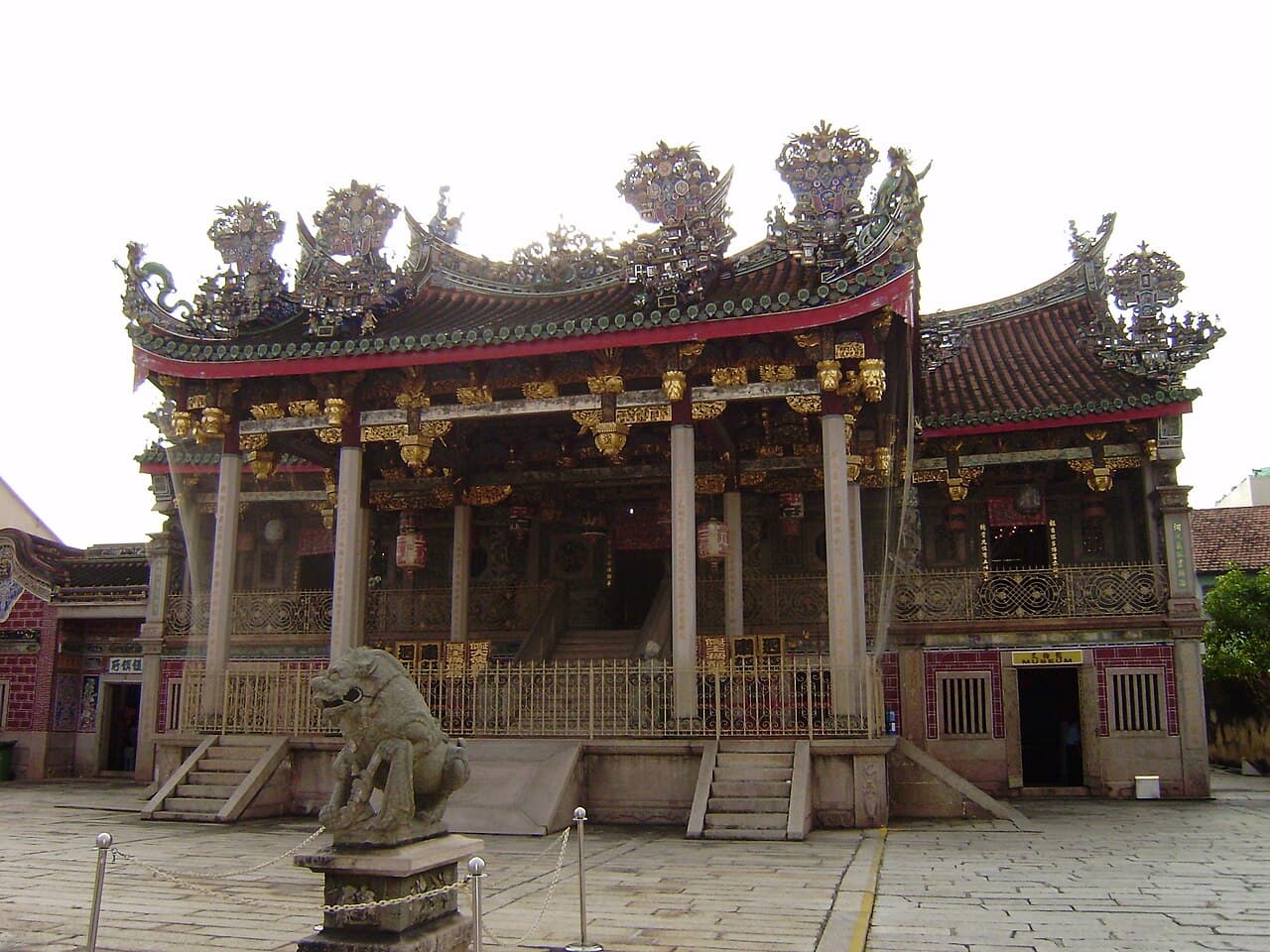
The clan house is 5 minutes walk and adds architectural depth to the heritage walk.
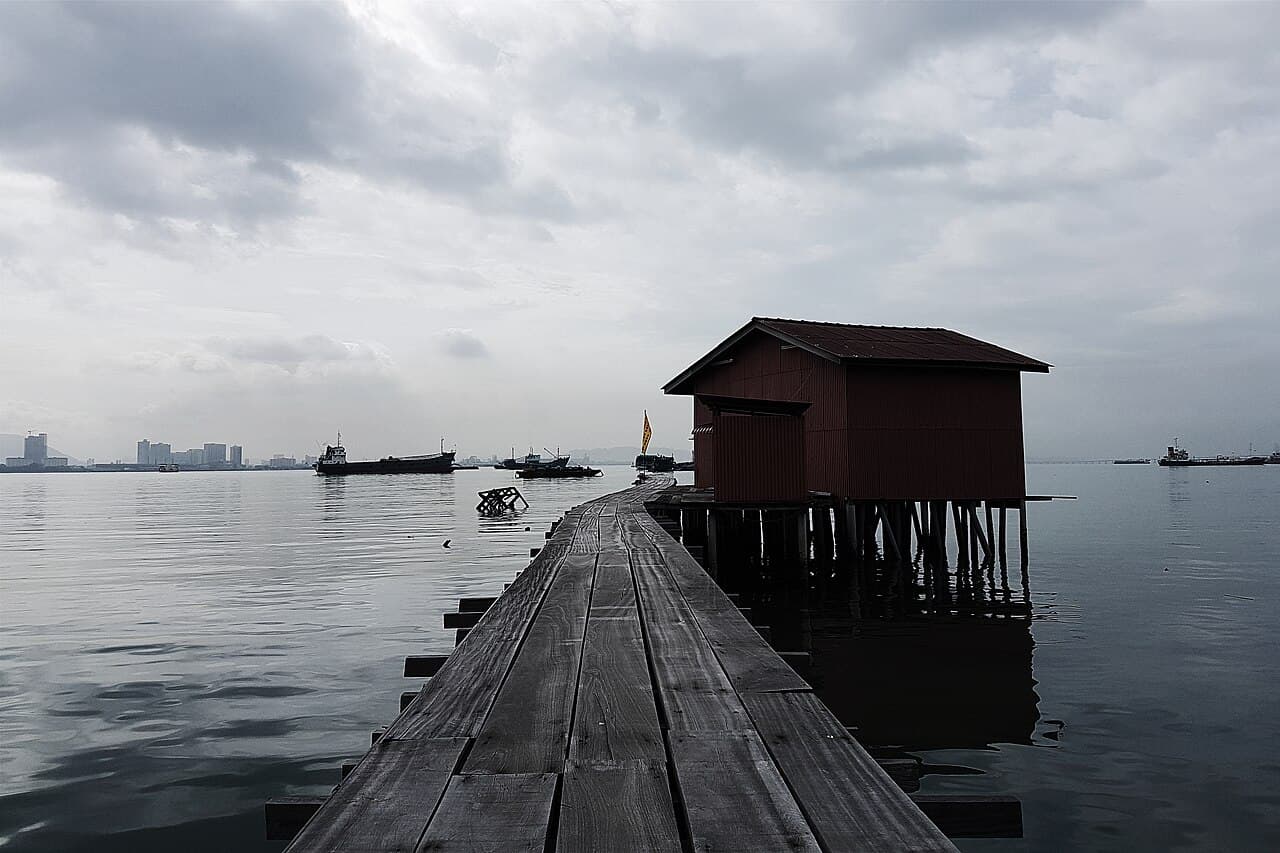
End the day at the jetties for sunset over the Straits of Malacca.
Travel times are approximate.
Map & Directions
Insider Tips
- •Start at Armenian Street and work outward - the densest cluster of art is here
- •Download the Marking George Town app or grab a free map from tourist info
- •Early morning (before 9am) means no queues for photos at popular murals
- •Some original Zacharevic murals have faded - they get periodically restored
- •Combine with a heritage walking tour for context on the buildings and streets
Frequently Asked Questions
Where does the George Town street art trail start?
Most visitors start at Armenian Street near the junction with Lebuh Cannon. The "Children on a Bicycle" mural is nearby, and the densest cluster of works is within a short walk. Free printed maps are available from tourist information offices and most cafes on Armenian Street.
Is the street art trail free?
Yes — all murals and steel-rod installations are on public streets and visible for free. There is no ticket, gate, or entrance fee.
How long does the trail take?
Allow 1.5 to 3 hours on foot. A faster pace covering 15–20 key works takes about 1.5 hours; a thorough walk covering all 50+ works takes closer to 3 hours, particularly in the heat.
Who created the famous Penang street art?
The most iconic works are by Lithuanian-Malaysian artist Ernest Zacharevic, who painted 6 murals for the 2012 George Town Festival. The steel-rod caricature panels are by local artist Louis Gan. Over 50 works now exist by various local and international artists.
Which is the most famous mural?
"Children on a Bicycle" on Armenian Street is the most photographed — a real bicycle is bolted to the wall as part of the trompe-l'oeil composition. "Boy on a Motorbike" on Ah Quee Street is also widely recognised.