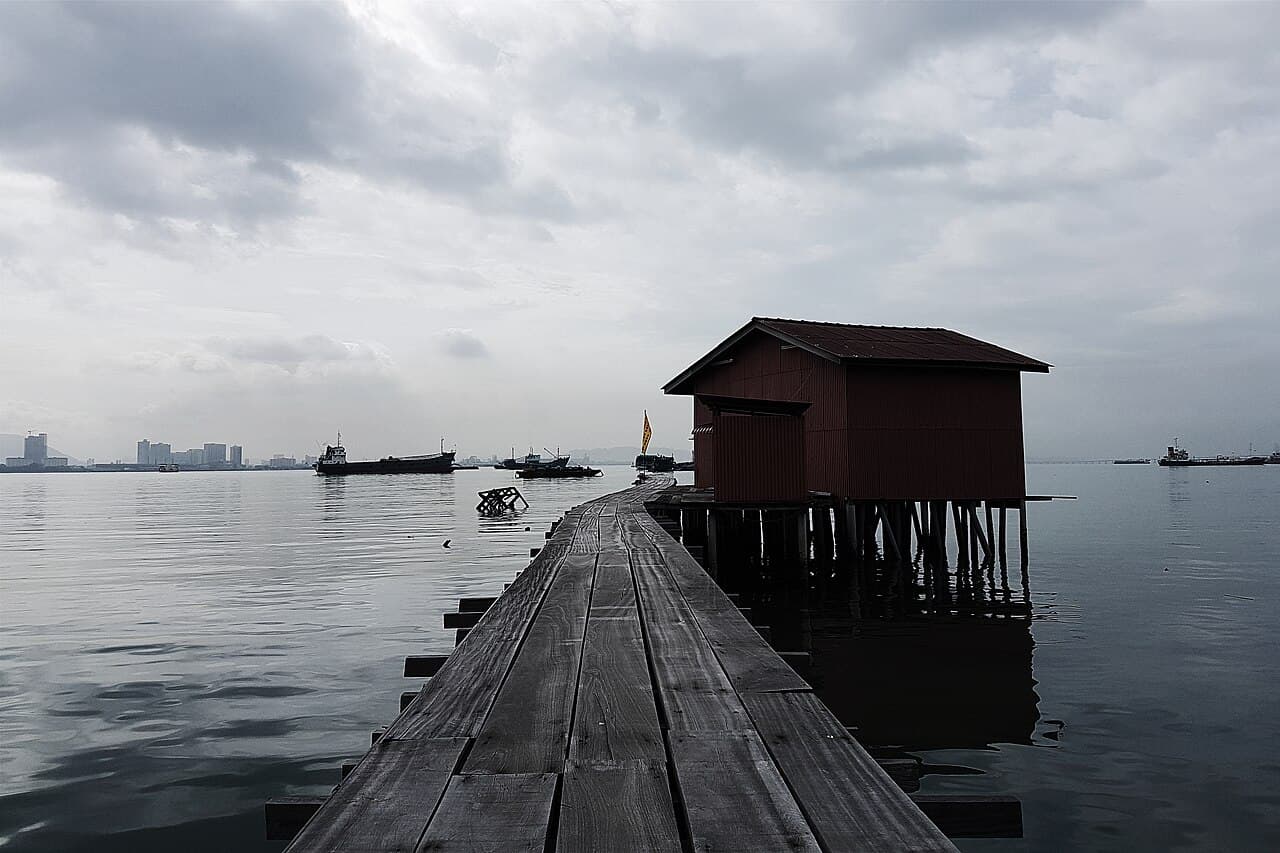
Clan Jetties
George Town
Daily, sunrise to sunset (residents live here, be respectful after dark)
Free
45 minutes–1.5 hours
Sunset is the signature shot
Self-guided
What is Clan Jetties?
The Clan Jetties are six waterfront stilt-house communities built over the sea at Pengkalan Weld in George Town, established by Chinese immigrant clan associations in the 19th century. Chew Jetty is the largest with around 75 resident families, a Taoist temple, and boardwalk food stalls. Entry is free; these are living residential communities, not museums — respectful behaviour is essential.
Photos5 photos
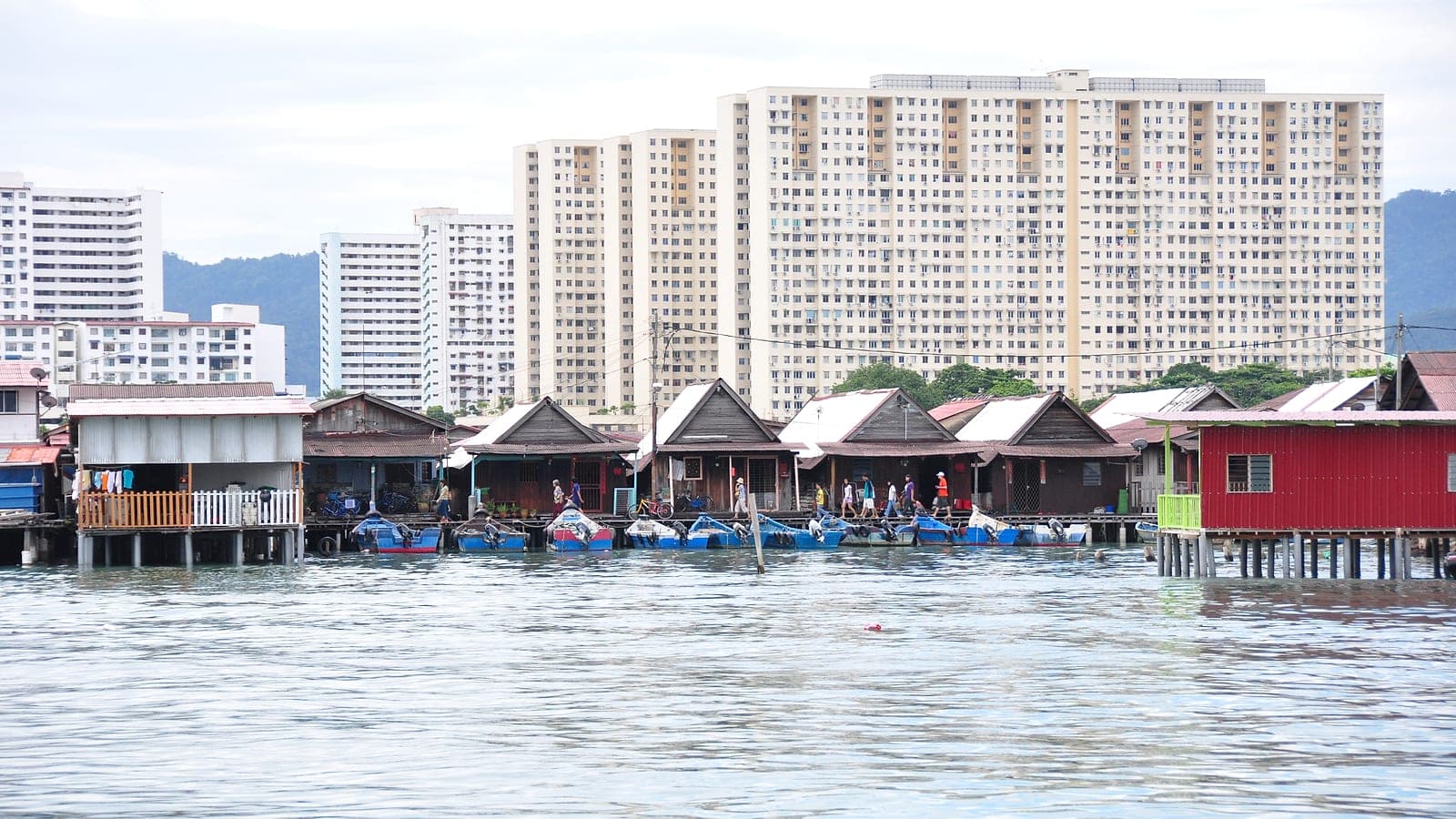
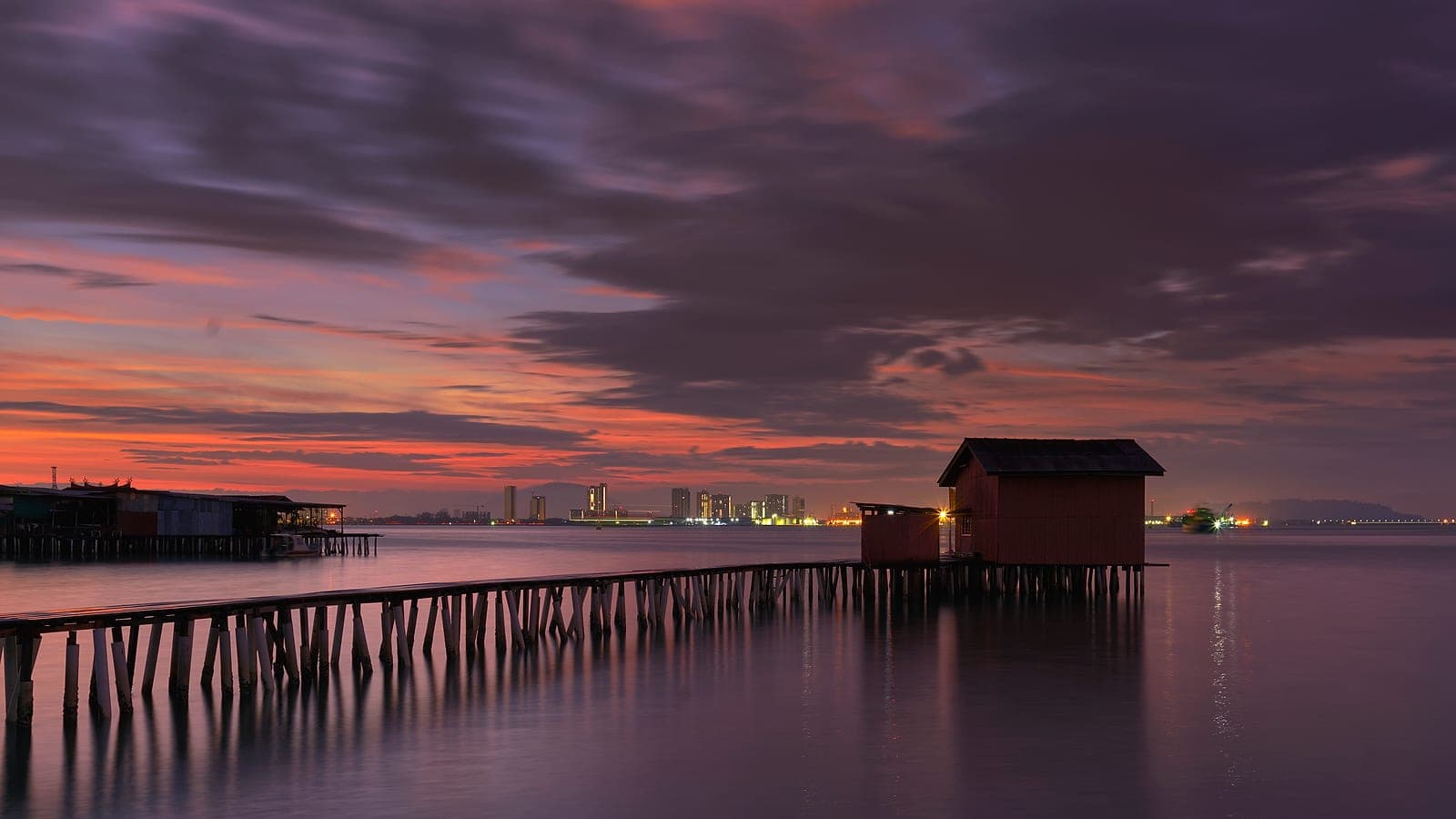
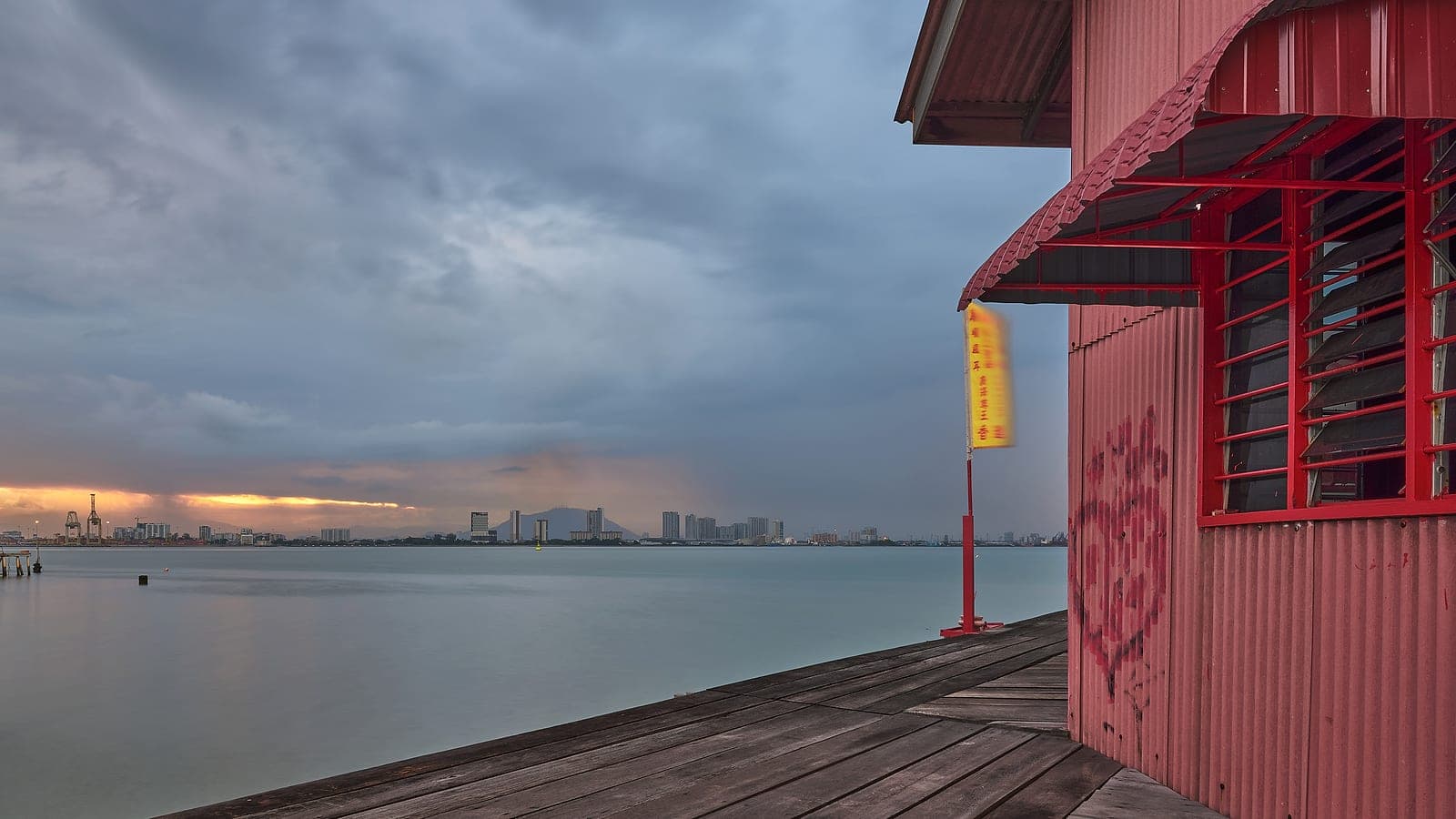
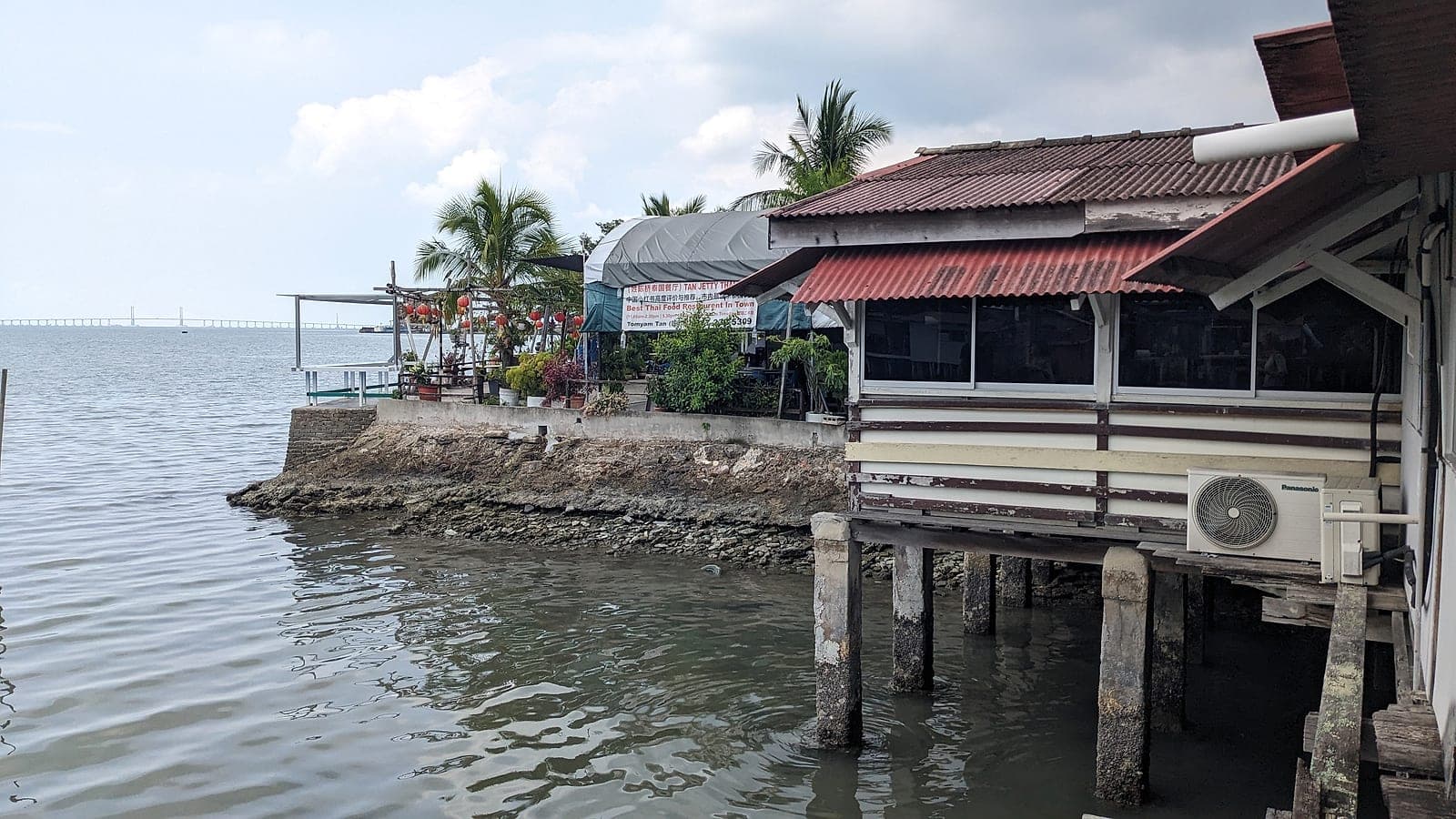
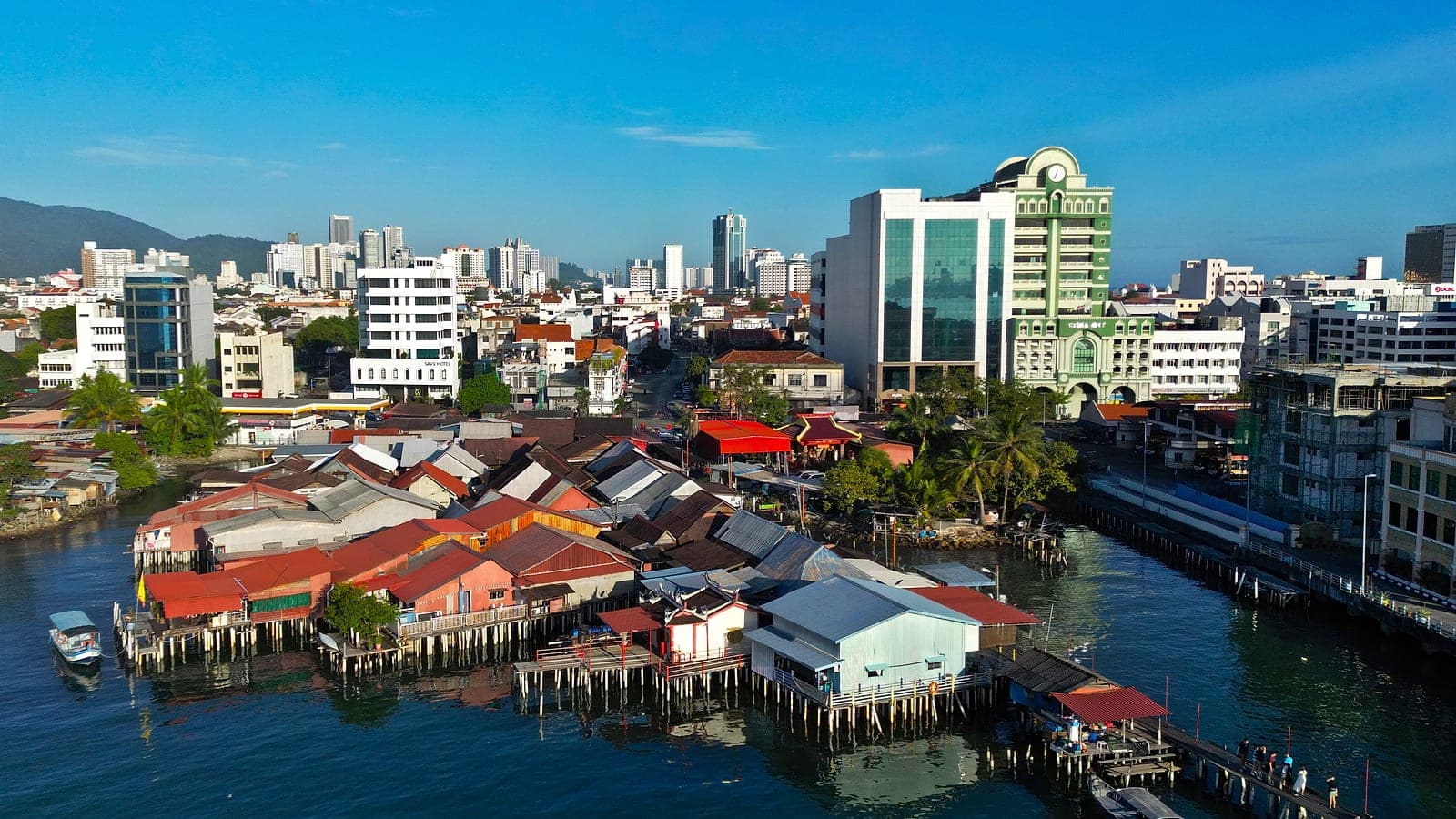
The clan jetties — waterfront stilt villages on Weld Quay
CK Tan / Wikimedia Commons (CC BY 3.0)
The Chinese who arrived in Penang in the 19th century came organised by surname — Hakka miners, Hokkien merchants, Teochew fishermen, each clan association managing its own mutual aid and welfare. The jetties they built off Pengkalan Weld were a practical extension of this system: families of the same surname built homes on stilts over the sea together, sharing a boardwalk, a communal well, and a clan temple. The sea location was partly circumstantial and partly strategic — fishing boats and trading vessels could be moored directly at the house, and the inter-clan tensions that occasionally erupted into violence in the George Town streets were easier to avoid when you lived over the water.
Originally nine jetties served nine clans. Today six remain: Chew, Lim, Tan, Lee, Mixed Surnames, and Yeoh jetties. Chew Jetty is the most visited: a 200-metre boardwalk lined with about 75 houses, souvenir stalls, and a temple dedicated to Guan Di. The other jetties are quieter and more residential, offering a more authentic view of the daily life that continues here despite the tourist footfall at Chew Jetty. Children attend school from houses on stilts; motorbikes are parked on narrow wooden boardwalks; fishing boats still come and go from the pilings.
History
Read the full history of Clan Jetties
The Chinese immigrant clan associations that established George Town's jetties imported an institutional structure that had existed in Fujian and Guangdong for generations — surname-based mutual aid, arbitration, education, and protection. The Chew clan, from Fujian Province, was among the earliest to build on stilts over the sea off Weld Quay; other clans followed as the waterfront became more crowded and land more expensive.
The jetties grew through the late 19th and early 20th centuries as immigration continued. At their peak they housed hundreds of families and functioned as a semi-independent waterfront community with their own temples, festivals, and informal economies. Progressive restriction of Chinese immigration from the mid-20th century, combined with urbanisation, reduced the population. But a core of families remained — many running businesses for the tourist trade that developed after the UNESCO Heritage listing.
In 2008, the Clan Jetties were designated part of George Town's UNESCO World Heritage buffer zone, protecting their physical structure and recognising their cultural value. This designation brought increased tourism but also complicated the question of what happens when elderly residents die and their plots pass to family members who may not want to live there. The community remains genuinely inhabited but increasingly mixed with commercial activity.
Photography Guide
- Best time
- Sunset is the signature shot — stilt houses silhouetted against warm sky over the Straits of Malacca. Arrive 30 minutes before sunset and walk to the end of Chew Jetty for the unobstructed view back along the boardwalk. Early morning (before 9am) also works for atmospheric mist over the water and reduced crowds. The Guan Di temple at the end of Chew Jetty catches warm morning light on its red lanterns.
- Best position
- For the sunset silhouette, stand at the end of Chew Jetty looking back toward George Town — the houses line up along the boardwalk with the city skyline behind. For detail work, frame individual houses and boats from the side of the boardwalk looking out over the water. A 24–35mm lens captures the compression of the boardwalk effectively.
- What's allowed
- Photography throughout. These are people's homes — do not photograph directly through windows or doors, and ask before photographing residents. The temple welcomes photography outside worship hours.
Tips
- Tan and Lee jetties are less visited — go there for documentary shots without tourist background noise
- Bring a polarising filter for water shots — reduces glare on the sea surface at midday
- The view back to George Town's skyline from the end of Chew Jetty is often missed — it's the best city photograph from this angle
- Evening light on the red lanterns of the Guan Di temple is strong for warm-colour photography
Plan Your Visit
Before your visit
Half-day George Town walk — street art in the morning, then down to the jetties at sunset.
After your visit
The fort is a 10-minute walk from Chew Jetty along Weld Quay — pair them as a waterfront heritage walk.
Travel times are approximate.
Map & Directions
Insider Tips
- •Chew Jetty is the most developed for visitors but Tan and Lee jetties are more authentic
- •Visit at sunset for beautiful photos of the stilt houses silhouetted against the sky
- •These are real homes - walk quietly, do not peer into houses, and ask before photographing people
- •Try the drinks and snacks sold by jetty residents at small stalls
- •The temple at the end of Chew Jetty is dedicated to the Taoist deity Guan Di
Frequently Asked Questions
What are the Clan Jetties?
The Clan Jetties are six waterfront stilt-house communities in George Town, built by Chinese immigrant clan associations (groupings by surname) in the 19th century. Each jetty was established and maintained by a specific clan — Chew, Lim, Tan, Lee, Yeoh, and a mixed-surnames jetty. They are living residential communities, not museums or reconstructions.
Is Chew Jetty the only one worth visiting?
Chew Jetty is the largest and most organised for visitors, with food stalls and a temple at the far end. But Tan and Lee jetties are less commercialised and give a more authentic sense of daily life. Allow 20 minutes at each and walk at least two of the six.
Do people still live on the jetties?
Yes — the jetties are inhabited year-round by families who have lived there for generations. Daily life continues alongside tourism. Behave as you would in any residential neighbourhood.
What time should I visit the Clan Jetties?
Sunset is the iconic time for photography. Mornings are cooler and less crowded. Avoid midday heat. The jetties are accessible at any hour but respectful behaviour is especially important in the evenings.
Are the Clan Jetties part of the UNESCO Heritage zone?
The Clan Jetties are part of the George Town UNESCO World Heritage buffer zone, designated in 2008. This protects the physical structure but does not prevent the gradual commercial transformation of Chew Jetty.