Kek Lok Si Temple
Air Itam
Daily 8:30am–5:30pm (Guanyin Pavilion closes 5pm)
Free entry; Pagoda RM 2; Inclined lift to Guanyin pavilion RM 4
1.5–2.5 hours
Before 9am for soft light on the pagoda and virtually no tour groups
The complex involves significant walking on steps and inclined paths
Self-guided
What is Kek Lok Si Temple?
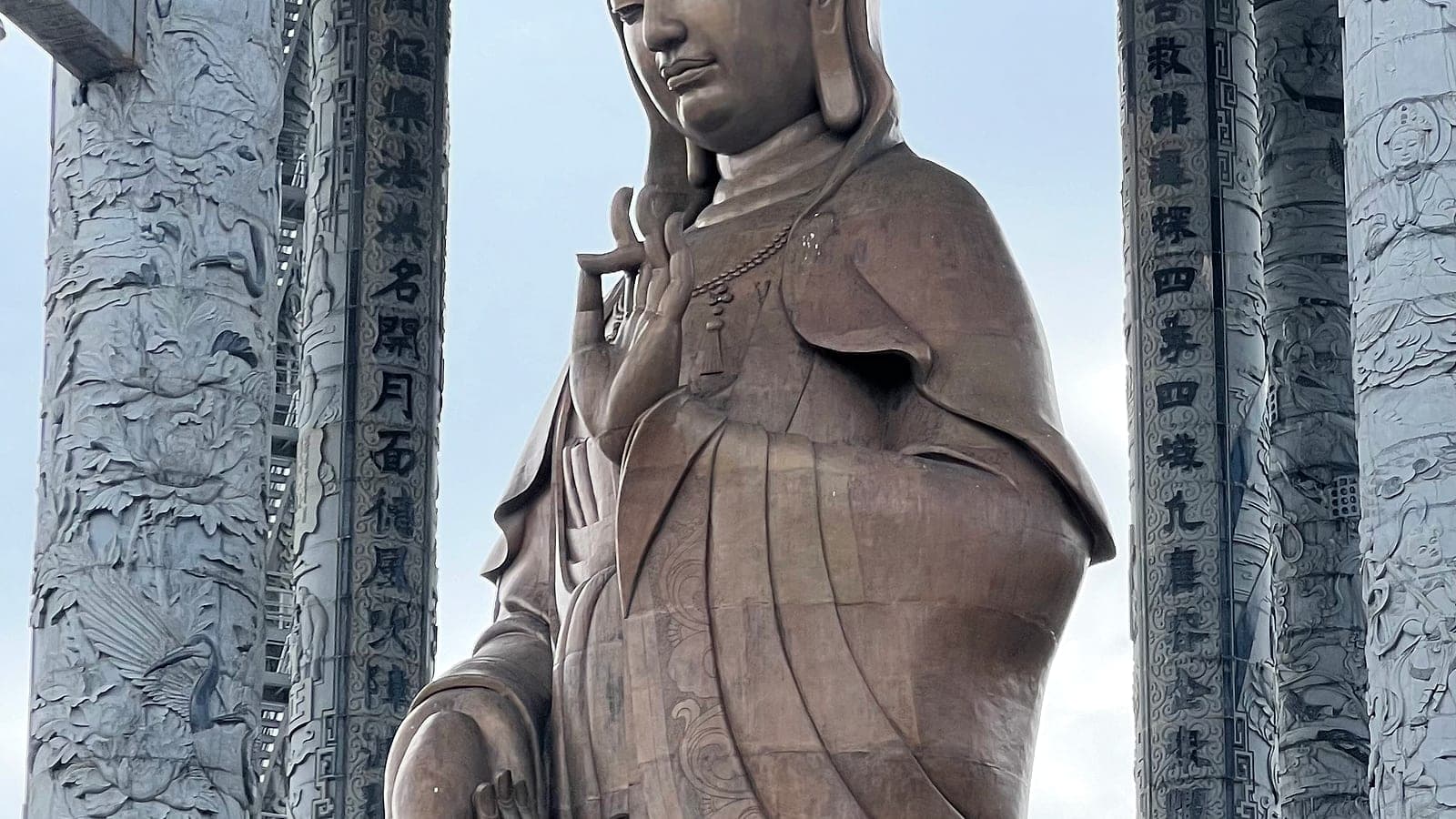
Kek Lok Si is Southeast Asia's largest Buddhist temple, a sprawling hilltop complex in Air Itam, Penang, where Chinese, Thai, and Burmese architectural traditions converge in a single landmark. Founded in 1890, the complex centres on the seven-storey Ban Po Thar pagoda and a 30-metre bronze Guanyin statue reachable by inclined lift. Entry to the grounds is free; the pagoda climb costs RM 2.
Photos8 photos
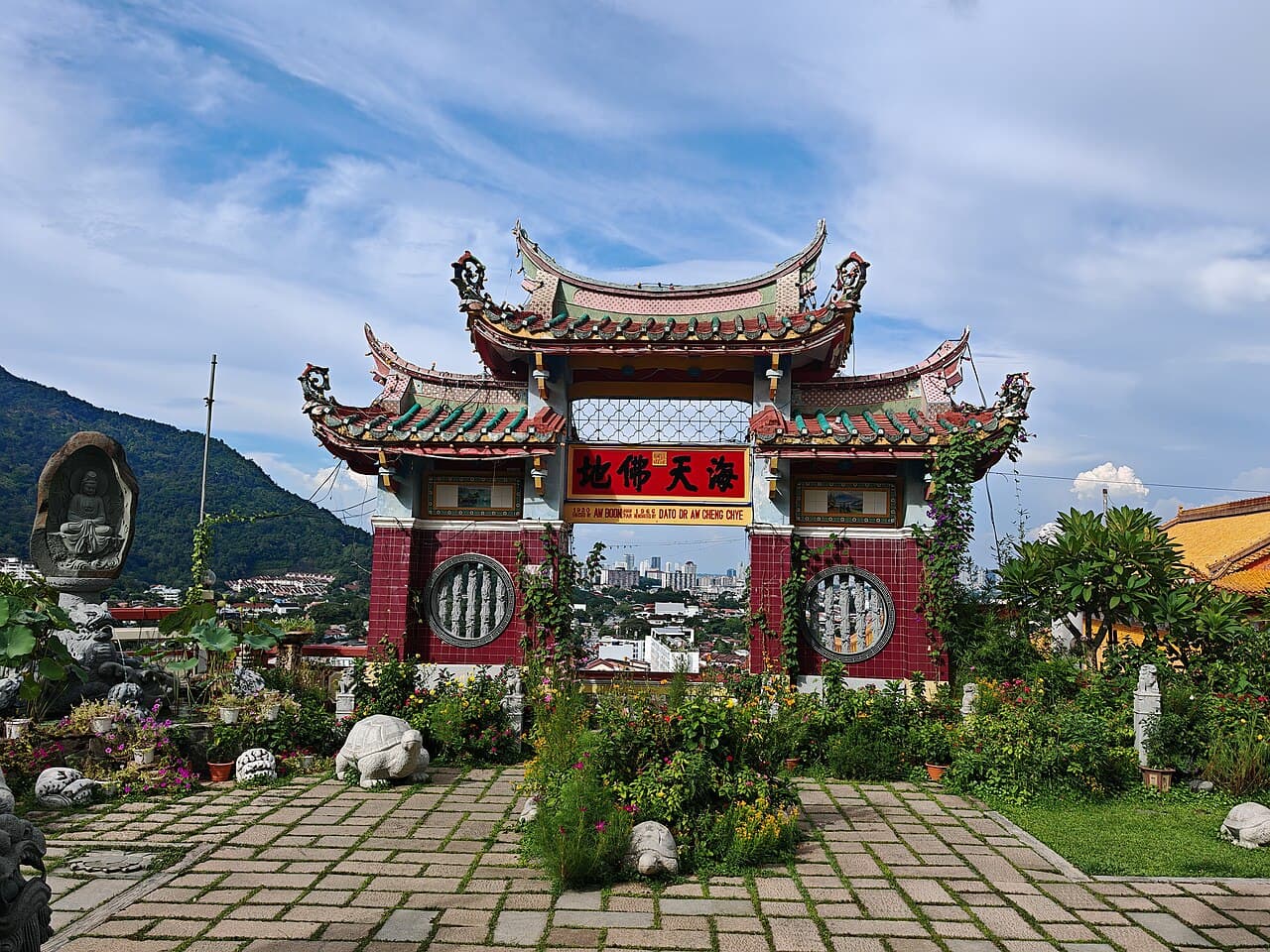
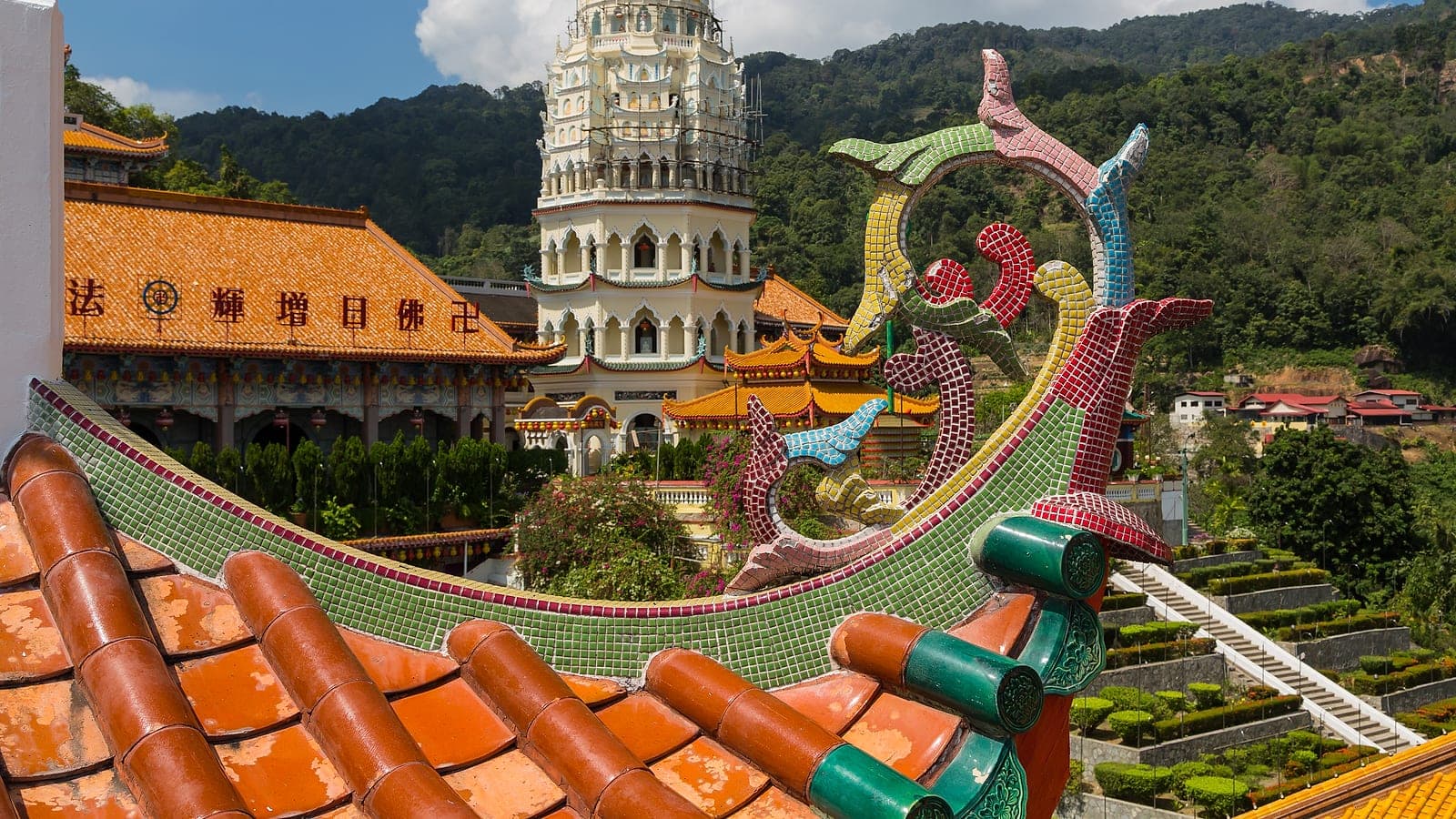
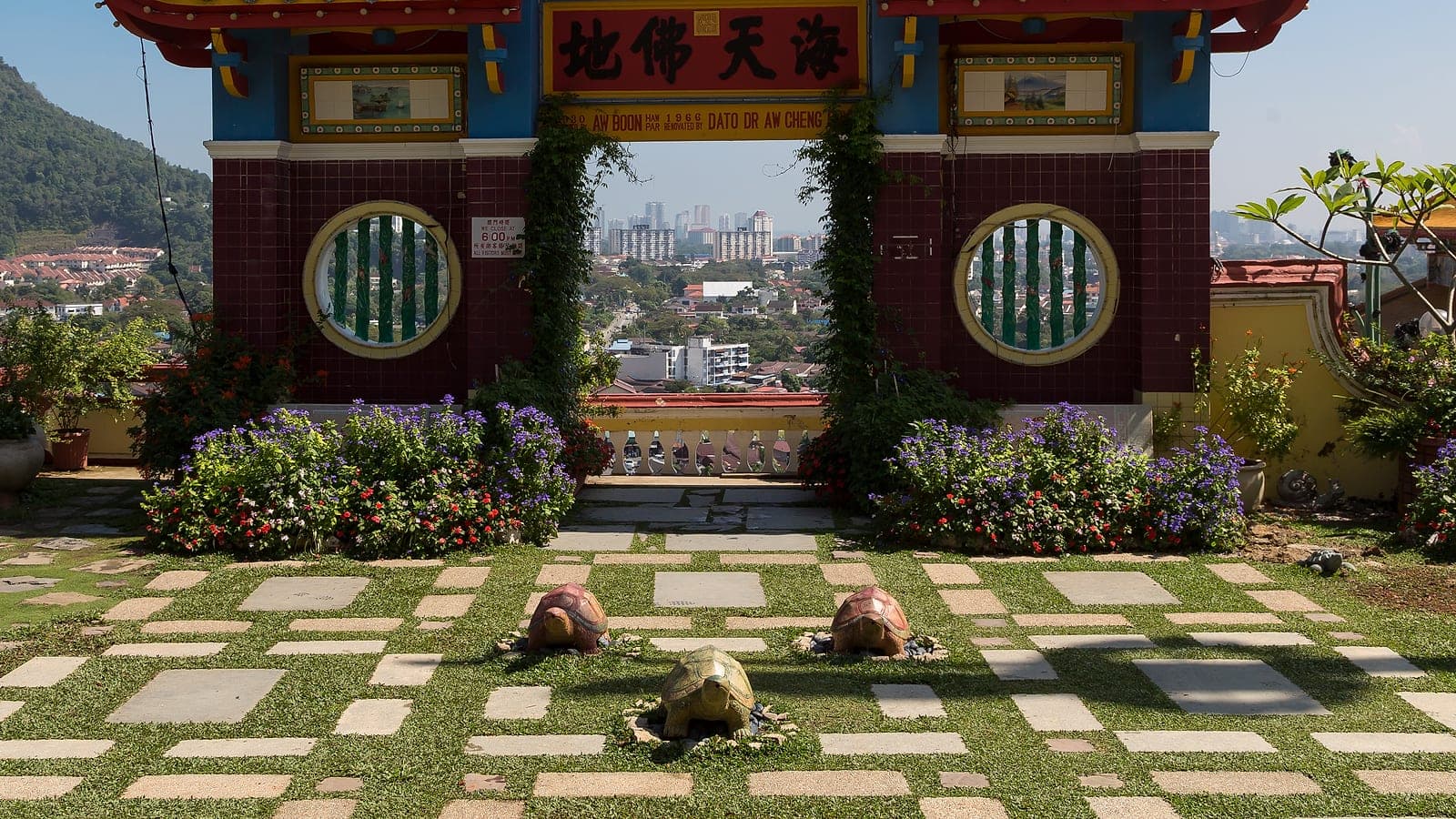
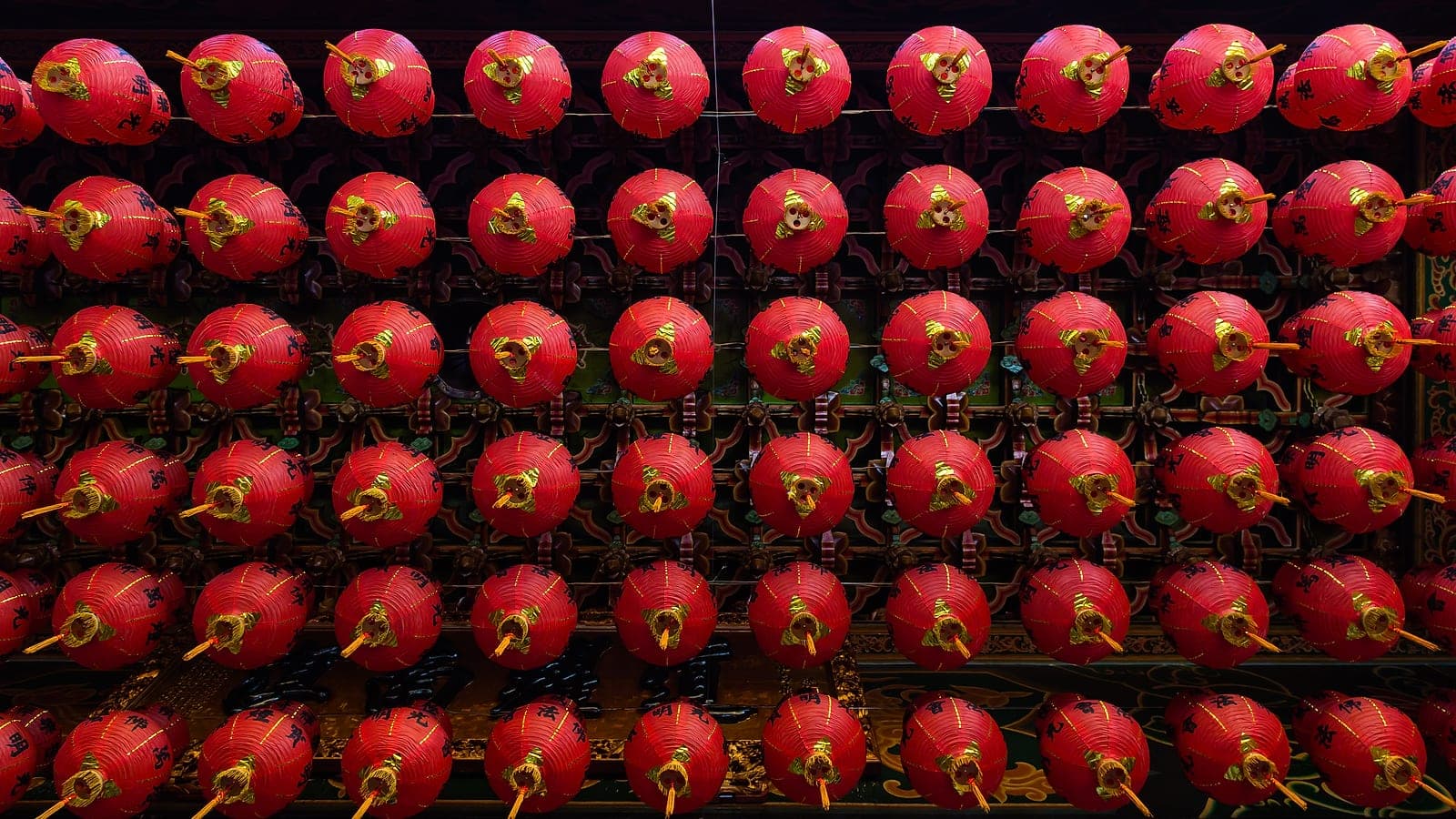
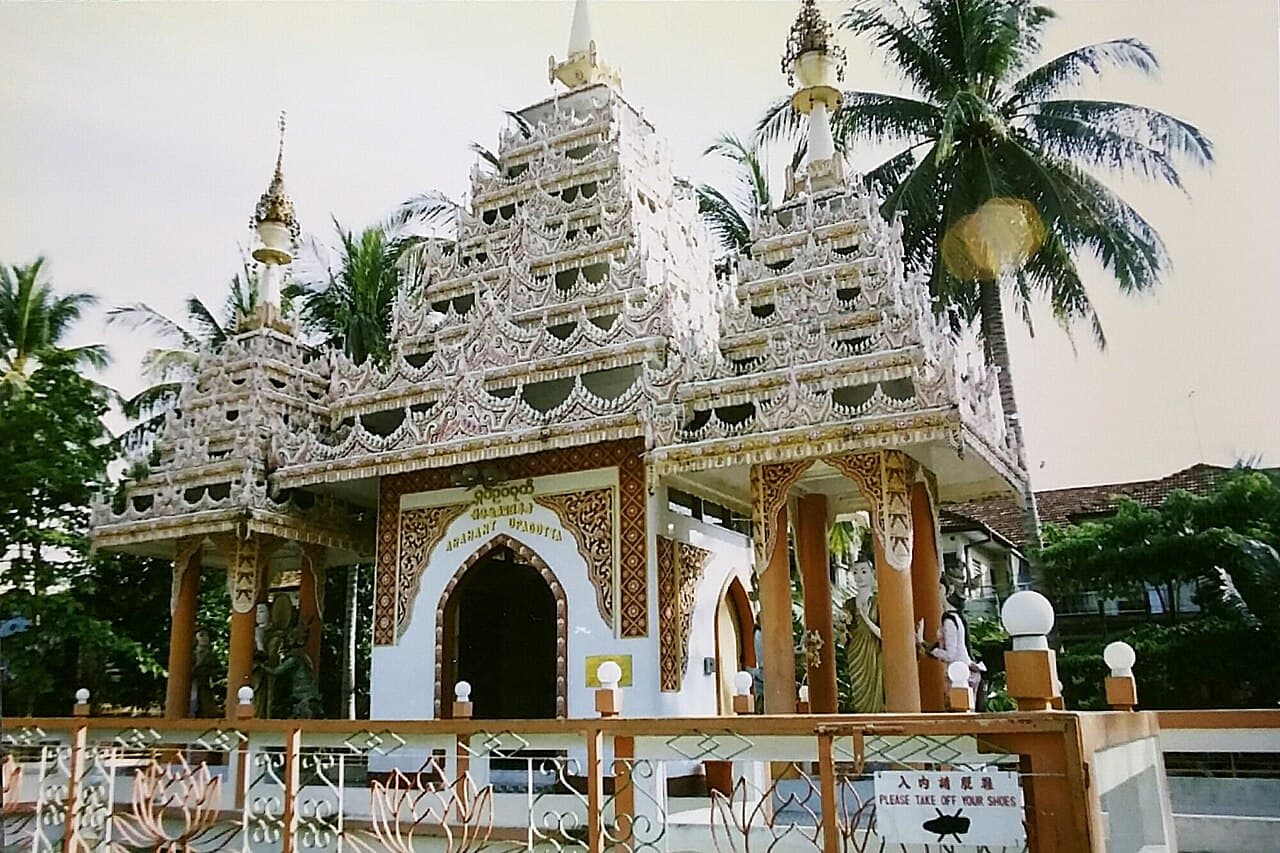
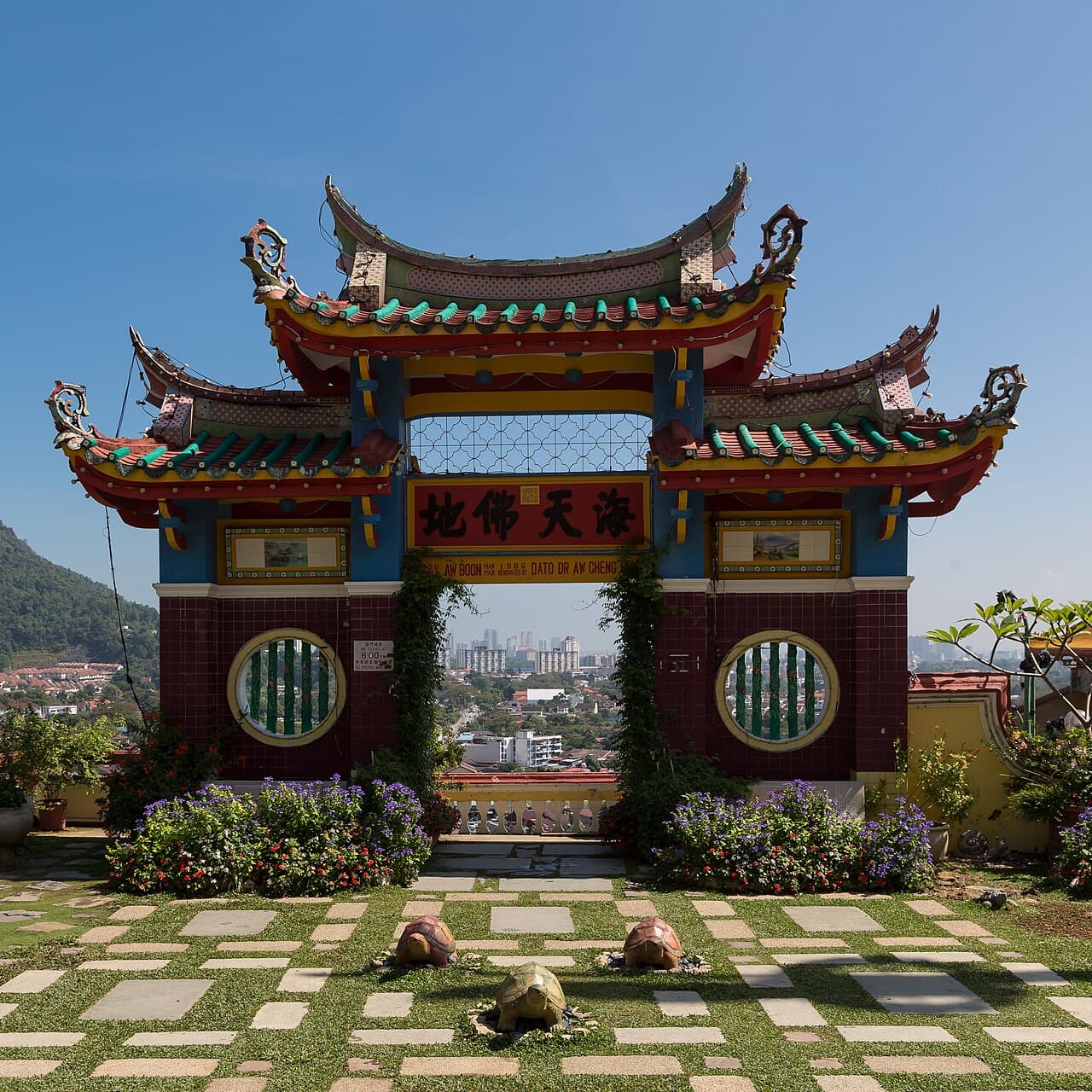
Ornate archway entrance to Kek Lok Si Temple
Wikimedia Commons
Kek Lok Si began with a piece of hillside above Air Itam and a founding abbot who arrived from Fujian Province with the backing of Penang's Hokkien merchant community. Construction started in 1890 and has, in practical terms, never stopped — each generation of devotees has added halls, pavilions, and garden terraces until the complex now covers eleven acres of hillside. The name means "Temple of Supreme Bliss" in Hokkien, and the scale suggests the founders meant it seriously: this is a temple-city, not a temple.
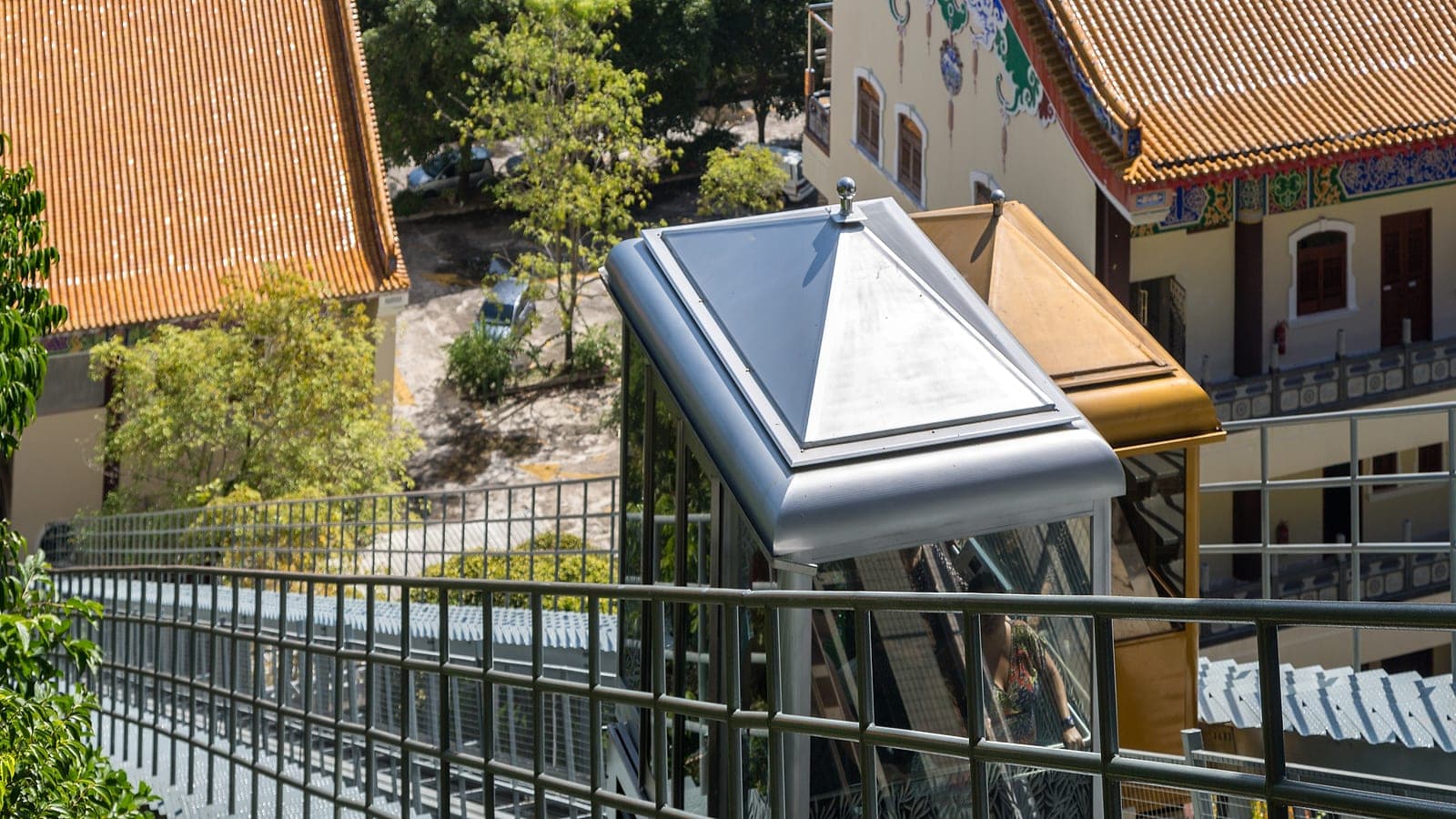
Most visitors enter through a covered bazaar that climbs steeply from Air Itam road — a gauntlet of incense, carved jade, and souvenir stalls that opens suddenly onto the main temple terrace. The real complex lies above: winding paths connect prayer halls dedicated to different deities, a tortoise liberation pond where devotees release turtles as a merit-making practice, and eventually the Ban Po Thar pagoda, where RM 2 buys access to seven tiers of Buddha figurines and views across the rooftops below. An inclined lift carries you the final stretch to the Guanyin pavilion, where a 30-metre bronze Goddess of Mercy looks out over Air Itam reservoir and, on clear mornings, the green ridge of Penang Hill beyond.
History
Read the full history of Kek Lok Si Temple
Kek Lok Si was founded in 1890 by Abbot Beow Lean (Mian Lian), a monk from Fujian Province who arrived in Penang with a vision of building a self-sustaining temple-city for the island's Chinese Buddhist community. The project drew immediate support from Penang's wealthy Hokkien merchant families — the same community that had built George Town into a trading hub — and from the colonial administration, which granted the hillside land above Air Itam for the purpose. The temple name, meaning "Temple of Supreme Bliss," referenced the Pure Land of Amitabha Buddha; the scale of the ambition was apparent from the beginning.
Construction proceeded in stages over decades. The earliest halls and terraces were completed by the mid-1890s, but the defining structure — the seven-storey Ban Po Thar pagoda — took far longer. Its design was a deliberate architectural statement: a Chinese octagonal base, a Thai middle tier decorated in the Siamese manner, and a Burmese-style crown, the three great Buddhist traditions of the region unified in a single tower. The pagoda houses approximately 10,000 marble and bronze Buddha figurines across its tiers, many donated by individual devotees whose names are inscribed on the tiles.
The temple complex continued growing through the 20th century. Shrines, pavilions, and terraced gardens crept steadily up the hillside. The most dramatic addition came in the early 2000s with the completion of the 30-metre bronze Guanyin statue — a Thousand-Hand Guanyin representing compassion in all directions — mounted on a hilltop pavilion reachable by an inclined lift. The statue is visible from much of Air Itam and from Penang Hill on a clear day. Construction at Kek Lok Si has never formally concluded; new donor-funded additions continue to appear on the hillside, in keeping with the founding vision of a temple that grows with its community.
Photography Guide
- Best time
- Before 9am for soft light on the pagoda and virtually no tour groups. The early morning haze at this altitude sometimes creates atmospheric mist around the upper terraces — worth checking on humid mornings. A completely different visit: come after dark during Chinese New Year (January/February) for the 30-night illumination, when the entire complex is outlined in thousands of coloured lights.
- Best position
- The Ban Po Thar pagoda reads best from the main temple terrace below, shooting slightly upward to isolate the upper tiers against the sky. For the Guanyin statue, stand at the inclined lift arrival platform and look up through the pavilion columns — the framing compresses the scale effectively. The tortoise pond at the base has calm reflective water and good soft light in the early morning.
- What's allowed
- Photography throughout the complex. Avoid pointing cameras at worshippers during active prayer sessions, particularly in the main hall and smaller deity shrines. Flash photography is discouraged inside prayer halls.
Tips
- Wide angle (16–24mm equivalent) for the pagoda courtyard — the base is wider than it looks from outside
- The pagoda tiers are best in dappled light mid-morning; harsh midday sun washes the tile colours
- Shoot the tortoise pond from low — the turtles at water level create strong foreground interest
- The Guanyin statue is best in the morning before the sky turns white; afternoon haze reduces contrast significantly
- During CNY bring a tripod — the night illuminations need 2–3 second exposures to capture the full glow
Plan Your Visit
Before your visit
The original Air Itam assam laksa stall, 10 minutes downhill from the temple entrance. Have breakfast here before the 8:30am opening — the stall opens early.
After your visit
Short Grab to the funicular base station (not walkable — 15 min by car). Do Kek Lok Si in the morning, Penang Hill in the afternoon for sunset views.
Walk back down the hill to the Air Itam wet market for lunch — the hawker stalls around the market serve good char kway teow and economy rice.
Travel times are approximate.
Map & Directions
Insider Tips
- •Visit before 9am to avoid tour buses and get the best photography light
- •Wear comfortable shoes — the complex involves significant walking on inclines and steps
- •Take the inclined lift to the Guanyin pavilion — RM 4 is worth it for the view
- •During Chinese New Year, come after dark for the 30-night illumination
- •Bring water and a hat — the upper levels are fully exposed to the sun
Frequently Asked Questions
Is entry to Kek Lok Si free?
The temple grounds are free to enter. The Ban Po Thar pagoda climb costs RM 2 per person. The inclined lift to the Guanyin pavilion at the summit costs RM 4.
How long should I spend at Kek Lok Si?
Budget 1.5 to 2.5 hours for a comfortable visit covering the main temple complex, the pagoda climb, and the inclined lift to the Guanyin pavilion. Rushed visitors can do the highlights in an hour but will miss the upper terraces.
What is the best time of day to visit?
Before 9am on weekday mornings. The temple opens at 8:30am. Early arrivals get the complex almost to themselves, with the best photography light and active morning worship to witness. Tour buses typically arrive from 10am.
Can I combine Kek Lok Si with Penang Hill on the same day?
Yes — both are in the Air Itam area. A practical itinerary: Kek Lok Si from 8:30am to 11am, then a short Grab to the Penang Hill funicular base for the afternoon and sunset. The two complement each other well.
When is the Chinese New Year illumination?
January or February each year — exact dates vary by the lunar calendar. The entire complex is lit with thousands of coloured lights for 30 consecutive nights beginning on Chinese New Year's Eve. Come after 7pm for the full effect.
Is there a dress code at Kek Lok Si?
Modest dress is required — cover shoulders and knees before entering the prayer halls. The temple usually has sarongs available to borrow at the main entrance if needed.
How difficult is the walk up to the pagoda and Guanyin statue?
The main temple complex involves a steady uphill walk on steps and inclined paths — manageable for most visitors but not suitable for wheelchairs or pushchairs. The inclined lift (RM 4) eliminates the steepest final section to the Guanyin pavilion.