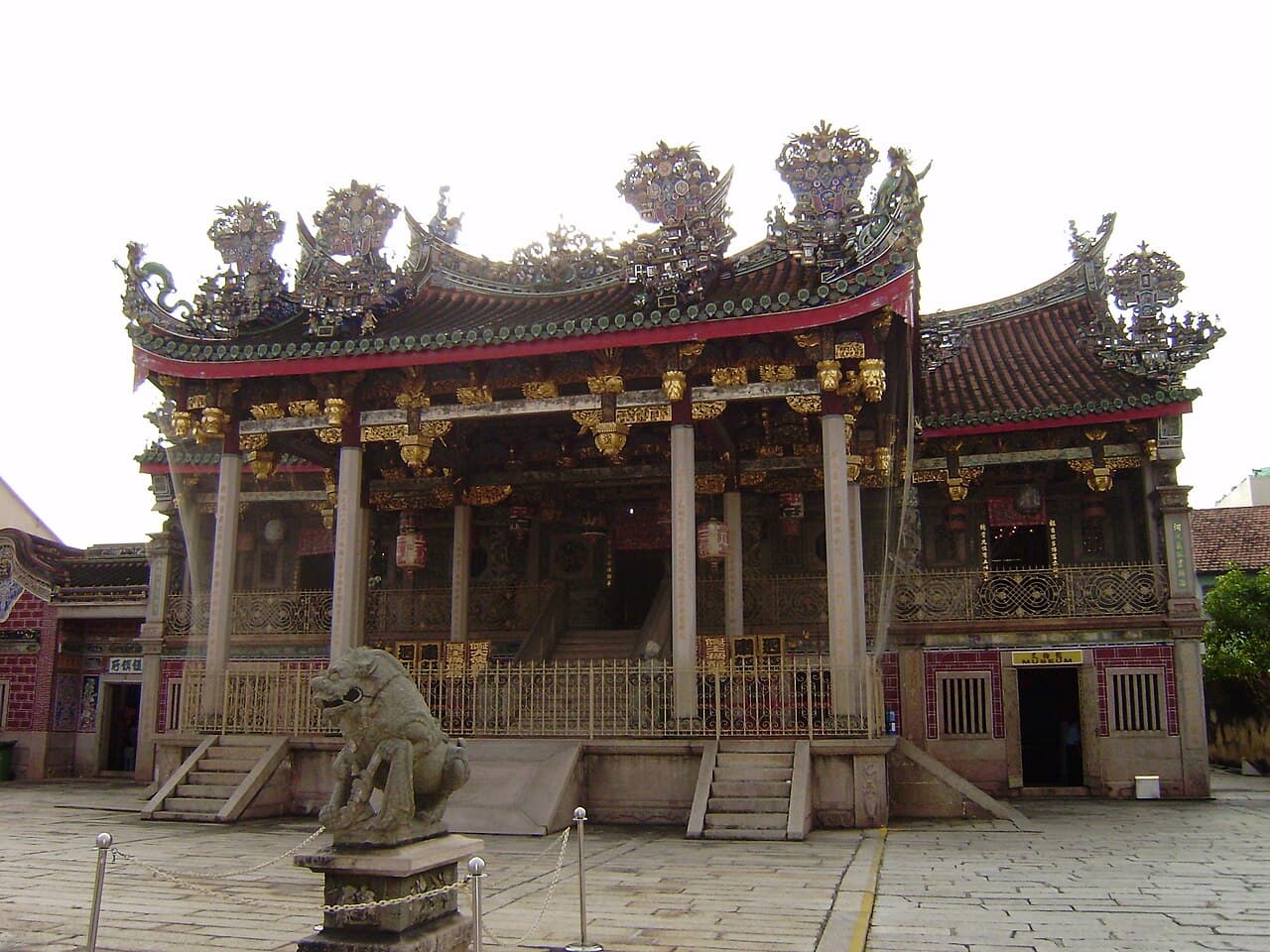
Khoo Kongsi
George Town
Open daily to visitors; a small entrance fee applies. Confirm current opening hours and the fee on arrival.
RM10 adult, RM1 child (12 and under)
45–75 minutes
Morning (9–11am) when the facade catches direct light from the east and the courtyard is not yet in harsh midday shade
Self-guided; exhibit texts in English and Mandarin
What is Khoo Kongsi?
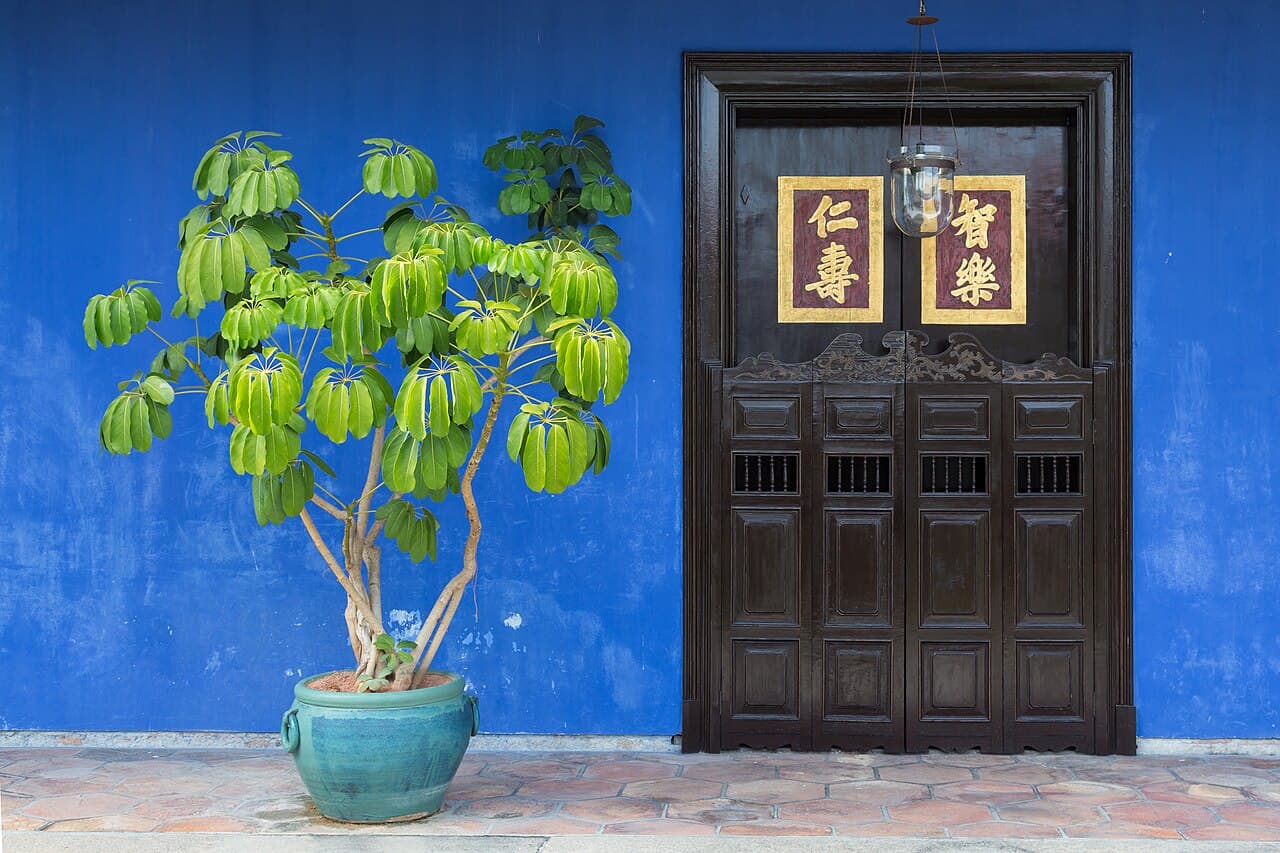
Leong San Tong Khoo Kongsi is the largest and most ornate Hokkien clan house in Malaysia — the ancestral hall of the Khoo family in Cannon Square, George Town. First built in 1851, rebuilt after an 1901 fire (completed 1906), it is famous for its intricate Chinese carvings and gilded woodwork, and sits at the heart of the UNESCO World Heritage zone.
Photos5 photos
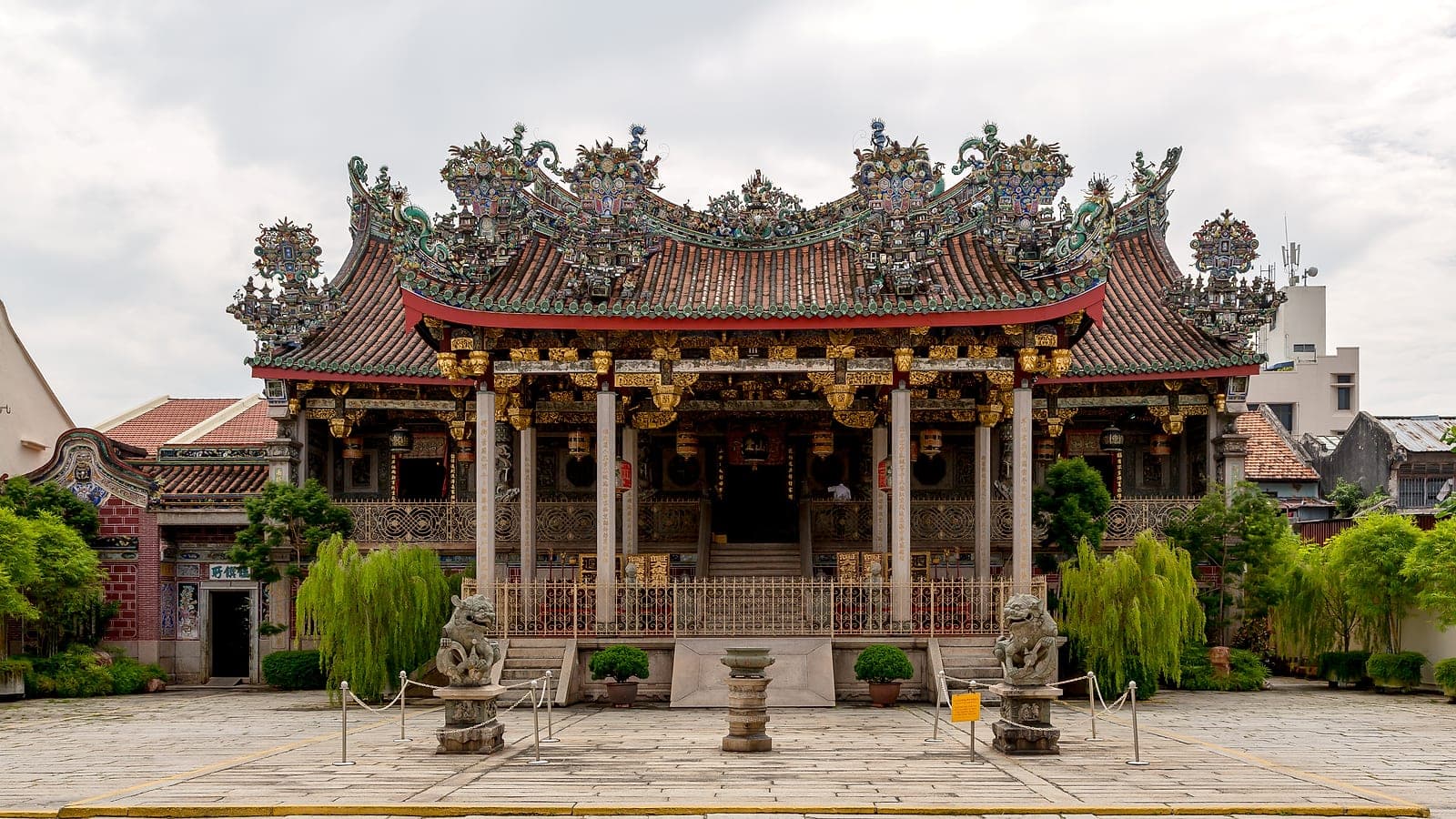
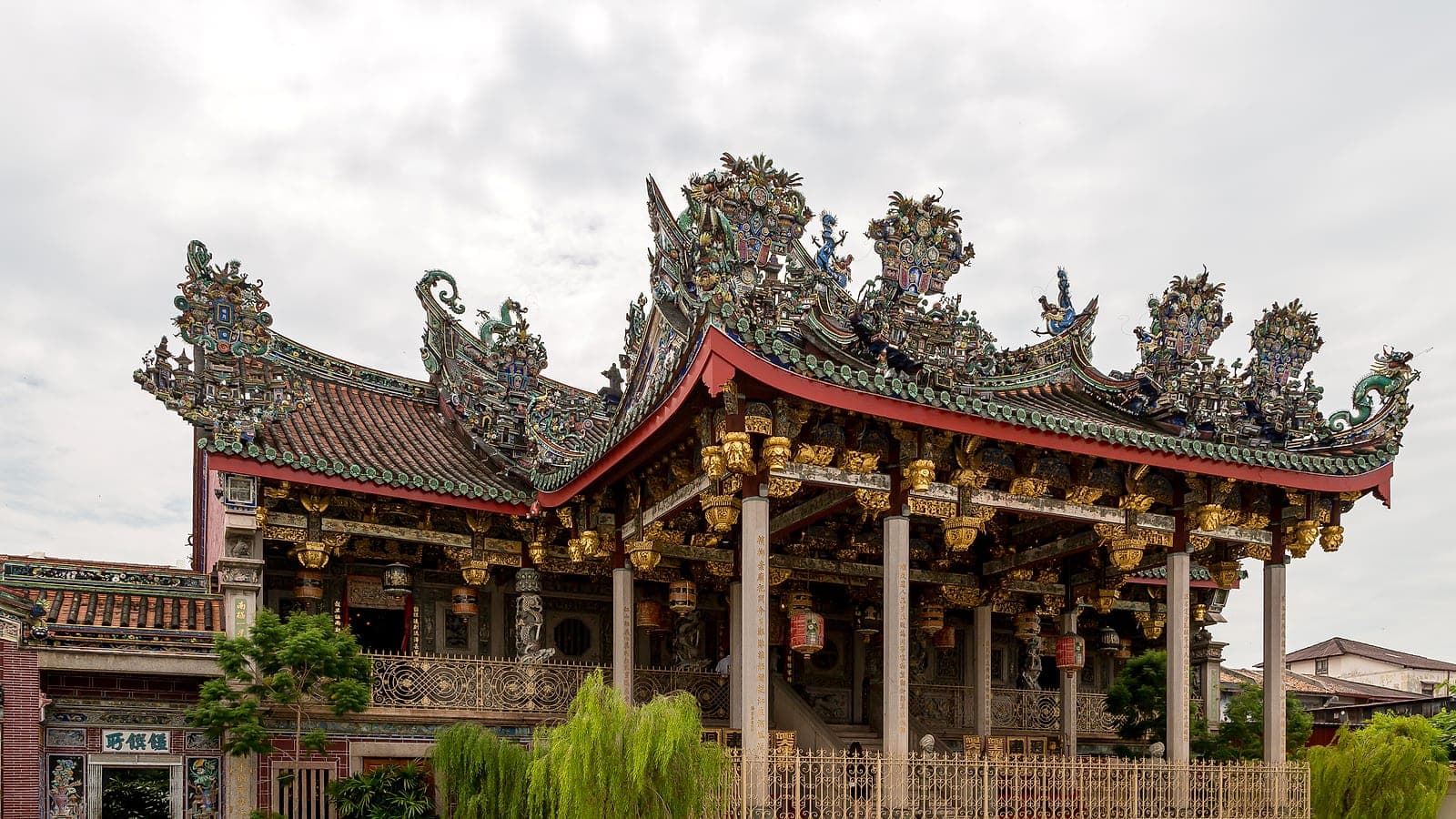
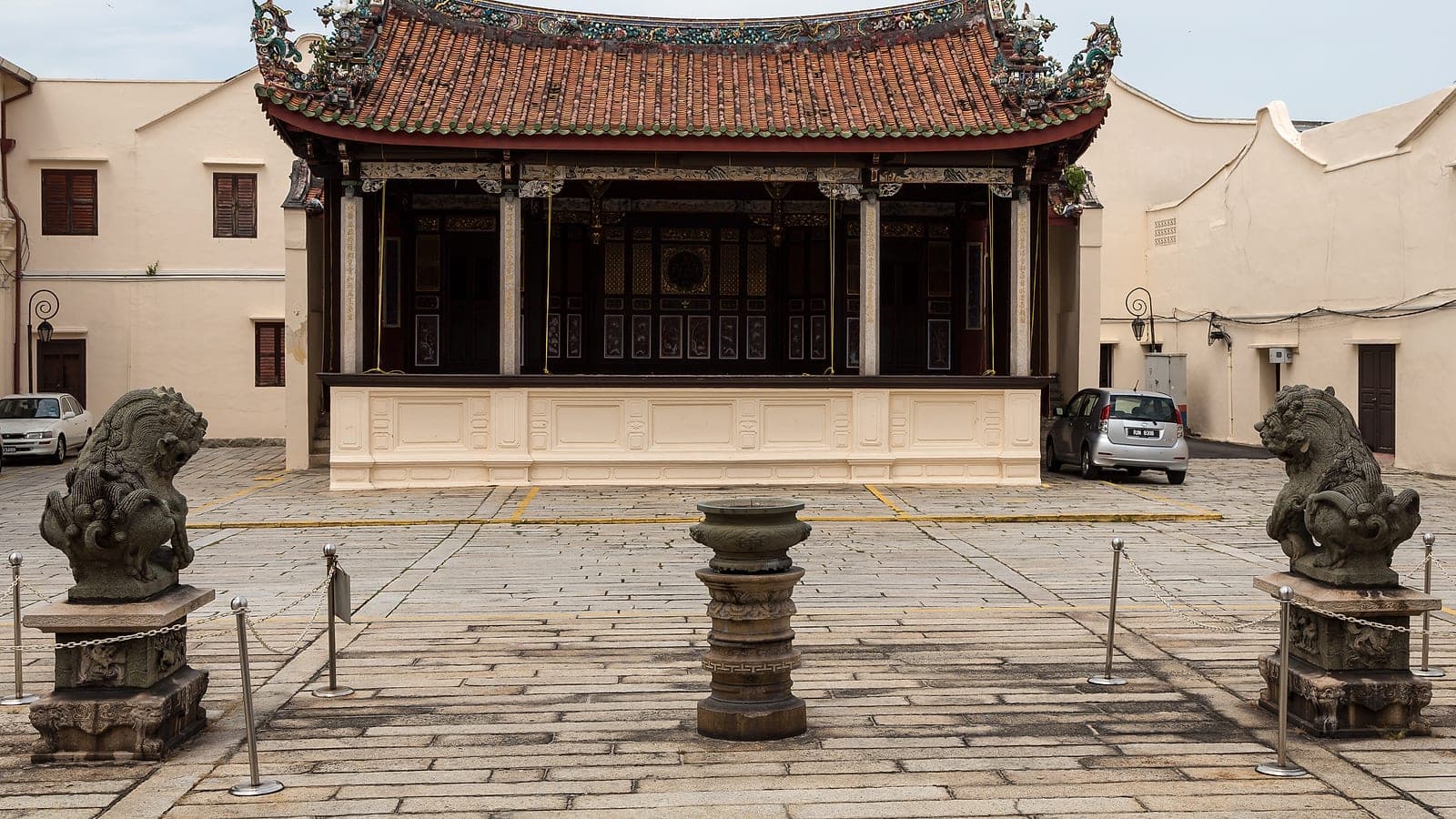
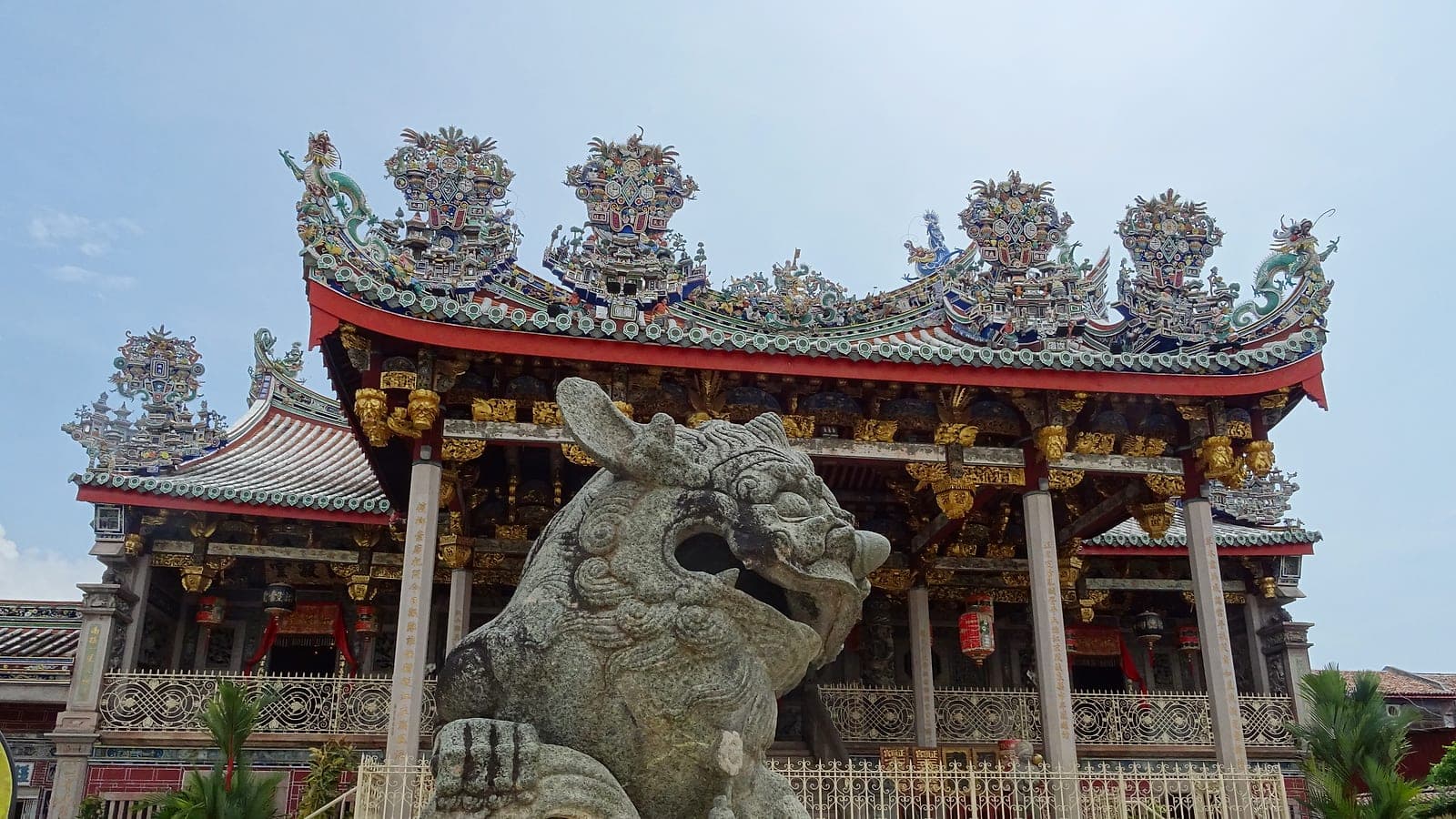
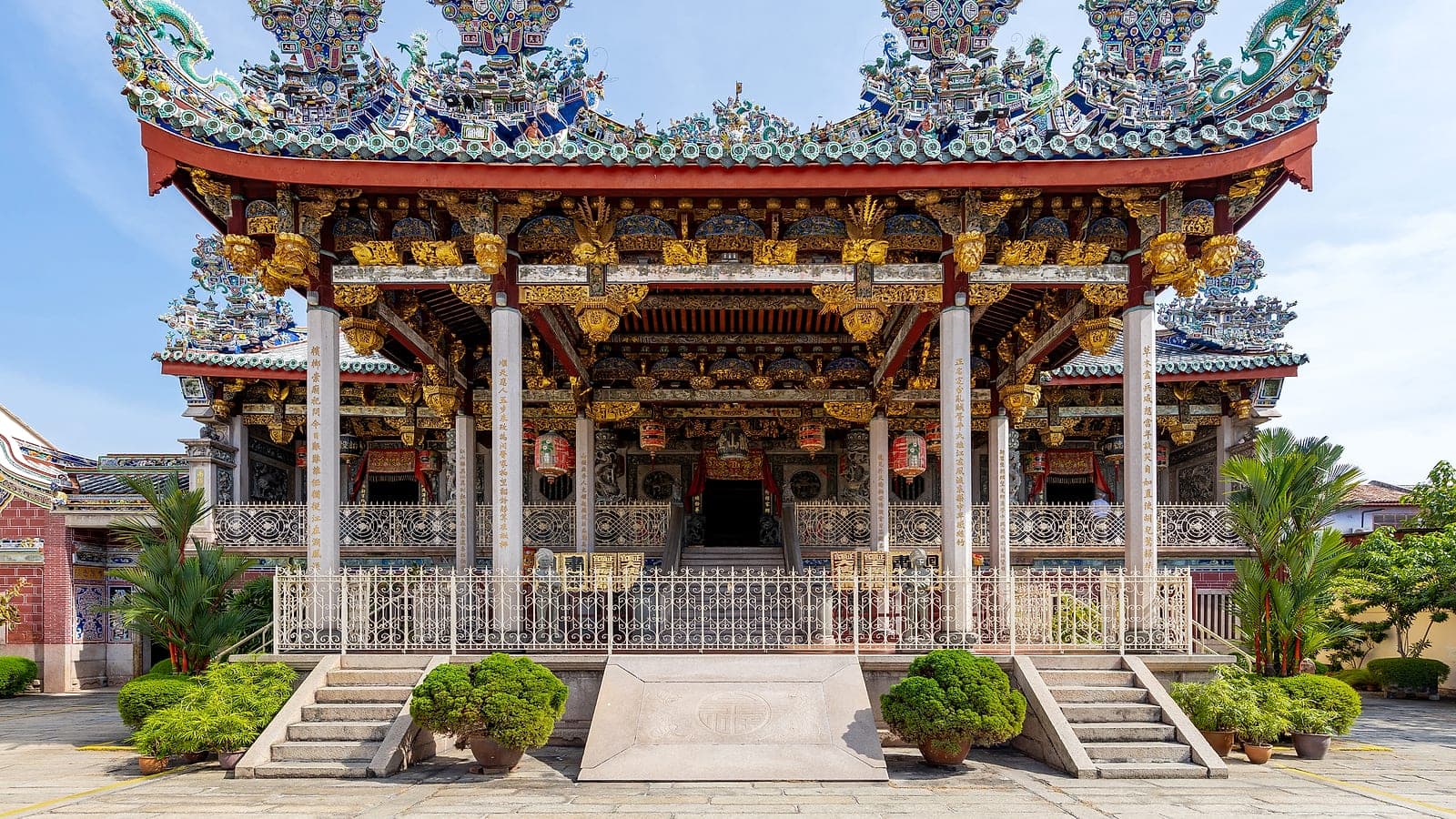
Leong San Tong Khoo Kongsi, Penang's grandest clan house
CEphoto, Uwe Aranas / Wikimedia Commons (CC BY-SA 3.0)
The Khoos arrived in Penang in the early 1800s with almost nothing and within two generations had become one of the most powerful Chinese clans in the Straits Settlements. Cannon Square — the enclave they built around their clan house — was a world unto itself: clan temple, row houses for members, opera stage, and the elaborate assembly hall at its centre. When the first hall burned down on the very night it was completed in 1898, the clan took it as a divine warning that they had reached too high. The replacement, finished in 1906, was slightly less ambitious and has stood for over a century.
History
Read the full history of Khoo Kongsi
The Khoo clan built their first clanhouse here in 1851. That building was destroyed by fire in 1901 — said to have been struck by lightning — and a more restrained replacement was constructed between 1902 and 1906 for about $100,000 Straits dollars. The clan house sits within the George Town zone inscribed as a UNESCO World Heritage Site in 2008 and remains both a working clan association and a major visitor attraction.
Photography Guide
- Best time
- Morning (9–11am) when the facade catches direct light from the east and the courtyard is not yet in harsh midday shade. Overcast days are excellent for the interior gilded panels, which reflect badly in direct sunlight. Avoid midday when the courtyard is fully shadowed.
- Best position
- The definitive shot is from the far end of Cannon Square looking straight toward the main hall facade — step back as far as possible to include the full tiered roofline with ceramic figurines. For the interior, position below the central gilded ceiling panel and shoot upward. The stone column carvings are best photographed from close-in with a wide aperture to separate the relief detail from the background.
- What's allowed
- Photography permitted throughout, including interior. No flash during active religious observances.
Tips
- Bring a wide-angle lens — the courtyard is narrow and the hall is tall
- The roofline ceramic figurines are best captured with a telephoto from across the square
- Early morning before tour groups arrive gives clean shots of the courtyard
- The side alleys around Cannon Square have excellent heritage row-house textures for context shots
Map & Directions
Insider Tips
- •Look up — the carved beams, gilded panels and tiled roof ridges are the real spectacle, and the detail rewards slow looking.
- •It's hidden inside Cannon Square, reached through narrow lanes off Lebuh Cannon — easy to miss, so follow the signs.
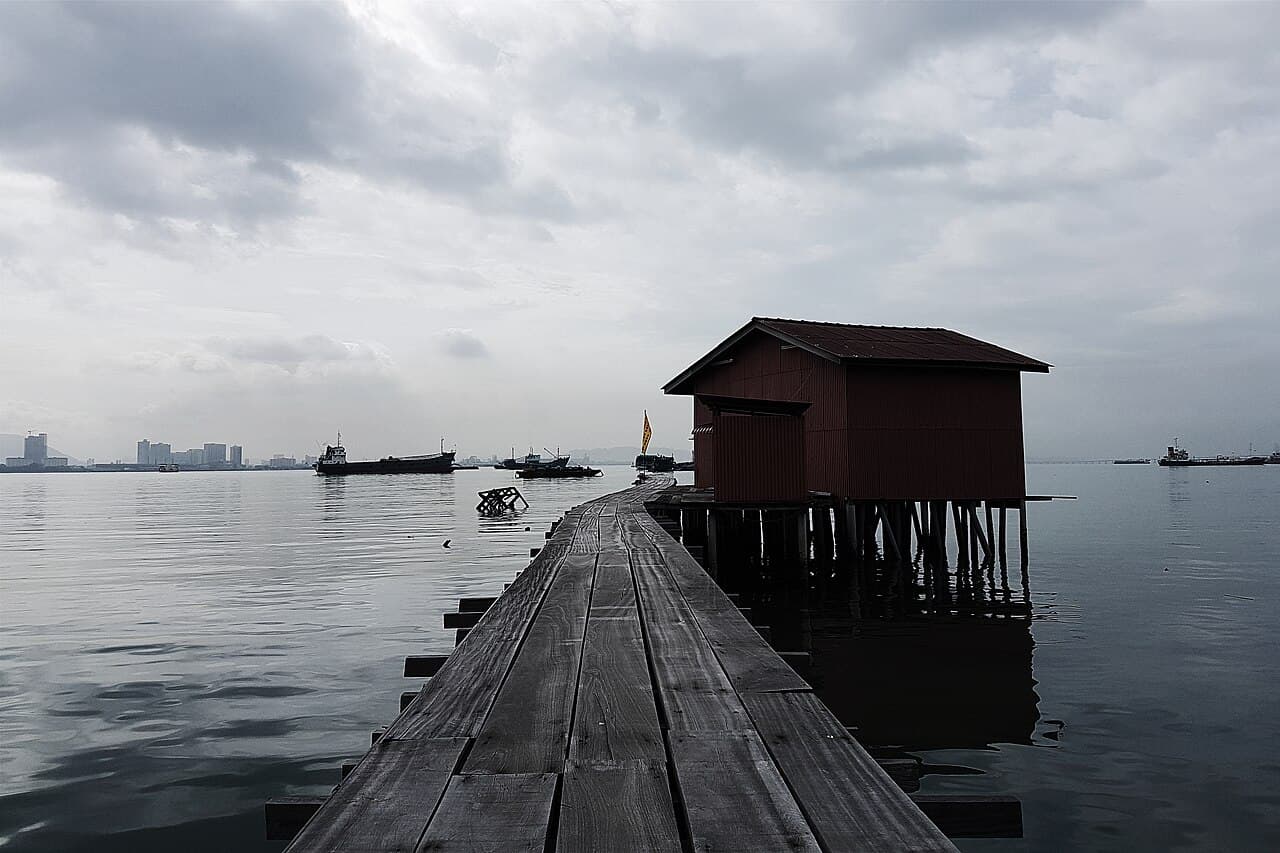
- •Combine it with the nearby Clan Jetties, Armenian Street and the Street of Harmony temples on one George Town heritage walk.
- •Mornings are quieter and the light on the front courtyard and roof carvings is at its best.
Frequently Asked Questions
What is Khoo Kongsi?
It is the clan house (kongsi) of the Khoo family — a Hokkien Chinese clan association in George Town. Leong San Tong Khoo Kongsi is the largest and most elaborately decorated Chinese clanhouse in Malaysia.
When was Khoo Kongsi built?
The Khoos first built a clanhouse on the site in 1851. After a fire destroyed it in 1901, the present building was constructed between 1902 and 1906.
Why was it rebuilt in the early 1900s?
The earlier, grander hall burned down in 1901 — reportedly after being struck by lightning. A scaled-down but still richly decorated replacement was completed in 1906 at a cost of about $100,000 Straits dollars.
Where is Khoo Kongsi?
In Cannon Square in central George Town, reached through narrow lanes off Lebuh Cannon and Lebuh Pitt, within the UNESCO World Heritage zone.
Can you visit Khoo Kongsi?
Yes. It is one of Penang's most popular heritage attractions, open daily to visitors for a small entrance fee. Check current opening hours and the fee on arrival.
What makes its architecture special?
It is the largest Hokkien clanhouse in Malaysia, built in elaborate Hokkien style with intricately carved beams and panels by master craftsmen from China, gilded woodwork, murals and ornate tiled roofs.