On this page
Penang vs Bangkok: Which City Should You Visit in 2026?
Both are world-class food cities — but completely different experiences. We compare cost, vibe, culture, nightlife, and who belongs where.
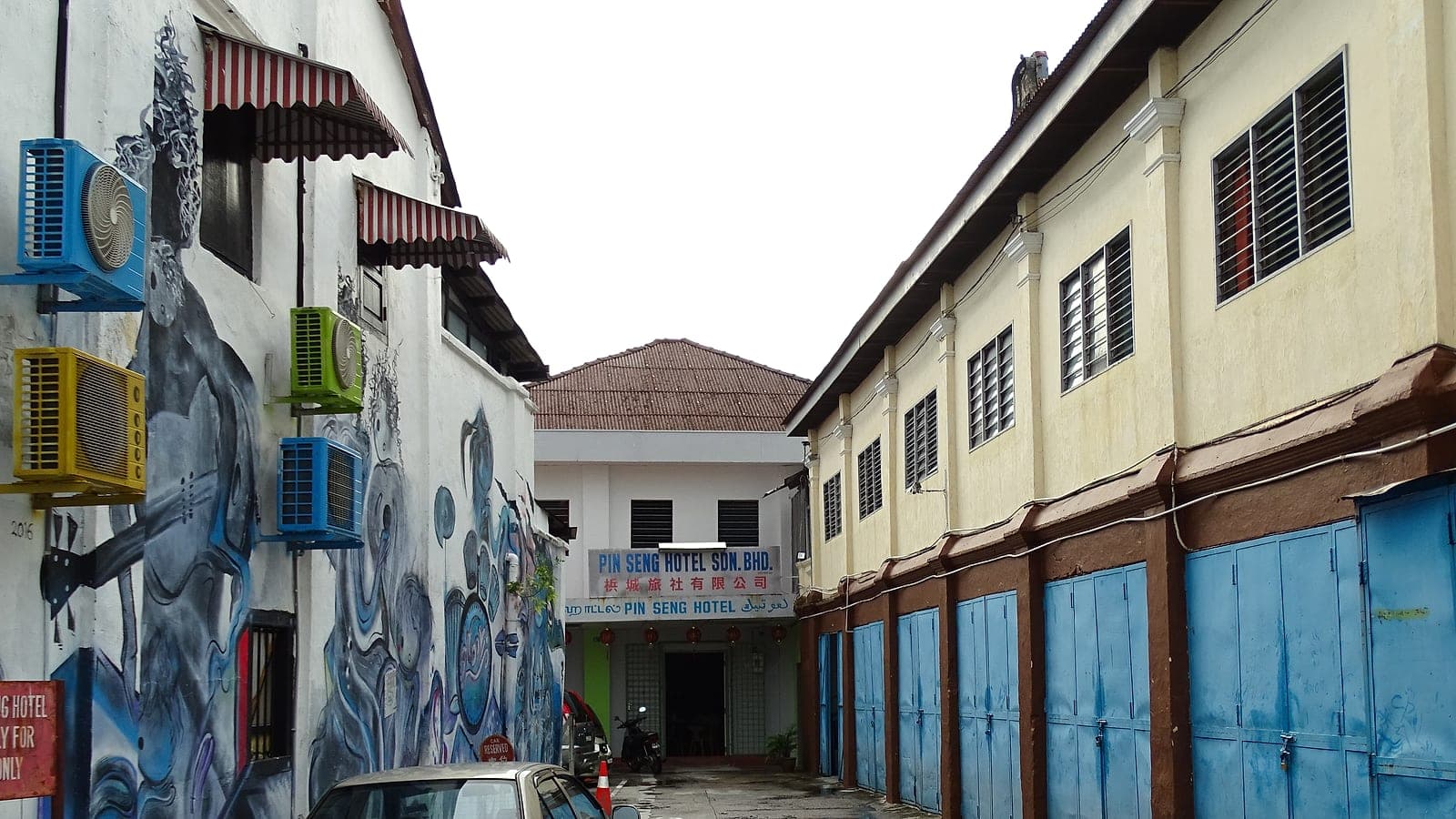
Bangkok is one of the world's great cities. Ten million people, 24-hour energy, a skyline of temple spires and glass towers, street food beside five-star hotel lobbies. Comparing anything to Bangkok carries a risk of making the comparison look small. Penang is not small — it is different. Four hundred years old, UNESCO-listed, walkable in three days, with food that holds its own against anything in the region. Where Bangkok demands your surrender to its scale, Penang is a city you can inhabit and understand quickly.
Both attract the same traveller: someone who wants food, urban culture, and a city that takes itself seriously. This guide helps you figure out which one fits your trip — or whether you should do both.
Most useful if you are choosing between Bangkok and Penang for a city-focused trip, or deciding how to divide time across both on a longer itinerary.
City break travellers, foodies, anyone on a 2–3 week Southeast Asia trip
Quick Verdict
Choose Penang if you:
- Want concentrated food heritage — hawker stalls here are generational, not tourist-facing; char kway teow at RM 8–12 is cheaper and more accomplished than most things you'll pay twice the price for in Bangkok
- Prefer a walkable, manageable city — George Town's heritage core fits in roughly 2km; 3–5 days covers it properly without feeling rushed
- Value quiet depth: 409 years of Chinese, Malay, Indian, and colonial British layering, the clan jetties, the street art, the kopitiams open at 6am with the same family behind the counter they've always had
Choose Bangkok if you:
- Want scale — Chatuchak Weekend Market alone covers 35 acres; the city's night market and dining ecosystem is enormous in a way Penang's cannot match
- Want nightlife — Sukhumvit Soi 11, Silom Road, and RCA (Royal City Avenue) all operate at a level Penang's bar scene does not approach
- Need breadth: Bangkok's food variety covers Thai regional cuisines, international dining, and serious restaurants in a way that a city of 750,000 in northwest Malaysia cannot
Do both? Almost always yes. Bangkok is 1.5 hours from Penang by direct flight and is the natural hub for a Thailand-Malaysia trip. See Doing Both below.
How They Compare
| Category | Winner | Notes |
|---|---|---|
| Food quality per ringgit | Penang | Hawker RM 8–15; Bangkok street food 80–150 THB (RM 10–20) — comparable cost, Penang has deeper heritage |
| Food variety | Bangkok | 10M people, Thai regional cuisines, international dining at every level |
| Accommodation (mid-range) | Penang | RM 150–250/night vs Bangkok RM 250–400 for equivalent quality |
| Walkability | Penang | Heritage core is 2km across; Bangkok requires BTS/MRT or Grab to cover ground |
| Culture / heritage | Penang | UNESCO World Heritage Site, 409 years of history, clan jetties, street art |
| Nightlife | Bangkok | Soi 11, Silom, RCA — completely different category |
| Shopping | Bangkok | MBK, Chatuchak, ICONSIAM, Terminal 21 |
| Getting around | Bangkok (BTS/MRT) | BTS/MRT is efficient and cheap; Penang is walkable but limited beyond George Town |
| English spoken | Penang | More consistently spoken island-wide |
| For a short trip (3–4 days) | Penang | Compact enough to feel complete; Bangkok in 3 days is always truncated |
Food
Both cities belong in the top tier of global street food destinations. The difference is format.
Penang's food is built on hawker heritage — families who have been cooking the same dish for decades, some for generations. Char kway teow at Lorong Selamat: flat rice noodles, cockles, Chinese sausage, egg, and wok hei from a stall that has been cooking this dish since before independence. Assam laksa at Air Itam Market: tamarind-sour fish broth with shredded mackerel — a dish that exists only in Penang in this form. Hokkien mee at Kampung Melayu on Jalan Macalister: rich prawn shellfish broth, where locals eat on weekday lunch. Nasi kandar at Line Clear on Penang Road: open since 1945, curries ladled from pots that have not really stopped since the Straits Settlements era. Meals at hawker centres: RM 6–15 for a full dish.
Bangkok's food culture is broader. Pad thai, khao man gai (poached chicken rice), and boat noodles are everywhere and good everywhere. Or Tor Kor Market near Chatuchak is the standard reference for premium Thai ingredients and prepared food. Chatuchak Weekend Market has food stalls alongside 8,000 others. Bangkok draws from across Thailand's regions — Isaan cooking (laab, som tam, grilled chicken), southern Thai curries, northern dishes (khao soi from Chiang Mai) — in a way that no single city's home kitchen can produce. The Michelin guide has been running here since 2018.
The honest verdict: Penang's best hawker stalls produce food that is more refined and more historically rooted than comparable Bangkok street food. Bangkok offers more total variety. If you eat to understand a food culture in depth, Penang. If you want to eat widely across everything Thailand produces, Bangkok.
Where to Stay
Penang: A clean, well-located guesthouse in George Town runs RM 80–150/night. Heritage boutique hotels — restored Straits Chinese shophouses — cost RM 180–350. The best (Cheong Fatt Tze Mansion, Seven Terraces) run RM 500–900 and are genuinely distinctive stays. Budget RM 150–250/night for a comfortable mid-range base. Browse all Penang hotel options.
Bangkok: Budget guesthouses on Khao San Road and in Silom start at THB 400–700/night (RM 55–95). Mid-range hotels in Sukhumvit or Riverside run THB 1,500–3,500 (RM 200–470). Bangkok's luxury hotels — Mandarin Oriental, Peninsula, Capella — are among the best in Asia. Budget RM 250–400/night for equivalent mid-range quality and location.
Penang has the accommodation advantage at the mid-range. Bangkok has a wider range and more options at every level, but costs more for comparable quality.
Culture and Heritage
Penang wins this decisively.
George Town is a UNESCO World Heritage Site — inscribed in 2008, covering 1.67 km² of intact pre-war colonial and Straits Chinese shophouses. The city is 409 years old. Within the heritage core, a Tamil Hindu temple, a Hokkien clan house, a Sunni mosque, and a colonial-era Protestant church sit within blocks of each other and have for centuries. This is daily life — not a curated experience.
Khoo Kongsi (the most elaborate clan temple in Malaysia, built 1906; RM 10); Penang Peranakan Mansion (four centuries of Straits Chinese material culture; RM 25); the Clan Jetties (six wooden water villages on stilts at the south edge of George Town, free); Ernest Zacharevic's murals on Armenian Street — "Boy on Bike," "Brother and Sister on a Swing" (free). All reachable on foot from a George Town guesthouse.
Bangkok's cultural sites are significant — Wat Pho, the Grand Palace, and Wat Arun along the Chao Phraya are genuine architectural achievements. Bangkok's blend of Theravada Buddhism, royal history, and Chinese-Thai cultural mixing is worth a half-day each at major sites. But Bangkok is a 20th-century city that grew fast; its heritage is scattered across a sprawl of 1,500 km². Penang's heritage is dense, intact, and walkable.
Nightlife
Bangkok is in a different category. Penang is not a nightlife destination.
Bangkok: Sukhumvit Soi 11 is the main expat and tourist bar strip — rooftop bars, cocktail lounges, clubs open until 2–3am. Silom Road has a similar density with a slightly older crowd. RCA (Royal City Avenue) is the Thai nightlife street — local-facing clubs that run until dawn. Add the rooftop bars (Vertigo at Banyan Tree, Octave at Marriott), jazz venues, and live music rooms across the city. Bangkok's nightlife is comprehensive, late, and genuine.
Penang: The heritage zone has a small cluster of bars along Love Lane and Lebuh Chulia — craft beer bars, casual drinking spots, some with live music. Ome by Spacebar and Mugshot Café are the main names. Batu Ferringhi beach strip has a night market and some beach bars. Everything winds down by midnight. This is fine; Penang is not a city where nightlife is the draw.
If late nights and a serious bar scene are part of what you're looking for, Bangkok.
Getting There
Penang to Bangkok: AirAsia and Thai Lion Air fly Penang (PEN) to Bangkok's Don Mueang (DMK) multiple times daily. Flight time 1.5 hours. Fares RM 100–200 one way booked in advance. Batik Air also covers this route.
From KL: Both cities are served by AirAsia from KLIA2. Penang is 45 minutes; Bangkok is 2 hours.
Overland: The classic backpacker trail runs through Hat Yai — bus from Penang to Hat Yai (3.5 hours, RM 25–40 via 12Go Asia), then overnight train to Bangkok (12–14 hours). Adds more of the peninsula if time permits.
Bangkok is the natural hub for a Thailand-Malaysia trip. Most itineraries fly into one city and out the other.
Doing Both
Bangkok and Penang make natural travel companions. The most common sequence: fly into Bangkok, spend 3–4 days covering the temples, markets, and nightlife, then fly to Penang (1.5h, RM 100–200 on AirAsia) for 3–4 days of eating and heritage walking. Or reverse it — land in Penang for a softer introduction to Southeast Asia, then fly north to Bangkok for the intensity. Either direction, the contrast is part of the value.
Final Word
Choose Penang for: Food heritage that is genuinely generational, a walkable UNESCO city you can understand in 3 days, halal food that is omnipresent and high quality, and an experience that rewards slowing down. Mid-range accommodation is 30–40% cheaper than Bangkok equivalent.
Choose Bangkok for: The full megacity experience — scale, variety, nightlife, shopping, and food across every Thai region and price point. Bangkok sustains a week of serious exploration without repetition.
Choose both if you have 8+ days. The cities are 1.5 hours apart by direct flight, serve completely different moods, and the contrast makes each feel more distinct.
Decided on Penang? Build your itinerary →
Keep reading
Guides that pair well with this one.
Penang vs Chiang Mai: Which Should You Visit in 2026?
Deciding between Penang and Chiang Mai? We compare food, cost, culture, digital nomad life, and which type of traveller belongs where.
8 min readplanningPenang vs Bangkok for Food: An Honest Comparison
Both cities are on every 'world's best food cities' list. Both have hawker culture, street food markets, and obsessive local food scenes. Which one should you visit for food?
3 min readplanningPenang vs Langkawi: Which Is Right for Your Malaysia Trip?
Honest comparison of Penang and Langkawi across food, beaches, cost, nightlife, and accessibility. Includes a who-should-choose-what framework.
10 min readplanningPenang vs Phuket: Which Should You Visit in 2026?
Phuket wins on beaches. Penang wins on food, heritage, and value. Here's an honest breakdown for every type of traveller.
7 min read