Pinang Peranakan Mansion
George Town
Daily 9:30am-5pm
RM25 adult, RM12 child
60–90 minutes
Mid-morning (10am–noon) when daylight enters the inner courtyards and the air-conditioned interior lights are supplemented by natural light from above
English, Mandarin, Malay
What is Pinang Peranakan Mansion?
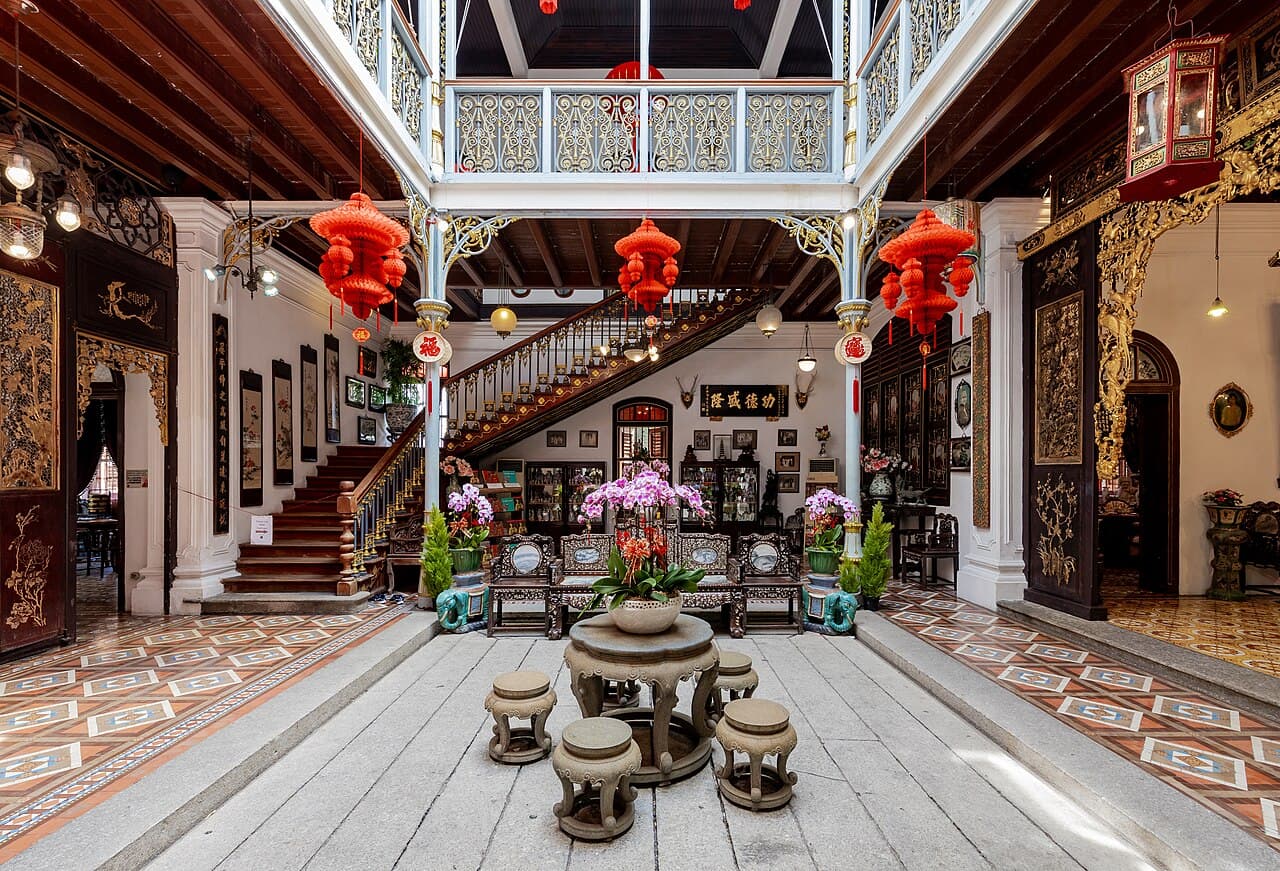
The Pinang Peranakan Mansion on Church Street, George Town, is a restored 19th-century townhouse museum displaying the material culture of the Baba-Nyonya (Peranakan Straits Chinese) community. It belonged to Chung Keng Quee (1827–1901), Kapitan Cina of Penang and a tin mining magnate. More than 1,000 antiques fill the rooms: blackwood furniture inlaid with mother-of-pearl by Fujian craftsmen, English Minton encaustic tiles, Glasgow cast-iron railings, gilded ceremonial beds, and hand-embroidered Nyonya beaded shoes.
Photos5 photos
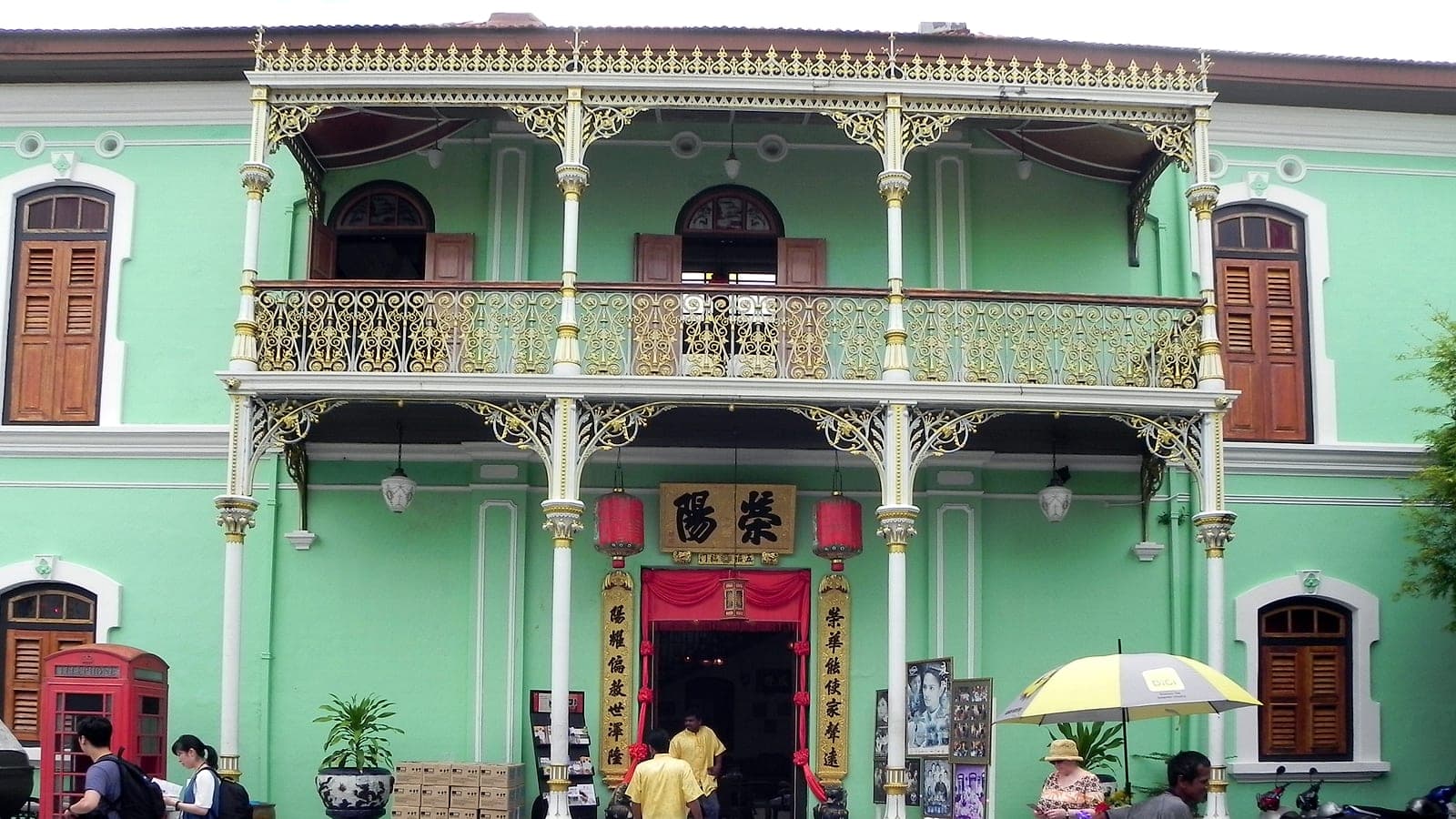
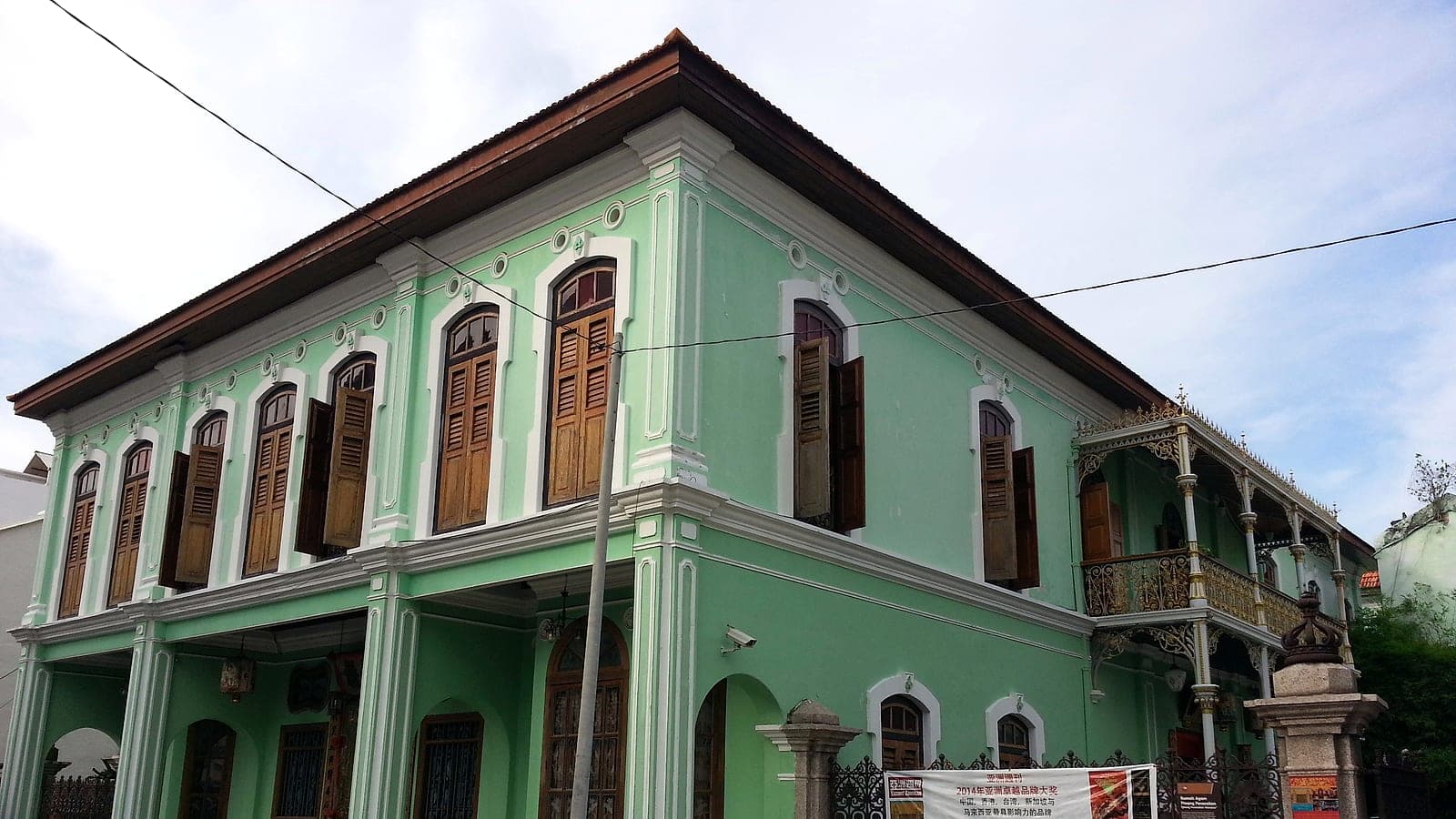
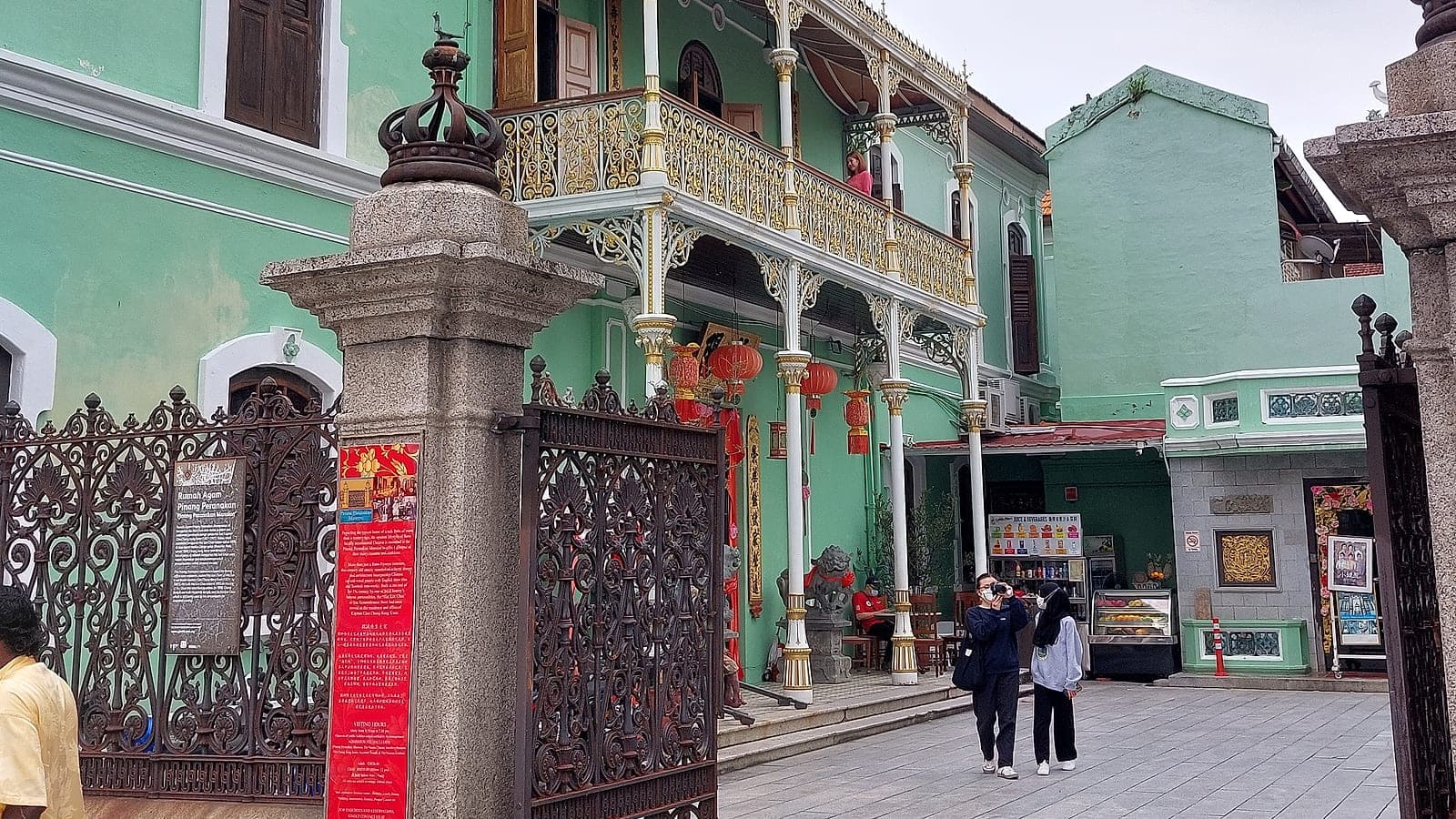
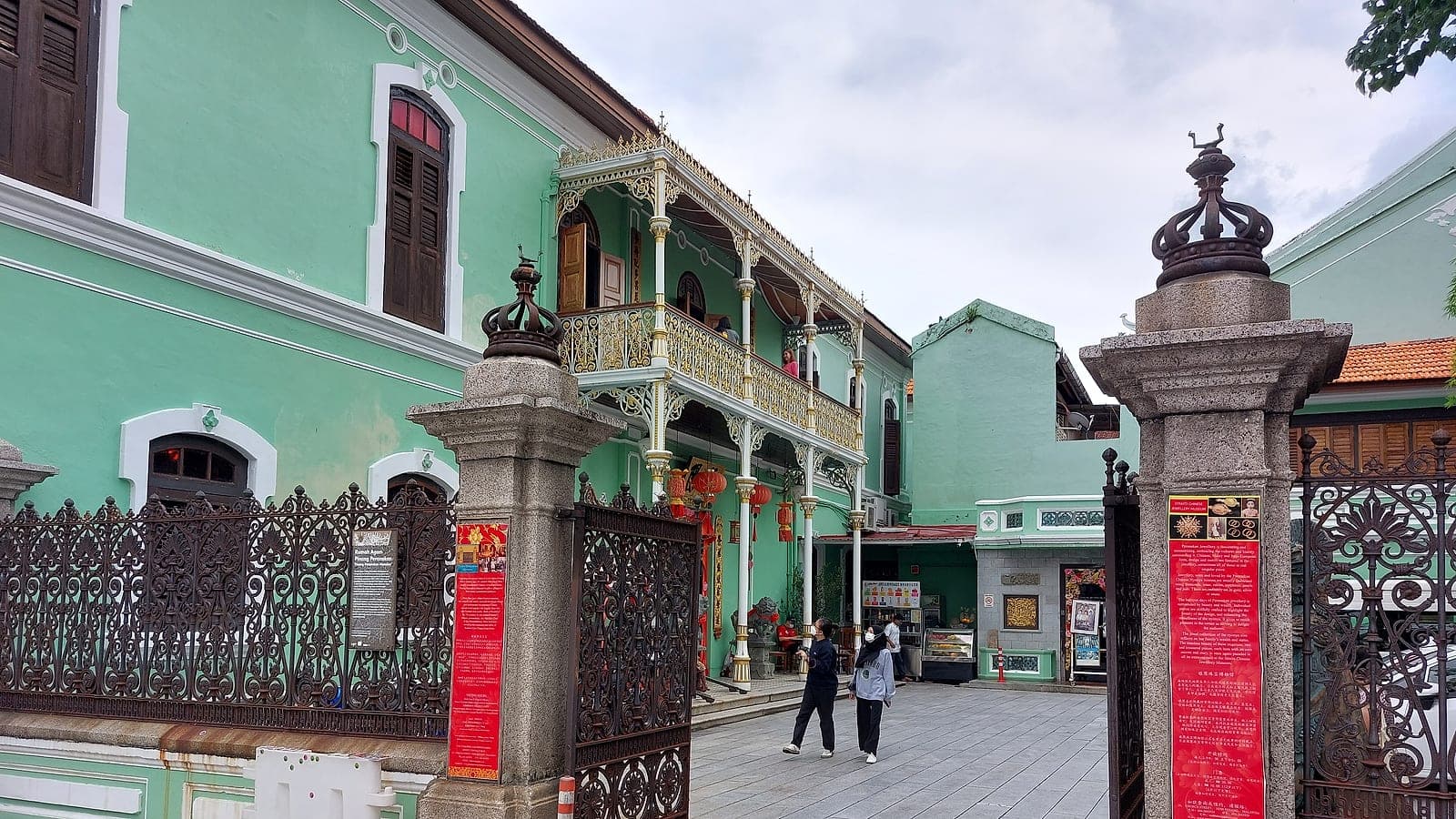
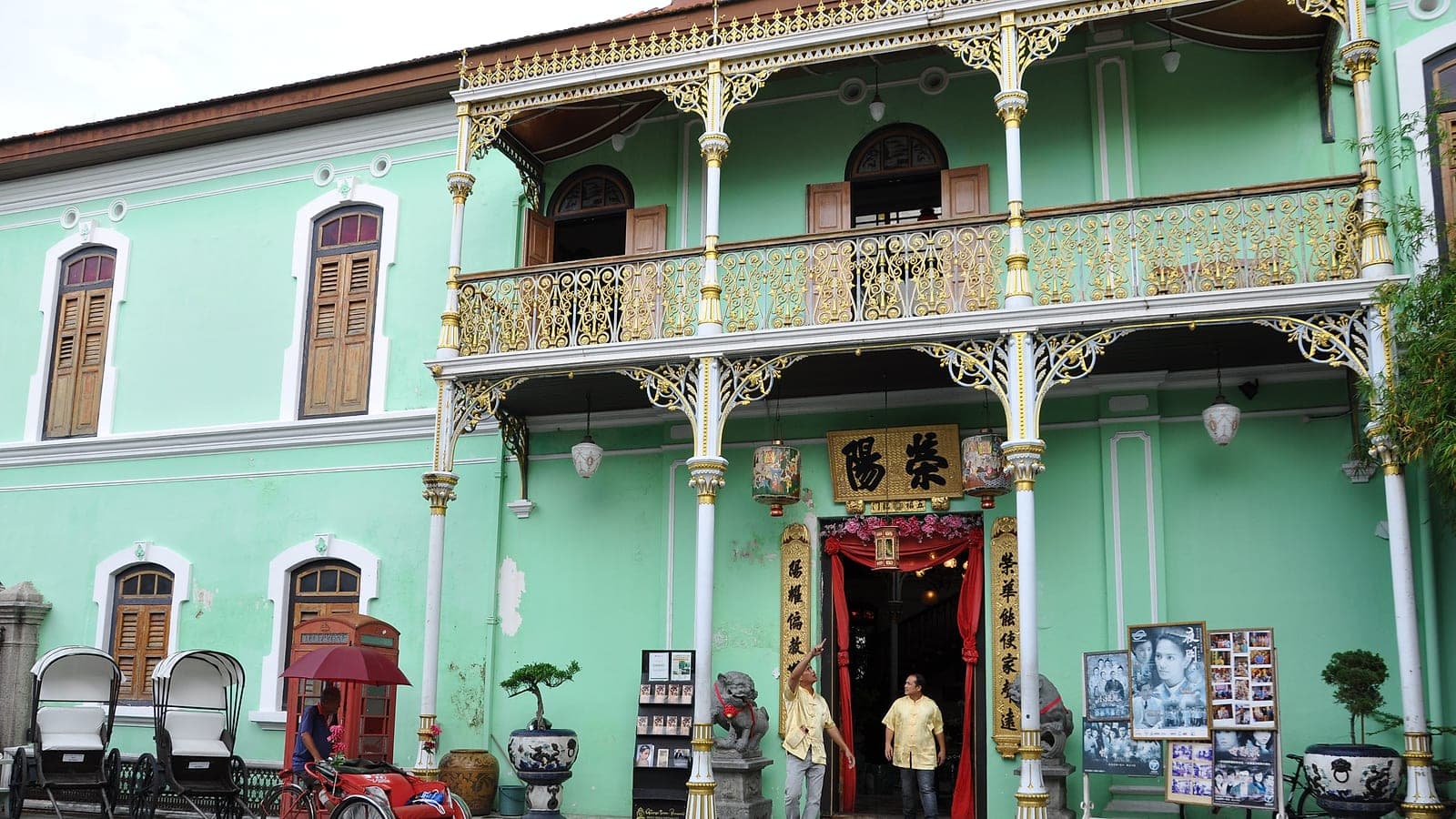
The Pinang Peranakan Mansion, a restored Baba-Nyonya townhouse
Hajotthu / Wikimedia Commons (CC BY 3.0)
The mansion announces itself from the street: a vivid green façade, ornate cast-iron railings, and carved timber screens that mix Southern Chinese and colonial European motifs in equal measure. This is the architecture of a community that spent generations sitting at the intersection of two worlds — the Baba-Nyonya, descendants of early Chinese immigrants who intermarried with local Malays, adopted the Malay language and dress, but maintained Chinese religion and brought a fusion material culture into existence that belongs entirely to the Straits.
Inside, more than 1,000 pieces fill the rooms so densely that a single visit barely scratches the surface. Blackwood furniture carved by Fujian artisans and inlaid with mother-of-pearl sits alongside English Minton encaustic floor tiles and Glasgow ironwork. The collection is not a generic Chinese heritage display — it is a specific portrait of what extreme prosperity looked like when it flowed through one of Penang's most powerful men: Chung Keng Quee, Kapitan Cina, tin baron, and the figure who built this mansion.
History
Read the full history of Pinang Peranakan Mansion
Chung Keng Quee was born in Guangdong, China, in 1827 and arrived in Penang as a young man seeking opportunity in the tin trade. He built his fortune through mining concessions in Perak and expanded into trading, banking, and property across Penang and the Straits Settlements. The British colonial administration appointed him Kapitan Cina of Penang — the official Chinese community leader responsible for mediating between the Chinese population and the colonial government — a position that placed him at the apex of Penang's commercial and political life.
The mansion on Church Street (Lebuh Gereja) was constructed in the latter half of the 19th century as both residence and statement of status. Its interiors drew craftsmen from Fujian province for the blackwood furniture, sourced English encaustic tiles from Minton, and used Scottish-made cast-iron railings — a combination that could only have been assembled by a man with Chung's reach and wealth. After his death in 1901, the property passed through family ownership and various uses before being restored and opened as a museum. The restoration made the collection accessible to the public for the first time.
Photography Guide
- Best time
- Mid-morning (10am–noon) when daylight enters the inner courtyards and the air-conditioned interior lights are supplemented by natural light from above
- Best position
- The main reception hall looking toward the first inner courtyard — the symmetrical composition of carved screens, gilded altar, and tiled floor reads well from the threshold. The Nyonya kasut manik display cases reward a macro lens or close telephoto.
- What's allowed
- Photography throughout. No tripods permitted. Commercial photography requires prior permission from management.
Tips
- Tripods are generally not permitted — use a high ISO and wide aperture in darker interior rooms
- The green façade photographs best in the morning before direct sun hits the street and creates harsh shadows
- The inner courtyard receives natural overhead light — arrive at opening for the best interior diffused light
- The encaustic tile floors in the main hall are a distinctive graphic element; a straight-down overhead shot (phone held flat above the floor) shows the pattern clearly
Plan Your Visit
Before your visit
5-minute walk along the waterfront — the Chew Jetty and Tan Jetty give context for the immigrant communities whose wealth eventually built mansions like this one
After your visit
15-minute walk through the UNESCO heritage zone — comparing the Green Mansion (Peranakan Straits Chinese) with the Blue Mansion (Hakka Chinese) shows two distinct heritage streams
Travel times are approximate.
Map & Directions
Insider Tips
- •Allow at least an hour - there is an enormous amount of detail to absorb
- •The guided explanation panels are thorough, but the optional guide adds great colour
- •Look for the Nyonya beaded shoes and embroidery - the craftsmanship is stunning
- •The gift shop has quality Peranakan-inspired souvenirs and books
- •Air-conditioned inside, making it a perfect escape from the midday heat
Frequently Asked Questions
Who were the Baba-Nyonya and why is their material culture so distinctive?
The Baba-Nyonya (also called Peranakan Straits Chinese) are descendants of early Chinese immigrants — predominantly Hokkien — who settled in Penang, Melaka, and Singapore over several centuries and intermarried with local Malays. They maintained Chinese religion and ancestry while adopting the Malay language and elements of Malay dress and cuisine. Their material culture is a unique fusion: Chinese craftsmanship and iconography applied to objects and spaces that also absorb European colonial goods (English tiles, Scottish ironwork) — an aesthetic that only emerged from that precise intersection of communities.
Is an English-language guide available and is it worth the extra cost?
Optional English-language guided tours run at set times — check with reception on arrival. The self-guided panels are detailed enough for most visitors, but a guide adds biographical depth on Chung Keng Quee and explains the specific symbolism in the furniture, porcelain motifs, and ritual objects that the panels cannot fully cover in the space available.
How long should I allow for the visit?
Minimum 60 minutes; 90 minutes is more realistic if you want to read the panels and examine the objects properly. The mansion is not physically large but the collection density is high — rushing through in 30 minutes means missing most of what makes it worthwhile.
Is the mansion accessible for wheelchairs or pushchairs?
Accessibility is limited. The mansion has original uneven tiled floors, narrow doorways, and interior steps between rooms. Wheelchairs and pushchairs will encounter difficulty beyond the ground-floor entrance area.
How does this compare to the Cheong Fatt Tze Blue Mansion nearby?
The two are complementary rather than competing. The Blue Mansion is primarily a heritage building experience — a guided architectural tour of a spectacular structure — with a smaller object collection. The Pinang Peranakan Mansion is primarily a collection experience — an overwhelming density of antiques in a house that is the context, not the subject. Both are worth visiting; they are 15 minutes apart on foot.