On this page
KL + Penang Itinerary: The Perfect 7–10 Day Malaysia Trip (2026)
Malaysia's two great food cities make the ideal combination trip. Here's how to split your time, what to do in each city, and how to travel between them.
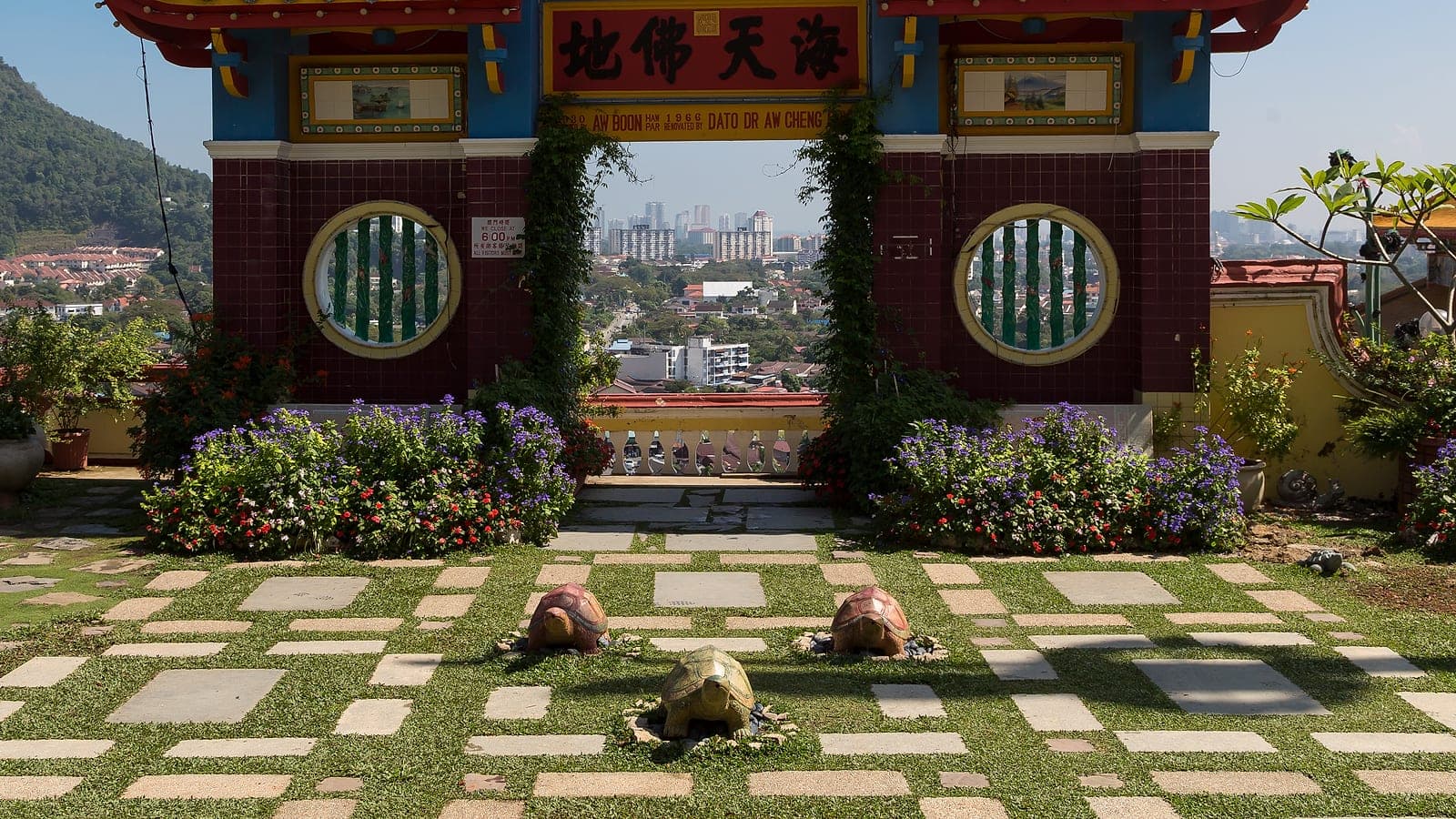
KL and Penang are Malaysia's two best food cities, and they sit 330km apart on the same expressway. Together they make the most rewarding combination trip in the country — modern KL for the Petronas Towers, Chinatown, and the Jalan Alor dinner strip; Penang for one of Asia's great hawker cultures, UNESCO-listed George Town, and four nights of eating you'll still be talking about on the flight home.
They complement each other without overlap. KL is large, vertical, and relentlessly contemporary. Penang is walkable, low-rise, and lived-in for 250 years. The journey between them — ETS train or a short flight — is easy enough that switching cities adds no stress to the trip.
This guide covers the day-by-day itinerary for both cities, all transport options between them, where to stay at each price point, and the practical details. The Penang section is a starting framework — use the Penang trip planner to customise those days for your interests and pace.
First-time visitors to Malaysia wanting both a modern city and a heritage destination; travellers with 7–10 days looking to cover the country's two most rewarding stops; anyone flying into KL and out of Penang (or vice versa)
How to Split Your Time
Penang tends to earn an extra day. Three days in KL covers the essentials without rushing; four days in Penang gives you room to eat your way through the city properly.
| Trip length | KL | Penang | Notes |
|---|---|---|---|
| 7 days | 3 days | 4 days | Comfortable pace for both cities |
| 9 days | 4 days | 5 days | One deeper KL day + one Penang breathing day |
| 10 days | 4 days | 5–6 days | Optional half-day stop in Ipoh between cities |
The Ipoh detour is worth the consideration if you have 10 days. Ipoh sits halfway between KL and Penang on the ETS line — 90 minutes from KL Sentral, then 90 minutes onward to Butterworth. See the Penang to Ipoh guide → for what to eat and do there. The old town's white coffee shops and dim sum at Nam Heong or Foh San justify a half-day stop.
Getting Between KL and Penang
| Method | Duration | Price range | Best for |
|---|---|---|---|
| ETS train (KL Sentral → Butterworth) | 3.5–4h | RM 45–85 | City-centre start, no airport stress |
| Flight (KLIA/KLIA2 → PEN) | 50 min + airport time | RM 60–150 | Travellers already at the airport |
| Bus (TBS → Sungai Nibong) | 4.5–5h | RM 35–55 | Tight budget |
| Drive (North-South Expressway) | 3.5–4h | Fuel + tolls ~RM 50 | Groups, or stopping in Ipoh |
The ETS train is the recommended option for most travellers. Depart from KL Sentral — the central rail hub connected to the LRT, MRT, and Monorail — and arrive at Butterworth Station on the Penang mainland. A 5-minute ferry crossing (RM 1.70) brings you to Georgetown Jetty in the heart of the old city. Book at KTM; 8 departures daily from around 7am.
Flying makes sense if you're arriving directly into KLIA or KLIA2 and want to head straight north without transiting the city first. A combination approach works well for the full trip: fly one direction, take the train the other.
The Penang ferry is part of the journey
When you arrive at Butterworth by train, the ferry terminal is a 3-minute walk. The crossing to Georgetown Jetty takes 5 minutes — and the first view of the George Town waterfront from the water is one of the best arrivals in Malaysian travel. On the return from Penang to KL, the ferry is free (the toll only runs in the KL-bound direction).
KL: 3–4 Days
Day 1 — KLCC and Bukit Bintang
Start at Kuala Lumpur City Centre. The Petronas Twin Towers are the obvious landmark — the bridge between the towers at Level 41 has timed-entry tickets if you want to go up, but the view from the base at KLCC Park is impressive without the queue. Aquaria KLCC, the aquarium in the basement of the convention centre, is a solid 2–3 hour option if you have children.
By evening, walk or Grab 15 minutes south to Bukit Bintang. Jalan Alor is the dining street: an outdoor strip of Chinese and Malay restaurants open until past midnight, with everything from butter prawns to satay to fruit stalls lit up under fluorescent lights. A full dinner for two with cold drinks runs RM 50–80.
Day 2 — Batu Caves, Chinatown, and Merdeka Square
Batu Caves is a 30-minute KTM Komuter train ride from KL Sentral (Batu Caves line, RM 2.00 each way). Go before 9am to beat the tour groups and the midday heat. The 272 rainbow-painted steps lead up to the main cave temple — a series of large caverns with active Hindu shrines and resident macaques. Free admission.
Back in the city, Petaling Street (Chinatown) fills the afternoon. The covered market street is surrounded by older stalls and shop-front businesses that have been operating for generations. Walk north to Masjid Jamek — KL's oldest mosque, built in 1909 at the confluence of the Gombak and Klang rivers — and then to Merdeka Square, where the Malaysian flag was raised on independence day in 1957. The Sultan Abdul Samad Building facing the square is the best piece of Moorish-colonial architecture in the city.
Dinner on or around Petaling Street: the beef noodle stalls on Jalan Silang, or the older kopitiam houses on Jalan Sultan.
Day 3 — Bangsar, KL Forest Eco Park, and Sunset at KLCC
Bangsar is KL's most liveable neighbourhood: independent cafes, a morning wet market (Bangsar Wet Market), and a brunch street scene that doesn't feel tourist-facing. A taxi or Grab to Telawi Street and a slow morning start works here.
After brunch, the KL Forest Eco Park is 9 hectares of original lowland rainforest preserved inside the city boundary, 15 minutes from Bukit Nanas. The canopy walkway (RM 10, entry at the forest office) runs 70 minutes through the forest at tree level. The Menara KL communications tower stands at the top of the hill — you can take the funicular up or hike Bukit Nanas.
End the day at KLCC Park as the sun drops behind the towers. The park fountains are at their best at dusk; food vendors line the lakeside walk.
Day 4 (9–10 day trip) — Putrajaya or a Slow KL Morning
Putrajaya is Malaysia's federal administrative capital, purpose-built 30km south of KL and reachable in 20 minutes by ERL from KL Sentral (Putrajaya Cyberjaya station, RM 9.50). The pink-domed Putra Mosque on the lakefront is the centrepiece — an unusual piece of late-20th-century Islamic neo-classical architecture in a city where everything is oversized by design. A half-day there and back leaves the afternoon free in KL.
Alternatively, use the day for Chow Kit wet market in the morning (raw and local; very different from the tourist-facing Petaling Street market), or a morning at TTDI or Taman Desa for a slower, neighbourhood-level read of how KL actually lives.
Where to Stay in KL
Bukit Bintang is the right base for first-timers: walking distance to Jalan Alor, KLCC, and connected to the Monorail for Chinatown and KL Sentral. Budget guesthouses run RM 80–150/night; mid-range hotels RM 200–350.
KLCC corridor (around Ampang Park or KLCC LRT) is quieter than Bukit Bintang, closer to the park. Rates are broadly comparable.
Penang: 4–5 Days
Day 1 — George Town Orientation
Arrive at Georgetown Jetty and walk straight into the heritage zone. The first afternoon is for getting your bearings rather than ticking off sites.
Head south along the waterfront to the Clan Jetties — six wooden-stilted villages over the sea, each built and still inhabited by descendants of a different Chinese clan. Chew Jetty is the most visited; Lee Jetty is a five-minute walk further and noticeably quieter. Both are free to enter. Then cut inland through Little India — Jalan Masjid Kapitan Keling and the streets around it, where Tamil textile merchants, flower sellers, and the Sri Mahamariamman Temple sit alongside Hokkien shophouse facades.
Evening on Armenian Street: this is where Ernest Zacharevic's 2012 murals live. "Boy on Bike" and "Children on a Bicycle" are the best known — walk the street slowly after 6pm when the day-trippers have cleared. Dinner at the hawker stalls around Lorong Baru (New Lane): char kway teow, assam laksa, and rojak, eaten at plastic tables on a side street.
Day 2 — Heritage Trail and Gurney Drive
Start at Cheong Fatt Tze (the Blue Mansion) on Leith Street — a 38-room indigo-painted mansion built in 1904 by a Hakka merchant. Guided tours run at 11am and 2pm daily (RM 17 for foreigners); the five courtyards, the cast-iron spiral staircase, and the stained-glass louvred windows are worth the entry.
Then Khoo Kongsi on Cannon Square — the most elaborate clan temple in Malaysia, with carved granite facades and painted interior ceilings. The Penang Museum on Farquhar Street covers colonial-era and Straits Chinese history in a compact building. Both are within 15 minutes' walk of each other.
Lunch: Lorong Selamat char kway teow. The stall here opens around 11:30am and typically sells out by early afternoon. Flat rice noodles fried at extreme heat with cockles, egg, and Chinese sausage. RM 6–8 a plate.
Dinner at Gurney Drive Hawker Centre — the long reclaimed-foreshore strip north of the city. Hokkien prawn mee, oyster omelette, and the cendol stall near the far end. This is the single-location benchmark for Penang hawker culture.
Day 3 — Penang Hill and Kek Lok Si
The funicular to the summit of Penang Hill (Bukit Bendera) runs from the base station at the foot of the hill, 30 minutes by Grab from George Town. Go at 7am for the mist and cooler air before the day warms up. Return fare: RM 30 for foreign adults. The summit sits at 821 metres with views across the island, the Strait of Malacca, and the Kedah hills to the north.
From the hill, Grab ten minutes down to Kek Lok Si Temple — the largest Buddhist temple in Malaysia, built incrementally from 1891 and still expanding. The bronze Kuan Yin statue on the hilltop pagoda is visible from the road. A small funicular runs to the upper level (RM 2) or walk. The temple complex is free; the light is best in the morning.
Lunch nearby at Air Itam market: assam laksa. The stalls at the foot of the Kek Lok Si approach road have been selling the sour tamarind-fish broth noodles here for decades. RM 5–7 a bowl. The specific vendor beside the temple carpark is the one people mean when they talk about Air Itam laksa.
Day 4 — Batu Ferringhi and the Evening Food Crawl
Take Route 101 bus (RM 2.70 from Komtar) or Grab (RM 25–30) to Batu Ferringhi — Penang's main beach, a 30-minute drive up the north coast. An honest assessment: it's a wide, clean beach with warm water and a serviceable seafood strip. It is not why most people come to Penang, but a beach morning before an evening in George Town is a reasonable way to spend the day.
On the return journey, stop at Tropical Spice Garden in Teluk Bahang: 500 species of spice and medicinal plants on a forested hillside at the edge of Penang National Park. The self-guided trail takes 90 minutes if you walk it properly. Entry RM 28 adults.
The evening is for a George Town food crawl. Pick three or four dishes across different stalls rather than sitting down for one meal: Hokkien prawn mee at Sri Weld Food Court near the ferry terminal, a walk along Lebuh Chulia for satay or rojak, then cendol at the Famous Teochew Chendul stall on Penang Road for dessert (RM 4–6 a bowl, open since 1936).
Day 5 (9–10 day trip) — Botanic Gardens or Cooking Class
Penang Botanic Gardens (free entry, opens at 7am) is 30 minutes by Grab from George Town. Colonial-era gardens with 200+ acres of planted grounds, canopy walks, and a long-tailed macaque population that ranges freely across the paths. Best visited before 10am before the heat.
Alternatively, a Penang Peranakan cooking class. Multiple operators in the heritage zone run 3-hour sessions (RM 120–180) that typically include a wet market visit followed by preparing three or four dishes. The Nyonya culinary tradition — Chinese ingredients and techniques adapted to Malay spices over four generations — is a useful context for understanding the whole Penang food story.
Customise your Penang days
Four or five days in Penang is enough time to go deeper than the standard circuit. Build a personalised Penang itinerary → to structure the days around your specific interests — food-first, heritage-heavy, or a balance of both.
Where to Stay in Penang
George Town heritage zone is the right base for almost everyone — walkable to the hawker centres, the clan jetties, and the major heritage sites. Budget guesthouses and boutique hotels in restored shophouses start at RM 60–100 (budget) and RM 150–250 (mid-range). The best boutique heritage hotels — Blue Mansion, Campbell House, Ren i Tang — run RM 300–500/night.
Batu Ferringhi if you specifically want beach access each morning. Most visitors don't — the food and walking culture are in George Town.
Practical Notes
Visa: Malaysia is one visa for the whole country. Most nationalities from the UK, EU, US, Australia, and major Asian countries receive 30 or 90 days on arrival, no fee. Check the current requirements at immigration.gov.my before you travel.
Currency: Malaysian Ringgit (MYR) throughout both cities. Cards are accepted at hotels and larger restaurants; hawker stalls, markets, and smaller kopitiams are cash-only. ATMs are widely available.
Getting around KL: Grab covers the whole city. The LRT, MRT, Monorail, and KTM Komuter networks are clean, cheap, and reliable — buy a Touch 'n Go card at any station (RM 10 deposit + credit) and it works across all lines.
Getting around Penang: Grab works well across the island. RapidPenang bus Route 101 covers the tourist corridor to Batu Ferringhi at RM 2.70. The heritage zone in George Town is pedestrian — most of the first two days' attractions are within 15 minutes' walk from Georgetown Jetty.
Best months: Both cities are pleasant year-round. November to February is the coolest and driest period in northwest Peninsular Malaysia. Avoid mid-June and mid-December school holidays if crowds at major sites are a concern.
FAQ
Is 7 days enough for KL and Penang?
Yes, with comfortable pacing. Three days in KL covers the Petronas Towers, Batu Caves, Petaling Street, and Bangsar without rushing. Four days in Penang gets you the George Town heritage circuit, Penang Hill, and several hawker benchmarks. You won't exhaust either city, but you'll leave having seen the parts that matter.
Should I fly or take the train between KL and Penang?
The ETS train from KL Sentral is the better option for most travellers: city-centre departure with no airport transit, a comfortable 3.5–4 hour journey through Malaysian countryside, and arrival at Butterworth with the ferry crossing to George Town as a natural arrival moment. Flying is faster in the air but adds 2+ hours of airport transit at both ends, and the total door-to-door time narrows considerably. Fly if you're already at KLIA or KLIA2 with bags checked.
Can I do KL and Penang on a budget?
Yes. Hawker meals in Penang run RM 6–12 per dish; budget guesthouses in the heritage zone start at RM 60–80/night. KL's hawker centres (Jalan Alor, Chow Kit, Petaling Street) are similarly priced. The ETS train between cities is RM 45–60 one way. A 7-day trip for two at the budget end — shared guesthouses, hawker meals, public transport — runs approximately RM 2,000–2,800 all in including the inter-city journey.
Keep reading
Guides that pair well with this one.
Malaysia 2-Week Itinerary: The Perfect Grand Tour (2026)
Two weeks is the ideal length for Malaysia. This day-by-day itinerary covers KL, Penang, Langkawi, and an optional Borneo extension — with realistic pacing.
20 min readitinerariesPenang + Cameron Highlands: 4–5 Day Itinerary (2026)
Penang for food and heritage, Cameron Highlands for tea, cool air, and highland escape. Here's how to combine both in one trip.
9 min readitinerariesDay Trips from Penang: Ipoh, Langkawi, Cameron Highlands & More (2026)
Using Penang as a base, you can reach Ipoh in 2 hours, Cameron Highlands in 3, and Langkawi in 4. Here's what each trip involves and whether it's worth a day.
9 min readitinerariesPenang + Ipoh Food Trail: 3–4 Days in Malaysia's Greatest Food Cities (2026)
Two of Malaysia's greatest food cities, 2 hours apart. Penang for hawker culture, Ipoh for white coffee and bean sprout chicken. Here's the full food trail.
10 min read