Hungry Ghost Festival
Penang's Chinese communities honour wandering spirits with elaborate street operas (getai), ceremonial paper-burning, and lavish food offerings during the seventh lunar month.
Image credits & licensing
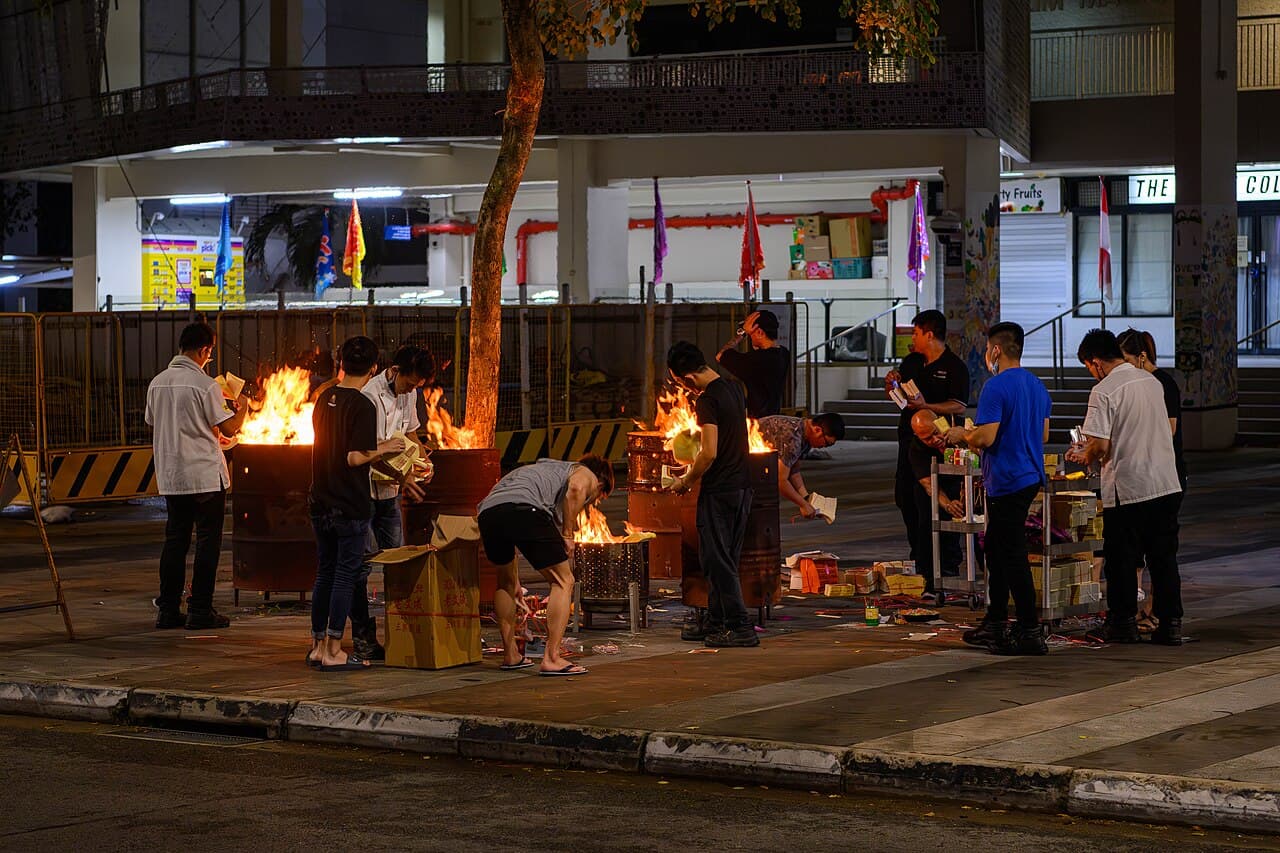
- Joss paper burnt as offerings during the Hungry Ghost Festival — Kari.Shouur (CC BY-SA 4.0) · source
- A home altar with offerings to ancestors and wandering spirits — User:Sampuna at en:wikipedia (PUBLIC DOMAIN) · source
- Incense, joss paper and food offered to the departed — Unknown [1] (PUBLIC DOMAIN) · source
The Hungry Ghost Festival (Zhongyuan Jie) is one of the most atmospheric and uniquely Chinese events in Penang, observed during the seventh month of the lunar calendar when the gates of the underworld are believed to open, releasing spirits to roam the earthly realm. In Penang, the festival is celebrated with particular fervour by the Hokkien and Teochew communities, who stage elaborate getai (stage shows), burn joss paper offerings, and prepare sumptuous food feasts for the wandering spirits.
The most visible aspect of the Hungry Ghost Festival in Penang is the getai -- open-air Chinese opera and concert performances staged on temporary stages throughout neighbourhoods across the island. These shows feature a mix of traditional Hokkien opera (wayang), pop concerts, and comedy acts, and are open to everyone. The front row of seats is always left empty for the "invisible guests" (the spirits). Paper effigies of luxury goods, cars, and money are ceremonially burned in large bonfires, sending these items to ancestors in the afterlife.
For visitors, the Hungry Ghost Festival provides a fascinating glimpse into Chinese spiritual beliefs and community traditions that are increasingly rare in modernising Asia. The festival atmosphere is lively rather than sombre, with food stalls, auctions of auspicious items, and community gatherings. Look for the large prayer tables set up at roadsides and neighbourhood entrances, laden with food offerings, incense, and candles.
What to Expect
Through the seventh month of the Chinese lunar calendar, Penang observes the Hungry Ghost Festival (known locally as Phor Thor). Roadsides, temples and neighbourhoods fill with offerings of food, incense and burning joss paper, and brightly lit getai stages host nightly performances believed to entertain visiting spirits as much as the living.
You may come across temporary altars, large papier-mâché effigies of the King of Hades, mountains of offerings and front-row seats left conspicuously empty for the spirits. It is an atmospheric, sometimes raucous, deeply rooted community observance rather than a ticketed event.
History & Significance
During the seventh lunar month it is believed the gates of the underworld open and spirits roam among the living. Offerings, prayers and performances are made to comfort and appease them. The tradition is central to Penang’s Hokkien and wider Chinese community and plays out across the island for the whole month.
Visitor Tips
Be respectful around altars and offerings — do not sit in the empty front-row seats reserved for spirits at getai performances, and avoid disturbing roadside offerings.
The festival runs throughout the seventh lunar month (around August–September); activity is spread across many neighbourhoods rather than one venue.
Insider Tips
- 1Attend a getai performance in the evening -- they are free, open to all, and genuinely entertaining
- 2Do not sit in the front row of chairs at getai performances as these are reserved for spirits
- 3Avoid stepping on or kicking joss paper offerings left at roadsides, even accidentally
- 4The most elaborate celebrations are in Hokkien neighbourhoods like Air Itam, Jelutong, and parts of George Town
Frequently Asked Questions
When is the Hungry Ghost Festival in Penang?
It runs through the seventh month of the Chinese lunar calendar, usually falling around August to September. Activity continues across the whole month rather than on a single day.
What happens during the Hungry Ghost Festival?
Communities make offerings of food, incense and burning joss paper, build temporary altars and effigies, and stage nightly getai performances believed to entertain wandering spirits.
Is it respectful for visitors to watch?
Yes, it is a public street observance, but be respectful: do not sit in the empty front-row seats reserved for spirits at getai shows, and do not disturb roadside offerings.
Related Events
Ponggal — Tamil Harvest Festival
January 14 (Tamil month Thai)
Ponggal is the Tamil harvest festival celebrated on January 14, marked by boiling sweet rice outdoors until it overflows — symbolising abundance. A glimpse into Penang's ancient Tamil Hindu community.
Thaipusam
January - February (follows Tamil calendar)
Witness one of Hinduism's most dramatic festivals as devotees carry kavadi in procession from George Town to the Waterfall Hilltop Temple in extraordinary acts of faith and devotion.
Chap Goh Mei
February (15th day of Lunar New Year)
The Chinese Valentine's Day closes out Lunar New Year festivities with Penang's unique tradition of single women throwing oranges into the sea at the Esplanade to find love.
When
August - September (seventh lunar month)
↺ Returns every year
Next: August 2027
Add to Calendar
Where
Throughout Penang (neighbourhood streets and temples)