Thaipusam
Witness one of Hinduism's most dramatic festivals as devotees carry kavadi in procession from George Town to the Waterfall Hilltop Temple in extraordinary acts of faith and devotion.
Image credits & licensing
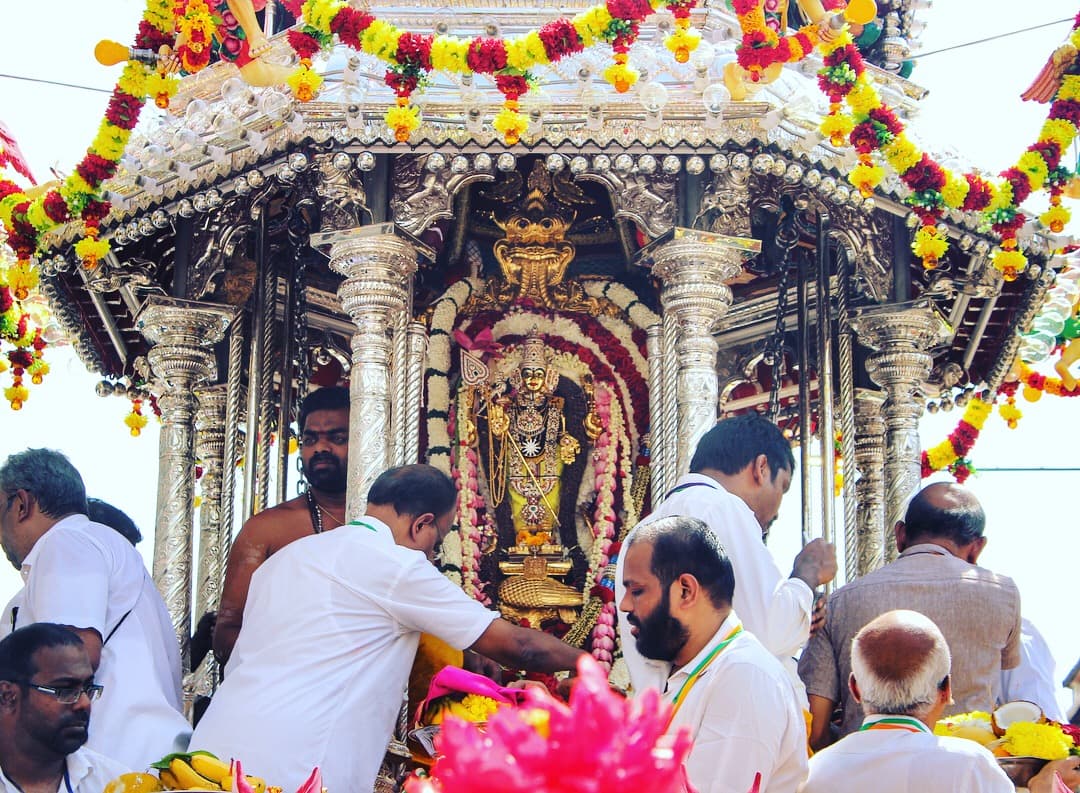
- The silver chariot in the Thaipusam procession, Penang — Dassmahen (CC BY-SA 4.0) · source
- Devotees carrying kavadi during Penang Thaipusam — Dassmahen (CC BY-SA 4.0) · source
- The golden chariot, Thaipusam, Penang — Dassmahen (CC BY-SA 4.0) · source
- Paal kudam — a milk-pot offering to Lord Murugan — Seelit2004 (CC BY-SA 4.0) · source
- Ritual cleansing with cold water during Thaipusam — Seelit2004 (CC BY-SA 4.0) · source
- A kavadi bearer in the Penang Thaipusam procession — Dassmahen (CC BY-SA 4.0) · source
- Preparing a kavadi before the procession, Penang — Krishrupesh (CC BY-SA 4.0) · source
Thaipusam is one of the most visually dramatic Hindu festivals in the world, and Penang hosts the largest celebration in Malaysia outside of the Batu Caves in Kuala Lumpur. The festival honours Lord Murugan, the Hindu deity of war, and is marked by extraordinary acts of devotion including the carrying of kavadi -- elaborate structures pierced through the skin with hooks and skewers. The sight of devotees in deep trance, seemingly unaffected by pain, is both mesmerising and humbling.
The main procession begins at the Sri Mahamariamman Temple on Queen Street in George Town and winds its way approximately 4 kilometres uphill to the Arulmigu Balathandayuthapani Temple (commonly called the Waterfall Hilltop Temple) on Waterfall Road. The silver chariot carrying the deity leads the procession, followed by thousands of devotees carrying milk pots and kavadi. The journey can take several hours, with the procession typically starting in the early morning hours.
For visitors, Thaipusam offers an unforgettable window into Hindu devotion and Tamil culture. The atmosphere along the procession route is electric, with music, chanting, and the burning of camphor. Food stalls line the route, and the event is open to all regardless of religion. The Waterfall Hilltop Temple, with its 513 steps, provides a dramatic backdrop for the culmination of the procession.
What to Expect
Thaipusam is a Hindu festival honouring Lord Murugan, and Penang hosts one of the largest celebrations anywhere outside India. In the days around the full moon of the Tamil month of Thai, hundreds of thousands of devotees and onlookers fill the streets of George Town and the road up to the hilltop temple.
The visual heart of the festival is the procession of kavadi — physical burdens carried as acts of devotion and thanksgiving. These range from simple pots of milk (paal kudam) balanced on the head to elaborate frames decorated with peacock feathers, some attached to the bearer with vel skewers and hooks. Many devotees enter a trance-like state, supported by family and friends drumming and chanting alongside them.
A silver chariot carrying the image of Lord Murugan is drawn through George Town, drawing crowds who make offerings of milk, fruit and flowers along the route. Expect drumming, the smell of camphor and jasmine, roadside stalls, and a powerful, emotionally charged atmosphere that runs through the night and into the following day.
History & Significance
Thaipusam marks the occasion when the goddess Parvati is said to have given Lord Murugan a divine spear (vel) to vanquish evil. For Penang’s Tamil community, whose roots on the island stretch back to the 19th century, it is the most important festival of the year.
The focal point is the Arulmigu Balathandayuthapani Temple — the Waterfall Hilltop Temple near the Penang Botanic Gardens — one of the most prominent Murugan temples outside India. The silver chariot procession traditionally travels between the Sri Mahamariamman Temple on Queen Street in George Town and the Waterfall temple complex.
How to Attend & Tickets
Thaipusam is free and open to all, believers and visitors alike. There is no ticket and no single venue — it plays out along the procession route and at the temples. Dress modestly (cover shoulders and knees), and remove footwear before entering temple grounds.
The exact dates follow the Tamil lunar calendar and fall in January or February each year; check the current year’s date before planning. Activity builds over two to three days, with the chariot procession and the busiest temple crowds on the main day.
Visitor Tips
Go early or late: the procession and rituals continue overnight, and the small hours can be both cooler and more atmospheric than the midday heat.
Be respectful with photography — ask before photographing devotees in trance or mid-ritual, and never block the procession path.
Wear comfortable shoes you can slip on and off easily, carry water, and be prepared for very large crowds and road closures around George Town and the Waterfall Road area.
Accessibility
The hilltop temple is reached by a long climb of around 513 steps, which is strenuous and not wheelchair accessible; the lower temple grounds and the George Town procession route are more accessible but extremely crowded on the main day.
Watch: Thaipusam
Insider Tips
- 1Arrive at the Waterfall Hilltop Temple by 6am to secure a good viewing spot for the procession's arrival
- 2Wear comfortable shoes -- you will be standing and walking on roads for hours
- 3Be respectful when photographing devotees in trance and always ask permission for close-up shots
- 4The procession route along Waterfall Road is closed to traffic, so plan alternative transport
Frequently Asked Questions
When is Thaipusam in Penang?
Thaipusam falls on the full moon of the Tamil month of Thai, in January or February each year. The exact date shifts annually with the lunar calendar, so check the current year before you travel.
Where does the Thaipusam procession take place?
The silver chariot procession runs through George Town, traditionally between the Sri Mahamariamman Temple on Queen Street and the Arulmigu Balathandayuthapani (Waterfall Hilltop) Temple near the Botanic Gardens, which is the main focal point.
Is Thaipusam free to attend?
Yes. There is no ticket — the procession and temple rituals are open to everyone. Dress modestly and remove footwear before entering temple grounds.
Can visitors take photographs?
Photography is generally welcome along the route, but be respectful: ask before photographing devotees carrying kavadi or in a trance, and never obstruct the procession.
What is a kavadi?
A kavadi is a physical burden carried by devotees as an act of devotion — from a simple pot of milk (paal kudam) to an ornate decorated frame, sometimes attached with skewers and hooks.
Related Events
Chinese New Year
January - February (follows lunar calendar)
George Town erupts in red lanterns, lion dances, and firecrackers as Penang celebrates the Lunar New Year with clan house festivities and spectacular light displays at Kek Lok Si Temple.
Ponggal — Tamil Harvest Festival
January 14 (Tamil month Thai)
Ponggal is the Tamil harvest festival celebrated on January 14, marked by boiling sweet rice outdoors until it overflows — symbolising abundance. A glimpse into Penang's ancient Tamil Hindu community.
Chap Goh Mei
February (15th day of Lunar New Year)
The Chinese Valentine's Day closes out Lunar New Year festivities with Penang's unique tradition of single women throwing oranges into the sea at the Esplanade to find love.
When
January - February (follows Tamil calendar)
↺ Returns every year
Next: January 2027
Add to Calendar
Where
Waterfall Hilltop Temple (Arulmigu Balathandayuthapani Temple)
Admission
Plan Your Visit
Featured Event
A must-see highlight of Penang's cultural calendar