Deepavali (Festival of Lights)
Little India glows with oil lamps and kolam patterns as Penang's Hindu community celebrates the Festival of Lights with temple prayers, open houses, and traditional sweets.
Image credits & licensing
- Little India, George Town — the heart of Penang's Deepavali — Adam Jones from Kelowna, BC, Canada (CC BY-SA 2.0) · source
- Deepavali decorations at KL Sentral, Malaysia — PulauKakatua19 (CC BY-SA 4.0) · source
- A kolam (rangoli) made for Deepavali, Malaysia — PulauKakatua19 (CC BY-SA 4.0) · source
- An intricate Deepavali kolam, Malaysia — PulauKakatua19 (CC BY-SA 4.0) · source
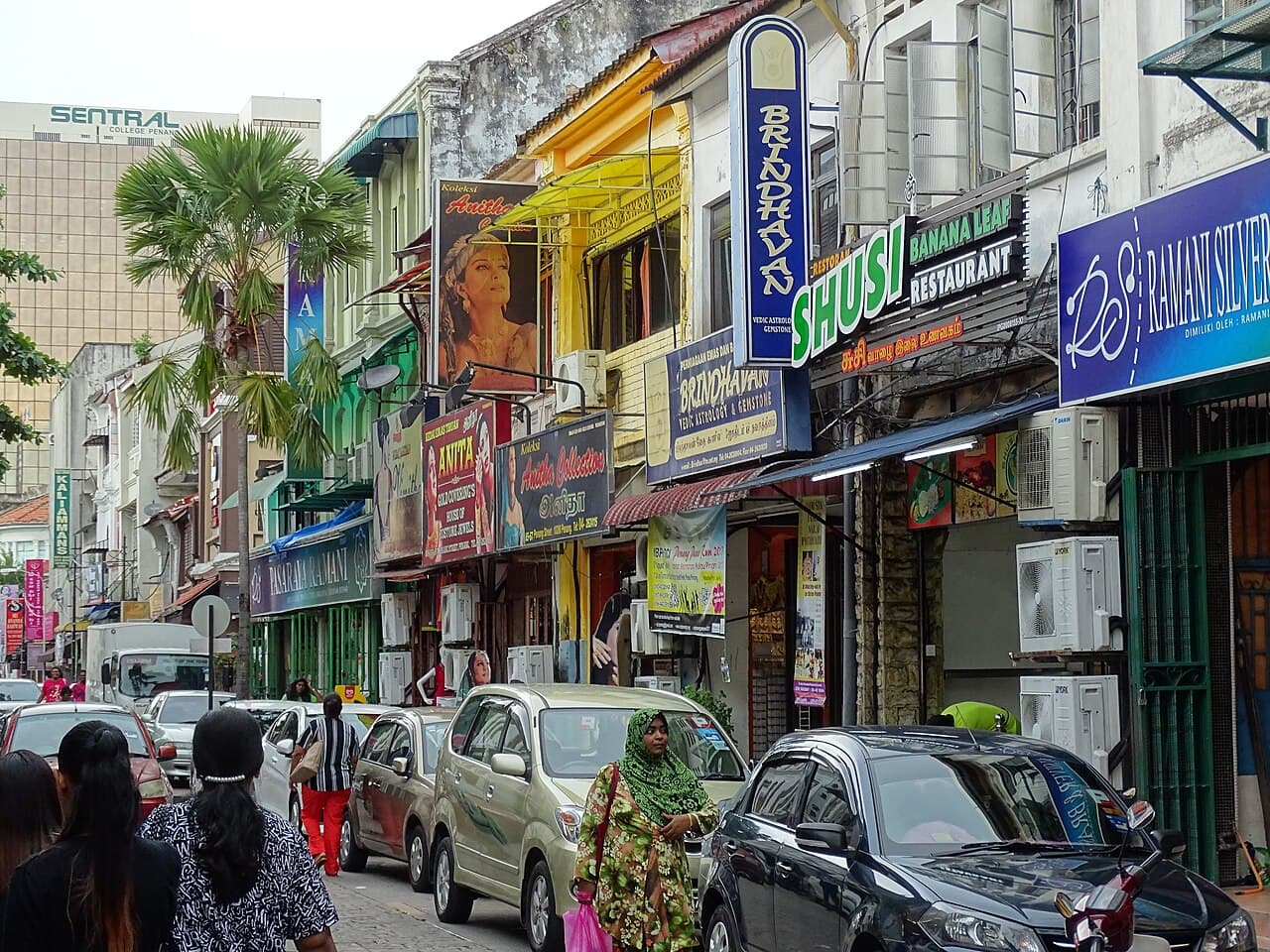
- A street scene in Little India, George Town, Penang — philip.mallis (CC BY-SA 2.0) · source
Deepavali, the Hindu Festival of Lights, transforms Penang's Little India on Jalan Masjid Kapitan Keling and the surrounding streets into a dazzling display of oil lamps, kolam (colourful rice flour patterns), and flower garlands. The festival celebrates the triumph of light over darkness and good over evil, and in Penang's multicultural setting, it is celebrated with an openness that welcomes visitors of all backgrounds to join in the festivities.
In the weeks leading up to Deepavali, Little India buzzes with shopping activity as families purchase new clothes, sweets, and decorations. The streets are strung with lights and banners, and the fragrance of jasmine, rose garlands, and incense fills the air. On the day itself, Hindu families light oil lamps at dawn, visit temples for prayers, and host open houses where traditional sweets like murukku, laddu, and gulab jamun are shared with friends and neighbours of all races.
The Arulmigu Sri Mahamariamman Temple on Queen Street and the Nattukotai Chettiar Temple on Jalan Kebun Bunga are the two main temples for Deepavali prayers in Penang. Both are beautifully decorated and packed with devotees. For visitors, attending a Deepavali open house is one of the best ways to experience Malaysian hospitality, and walking through Little India during the festival is a sensory feast of colours, sounds, and flavours.
What to Expect
Deepavali, the Hindu Festival of Lights, is a public holiday in Malaysia and one of the warmest celebrations in Penang’s multicultural calendar. The focus is Little India in George Town, where the streets are strung with lights, shops overflow with garlands, sweets and saris, and music fills the air in the run-up to the day.
Homes and shopfronts are decorated with rows of oil lamps (diya) and intricate kolam — colourful floor patterns made from rice, flour or coloured powder — symbolising the triumph of light over darkness. Many families hold open houses, a Malaysian tradition of welcoming friends and neighbours of all backgrounds to share food.
History & Significance
Deepavali celebrates the victory of light over darkness and good over evil, and for Penang’s Tamil Hindu community it is among the most important festivals of the year. Its public-holiday status and the culture of open houses make it a shared celebration across communities in Malaysia.
Little India, around Lebuh Penang, Market Street and Queen Street in George Town, has been the centre of the island’s Indian community for generations and becomes the natural heart of the festivities.
How to Attend & Tickets
There is no ticket — the best way to experience Deepavali is simply to walk through Little India in the days before and during the festival, when the decorations, markets and atmosphere are at their peak. Temples hold prayers, and some open houses and cultural events are open to the public.
The date follows the Hindu lunar calendar and usually falls in October or November. The evening, when the lamps are lit, is the most atmospheric time.
Visitor Tips
Visit Little India in the evening to see the lights and kolam at their best, and come hungry — this is a wonderful time to try Indian sweets and street food.
Dress modestly if you plan to visit a temple, and remove footwear before entering.
Be mindful when photographing people’s homes, shops and kolam — these are made with care, so look without stepping on them and ask before close-up portraits.
Accessibility
Little India’s streets are largely flat and walkable but become very crowded and busy with traffic during the festival; footpaths can be narrow and uneven in places.
Insider Tips
- 1Walk through Little India in the evenings during the week before Deepavali for the best shopping and atmosphere
- 2Visit the Sri Mahamariamman Temple early morning on Deepavali day for the main prayer ceremonies
- 3Accept invitations to open houses -- it is customary to welcome guests with food and sweets
- 4Try traditional Indian sweets like murukku and laddu sold from street stalls throughout Little India
Frequently Asked Questions
When is Deepavali in Penang?
Deepavali follows the Hindu lunar calendar and usually falls in October or November. It is a public holiday in Malaysia; check the current year’s date before planning.
Where is the best place to experience Deepavali in Penang?
Little India in George Town — around Lebuh Penang, Market Street and Queen Street — is the heart of the celebration, with lights, kolam, markets and temple activity.
What is a kolam?
A kolam is a decorative floor pattern made from coloured rice, flour or powder, created to welcome guests and good fortune during Deepavali. They are intricate works of art, so admire them without stepping on them.
Is Deepavali free to experience?
Yes. Walking through Little India to enjoy the decorations, markets and atmosphere is free. Temple prayers and many open-house events are also open to visitors.
Related Events
Ponggal — Tamil Harvest Festival
January 14 (Tamil month Thai)
Ponggal is the Tamil harvest festival celebrated on January 14, marked by boiling sweet rice outdoors until it overflows — symbolising abundance. A glimpse into Penang's ancient Tamil Hindu community.
Thaipusam
January - February (follows Tamil calendar)
Witness one of Hinduism's most dramatic festivals as devotees carry kavadi in procession from George Town to the Waterfall Hilltop Temple in extraordinary acts of faith and devotion.
Chap Goh Mei
February (15th day of Lunar New Year)
The Chinese Valentine's Day closes out Lunar New Year festivities with Penang's unique tradition of single women throwing oranges into the sea at the Esplanade to find love.
When
October - November (follows Hindu calendar)
↺ Returns every year
Next: November 2026
Add to Calendar
Where
Little India, Jalan Masjid Kapitan Keling