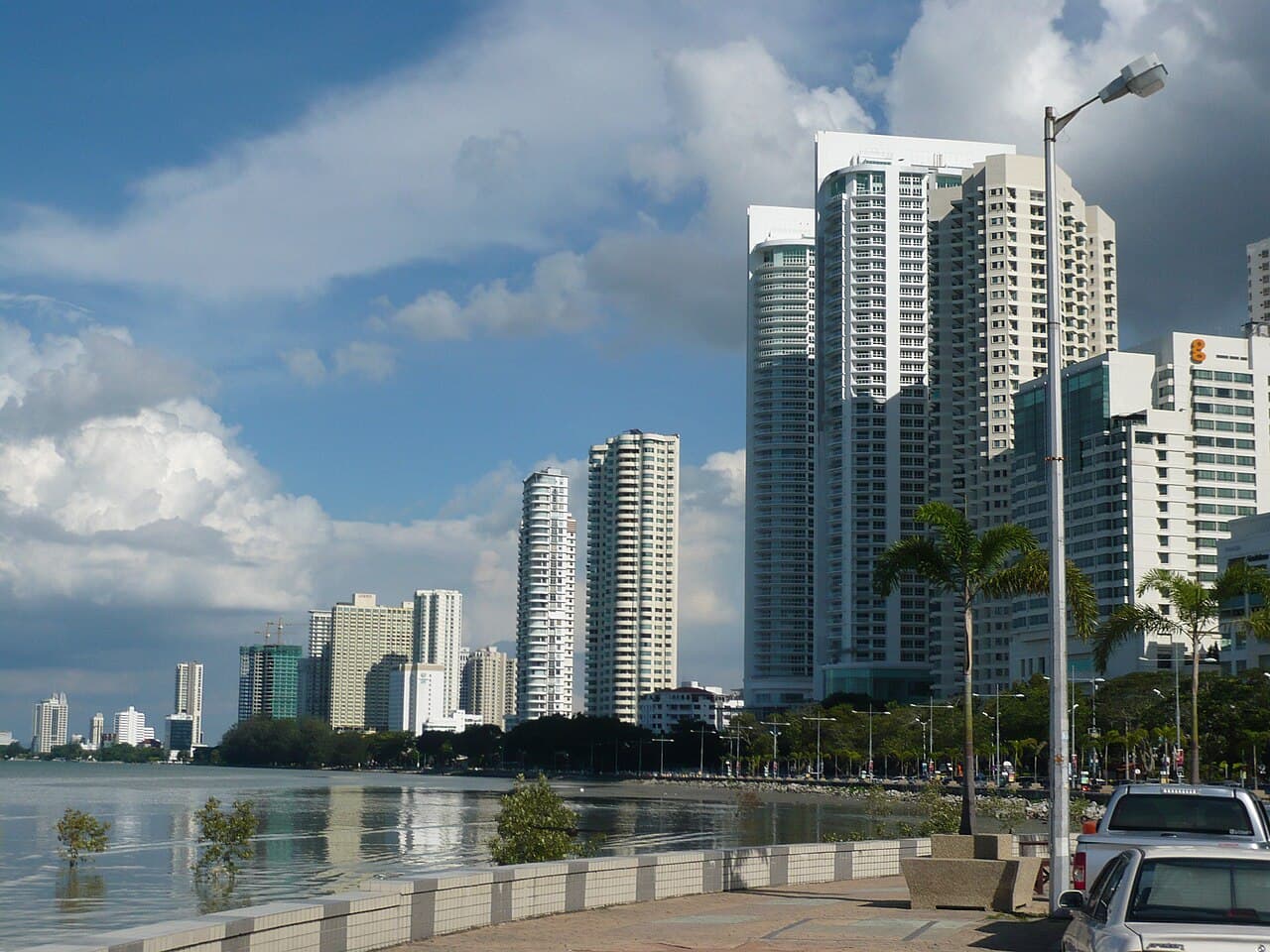
Gurney Drive Promenade
Gurney Drive
Open 24/7 (hawker centre nearby open evenings)
Free
Golden hour (30–45 minutes before sunset) for warm light over the Penang Strait and silhouettes of mainland hills
What is Gurney Drive Promenade?
Gurney Drive Promenade is a free 2km seaside walkway in Penang best visited at sunset. Walk westward as the sun drops over the Penang Strait, then head to the Gurney Drive Hawker Centre at the eastern end for char kway teow or Hokkien mee. The newer Gurney Wharf extension adds cycling paths and food trucks. There is no entry fee and the walkway is accessible 24 hours a day.
Photos5 photos
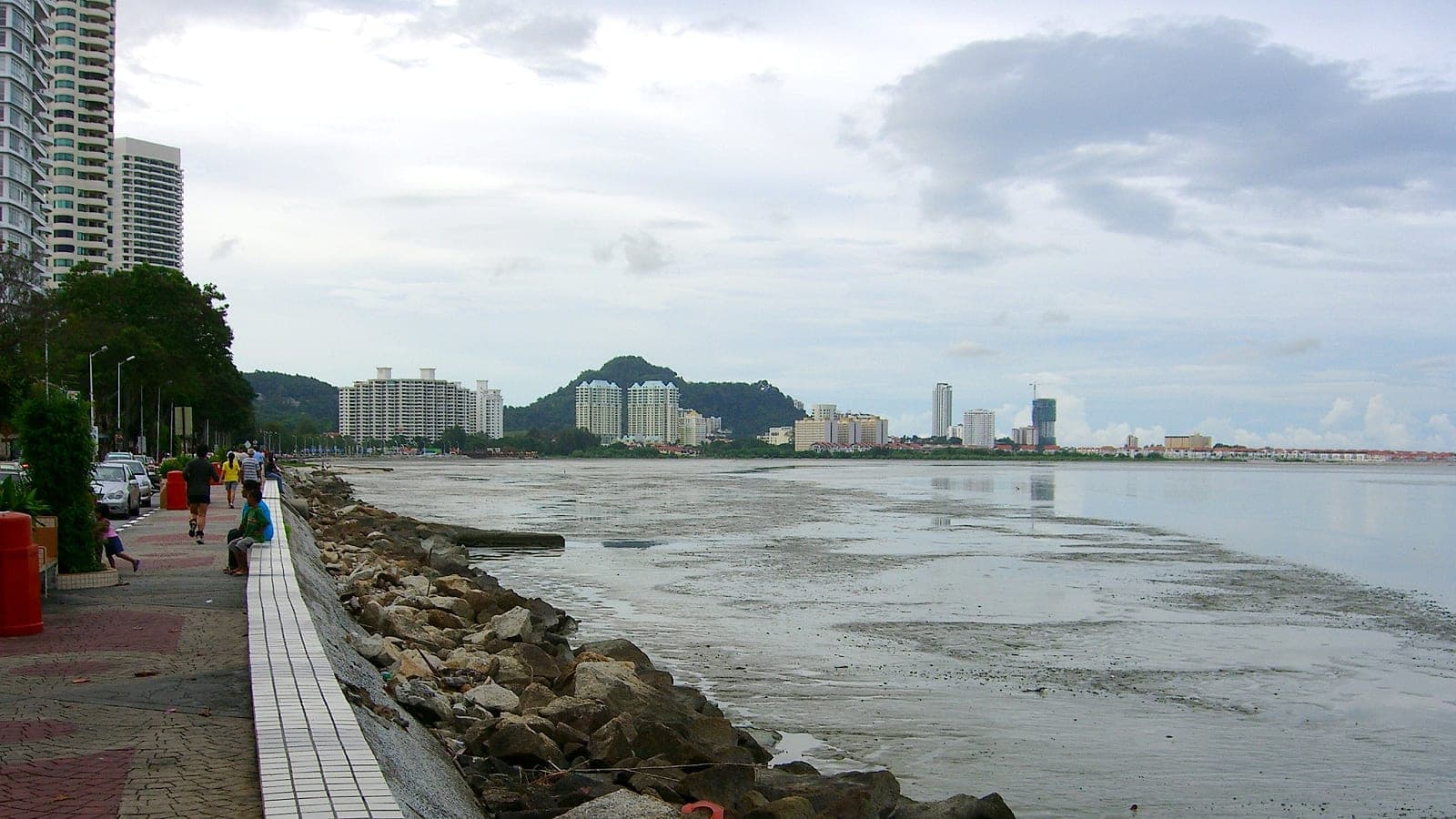
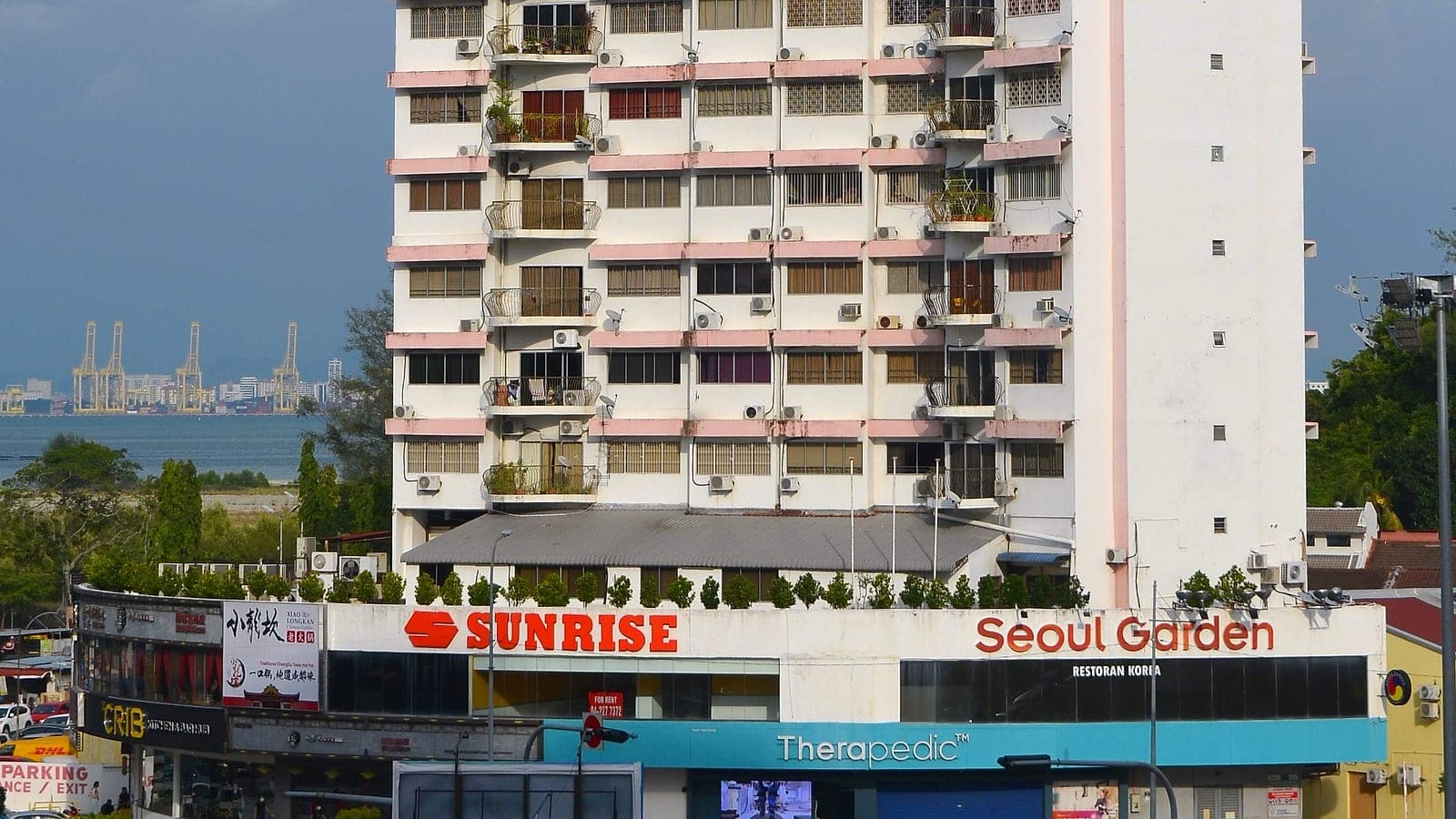
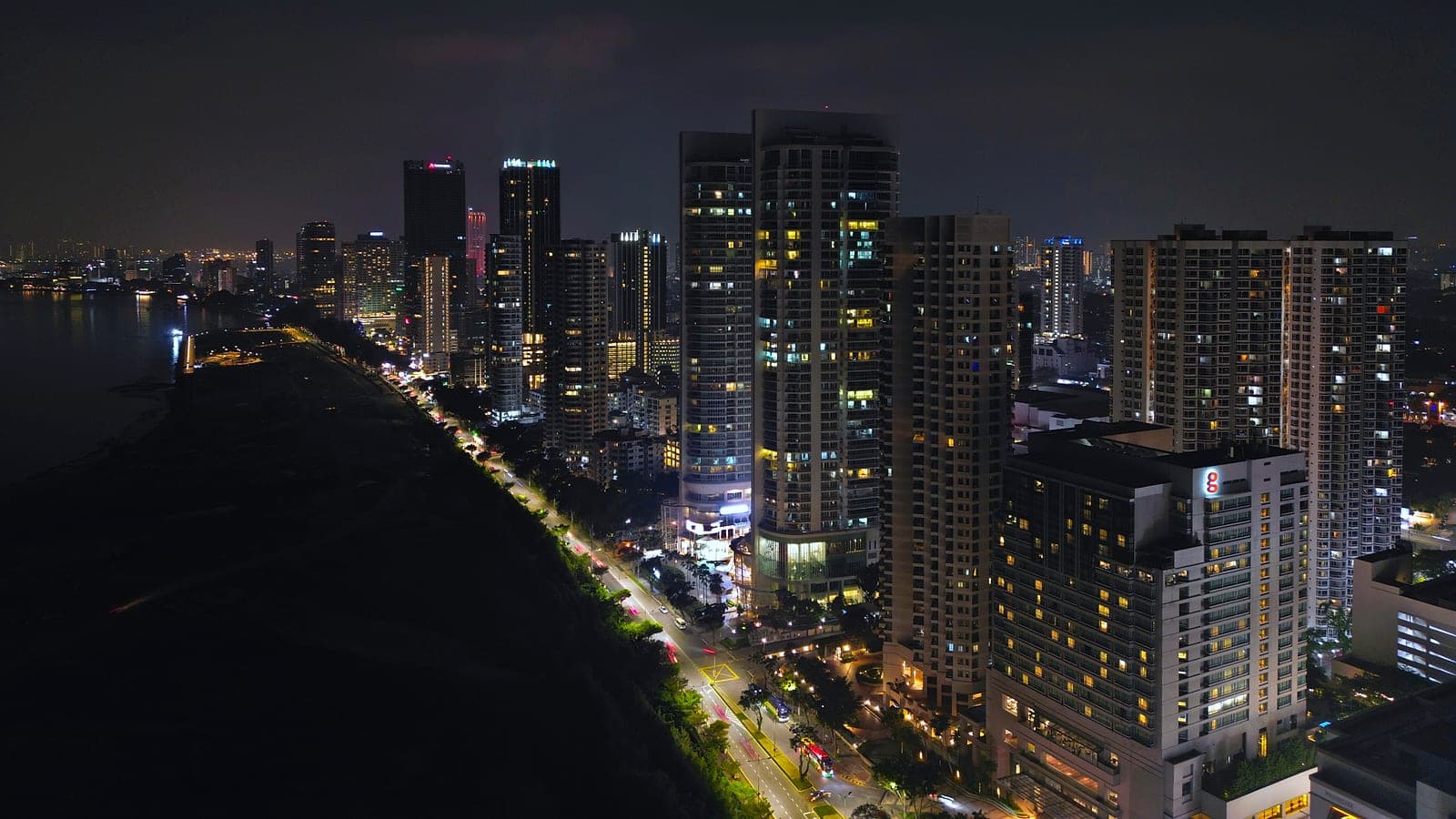
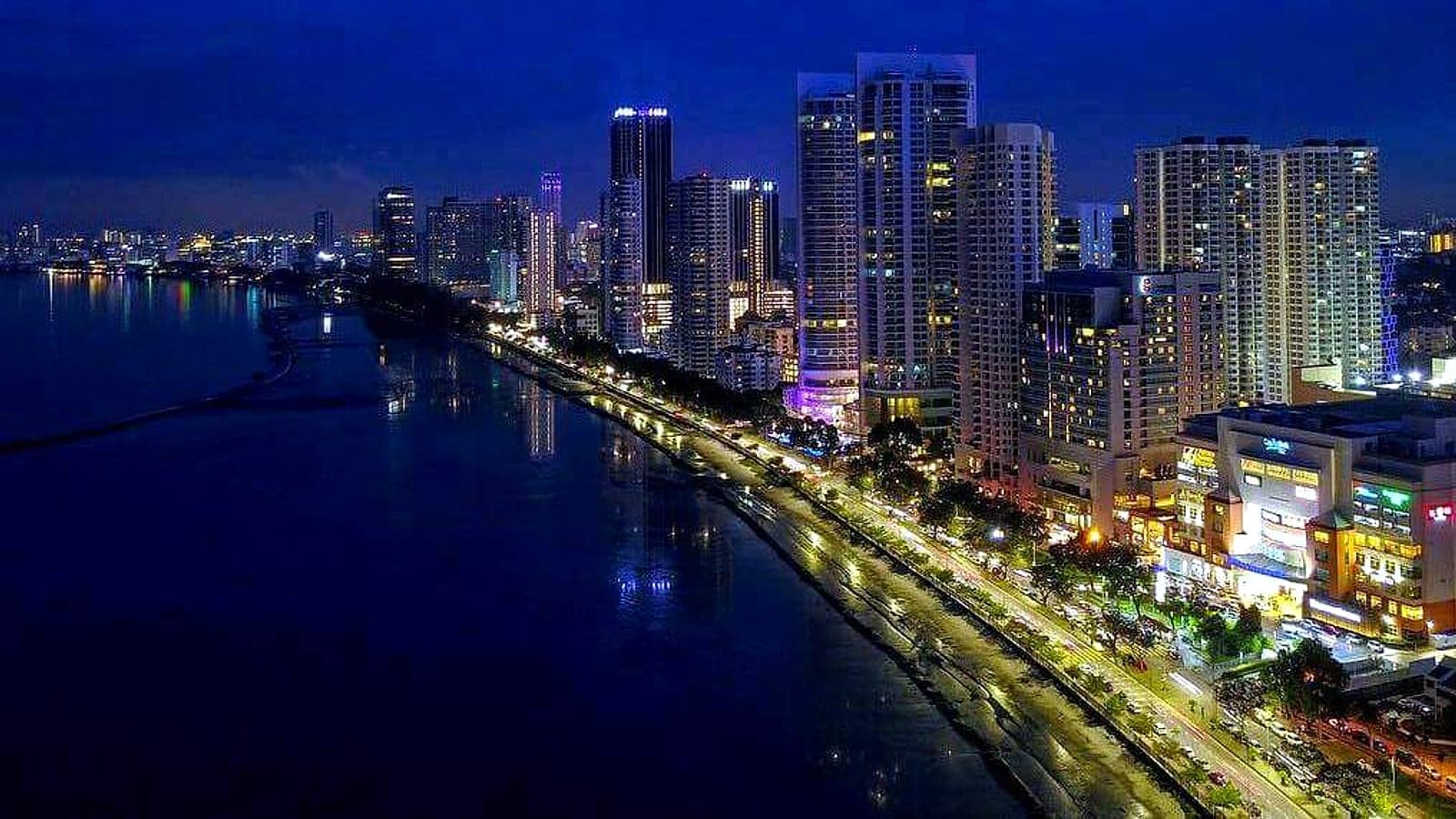
The seafront promenade at Gurney Drive
The original uploader was Nuttycoconut at English Wikipedia. / Wikimedia Commons (Public domain)
Gurney Drive is where Penang exhales. Every evening, as the heat softens and the light on the Penang Strait turns copper, the promenade fills with a cross-section of the island's life — aunties power-walking in tracksuits, teenagers sitting on the seawall, families pushing strollers along the flat, tree-lined path. The 2km strip is not a tourist attraction in any formal sense; it is simply where Penangites go at the end of the day, and visitors who wander here quickly understand why.
The stretch has a deeper history than its relaxed mood suggests. Land reclamation throughout the twentieth century created the level ground on which the promenade stands, pushing what was once Penang's prestigious seafront address further from the water. The road was named after Sir Henry Gurney, British High Commissioner, who was assassinated by communist guerrillas in an ambush on the road to Fraser's Hill in October 1951 — a killing that shook the British administration during the Malayan Emergency. Today the name is synonymous not with tragedy but with the smell of wok hei and the sound of evening conversation drifting off the water.
History
Read the full history of Gurney Drive Promenade
The Gurney Drive area was one of colonial Penang's most sought-after residential addresses, its bungalows sitting close enough to the sea to catch the evening breeze off the Penang Strait. Twentieth-century land reclamation progressively extended the foreshore and created the flat coastal strip that became the modern promenade. The road was named to honour Sir Henry Gurney, appointed British High Commissioner in 1948 at the height of the Malayan Emergency. Gurney was killed on 6 October 1951 when communist insurgents ambushed his convoy on the road to Fraser's Hill — his was the highest-profile British casualty of the Emergency. His death prompted a strategic rethink that eventually culminated in the Briggs Plan and, ultimately, Malayan independence. The promenade bearing his name was subsequently developed as a public amenity, and the hawker centre at its eastern end became one of Penang's defining food destinations. Gurney Wharf, opened in 2018 as a western extension, added a modern public park, food truck zone, and cycling paths connected to the original promenade via a tree-lined walkway.
Photography Guide
- Best time
- Golden hour (30–45 minutes before sunset) for warm light over the Penang Strait and silhouettes of mainland hills
- Best position
- Face northwest along the promenade to catch the sun setting behind Penang Bridge; or shoot from Gurney Wharf toward the city skyline for a urban-waterfront composition
- What's allowed
- Photography throughout. Public promenade — no restrictions.
Tips
- The Penang Strait turns deep gold 20 minutes before sunset — this window is brief, be positioned early
- Weekend evenings bring ambient life: families, food stalls, light trails from traffic — good for street photography
- Gurney Wharf offers an elevated boardwalk perspective with cleaner water foreground
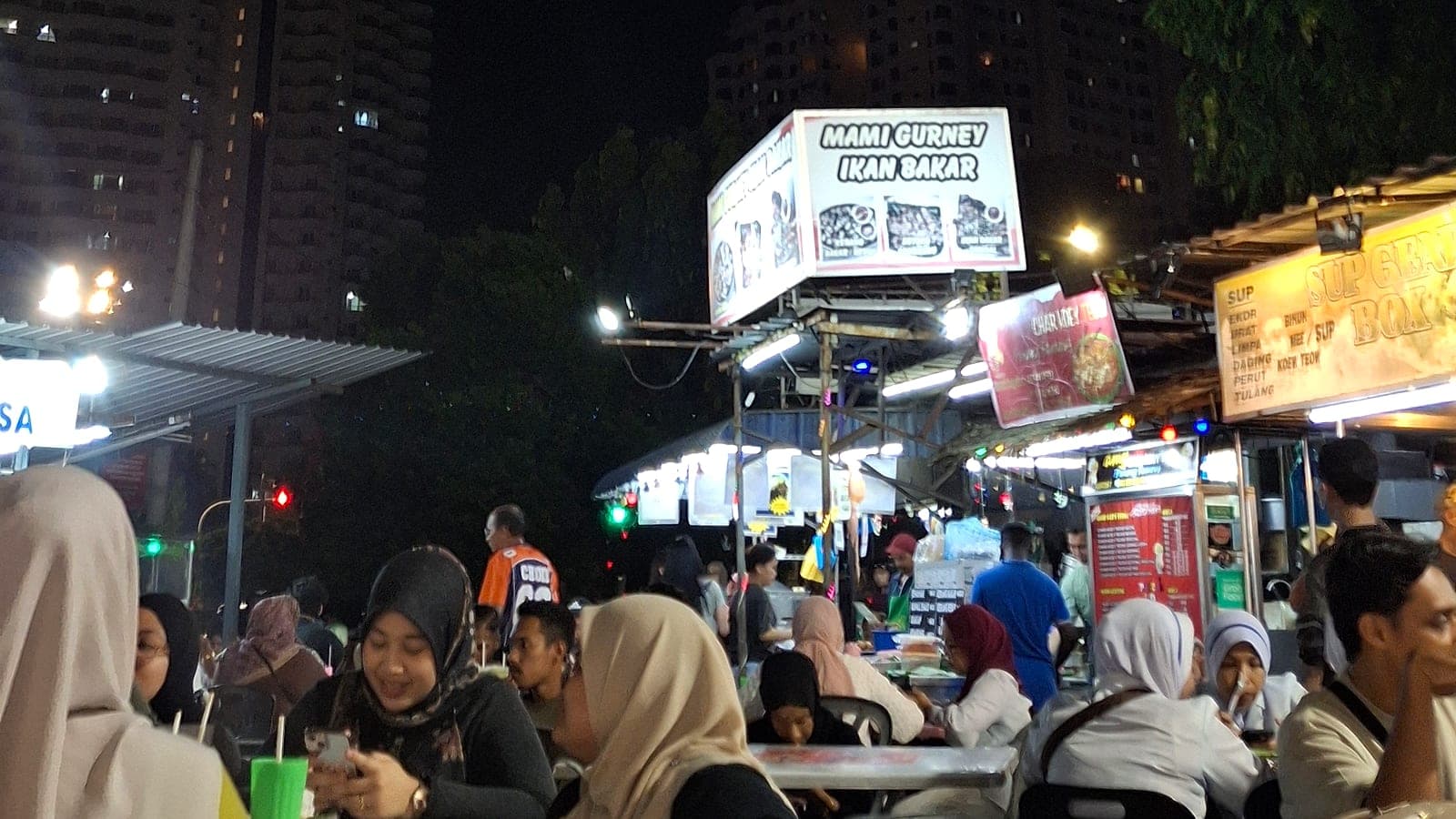
- Hawker centre at dusk: wok fire glow and hanging lanterns make for vivid available-light shots
- Bring a wide lens for the full promenade stretch — the two-kilometre run needs at least 24mm to convey scale
Plan Your Visit
Before your visit
Beach afternoon at Batu Ferringhi followed by Gurney Drive sunset makes a full coastal day
After your visit
Gurney Drive Hawker Centre is at the eastern end of the promenade — UNESCO-inscribed hawker culture, famous for char kway teow, Hokkien mee, and cendol
Travel times are approximate.
Map & Directions
Insider Tips
- •Come for sunset and then walk to the hawker centre for dinner - the classic Penang evening
- •The promenade is flat and well-lit, making it safe and pleasant for evening walks
- •Weekend evenings are busy but atmospheric with families and street performers
- •The new Gurney Wharf extension has added more waterfront space to explore
- •Pair with shopping at Gurney Plaza or Gurney Paragon malls nearby
Frequently Asked Questions
Is Gurney Drive Promenade free to visit?
Yes, entirely free. The promenade is a public walkway open 24 hours. The adjacent hawker centre and Gurney Wharf food trucks are separate paid vendors.
What is the best time to visit Gurney Drive?
Sunset (roughly 7–7:30pm year-round in Penang) is the classic time. The light on the Penang Strait is beautiful and the hawker centre fills up immediately after. Weekday evenings are noticeably less crowded than weekends.
What is Gurney Wharf and how is it different from Gurney Drive?
Gurney Wharf is a newer public park (opened 2018) at the western end of Gurney Drive. It has food trucks, a children's playground, cycling paths, and an event lawn. It is connected to the original promenade by a tree-lined walkway — most visitors do both in one outing.
Can I cycle along Gurney Drive?
Yes. Gurney Wharf has a dedicated cycling path. The main promenade is shared-use pedestrian space where cycling is tolerated but not fast-riding. Bicycles can be rented nearby.
Who was Gurney Drive named after?
Sir Henry Gurney, British High Commissioner of Malaya, who was assassinated by communist guerrillas in an ambush on 6 October 1951 during the Malayan Emergency — the highest-profile British casualty of that conflict.