Colonial Heritage Walk Penang
Explore 171 years of British rule: colonial buildings, architectural heritage, and the story of Francis Light
Penang's Colonial Legacy (1786-1957)
When Francis Light arrived in Penang in 1786, he envisioned a cosmopolitan free port that would attract merchants from across Asia. What he created was one of the most vibrant colonial cities in Southeast Asia—a place where British administration, Chinese commerce, Indian labor, and Arab traders coexisted in a dynamic multicultural society.
George Town's colonial architecture tells the story of empire at its height. From the practical fortifications of Fort Cornwallis to the grand civic pride of City Hall, from the exclusive elegance of the E&O Hotel to the ornate Town Hall, these buildings represent the confidence, hierarchy, and aesthetic values of the British Raj in the tropics.
Today, George Town's colonial core (designated a UNESCO World Heritage Site in 2008) preserves not just individual monuments but an entire urban landscape that captures a unique moment in history when East met West in a bustling trading port.
Colonial Timeline
1786
Francis Light arrives, establishes colony
1800s
Major institutional buildings erected
1880-1920
Grand Edwardian architecture dominates
1941-1945
Japanese occupation; WWII damage
1957
Malaysia gains independence
Francis Light: The Founder
1740-1794 • British merchant and colonial administrator
Key Achievements
- ✓Established British free port in Penang (1786)
- ✓Negotiated with Sultan Kedah for island lease
- ✓Named the island "Prince of Wales Island"
- ✓Envisioned egalitarian, cosmopolitan settlement
- ✓Attracted merchants and settlers from across Asia
Legacy
Light's vision created a unique multicultural trading hub that became one of Asia's most important ports. His relatively inclusive approach (for the time) allowed Penang to become home to Chinese, Indian, Arab, and other communities alongside British colonizers.
Major Colonial Buildings
Architectural landmarks representing different eras of British rule
Fort Cornwallis
Esplanade, George Town
First British fortification; heart of colonial Penang
The most iconic symbol of British colonial rule in Penang. Built by Francis Light, founder of Penang, this star-shaped fortress was constructed using slave labor and served as the administrative and military center for over a century. The fort has been meticulously preserved and offers visitors insight into 18th-century military architecture and colonial governance.
Highlights:
- •Original stone fortifications and gun emplacements
- •Historical museum with artifacts from colonial era
- •Stunning views of the Straits of Malacca
- •Ancient cannons and military hardware
- •Colonial-era buildings within the fort grounds
Hours
9:00 AM - 5:00 PM daily
Admission
RM20 adults, RM10 children
Duration
1.5-2 hours
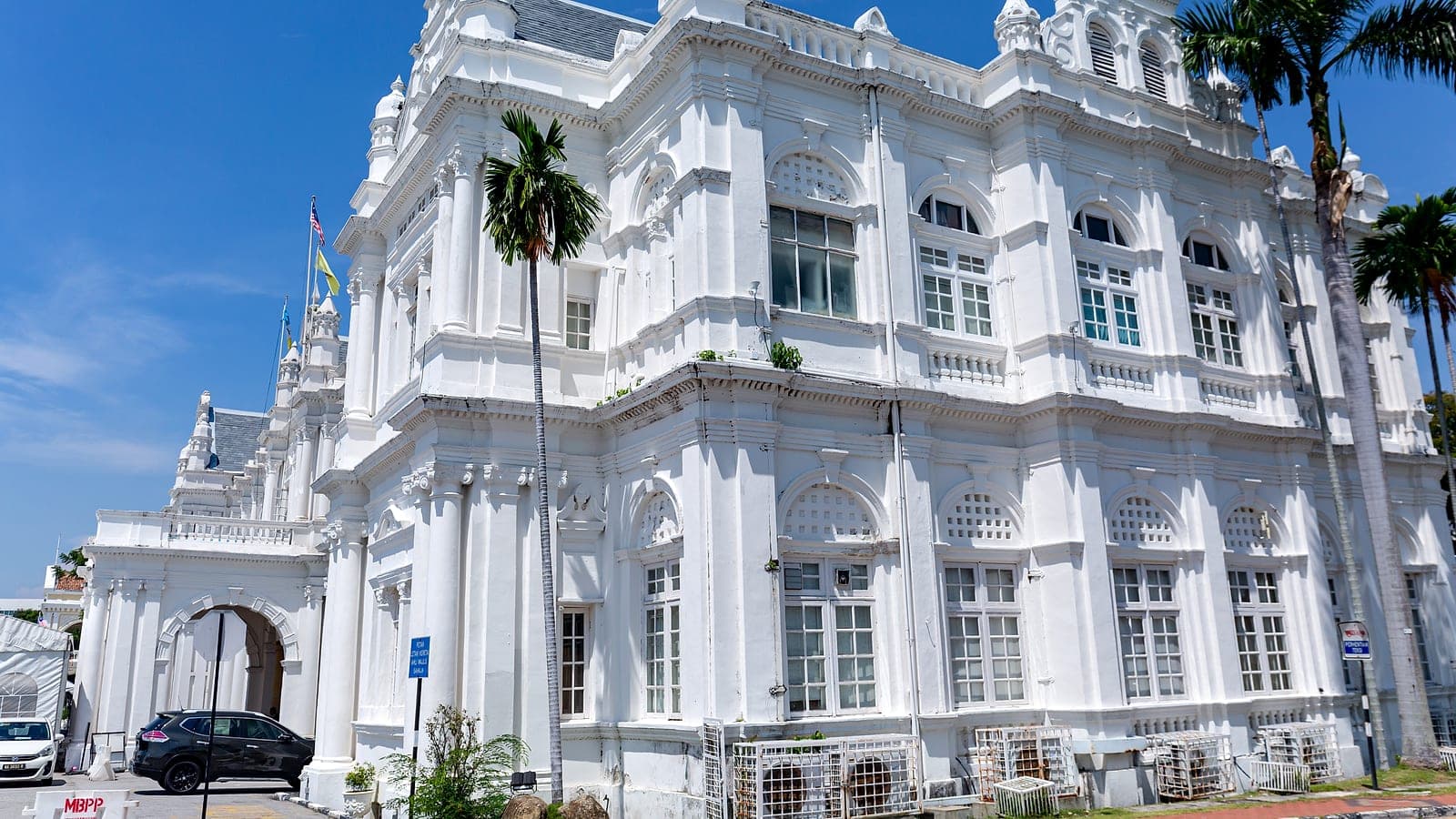
City Hall (Dewan Bandaraya)
Esplanade, George Town
Government headquarters representing civic pride
A grand Edwardian Baroque building that served as the nerve center of colonial administration. The symmetrical design and ornate facade exemplify the architectural confidence of the British empire at its height. The building remains an active government office and is best viewed from outside.
Highlights:
- •Grand Renaissance facade
- •High dome and symmetrical towers
- •Original architectural details intact
- •Iconic symbol of colonial administration
- •Beautiful gardens in front
Hours
Exterior viewing anytime; interior by arrangement
Admission
Free (exterior)
Duration
30-45 minutes
Town Hall (Dewan Undangan)
Light Street, George Town
Center for civic and social gatherings
This Victorian Gothic structure served as the focal point of colonial social life. The building hosted civic meetings, concerts, exhibitions, and official ceremonies. Its ornate interior remains largely preserved, offering glimpses of colonial-era opulence and refinement.
Highlights:
- •Victorian Gothic architecture
- •Original ornate interior
- •Historic gathering space for colonials
- •Beautiful timber work and decorative details
- •Well-maintained facade
Hours
Exterior viewing anytime; interior by arrangement
Admission
Free (exterior)
Duration
30-45 minutes
High Court (Istana Kehakiman)
Lebuh Pantai, George Town
Justice administration during colonial era
A magnificent Edwardian structure that housed the colonial legal system. The building's grandeur reflected Britain's confidence in its rule of law. Original courtrooms and judicial chambers showcase the institutional infrastructure of empire.
Highlights:
- •Impressive neoclassical facade
- •Original courtrooms with period details
- •High ceilings and grand interiors
- •Symbol of British legal authority
- •Architectural mastery of the era
Hours
Exterior viewing; interior restricted
Admission
Free (exterior)
Duration
30 minutes
Eastern & Oriental Hotel (E&O)
Lebuh Pantai (Beach Street)
Iconic luxury hotel of the Raj era
One of Southeast Asia's grandest hotels, the E&O Hotel exemplified colonial elegance and cosmopolitan charm. Built during the height of the British Raj, it welcomed dignitaries, business magnates, and travelers seeking the height of luxury in the tropics. The hotel remains operational and retains much of its colonial character.
Highlights:
- •Belle Époque architecture
- •Stunning sea-facing location
- •Historic ballroom and dining venues
- •Period furnishings and decor
- •Operating as heritage hotel
Hours
Open to visitors; hotel guests anytime
Admission
Free to view lobby; dining available
Duration
45 minutes - 2 hours (including tea/meal)
Penang Club
Light Street, George Town
Exclusive colonial gentlemen's club
Founded shortly after British settlement, the Penang Club served as the social hub of colonial elite. Its membership was strictly limited to European males of standing, reflecting the rigid hierarchies of colonial society. The current building showcases 18th-century colonial aesthetics.
Highlights:
- •Historic colonial club still in operation
- •Original timber and architectural details
- •Reflects colonial social hierarchy
- •Belle Époque interior design
- •Well-preserved heritage space
Hours
Exterior viewing; interior by member invitation
Admission
Free (exterior)
Duration
15-20 minutes
Colonial Architectural Evolution
How British architectural styles changed across 170 years of colonial rule
1786-1830 (Early Colonial)
Simple, functional designs with basic fortifications
Examples: Fort Cornwallis, early shophouses
1830-1880 (Mid-Victorian)
Gothic Revival and Classical influences
Examples: Town Hall, Penang Club
1880-1920 (Late Victorian & Edwardian)
Grand institutional architecture, Belle Époque elegance
Examples: City Hall, High Court, E&O Hotel
1920-1957 (Late Colonial)
Art Deco influences mixed with colonial traditions
Examples: Various government offices, commercial buildings
Self-Guided Colonial Heritage Walking Tour
3 km route through historic colonial landmarks with GPS waypoints
Tour Overview
Total distance: ~3 km | Total time: 2-3 hours including site visits | Best done in early morning or late afternoon | All waypoints have GPS coordinates
Fort Cornwallis
Start at Penang's most iconic colonial landmark. Visit the museum and climb to the top for panoramic views.
GPS: 5.3521°N, 100.3348°E
City Hall & The Green (Padang)
Walk to see the magnificent City Hall from the front. The open Padang field is the green heart of colonial George Town.
GPS: 5.3510°N, 100.3365°E
Town Hall
Victorian Gothic architecture on Light Street. Observe the ornate facade and historic details.
GPS: 5.3489°N, 100.3376°E
Penang Club
Historic gentlemen's club still in operation. Observe the colonial design and imagine the exclusive society of the Raj era.
GPS: 5.3501°N, 100.3393°E
High Court (Istana Kehakiman)
Impressive Edwardian building representing British legal authority. Photograph the facade.
GPS: 5.3465°N, 100.3341°E
Eastern & Oriental Hotel
End at the iconic E&O Hotel for afternoon tea or a meal. Soak in the colonial atmosphere while enjoying sea views.
GPS: 5.3458°N, 100.3318°E
Pro Tips for the Tour
- • Bring plenty of water and wear comfortable shoes
- • Best visited December-February for pleasant weather
- • Many buildings have restricted interior access; call ahead to arrange
- • Take a break at a heritage cafe for local coffee or afternoon tea
- • Late afternoon light is best for photography
Planning Your Visit
Best Time to Visit
December to February offers the driest weather. Visit early morning (8-9 AM) to beat crowds and heat. Many buildings are closed to interior viewing on weekends and public holidays.
Getting Around
All major colonial sites are within walking distance in George Town. The walking tour is about 3 km and takes 2-3 hours including site visits. Wear comfortable shoes.
Photography Tips
Golden hour (early morning or late afternoon) provides best light for photographing colonial buildings. Most sites allow exterior photography. Ask permission before entering private buildings.
Frequently Asked Questions
Who was Francis Light and why is he important?
Francis Light was a British merchant and colonial administrator who founded Penang in 1786. He negotiated the lease of the island from the Sultan of Kedah and envisioned a cosmopolitan, open trading port. Light's relatively inclusive approach attracted merchants and settlers from across Asia, making Penang unique in colonial Southeast Asia. His legacy lives on in street names and historical sites throughout George Town.
When did British colonial rule end in Penang?
British colonial rule officially ended in 1957 when Malaysia gained independence. However, the British began withdrawing after WWII (1945), and the transition was gradual. Many colonial institutions remained even after independence, and British architectural and social influences persist in Penang's heritage today.
What is the E&O Hotel and why is it famous?
The Eastern & Oriental Hotel (E&O), built in 1885, was one of Asia's grandest colonial-era hotels. It hosted royalty, dignitaries, and wealthy travelers seeking luxury in the tropics. Famous guests included Somerset Maugham and other literary figures. The hotel remains operational and retains its Belle Époque charm. Visitors can enjoy afternoon tea in the historic setting.
Can I visit the interiors of colonial buildings?
Fort Cornwallis, City Hall, and Town Hall allow interior viewing. However, many buildings like the High Court and Penang Club are restricted or require special arrangements. Check ahead before visiting. Museums within colonial buildings (like Fort Cornwallis) are always open during business hours.
How long does the colonial heritage walking tour take?
The complete walking tour (Fort Cornwallis to E&O Hotel) takes 2-3 hours depending on how much time you spend at each site. You can shorten it to 1-1.5 hours by focusing on exteriors only, or extend it to 4-5 hours by adding museum visits and stopping for lunch at a heritage cafe.
What was the architectural style of colonial Penang?
Colonial Penang showcases various styles spanning 1786-1957: Early colonial was simple and functional; mid-Victorian featured Gothic Revival; late Victorian and Edwardian brought grand institutional architecture (like City Hall); and late colonial incorporated Art Deco. This architectural evolution reflects changing British design trends and Penang's development over time.
Explore More of Penang's History
Colonial rule set the framework — but it was the Peranakan traders, the clan associations, and the WWII occupation that filled in the rest of the city's character.