On this page
Penang Weather by Month (2026): Rain, Monsoon & Best Time to Visit
Penang is warm year-round, but rain patterns matter. A month-by-month breakdown of temperature, rainfall and the two monsoon seasons — what January, February and every other month actually feels like, and the best months to go.
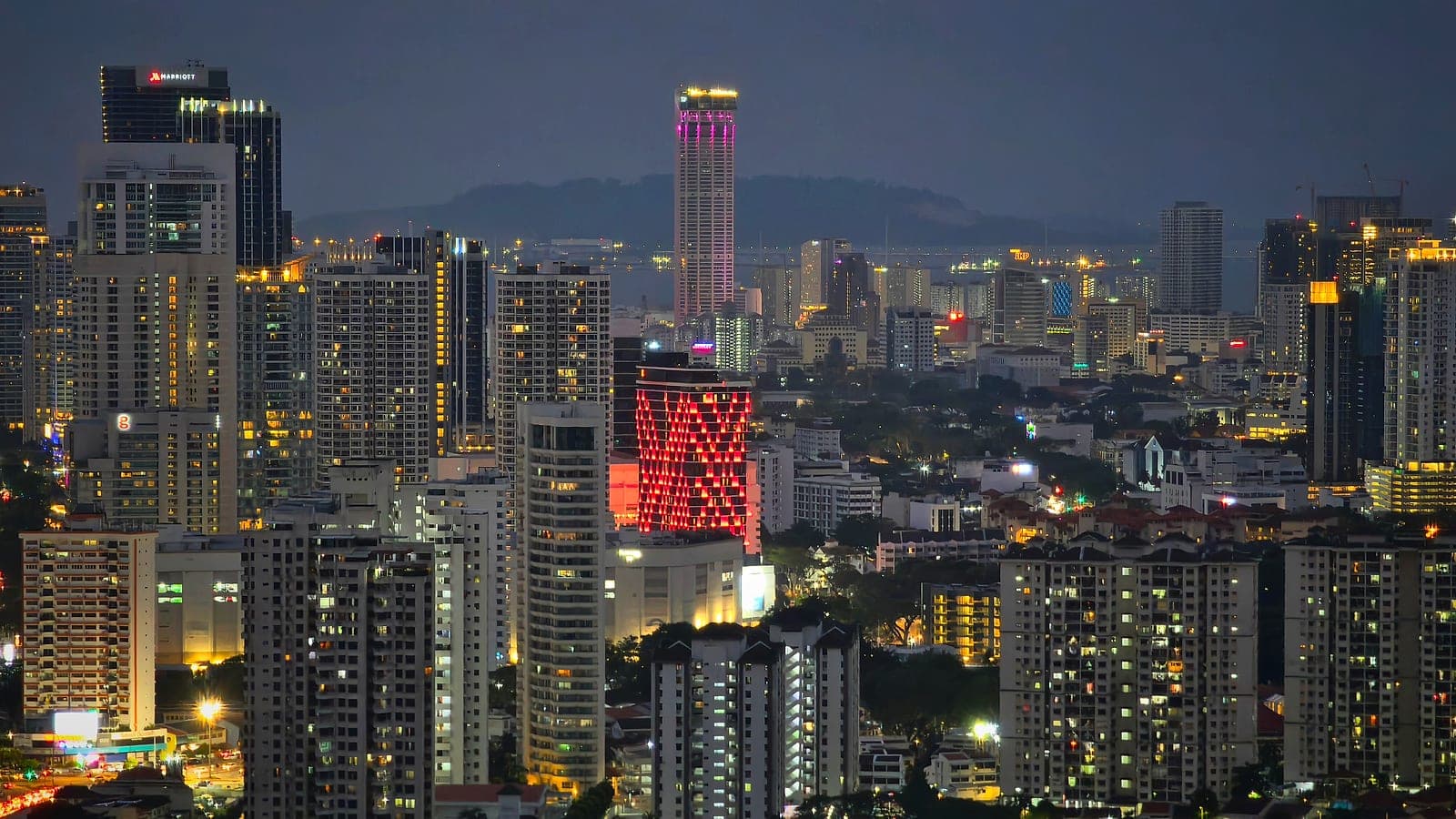
Penang is warm every month of the year. The honest answer to "when should I go?" is: whenever you can. But rain patterns, festivals, and crowd levels vary enough that a little planning makes a real difference — especially if you're hoping for beach days or want to catch Chinese New Year without paying triple for a hotel room.
Best months overall: December through February — dry weather, the island's biggest festivals, and calm seas. Worst months for weather: October and November (peak northeast monsoon, heaviest rain of the year). Every other month is workable with sensible planning.
First-time visitors, beach travellers, festival-seekers, travellers with flexibility on dates
The Climate in Plain Terms
Penang sits just north of the equator on Malaysia's northwest coast. That means one thing above all: it's hot year-round. Georgetown averages 28–33°C every month. There is no cold season, no ski lodge escape, no need to pack a winter coat.
What does change is rain. Penang sits between two monsoon patterns:
Northeast monsoon (October–February): Brings rain to the north and east coasts. Georgetown, which faces east across the Penang Strait, gets the heaviest rain in October and November. By December the rain eases noticeably.
Southwest monsoon (May–September): Hits the west coast harder — Batu Ferringhi beach gets rougher seas and afternoon showers. Georgetown on the sheltered east side is less exposed but still sees regular afternoon downpours from May onward.
One thing that surprises many visitors: "rainy season" in Penang usually means a sharp, intense burst of rain for one to two hours — most often in the afternoon or evening — followed by clear skies. It is rarely the grey all-day drizzle of a European autumn. Mornings are almost always dry and clear, regardless of the month. Pack a compact umbrella or a packable rain jacket and you can comfortably visit at any time of year.
Georgetown and Batu Ferringhi also behave differently due to their geography. If the weather forecast looks grim for the beach, the heritage zone often stays drier — and vice versa. It's worth knowing which way you're going before you write off a day.
Month-by-Month Breakdown
January Dry and relatively cool by Penang standards — daytime highs around 29–31°C, lower humidity than mid-year. Good beach weather on Batu Ferringhi. The island is gearing up for Chinese New Year (usually late January or February), which means decorations go up early, clan associations hold rehearsals, and the pre-festival atmosphere is already noticeable in George Town's heritage streets. Hotel prices start climbing in the final two weeks of January as CNY approaches.
February Chinese New Year dominates the month. It is the biggest event in Penang's calendar — fireworks over George Town, lion dances through the shophouse streets, clan jetty celebrations, and the entire island lit in red and gold. If you want to experience it, book hotels three to four months ahead; rates double or triple during CNY week. Thaipusam also falls in late January or February — the procession to Waterfall Hilltop Temple begins in the early hours (3–4am) and is one of the most visually striking events on the island. Weather is excellent: mostly dry, slightly breezy, low rain probability.
March The transition month. Dry season is easing but the monsoons haven't kicked in yet. Weather is still good — warm, manageable humidity, low rain risk. Crowd levels drop sharply after CNY, and hotel rates fall back to normal. Shoulder-season prices and good conditions make March one of the better-value months for a Penang visit. No major festivals this month, which suits travellers who want the island at a quieter pace.
April Warm and dry, with the occasional afternoon shower starting to appear. Wesak Day — which commemorates the Buddha's birth, enlightenment, and passing — falls in late April or early May depending on the lunar calendar. Georgetown's Buddhist temples hold candlelit processions in the evening; Kek Lok Si Temple on Penang Hill's lower slopes is particularly striking. Good month for outdoor activities: heritage walking, Penang Hill, cycling around Balik Pulau on the island's quieter southwest side.
May The southwest monsoon begins building on the west coast. Batu Ferringhi starts to see rougher surf and more frequent afternoon rain. Georgetown on the east coast is more sheltered but afternoon downpours become a regular feature of the day. Still a perfectly viable travel month — just shift beach visits to morning hours, and keep your afternoons flexible for indoor options like the Penang State Museum, the Blue Mansion, or a hawker centre crawl. Wesak Day may fall in May (check the exact date for the relevant year).
June and July Southwest monsoon in full effect on the west coast. Batu Ferringhi beach is swimmable but the sea is choppier and less reliably calm than in January. George Town sees afternoon rain most days but mornings remain clear and pleasant. These are mid-year school holiday months in Malaysia and Singapore, so the island is busier than the surrounding weeks — popular hawker stalls get long queues, and hotel rates tick up slightly on weekends. The George Town Festival sits right on the edge of this window: it runs nine or ten days spanning late July and early August, and the exact dates shift each year (19–28 July in 2024, 2–10 August in 2025, 1–9 August in 2026). Confirm the dates for your year before booking.
August The Hungry Ghost Festival runs through the seventh month of the Chinese lunar calendar, which typically falls in August. For a visitor, this is genuinely fascinating to witness: street-side altars appear on pavements across the heritage zone, temporary stages host Hokkien opera and getai performances for the spirits (and incidentally for any passerby), and the smell of burning joss paper is omnipresent in the evenings. No tickets needed — these are neighbourhood events, open to anyone who shows respect. Merdeka Day (Malaysian National Day) falls on August 31, with flag-raising ceremonies and public events at Padang Kota Lama. Rain continues at southwest monsoon levels. If you're planning a durian hunt, late July through August is peak season — the island's own orchards are in full swing.
September Rain remains common. The George Town Festival has finished by now — it runs in the late-July-to-early-August window, not September — but several of its visual arts exhibitions stay open into September, and they are usually free. That makes this a quiet, cheap month to see the art without the festival crowds or the festival hotel rates. Worth checking the festival programme for which exhibitions are still running.
October The northeast monsoon starts building. Rain becomes heavier and less predictable, particularly on the north coast. Georgetown gets wetter but is still functional; outdoor sightseeing in the mornings is usually fine, with indoor contingencies needed for afternoons. Deepavali (the Hindu festival of lights) falls in October or November — Little India in Georgetown comes alive with flower garlands, oil lamps, kolam patterns on the pavements, and the smell of murukku frying in every second shop. Worth timing a visit to Little India around Deepavali evening.
November The heaviest rain month of the year. Northeast monsoon is at peak intensity — north coast and Georgetown see sustained downpours, occasionally lasting most of the day rather than the usual two-hour burst pattern. Batu Ferringhi beach is rough and generally not enjoyable for swimming. If November is your only option, Penang is still workable: the heritage zone, food scene, temples, and cultural sites are all fully operational rain or shine. Just build indoor time into every day and don't count on beach days. Deepavali may fall in early November; check the exact date.
December Rain easing noticeably through the month. By mid-December, Georgetown is largely back to manageable dry-season conditions. Christmas is well-celebrated in Penang — Georgetown's heritage zone gets decorated, the shopping malls (Gurney Plaza, Queensbay) put on Christmas displays, and some of the boutique heritage hotels do genuinely good Christmas dinners. Malaysian and Singaporean school holidays mean the island is busy from mid-December through New Year; families arrive in force and hotel prices reflect it. New Year's Eve in Georgetown — fireworks visible from the Esplanade — is worth experiencing once.
Temperature Reference
| Location | Daytime High | Night Low |
|---|---|---|
| Georgetown | 31–33°C | 24–26°C |
| Batu Ferringhi | 30–32°C | 24–26°C |
| Penang Hill (peak) | 18–23°C | 14–18°C |
Penang Hill is the outlier. At 830 metres, the summit is genuinely cool — sometimes cold after dark or in the rain. Bring a light jacket or a layer if you're going up for sunset or an overnight stay.
Air-conditioning is aggressively cold in virtually every mall, restaurant, and bus in Penang. A thin cardigan or long-sleeved shirt is useful even in the hottest months purely for surviving indoor spaces.
Festivals Calendar
| Month | Festival | Notes |
|---|---|---|
| Jan / Feb | Chinese New Year | Biggest event of the year. Book hotels 3–4 months ahead. George Town clan streets, Clan Jetties, Chingay procession. |
| Jan / Feb | Thaipusam | Procession to Waterfall Hilltop Temple begins ~3am. Kavadi carriers, milk pots. Spectators welcome. |
| Apr / May | Wesak Day | Buddhist procession, candlelit parade. Kek Lok Si Temple is the focal point. |
| Late Jul / early Aug | George Town Festival | Nine to ten days of arts across the heritage zone; the festival says over 80% is free. Dates move yearly — 1–9 Aug in 2026. |
| Aug | Hungry Ghost Festival | Street altars, getai performances, Hokkien opera on makeshift stages throughout heritage zone. |
| Aug 31 | Merdeka Day (National Day) | Flag ceremonies, public events at Padang Kota Lama (the Esplanade). |
| Oct / Nov | Deepavali | Little India celebrates. Flower garlands, kolam patterns, oil lamps. Evening is best. |
| Dec | Christmas | Georgetown heritage zone decorated. Boutique hotels and Straits Quay have the best atmosphere. |
What to Pack (Weather-Specific)
Light cotton or linen clothing covers most of the trip — Penang's heat calls for breathable fabrics. Beyond that:
Compact umbrella or packable rain jacket. Non-negotiable. Even in the dry season, an afternoon shower can appear with 15 minutes' notice. A pocket umbrella weighs nothing and saves every outdoor plan in the rainy months.
SPF 50+ sunscreen. The tropical sun at midday is serious. Apply before leaving the hotel, not after you've been out for an hour.
One warm layer. For Penang Hill and for the aggressive air-conditioning in malls, cinemas, and restaurants.
Comfortable walking shoes. George Town's heritage zone is best explored on foot; many heritage buildings have uneven tile floors.
Planning Your Trip Around the Weather
For beach-focused trips, January through March is the sweet spot: calm seas, dry mornings, and the island's best festival. Book hotels early if you're visiting during Chinese New Year.
For culture and festivals with less beach time, any month works. The heritage zone, hawker centres, and temples are entirely rain-proof as experiences — a downpour just means ducking into a coffee shop for teh tarik until it passes.
For budget travel with fewer crowds, March and April are hard to beat: good weather, post-CNY hotel prices, and manageable visitor numbers.
If October or November is unavoidable, plan your itinerary around mornings for outdoor sightseeing and afternoons for indoor experiences — the Penang State Museum, the Blue Mansion (Cheong Fatt Tze Mansion), the Pinang Peranakan Mansion, and the covered lanes of Little India all work perfectly in the rain. The food scene is entirely rain-proof — a downpour is the ideal excuse to sit down at a proper nasi kandar or asam laksa.
For a full trip structure, the itinerary planner helps you build a day-by-day schedule around your travel dates, and to choose where to base yourself for those dates, see where to stay in Penang. For festival timing and what to expect at each one, see the Penang festivals guide.
Keep reading
Guides that pair well with this one.
Penang in the Rainy Season: What to Expect and When to Go (2026)
Penang has rain year-round, but there's a wet season and a drier season. Here's what the weather actually looks like month by month, what gets affected, and whether the rain should change your plans.
8 min readplanningBest Places to Visit in Malaysia (2026): An Honest Guide by Traveller Type
Malaysia has jungle, beaches, colonial cities, and the world's best street food. Here's where to go based on what you actually want from a trip.
8 min readplanningPenang on a Budget: Travel Well for Under RM 150 a Day
How to see Penang's best without overspending. Daily budget breakdown, cheapest accommodation, hawker centre strategy, free attractions, and transport tips for budget travellers.
6 min readplanningPenang from Singapore: The Complete Day Trip and Weekend Guide
Penang is 55 minutes from Singapore by air. Here's how to do it in a day, what to do on a long weekend, and which flights, hotels, and food stops to prioritise.
7 min read