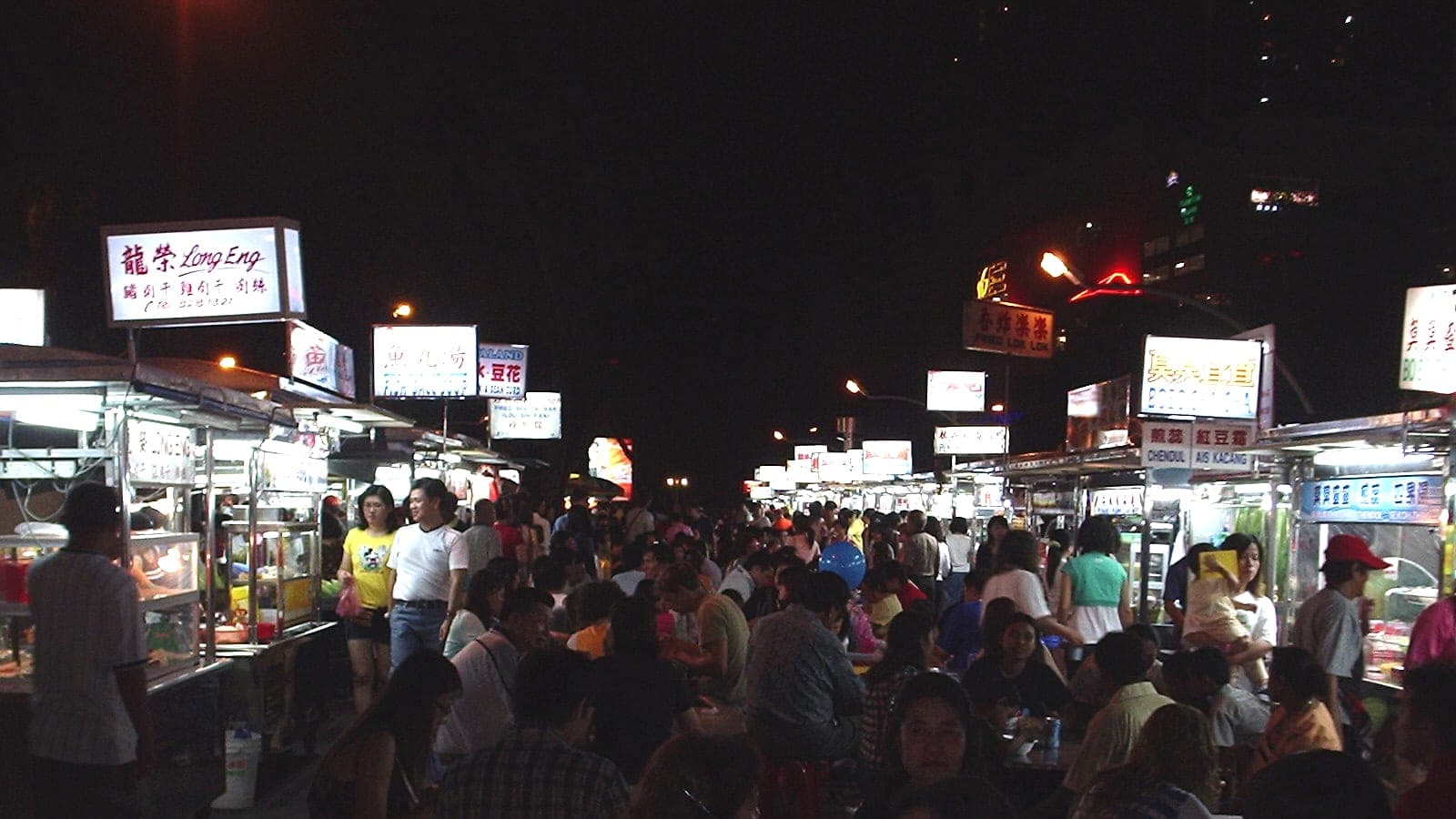
Penang Hawker Centres
Where Locals Eat · Char Kway Teow · Hokkien Mee · Laksa · Pasembur
Hawker centres are the heart of Penang food — clusters of single-dish specialists where you table-hop between stalls for char kway teow, Hokkien mee and asam laksa, usually for RM 6–12 a plate. Here are the centres worth planning around, and when to go. New to the format? See what to order first.
Penang's major hawker centres
Gurney Drive Hawker Centre
Evenings (from ~5–6pm)
The big, covered seafront centre and the easiest first stop — the widest variety under one roof and the most visitor-friendly. Good for char kway teow, Hokkien mee, rojak and ais kacang. Busiest after dark; come early for a table.
New Lane (Lorong Baru)
Evenings (from ~5pm, some stalls late)
A street lined with stalls where locals actually eat — less polished than Gurney, arguably better food. Known for char kway teow, Hokkien mee and oyster omelette. Closed some weeknights, so it pays to check.
Air Itam Market
Mornings (sells out by early afternoon)
A morning market near Kek Lok Si famous for one dish above all: Air Itam asam laksa. Arrive before noon — the legendary stalls sell out. Pair it with a temple-and-hill morning up at Penang Hill.
Padang Brown
Late morning to afternoon
A local lunch spot off the tourist trail, best known for popiah, apom and cendol. Quieter and cheaper than the headline centres.
Chulia Street night hawkers
Late night (from ~7pm)
George Town street stalls that come alive late — char kway teow, wonton mee and porridge after the heritage core has quietened down. Handy if you are staying in town.
Red Garden Food Paradise
Evenings
A lively George Town food court with a huge spread of stalls and live music — convenient and varied rather than the most authentic, but an easy group option.
How to eat at a hawker centre
Find a table first (occupied by someone's bag is fine — it means it's taken). Walk the stalls, order and pay at each one directly. Your food is brought to your table. Drinks come from a separate stall — give them your table number. Cash only at most stalls.
13 hawker centres
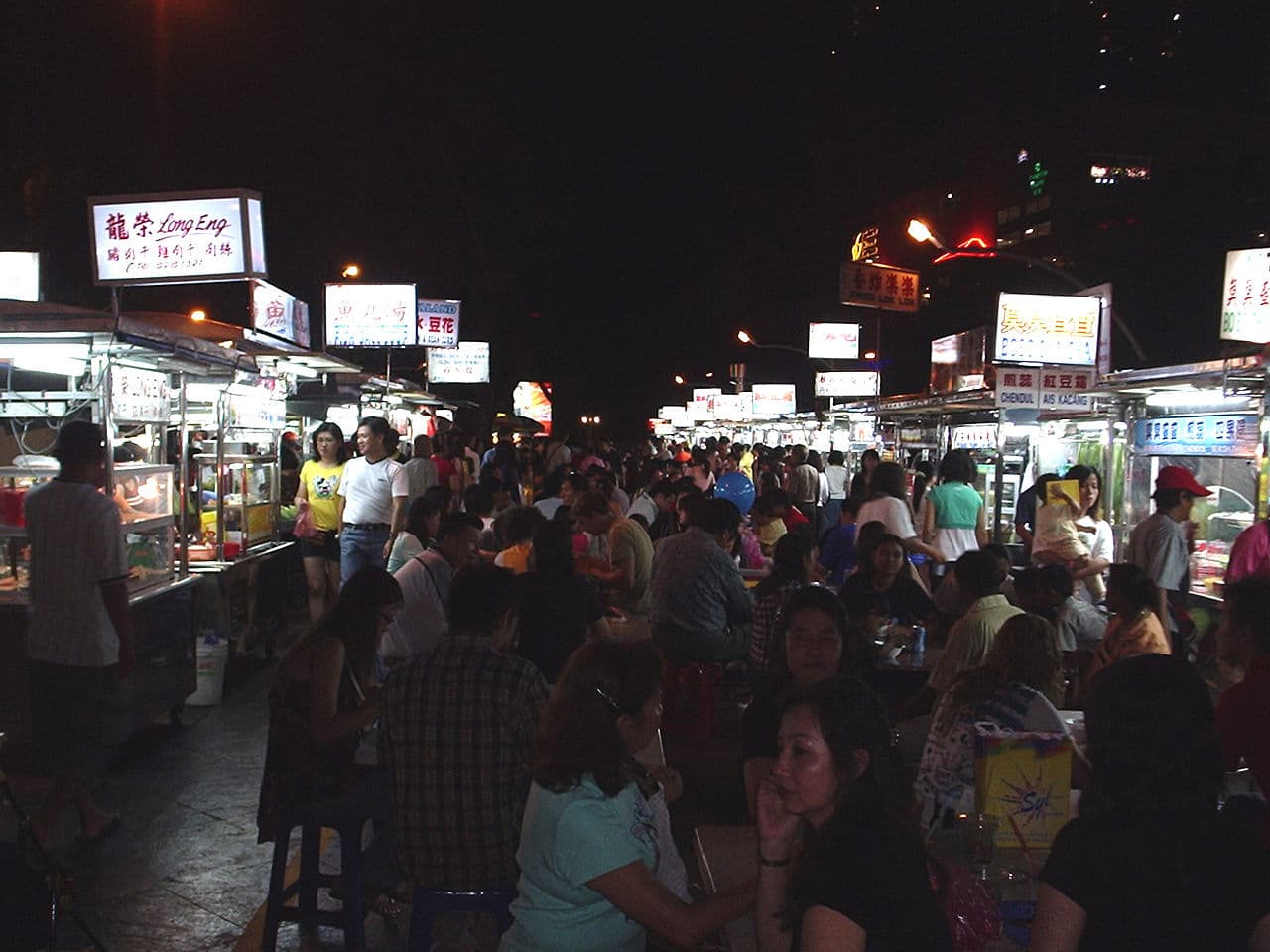
Gurney Drive Hawker Centre
Penang's most famous hawker centre with dozens of stalls serving the island's greatest street food hits.
Must try:
hawker center
George Town
New Lane Hawker Centre (Lorong Baru)
Nightly street food paradise where locals feast on duck rice, fried kway teow, and char koay kak.
Must try:
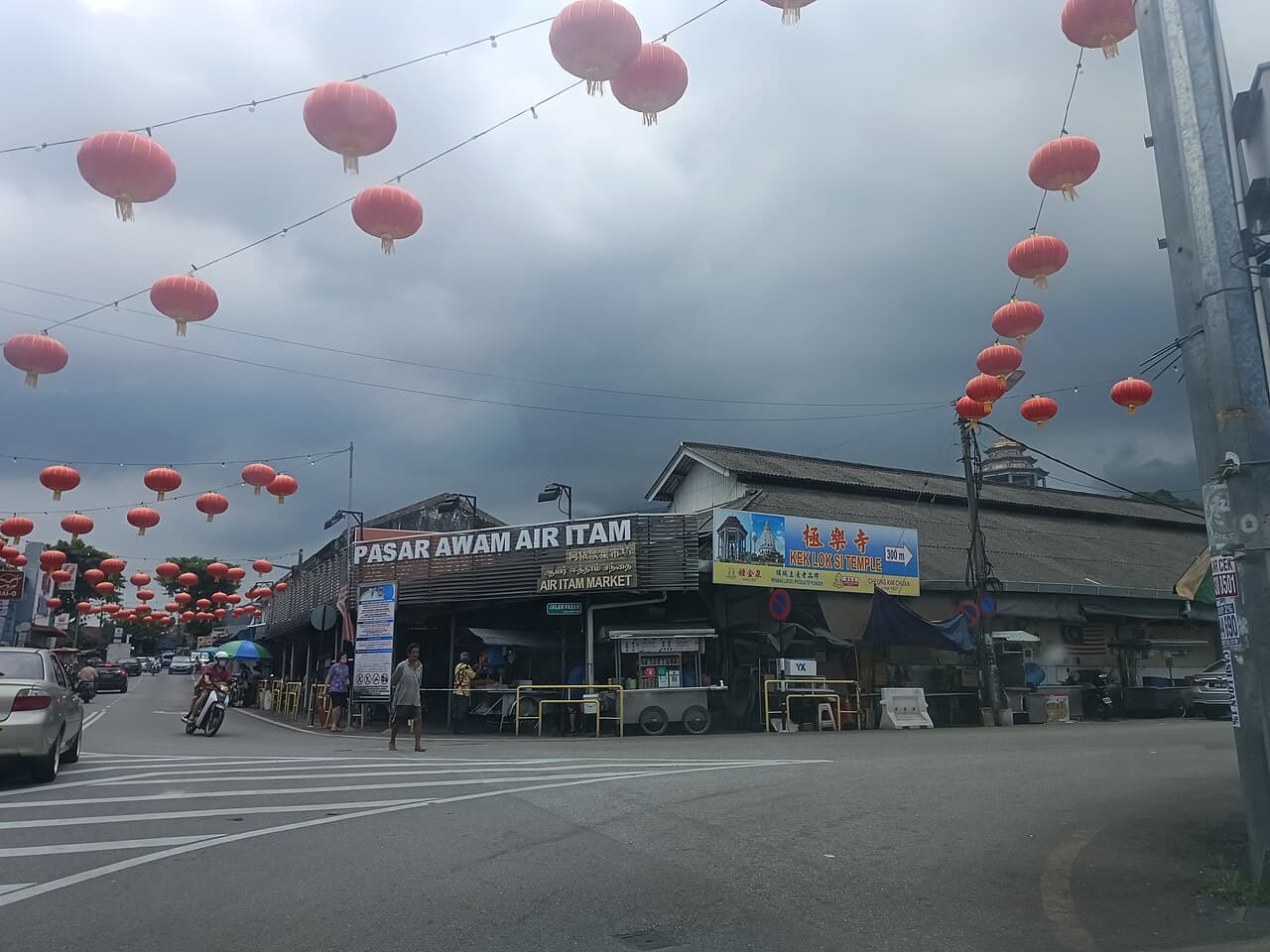
Air Itam Market (Pasar Air Itam)
Authentic local market and food court - traditional wet market by day, evening hawker paradise.
Must try:
hawker center
Batu Lanchang
Batu Lanchang Market (Pasar Batu Lanchang)
Quiet residential market with 20+ year stall operators - authentic home-style local cooking.
Must try:
hawker center
Bayan Lepas
Bayan Lepas Food Court
Modern food court for locals in southern Penang - authentic cooking with evening/late-night hours.
Must try:
hawker center
Jelutong
Jelutong Market (Pasar Jelutong)
Neighborhood favorite market with home-style dishes and genuine local atmosphere - budget-friendly.
Must try:
hawker center
Air Itam
Kek Lok Si Food Court
Temple base food court with vegetarian options and views - perfect rest stop for Kek Lok Si visitors.
Must try:
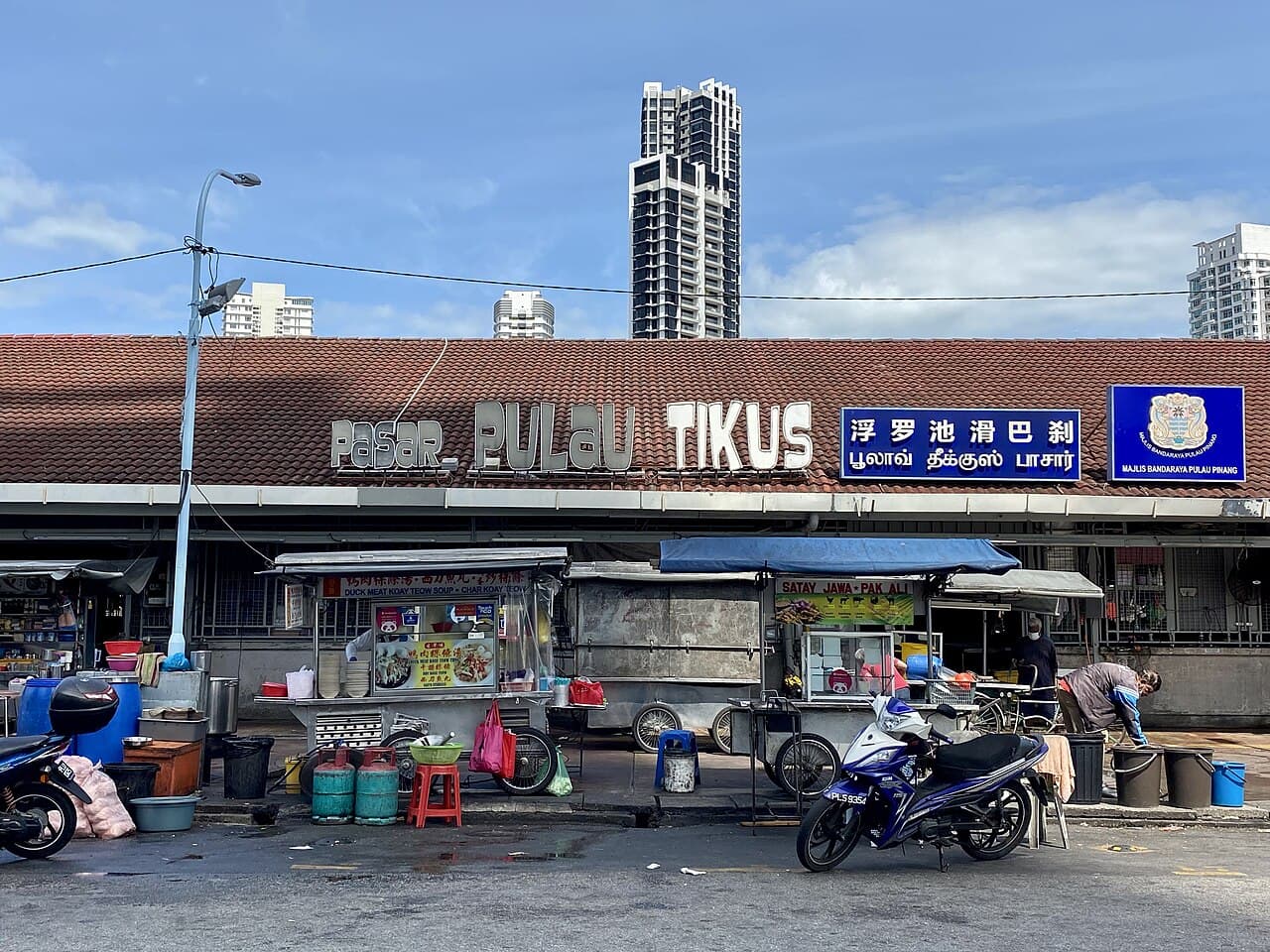
Pulau Tikus Market (Pasar Pulau Tikus)
Seafood-focused market hawkers with direct access to ultra-fresh ingredients - exceptional prawn noodles.
Must try:
hawker center
George Town
Red Garden Food Paradise
Lively open-air food court with 50 stalls, live music, and cuisines from across Southeast Asia.
Must try:
More Food in Penang
Frequently Asked Questions
What is a hawker centre in Penang?
A hawker centre is a collection of individual food stalls under one roof or in an open-air setting. Each stall specialises in one dish — one stall for char kway teow, another for Hokkien mee, another for laksa. You pick your stall, order, and eat at communal tables. Prices range from RM 5 to RM 15 per dish. Drinks are usually ordered from a separate drinks stall.
What should I order at a Penang hawker centre?
The Penang classics: char kway teow (flat rice noodles wok-fried with prawns, cockles, and lard), Hokkien mee (rich prawn noodle soup), assam laksa (fish-based sour tamarind noodle soup), oyster omelette (or chien), pasembur (Indian-Muslim salad with peanut sauce), and rojak. At beachside hawker centres, add fresh seafood. At morning markets, look for chee cheong fun and nasi lemak.
What is the difference between Gurney Drive and New Lane hawker centres?
Gurney Drive is the most famous hawker centre in Penang — large, covered, convenient, and geared toward tourists as well as locals. New Lane (Lorong Baru) is where locals actually go for serious eating — smaller stalls, more authentic atmosphere, less English signage, and arguably better food. If you're visiting one, go to Gurney Drive for orientation; if you're eating twice, go to New Lane for the real experience.
Are hawker centres in Penang halal?
Hawker centres in Penang are typically mixed — some stalls are halal (Malay and Indian-Muslim stalls, nasi kandar, pasembur), some are not (Chinese pork dishes, lard-fried char kway teow). There are dedicated halal hawker centres and food courts (particularly in shopping malls and near mosques). The Halal section of this site lists specifically halal options by area.
What time do hawker centres open?
Morning hawker markets (pasar pagi) run from around 6am to 11am — nasi lemak, dim sum, chee cheong fun, and kopi. Evening hawker centres open from about 5pm and run to midnight or later. Some iconic stalls operate only in the evening: the char kway teow uncle at Kimberly Street, for example, starts at 6pm and sells out by 9:30pm. Lunch centres are less common — nasi kandar restaurants cover that gap.