On this page
Penang vs Bali: A Brutally Honest Comparison
Penang and Bali attract very different travellers. This comparison covers food, beaches, cost, culture, vibe, and who belongs where.
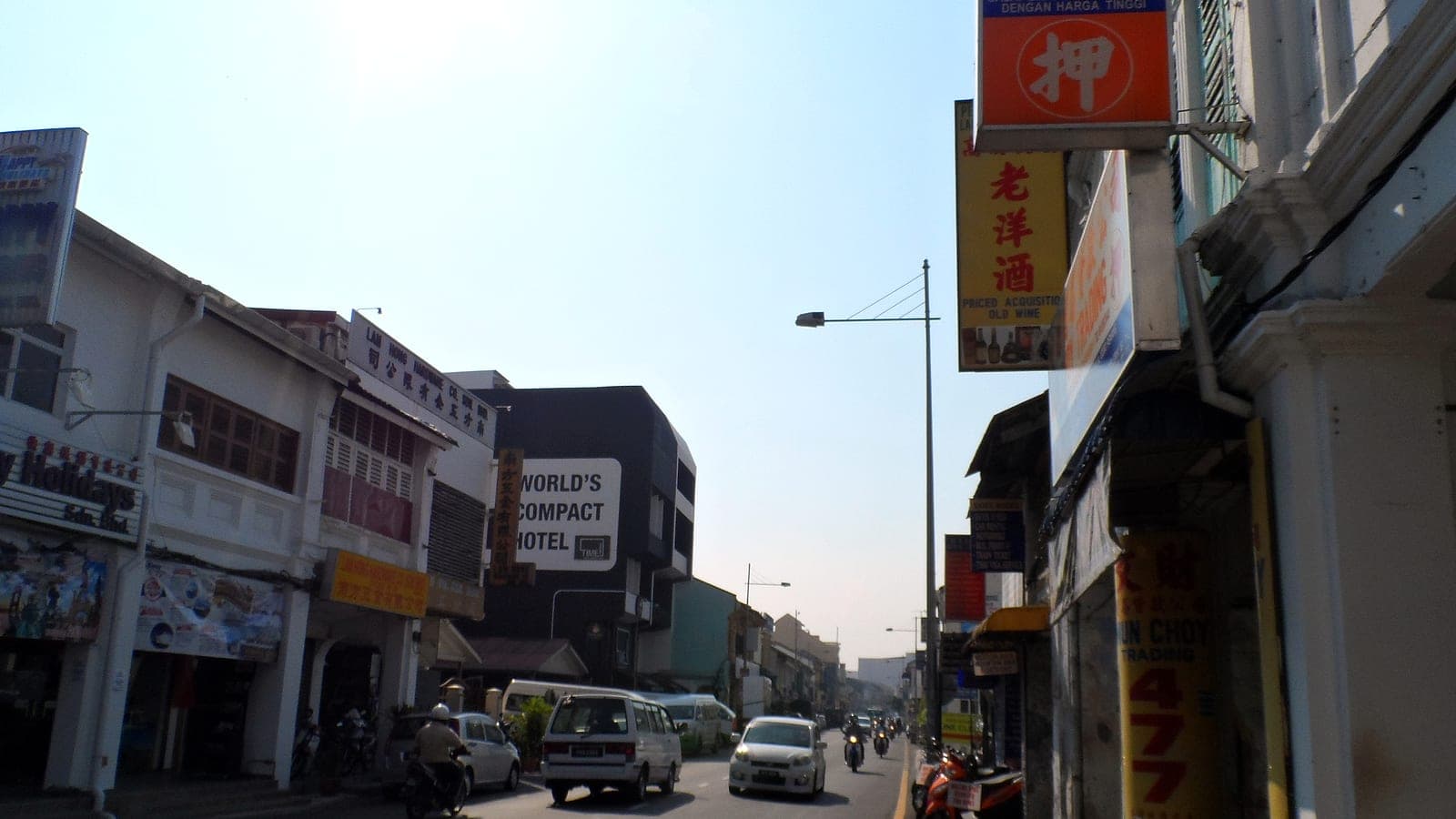
Penang and Bali both appear on the same shortlists — "best of Southeast Asia," "most Instagrammed," "great food scene" — but they are fundamentally different experiences. Bali is a resort island that has built an entire economy around holidays, sunsets, and aesthetics. Penang is a UNESCO-listed city where locals have been eating extraordinary food for two centuries and tourists are welcome to join in. Comparing them as equivalents is the first mistake most travellers make.
The right question is not which destination is better. It is which destination suits what you actually want from this trip. If you are chasing white-sand beaches, surf breaks, and a built-out international nightlife scene, Bali wins and it is not close. If you want the best food in Southeast Asia, layers of multicultural history in a walkable city, and honest value for money, Penang is in a category of its own. Some travellers want both — and with 10 or more days in the region, that is entirely achievable.
This comparison is honest about where each destination wins. The goal is to help you make the right call, not to sell Penang to the wrong person.
This guide is most useful if you are choosing between Penang and Bali for a trip of 4–10 days, or are planning a combined SEA itinerary. Both are well-connected, both have international airports, and both can be done on a range of budgets.
Travellers torn between the two, first-time Southeast Asia visitors, foodies choosing a cultural base, beach holiday seekers, backpackers planning a multi-destination trip
The Core Difference
Bali is a resort island built around beach holidays and Instagram aesthetics. The infrastructure, the accommodation, the nightlife, the cafes — all of it has been shaped by decades of international tourism to serve that market, and it does so very well.
Penang is a living city where food and culture happen to be world-class. The hawker stalls that serve the best char kway teow in the world also serve the office workers, the pensioners, and the schoolkids who live two streets away. George Town has won UNESCO World Heritage status not as a tourist attraction but because it is a genuinely preserved multicultural city with 400 years of layered history still intact. Tourists fit into Penang; Penang was not built for tourists.
This is not a value judgment. Some trips call for a resort experience. Others call for something more rooted. Knowing which you want makes the decision straightforward.
Food
Penang wins by a significant margin, and the gap is not as close as balanced comparisons sometimes suggest.
Penang's hawker culture is considered one of the best in the world — not Southeast Asia, the world. Char kway teow cooked in a screaming-hot wok by the same family for thirty years at Penang Road Famous Teochew Cendol. Assam laksa with its tamarind-sour broth at Air Itam Market. Nasi kandar at line clear on Penang Road, where the curries have been simmering continuously since 1945. Roti canai and teh tarik at any mamak stall open until 2am. The variety across Chinese, Malay, Indian, and Peranakan cuisines in a city this small is extraordinary.
Bali has good food, and in some categories — Western café breakfasts, healthy bowls, Balinese ceremonial dishes like babi guling (suckling pig) and bebek betutu (slow-roasted duck) — it excels. Ubud in particular has a strong restaurant scene with high quality. But Bali's food culture is largely restaurant-driven, not street food culture. The range of authentic Asian food available — particularly for travellers wanting Chinese, Indian, or Malay options — is narrow compared to Penang. Bali's hawker-equivalent warung scene is decent but modest by comparison.
For Asian food culture, there is nothing in Bali that competes with Penang's hawker scene. If food is the primary reason you are travelling, Penang is the correct answer.
Beaches
Bali wins, and it is not particularly close.
Bali's coastline is genuinely spectacular in parts. Seminyak and Canggu have broad beaches with strong surf and a developed beach club scene — Potato Head, Atlas, Single Fin at Uluwatu. The Bukit Peninsula offers dramatic cliff-top settings at Uluwatu and Padang Padang. Nusa Dua has calm, protected beach conditions better suited to families. The variety in Bali's coastal geography — from surf breaks to calm lagoons to cliff walks — is hard to match.
Penang's main beach is Batu Ferringhi, a 3km stretch of sand on the island's northern coast. It is pleasant, wide, and warm. You can swim in it, lie on it, and eat satay from the beach vendors at night. But it does not compare to Bali's best beaches in terms of scenery, water clarity, or the range of activities around it. Penang also has Monkey Beach (accessible by boat from Teluk Bahang) and a few smaller coves, but none challenge Bali's coastline.
If your trip is centred on beach time, Bali is the right choice.
Cost
Penang is generally cheaper for equivalent quality, though the gap has narrowed on accommodation as both destinations have become more popular.
Accommodation: A decent guesthouse or boutique hotel in George Town runs RM 100–200 per night. Heritage shophouse guesthouses with character — the kind of place you would pay a premium for in Bali — cost RM 120–180. In Canggu and Seminyak, a similar quality stay in a villa or boutique hotel runs USD 60–150 (RM 270–675) per night. Bali does have budget options — basic rooms in Kuta from IDR 150,000–250,000 (RM 45–75), Ubud guesthouses from USD 20–35 (RM 90–160) — but at mid-range and above, Penang costs less for comparable quality.
Food: Penang is dramatically cheaper if you eat at hawker stalls — RM 5–12 per meal is standard. Bali warung meals are similarly cheap (IDR 25,000–50,000, roughly RM 7–15), but the mid-range restaurant scene in Canggu and Seminyak prices in USD, and a sit-down meal with drinks runs USD 15–25 (RM 65–110) per person quickly.
Activities: Penang's best attractions — George Town heritage walks, Clan Jetties, temples, street art — are free. Major paid attractions like Penang Hill funicular (RM 30 for foreigners) are modestly priced. Bali's temple entrance fees, rice terrace walking fees, and tour costs add up, though individual costs are not high.
Overall verdict: Penang offers better value at mid-range. Bali can be done cheaply or expensively depending on where you stay and eat. For a similar quality experience, Penang is the more affordable choice.
Culture
Both destinations offer genuine cultural depth, but in very different forms.
Penang's multiculturalism is dense and compact. Within a few square kilometres of George Town, you have: Cheong Fatt Tze Mansion (a Chinese indigo Straits mansion), Masjid Kapitan Keling (the oldest mosque on the island, built in 1801), Sri Mahamariamman Temple (a Tamil Hindu temple with a towering gopuram), Khoo Kongsi (a Hokkien clan house with a courtyard that took decades to build), Armenian Street with its Peranakan shophouses, and Little India with its spice markets and flower garland sellers. This is not a heritage theme park — these communities are still active, the temples are used for worship, the clan associations still meet.
Bali's Hindu culture is visually spectacular and spiritually distinct. Temple complexes like Pura Besakih (the mother temple on the slopes of Gunung Agung), Tanah Lot (a sea temple on a rock outcrop), and Uluwatu (cliff-top temple with Kecak fire dance at sunset) are extraordinary. The rice terrace landscapes at Tegallalang and Jatiluwih are UNESCO-listed. Balinese ceremonial life — the offerings, the processions, the temple festivals — is woven into daily life in a way that is genuinely different from anywhere else in Southeast Asia.
Penang offers multicultural breadth — multiple civilisations co-existing in one city. Bali offers cultural depth within one tradition, expressed through art, ritual, and landscape. Both are worth experiencing. They are not comparable because they are different types of cultural richness.
Getting There
From Singapore: Both are easy. Penang is approximately 1.5 hours by direct flight; Bali is approximately 2.5 hours. AirAsia, Scoot, and Jetstar operate both routes frequently. Penang is also reachable from Singapore by bus (5–6 hours) or train via KL (8+ hours) if you prefer overland.
From Kuala Lumpur: Penang is 45 minutes by flight (Firefly or AirAsia from KLIA2) or 3.5 hours by ETS train from KL Sentral — one of the better train journeys in Malaysia. Check KTM rail schedules for the KL–Butterworth route. Bali from KL is approximately 3 hours by direct flight.
From Australia: Bali has a significant advantage here. Jetstar, AirAsia, and Scoot operate direct flights from multiple Australian cities (Perth, Sydney, Melbourne, Brisbane) — Perth to Bali is under 4 hours. Penang from Australia always requires a connection, typically via KL or Singapore. For Australian travellers, Bali is considerably more accessible.
From Europe and the UK: Both require connections and similar total travel times of 13–16 hours depending on routing. Neither has a meaningful advantage from Europe.
Vibe and Crowd
Bali — particularly Canggu and Seminyak — is heavily international. The cafes serve flat whites and avocado toast. The beach clubs run international DJs on weekend nights. Digital nomads, surfers, Australians, and Europeans make up a large proportion of the crowd in those areas. It is well set up for tourism: English is spoken everywhere, international card payments work, Grab and Gojek operate across the island. Bali has been shaped by its visitors over many decades, and that shows in both its strengths (excellent service infrastructure) and its limitations (some areas feel more like a global expat enclave than an Indonesian destination).
Penang feels like a city that tourists visit, not a place built for tourists. Locals eat at the same hawker stalls. The heritage shophouses are lived in. The morning market at Pulau Tikus is not a tourist market — it is where the neighbourhood buys its vegetables. English is widely spoken (a legacy of British colonial history), Grab works reliably, and international accommodation is plentiful — but the city's personality is not tourism-driven. George Town would be exactly what it is whether tourists came or not.
If you want a destination built around ease and comfort for international visitors, Bali is the more polished choice. If you want to feel like you are genuinely in a place rather than a resort, Penang has that quality.
Activities
Bali: Surfing (Kuta, Canggu, Uluwatu — boards from IDR 50,000–100,000/day); rice terrace walks at Tegallalang (IDR 50,000 entrance) and Jatiluwih (IDR 40,000); temple visits including Tanah Lot and Uluwatu (both around IDR 50,000 entrance); sunrise hike up Gunung Batur (guided tour from IDR 350,000–500,000 per person); Ubud arts scene — galleries, craft markets, the Monkey Forest; cooking classes in Ubud (USD 35–70 per person); white-water rafting on the Ayung River.
Penang: George Town heritage walk — clan jetties, temples, street art, Peranakan mansions (mostly free); Penang Hill funicular and The Habitat treetop walk (RM 30 + RM 30 for foreigners); Kek Lok Si Temple — one of the largest Buddhist temples in Southeast Asia (free grounds, RM 2 for the tower); food tours through hawker stalls (self-guided or RM 80–150 per person guided); Penang National Park and Monkey Beach (boat from Teluk Bahang, RM 60–80); cooking classes in George Town (RM 100–200 per person); Escape waterpark and adventure park at Teluk Bahang.
Bali has more outdoor and adventure activities. Penang has more culture-centred activities. Both have cooking classes worth doing.
Nightlife
Bali wins significantly, and Penang is not trying to compete.
Canggu's beach club scene — Atlas Beach Club, La Brisa, Finn's — is genuinely impressive. Seminyak has Potato Head and Ku De Ta. Kuta caters to a younger, more chaotic crowd. Ubud is quieter but has live music venues and cocktail bars. Across the island, Bali has a developed nightlife infrastructure built for international visitors who want to go out.
Penang's nightlife is modest by comparison. George Town has a handful of good bars — Ome by Spacebar, China House (which also functions as a cultural venue), the Muntri Street area. Batu Ferringhi has some beach-facing bars. But Penang closes early by Southeast Asian standards, and it is not a destination you choose for nights out. If nightlife is part of what you want from this trip, Bali is the answer.
Can you do both?
Yes, and it works well. AirAsia operates Penang to Bali via Kuala Lumpur — total journey time roughly 4–5 hours, fares from RM 250–500 return depending on timing. For a 10–14 day Southeast Asia trip, a common and effective sequence is: Singapore (2 days) → Penang (3–4 days) → Bali (5–6 days), or the reverse. The contrast between Penang's urban food culture and Bali's beach and resort energy is genuinely complementary — they do not feel like the same type of trip. If you have the time, doing both is better than choosing.
Who Should Choose What
Choose Penang if:
- Food is a primary reason for the trip — you want to eat char kway teow, assam laksa, and nasi kandar at source, not at a restaurant inspired by them
- You want multicultural urban depth — UNESCO heritage, Chinese, Malay, Indian, and Peranakan culture in one walkable city
- You are a first-time Asia visitor who wants a city base with genuine local character rather than a resort environment
- Value matters — you want a mid-range trip without mid-range prices
- Halal food availability is important — Penang has halal options at virtually every hawker centre and almost all restaurants
- You find over-touristed resorts draining and prefer to be somewhere that exists independently of tourism
Choose Bali if:
- A beach holiday is the point of the trip — you want to swim, surf, lie on sand, and enjoy sunset from a beach club
- You are a surfer or want to learn to surf in warm water
- Nightlife is part of what you are looking for — beach clubs, DJ sets, bar-hopping
- You are a digital nomad — Canggu has a large, established nomad community with co-working spaces, fast internet, and a strong social scene
- You want a spiritual or wellness retreat — Ubud has a well-developed yoga, meditation, and retreat scene
- Instagram scenery matters — rice terraces, temple silhouettes, volcanic backdrops — Bali has it
Choose both if:
- You have 10 or more days in Southeast Asia and want contrast — city culture followed by beach resort, or vice versa
- You are visiting the region for the first time and want to cover two very different types of experience
- You are flying from Australia and the Bali leg is already decided — adding Penang via KL is straightforward
Decided on Penang?
If this comparison has pointed you toward Penang, the best starting point is a custom itinerary built around what matters most to you — food, heritage, day trips, or a combination. Build one with our free itinerary builder.
Keep reading
Guides that pair well with this one.
Penang to Ipoh: Day Trip or Overnight Guide (2026)
Two hours by bus. Two of Malaysia's greatest food cities back-to-back. Here's how to do Penang to Ipoh — as a day trip or an overnight stop.
7 min readplanningBest Places to Visit in Malaysia (2026): An Honest Guide by Traveller Type
Malaysia has jungle, beaches, colonial cities, and the world's best street food. Here's where to go based on what you actually want from a trip.
8 min readplanningPenang on a Budget: Travel Well for Under RM 150 a Day
How to see Penang's best without overspending. Daily budget breakdown, cheapest accommodation, hawker centre strategy, free attractions, and transport tips for budget travellers.
6 min readplanningPenang from Singapore: The Complete Day Trip and Weekend Guide
Penang is 55 minutes from Singapore by air. Here's how to do it in a day, what to do on a long weekend, and which flights, hotels, and food stops to prioritise.
7 min read