On this page
Penang Travel Tips: 25 Things to Know Before You Go (2026)
First-time Penang trip? 25 specific, no-fluff travel tips on money, transport, food, weather, etiquette, SIMs, and the things tourists consistently underestimate.
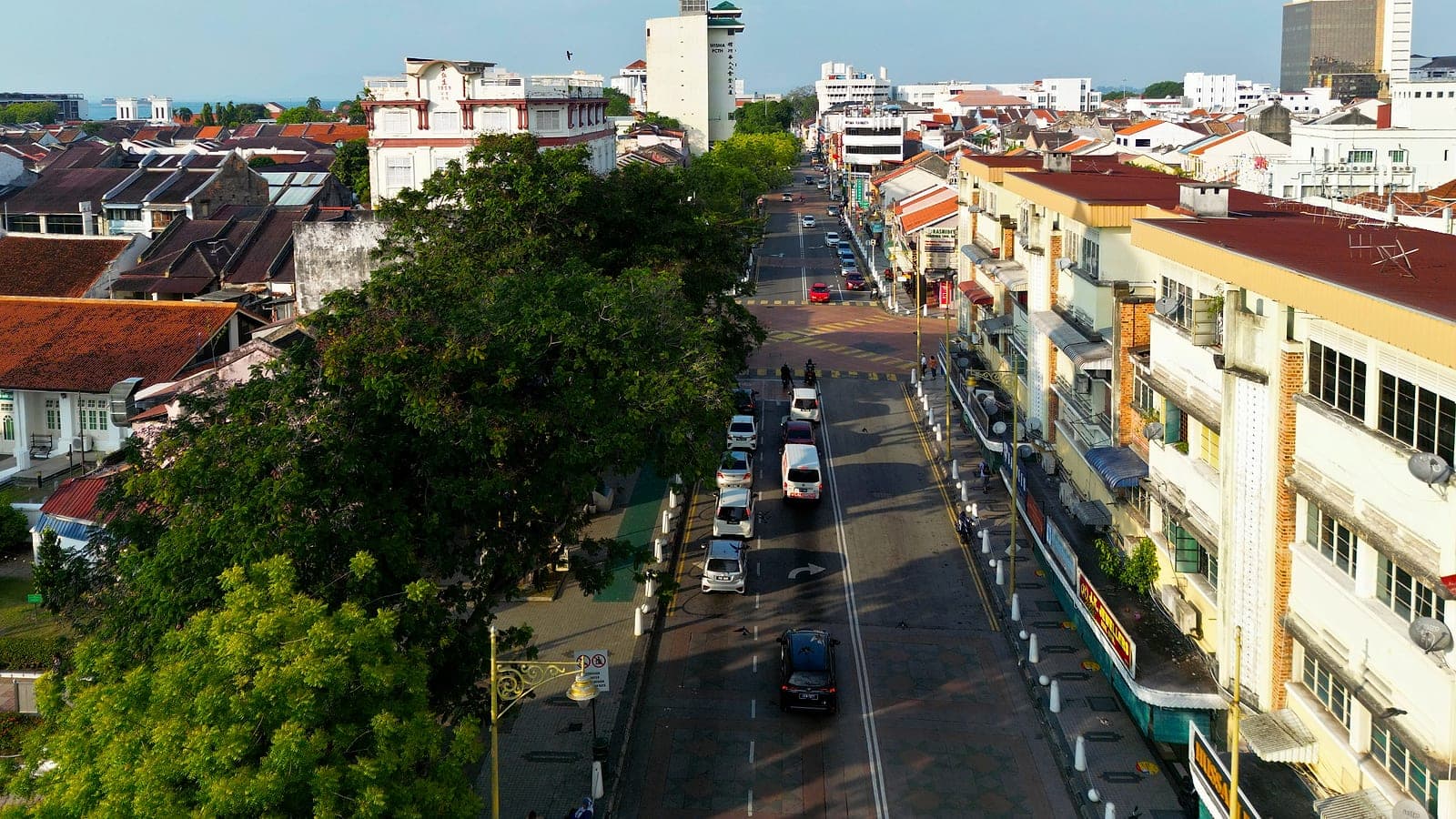
Penang rewards visitors who arrive with a few small things sorted in advance — a working ride-hail app, the right amount of cash, a sense of when hawker stalls open and when they don't. None of it is hard. But the gap between a smooth first trip and a frustrating one usually comes down to ten or fifteen practical decisions that nobody tells you about until you're already here.
This is that list. 25 specific things to know before you go, grouped by what they actually concern. If you only read one prep guide for Penang, this one covers the ground that matters.
For day-by-day planning, the AI trip planner takes your dates and interests and builds an itinerary around them. For the deeper specifics — weather windows, tipping norms, what to call your coffee — the linked guides go further than this overview can.
Money and Payments
1. The currency is the Malaysian Ringgit (RM or MYR). Notes come in RM 1, 5, 10, 20, 50, and 100. Coins are 5, 10, 20, and 50 sen. As at May 2026, RM 1 ≈ USD 0.21 / GBP 0.17 / SGD 0.28 — but check live rates before you fly. Bring small notes (RM 1, 5, 10) for hawker stalls and parking; nobody wants to break a RM 100 for a RM 7 noodle bowl. The Penang currency and cash guide goes deeper on changing money on arrival vs in advance.
2. Carry cash for hawkers; cards for everything else. Hawker stalls, kopitiam (traditional coffee shops), wet markets, and small family-run shops are cash-only or near enough. A meal at a hawker stall is RM 6–15. Mid-range and upmarket restaurants, malls, hotels, and chain pharmacies all take Visa and Mastercard. Amex acceptance is patchy outside hotel chains.
3. Set up Touch-n-Go eWallet or GrabPay before arrival if you can. Touch-n-Go is the de facto local wallet — used everywhere from highway tolls to 7-Eleven. Setting it up requires a Malaysian phone number and ID, which most visitors won't have, but if you're staying with friends or for an extended trip, it's worth the effort. Grab is the easier path for short-term visitors: the app accepts foreign credit cards directly for rides, food delivery, and now in-app payments at a growing list of merchants. Download Grab before you land.
4. ATMs are everywhere; foreign-card fees apply. Maybank, CIMB, Public Bank, and HSBC ATMs accept international cards. Expect a per-withdrawal fee of around RM 12–15 from the ATM operator, plus whatever your home bank charges. Withdraw a few hundred ringgit at a time rather than RM 50 every other day. Decline the on-screen "convert to your home currency" prompt — the ATM's rate is consistently worse than letting your bank handle the conversion. Tipping isn't generally expected outside hotels, guides, and upmarket restaurants — the Penang tipping guide covers exactly when and how much.
Getting Around
5. Grab is the default ride-hail. Uber doesn't operate here. Grab works exactly like Uber elsewhere — fares are upfront, you pay through the app, drivers are tracked. A typical George Town to Batu Ferringhi run is RM 25–40 depending on time of day. Airport to George Town is RM 35–55. See the getting around guide for the full transport breakdown.
6. Rapid Penang buses are cheap but slow. Standard fare is RM 2.00–4.00 depending on route. Useful for a budget day trip to Penang Hill (101 from George Town) or out to Batu Ferringhi (101 again, or 102), but allow double the Grab time on the same route. Pay cash on board or tap a MyRapid card. No transfers.
7. The CAT shuttle inside George Town is free. The Central Area Transit bus is an orange shuttle that loops through the heritage zone — Komtar, Jetty, Little India, the Pinang Peranakan Mansion area. Hop on, hop off, no fare, no app. Runs roughly every 20 minutes. Ideal for tired feet on a heritage walking day.
8. The Penang ferry is back, but pedestrian-only. After a multi-year hiatus, the historic Penang–Butterworth ferry resumed passenger-only service in late 2024. RM 1.20 per crossing, 15 minutes. Picturesque and cheap. For cars, use the Penang Bridge or Second Bridge (Sultan Abdul Halim Muadzam Shah Bridge) — toll RM 7 each way.
9. George Town heritage streets favour pedestrians by default. Streets are narrow, cars crawl, and motorcycles weave through everything. Walk confidently but watch for bikes coming the wrong way down one-way streets — common, ignored by enforcement, technically illegal. The five-foot ways (covered shophouse walkways) double as motorbike parking and informal hawker space — you'll often share them with a stack of crates and an idling scooter. Step into the road around them, then back up onto the walkway.
Eating Like a Local
10. The busy hawker stall is the good hawker stall. Locals will queue twenty minutes for the right char kway teow when an empty stall sits next door. Trust the queue. Empty stall at 7pm = avoid.
11. "Tapao" means takeaway. If you want food to go, say "tapao" (pronounced "ta-pow"). The hawker will pack it in plastic or polystyrene and you walk off. Universal across hawker centres and kopitiam.
12. Hawker centres have communal seating. At places like Lebuh Kimberley night market, Gurney Drive Hawker Centre, or the New Lane stalls, you grab any free table and order from whichever stall you like. The drink seller is usually the table owner — ordering a drink is the implicit "rent" for your seat.
13. Most hawker centres have separate halal sections. Look for the green Halal certificate sticker (issued by JAKIM) on the stall, or simply ask "halal ah?" — the answer will be honest. Bigger hawker centres physically separate halal and non-halal stalls. The halal guide covers the dedicated halal-only spots.
14. Spice levels: "kurang pedas" = less spicy. "Tak pedas" = not spicy at all. Mamak stalls and Indian restaurants will adjust to order. Default chilli levels at nasi kandar stalls are higher than most Western visitors expect — calibrate down on day one and adjust up. The little dish of soy sauce with sliced bird's-eye chillies (chilli padi) on every kopitiam table is not mild — treat it like a hot sauce, not a garnish.
14a. Hawker centres open in shifts. Many breakfast stalls (chee cheong fun, kaya toast, half-boiled eggs) close by 11am. Lunch stalls run 11am–3pm. Evening stalls and night markets fire up around 5–6pm and run to 10–11pm. Showing up at 4pm to a famous hawker centre and finding it empty doesn't mean the place is bad — it means you came between shifts. Check opening hours per stall, not per centre.
For the language behind ordering — kopi vs kopi O, mee vs kway teow, what banjir actually means — the Penang words and phrases guide is the deeper reference.
Weather
15. It's hot and humid year-round. Daytime highs sit at 28–32°C with 75–85% humidity. There is no cool season. Mornings in the heritage zone before 10am are the most comfortable window for walking — after that you're sweating regardless.
16. Rain is intense but short. Tropical thunderstorms drop a lot of water in 30–60 minutes, then move on. Pack a small folding umbrella, not a heavy rain jacket. Most cafes will let you wait out a downpour over a coffee. The Penang weather guide breaks down the months in detail (the wettest stretch is roughly September to November).
16a. Pack thin, dry-fast cotton or technical fabric. Jeans are a mistake — they hold sweat and never dry. Two pairs of light trousers or shorts and four thin shirts will outperform a packed suitcase of heavier clothes. Hotel laundry runs RM 3–8 per item; same-day service is standard. A light long-sleeve layer is useful for over-air-conditioned malls and cinemas, where indoor temperatures can drop to 18°C.
Cultural and Etiquette
17. Remove shoes when entering temples and most homes. Watch what locals do at the threshold. Buddhist temples, Hindu temples, mosques (where non-Muslims are admitted), and Peranakan-style homes all expect shoes off. Wear something easy to slip on and off if you're temple-hopping.
18. Dress modestly at religious sites. Knees and shoulders covered, ideally. Mosques will provide a robe at the entrance if your clothing is borderline. Hindu temples are slightly more relaxed but the principle holds.
19. Don't point with your index finger. Use your thumb (curled fingers, thumb out) or an open hand. Index-finger pointing at people is read as rude across Malay, Chinese, and Indian etiquette in roughly equal measure.
20. "Lah" is fine to mimic gently. The Manglish particle softens or emphasises a sentence ("It's fine lah", "Come lah"). Locals don't find foreigners using it offensive — done lightly, it lands as friendly. Don't lean into it as a comedy bit.
20a. Photographing locals — ask first. Street art is fair game. Hawkers cooking, kids in uniform, devotees at a temple are not. A nod and a raised camera with a questioning look is enough to get a yes or no. Most people say yes. The ones who don't have already had a bad experience with someone who didn't ask.
Getting Online
21. WiFi is everywhere for free. Hotels, cafes, malls, and most restaurants have open or password-on-receipt WiFi. KLIA and Penang International Airport have free WiFi too. For walking around George Town, you'll never be more than a block from a connection.
22. Buy a local SIM at the airport for ~RM 30/week. Hotlink (Maxis), Celcom, and U Mobile all sell prepaid SIMs at the airport arrivals hall. Roughly RM 30 buys 7 days of unlimited data plus calls. Bring your passport — registration is mandatory under Malaysian law. Airalo and Holafly eSIMs are a smoother option for short trips: install before you fly, activate on arrival, no queue. Slightly more expensive than the airport SIM but significantly less hassle. If your phone is locked to a carrier, the eSIM is your only option — physical SIM swap won't activate.
Health and Safety
23. Don't drink the tap water. Bottled water is RM 1–3 from any 7-Eleven, mart, or hawker centre, and most hotels provide a daily allowance free. Brushing teeth with tap water is fine for most people. Ice in established restaurants and chain cafes is made from filtered water — generally safe.
24. Mosquitoes at dusk; pharmacies for everything else. Use repellent in the late afternoon and evening, especially around greenery (Botanic Gardens, Penang Hill base, kampung areas). Watson's and Guardian (chain pharmacies) carry every common over-the-counter medication, including DEET repellents, antihistamines, paracetamol, and oral rehydration salts. Open late and well-stocked. Penang's hospitals — Gleneagles, Island Hospital, Loh Guan Lye — are at international standard and a fraction of US/UK private prices, which is why medical tourism is a serious industry here. For minor issues, a clinic walk-in costs RM 60–120 with consultation and basic medication included.
24a. Travel insurance is genuinely worth it. Not because Penang is dangerous (it isn't — it's one of the safer destinations in Southeast Asia) but because tropical issues and small accidents happen. Scooter rental crashes are the most common claim. If you don't have an international driving permit and motorbike endorsement, your insurance won't cover a scooter accident — read the policy.
Money-Saving and Things First-Timers Underestimate
25. The big stuff to know:
- Hawker meals (RM 6–15) vs sit-down restaurants (RM 25–60 per person). You can eat extremely well in Penang for RM 30 a day on hawker food. The famous restaurants are excellent but the food culture's heart is at the stalls.
- Mid-range hotels in George Town run RM 200–400 a night, with similar elsewhere on the island typically RM 150–300. Rooms book up around Chinese New Year, Hari Raya, and the George Town Festival, which runs nine or ten days in the late-July-to-early-August window (1–9 August in 2026) — book ahead for those dates.
- Free attractions are genuinely good. The Botanic Gardens (free entry), the Gurney Drive walk at sunset, Esplanade and Fort Cornwallis exteriors, all the street art around Armenian Street and Lebuh Cannon — none of it requires a ticket. The Cheong Fatt Tze Mansion exterior is free; the guided tour is paid.
- George Town is walkable end to end. The UNESCO heritage zone is roughly 3 km east-west and 1.5 km north-south. Plan for foot transport inside it; Grab for getting in and out. The food streets guide and the George Town heritage walk both work as walking maps.
- Penang is bigger than the heritage zone. Most first-timers spend three days in George Town and miss the rest of the island. Batu Ferringhi beach, Penang Hill, the Tropical Spice Garden, and the Balik Pulau countryside (durian orchards, fishing villages, slower pace) are each worth at least a half-day. A four- or five-day trip lets you see both halves.
The Short Version
If you remember nothing else from this list:
- Download Grab before you fly. Bring some cash. Get a SIM or eSIM.
- Eat at busy hawker stalls. Drink bottled water. Walk in the morning, not midday.
- Shoes off at temples. Modest dress at religious sites.
- George Town isn't all of Penang — leave a day for the rest of the island.
Everything else is detail. For a trip designed around your dates and interests, the AI trip planner builds the day-by-day. For the bigger food picture, the food guide is the place to start. Have a good trip.
Keep reading
Guides that pair well with this one.
George Town Walking Guide: Routes, Neighbourhoods & Tips for First-Timers (2026)
How to walk George Town for your whole stay — five named loops covering heritage, street art, food, clan houses, and the colonial waterfront, plus heat and shade-hopping tips.
10 min readplanning3 Days in Penang: The Best Short-Trip Itinerary
Three focused days in Penang — the George Town hawker trail, the heritage zone on foot, Penang Hill, a half-day in Balik Pulau, and the meals that justify coming here in the first place.
9 min readpracticalPenang Currency and Cash Guide
The Malaysian Ringgit, where to exchange it, how much cash to carry, and whether you need cash at all. Updated for 2026.
3 min readpracticalPenang SIM Card Guide 2026
Where to buy a SIM card in Penang, which network to choose, and how much data you actually need for a week. Updated for 2026.
3 min read