On this page
Best Photography Spots in Penang: A Location-by-Location Guide (2026)
The definitive photography guide to Penang. Ernest Zacharevic murals, Cheong Fatt Tze Blue Mansion, Clan Jetties at sunrise, Penang Hill at golden hour, and hidden heritage lanes — with exact locations, best light times, and practical tips.
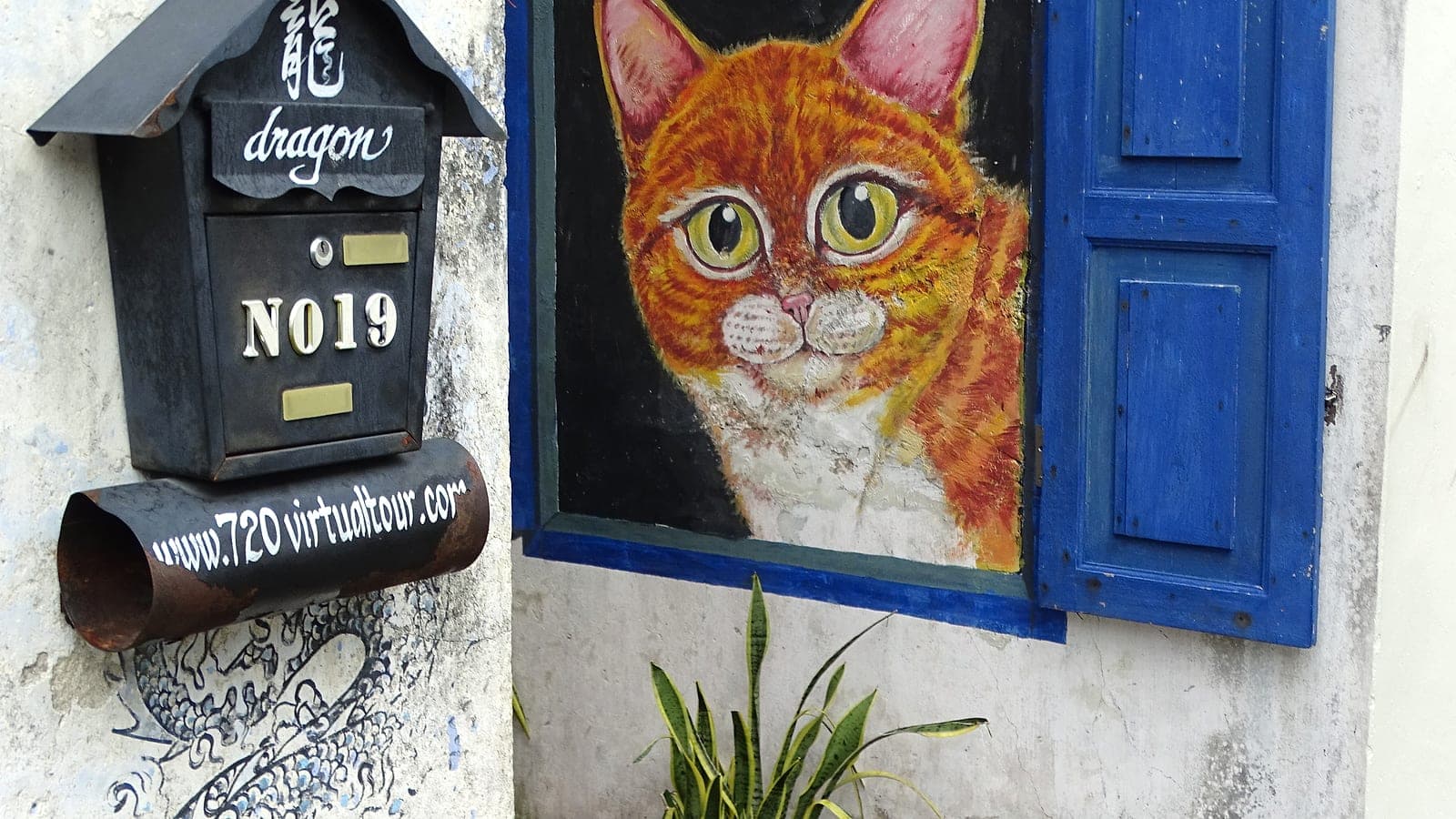
Penang photographs itself. The George Town heritage zone is a compression of texture, colour, and human activity that rewards a camera at almost any time of day — but the best shots are the result of being in the right place at the right moment, which in Penang means early mornings, late afternoons, and knowing which lanes the tour groups don't walk down.
This guide covers the major locations and the overlooked ones, gives specific light timing for each, and includes the practical logistics — transport, crowd patterns, entry fees — that affect whether you actually get the shot.
Two or three days of deliberate photography in Penang will take you from the famous murals to the canal-side fishing villages to the summit views over the Malacca Strait. Each location has a different logic; this guide gives you that logic.
Photographers of all levels visiting Penang — from smartphone photographers building a travel feed to serious shooters with a deliberate portfolio agenda. Also useful for anyone who wants to see the heritage zone with genuine attention rather than on a tour route.
George Town Heritage Zone
The Zacharevic Murals — Armenian Street Cluster
Ernest Zacharevic's 2012 George Town Festival murals remain the most-photographed subjects in Penang, and for good reason: they blend painted figures with real-world objects (an actual bicycle, an actual motorcycle, an actual swing) in a way that has barely been replicated elsewhere.
Kids on Bicycle (Lebuh Armenian, west of the junction with Lebuh Pantai) — the most photographed. Two children on a real steel bicycle mounted to a mural-painted wall. The fame comes at a cost: this spot has a consistent queue from 9am to 5pm. For clean shots without waiting tourists, arrive before 8am or after 6pm.
Little Children on a Swing (opposite side of Armenian Street, slightly further east) — two mural children on a real swing attached to the shophouse. Less consistent queue than the bicycle. Best light is afternoon — the wall faces east, catching warm reflected light from the west.
Boy on a Motorbike (Lebuh Armenian, further east toward Jalan Penang) — mural boy on a genuine vintage motorbike. Strong late-afternoon light comes from the west along the street. The motorbike is the strongest compositional element in the trio.
Beating the crowd
The Armenian Street murals are on a UNESCO-listed tourist trail. If you want the murals without visitors in the frame, your window is 7:30–8:30am on weekdays. Weekends are harder. Consider the evening — the street empties significantly after 6pm and the light is warm. Overcast mornings diffuse the harsh tropical sun and often produce cleaner shots on the textured walls.
Iron Rod Sculptures — Heritage Zone
The Mirrors George Town series (2012, same festival as the Zacharevic murals) placed iron-rod silhouette sculptures at culturally significant spots throughout the heritage zone. These are less Instagrammed but often more interesting as photography subjects: a blacksmith at his forge, a woman grinding spices, a trishaw driver.
Pick up the official Heritage Trail map at the George Town World Heritage Inc. visitor centre (Church Street / Lebuh Gereja). The map marks all sculpture locations. A full walk of the trail takes 2–3 hours; it doubles as a neighbourhood orientation.
Cheong Fatt Tze Blue Mansion
The indigo-blue facade of this 1880s Chinese courtyard mansion on Leith Street is the most reproduced heritage image in Penang. The blue is a specific mix of indigo and lime wash; it reads differently in shade than in direct sun. Facade shots from the street are free; the interior courtyard requires a guided tour (RM 17, runs multiple times daily, well worth doing).
Photography notes: The facade faces southwest. Best exterior light is late afternoon (3–5pm) when the low sun catches the louvered windows and the shadows on the textured plaster become directional. Direct midday sun bleaches the blue tone. Overcast skies hold the colour well at any time.
The interior courtyard (tour access only) has a central open-air well with patterned encaustic tile floors and a carved wooden screen gallery. Natural light from the courtyard opening is the only source — shoot wide, use the tile patterns as foreground.
Seven Terraces — Stewart Lane
A row of seven restored Anglo-Indian terraced houses on Stewart Lane (Lorong Stewart), painted in warm ochre tones. The streetscape from the lane junction is a clean composition — the repeating facades, the proportional windows, the ochre-on-white contrast. No queue, no admission charge.
Photography notes: The lane runs roughly east-west. Best light is morning (east end illuminated) or evening (whole row catches warm reflected light). Mid-afternoon is flat.
Clan Jetties — Weld Quay / Pengkalan Weld
The Clan Jetties are stilt-house villages built over the sea by early Chinese immigrant clan associations. Chew Jetty (largest, most commercial) has been modified by souvenir stalls; Tan Jetty, Lim Jetty, and the Mixed Jetty retain more architectural authenticity and photograph more honestly.
What to shoot:
- The long wooden jetty walkways stretching over the water, with stilt houses on both sides
- Resident fishing boats tied below the jetties
- The older clan association buildings at the jetty entrance — faded red paint, ornate doorways
- The view back toward George Town from the end of the jetty
Photography notes: Early morning (6:30–8am) gives golden-hour light, reflections on still water, and genuine fishing activity without the tour groups. Bring a tripod for the low-light water reflections. Overcast days reduce the harsh contrast between the dark water and the bright sky.
Hidden Lanes and Secondary Streets
The major streets — Armenian, Lebuh Chulia, Penang Road — are well-photographed. The lanes between them are not.
Lorong Love (Love Lane) — a narrow lane between Lebuh Chulia and Lebuh Muntri lined with budget guesthouses in former shophouses. Mural fragments, local laundry on lines, cats on walls. Works well as street photography at any time; golden light comes down the lane at late afternoon.
Muntri Street (Lebuh Muntri) — one of the most architecturally intact streets in the heritage zone. Mid-19th century shophouses in continuous use. The ironwork window shutters and hand-painted shophouse tiles are distinctive. Walk it slowly with a 50mm equivalent lens.
Lebuh Aceh and the Malay Quarter — quieter than the tourist core, with Malay timber houses behind the shophouse line. The Masjid Melayu Lebuh Aceh (Aceh Mosque, 1808) has a distinctive Sumatran architectural style and is open to non-Muslim visitors outside prayer times. The surrounding streets give a different visual language from the Chinese heritage core.
Entering temples and mosques
Dress modestly (shoulders and knees covered) when entering any religious site. Remove shoes at the entrance — a rack is always present. Photography inside is generally permitted in common areas but not during active prayers. When in doubt, ask a staff member or follow what other visitors are doing.
Penang Hill
The summit of Penang Hill at 833 metres is the best elevated view in Penang. The funicular takes 5 minutes from the lower station at Air Itam.
What to shoot:
City and strait views — from the viewing platforms on the summit, George Town spreads below and the Malacca Strait extends to the south and west. The bridge connecting the island to the mainland is visible on clear days. The view is best when haze is low — early dry season (December–February) gives the clearest long-distance visibility.
Cloud forest — the summit is frequently in or just below cloud. Low-cloud mornings give atmospheric shots of the forested hillside with cloud layers moving through the trees. This is notably different photography from the heritage zone.
Sunrise — the funicular opens at 6:30am. A 6:30am departure puts you on the summit as sunrise lights up the city below. Bring a tripod. The hill faces east; the first light catches the white colonial buildings and the sea at the same time.
Macro and nature — the summit forest has orchids, pitcher plants, and hill birds that don't appear at sea level. The jungle trail near the peak (30-minute loop) rewards a longer lens and patience.
Practical notes: Funicular tickets cost RM 30 (adults, non-citizen). Weekends and public holidays are crowded; the views from the summit are the same regardless of queue length. The open-air platform at the top is cold by Penang standards — bring a light layer for dawn visits.
Batu Ferringhi and the North Coast
Batu Ferringhi is Penang's main beach zone, 30 minutes from George Town by Grab.
Sunset photography: The beach faces northwest. Sunset light hits the water directly from May to October (the southwest monsoon season); the cloud formations during the monsoon produce dramatic sunset skies. The rock formations at the northern end of the beach and the silhouettes of fishing boats at anchor are the best compositional anchors.
Night market: The Batu Ferringhi night market (daily from 6pm) has stall lights, crowd movement, and compressed visual chaos that works well for street photography with a fast lens. Shoot wide-open at ISO 1600–3200 to freeze the movement in the mixed artificial light.
Balik Pulau — Rural South
Balik Pulau on the southwest side of the island is a 40-minute drive from George Town and a completely different visual environment.
What to shoot:
- Durian orchards along the road in season (May–August)
- The old Balik Pulau town centre — colonial post office, shop fronts unchanged since the 1950s, coffee shops with Hokkien-speaking regulars
- Rice fields and fruit farms in the valley before the town
- Teluk Bahang fishing village (on the route back north)
This is rural Malaysia, not heritage-zone Malaysia. Bring a longer lens (85–135mm equivalent) for the orchards and village life; a wide zoom for the valley landscape.
The Esplanade and Waterfront
The colonial Esplanade (Padang Kota Lama) is the open green space facing the Malacca Strait, bounded by Fort Cornwallis, the Victoria Memorial Clock Tower, and the 19th-century colonial civic buildings along Lebuh Farquhar.
What to shoot:
- The clocktower at dusk — the white colonial tower against a deep blue sky just after sunset
- The city lights reflected in the sea at night (shot from the seawall)
- Fort Cornwallis (RM 20 entry) — the oldest surviving British fort in Malaysia; the cannon row inside the bastion is distinctive
Night photography: The strip of civic buildings along Lebuh Farquhar (High Court, City Hall, Penang State Museum) are lit at night. A tripod and 15–30 second exposure with the traffic light trails on the road below gives a clean long-exposure urban shot.
Equipment Notes
What matters most: In Penang's heritage zone, a 28–50mm equivalent lens does 80% of the work — the lanes are narrow and you can't back up. A wider lens (24mm or wider) is useful for interiors. A longer lens (85–135mm) compresses the heritage architecture effectively and lets you work from distance in crowded spots.
Light: The equatorial sun is harsh from 10am to 4pm. Shoot in the golden hours (7–9am, 4–6:30pm) for colour and texture. Overcast light (frequent during monsoon season) is excellent for the street art — it eliminates harsh shadows on the textured walls.
Tripod: Useful for the Clan Jetties at dawn, Penang Hill sunrise, and the Esplanade night shots. A small travel tripod or gorilla pod is enough; a full-size tripod is awkward in the narrow lanes.
Heat: Sensor heat haze is real at midday. Keep your camera in shade when not shooting. A UV filter adds minimal optical effect but protects the front element from humidity and salt air near the sea.
Further Reading
- George Town Heritage Zone — orientation and walking map
- George Town Street Art Guide — full mural locations
- Penang Hill — funicular times, tickets, and what to see
- Balik Pulau Guide — rural Penang day trip
- Clan Jetties — stilt village history and access
Keep reading
Guides that pair well with this one.
George Town Street Art Guide: Every Mural Worth Finding (2026)
A street-by-street guide to Penang's famous murals — Zacharevic's iron cartoons, the Armenian Street pieces, and how to walk the full trail in half a day.
10 min readplanningPenang for Korean Visitors: Café Trail, Street Art & Food Guide
Korean travellers' guide to Penang. Visual café trail, Ernest Zacharevic street art locations, heritage photo spots, souvenir guide, halal food options, and practical info for visitors from Seoul, Busan, and Daegu.
11 min readtravelFree Things to Do in Penang: A Practical Guide to Exploring Without Spending
The best free activities in Penang — heritage walks, street art, temples, beaches, and markets. Honest about what costs and what genuinely doesn't.
11 min readneighborhoodsArmenian Street George Town — Complete Guide
Lebuh Armenian is the most-photographed street in Penang. Here's what's actually on it, what's nearby, and how to see it without just following the mural trail.
7 min read