Kuih (Nyonya Cakes)
Colourful bite-sized Malay-Peranakan cakes and sweet treats
What is Kuih (Nyonya Cakes)?
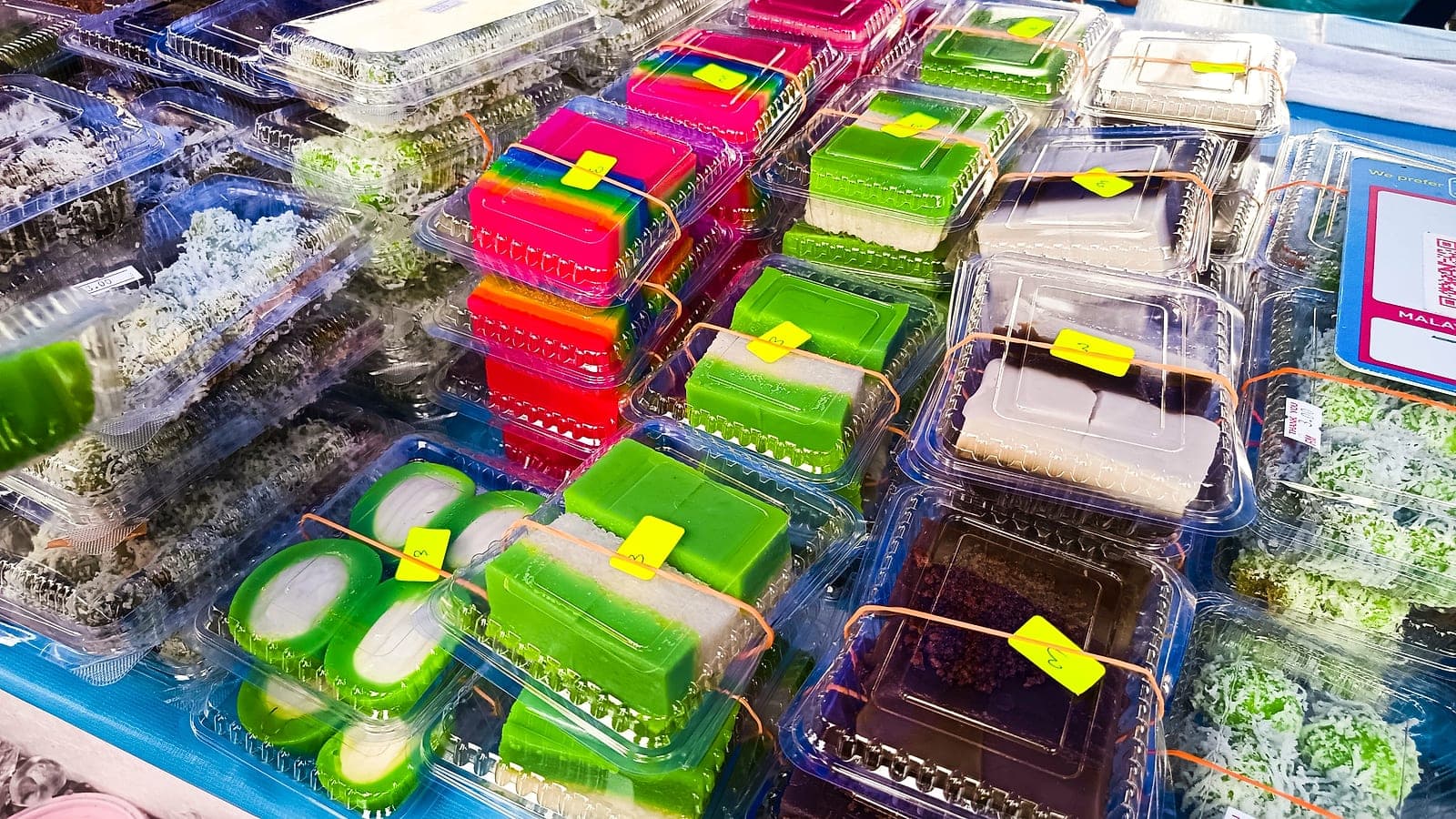
Kuih (pronounced "koo-eh") is the collective name for a dazzling array of traditional Malay and Nyonya (Peranakan) bite-sized cakes, snacks, and confections. In Penang, home to one of the largest Peranakan communities in the world, kuih-making is an art form passed down through generations. These petite treats come in every colour of the rainbow - vivid green from pandan, deep purple from sweet potato, bright pink from rose water, snowy white from rice flour and coconut milk. Each piece is a miniature masterpiece of texture and flavour: chewy, springy, silky, crispy, or melt-in-your-mouth soft. Walk through any Penang morning market and you will see trays upon trays of kuih arranged like edible jewels.
History & Origins
Kuih has deep roots in the Malay Archipelago, but Penang's Nyonya (Peranakan) community elevated it into a refined culinary art. The Peranakans - descendants of Chinese immigrants who married local Malays - developed elaborate kuih recipes that blended Chinese techniques with Malay ingredients like pandan, coconut milk, and palm sugar. In traditional Nyonya households, kuih-making was a test of a young woman's skills and marriageability. Some recipes required hours of patient steaming, layering, and hand-shaping. Penang's kuih tradition is particularly rich because of the island's Nyonya heritage - families in George Town have been making the same recipes for five or six generations. Today, while fewer home cooks make kuih from scratch, market vendors and Nyonya restaurants keep the tradition alive.
Key Ingredients
How to Order
Top 5 Spots to Try Kuih (Nyonya Cakes)
Chowrasta Market
Why it's the best: The kuih capital of Penang. Dozens of vendors sell homemade kuih every morning. Widest variety on the island - 30+ types on a good day. Go before 9am for best selection.
Pulau Tikus Market
Why it's the best: Neighbourhood market with excellent Nyonya kuih from home bakers. The kuih lapis and ondeh-ondeh here are exceptional. Very local, very authentic.
Moh Teng Pheow Nyonya Koay & Canteen
Why it's the best: A dedicated Nyonya kuih shop in a heritage building. Beautifully presented, traditional recipes. The ang ku kuih and kuih talam are house specialities.
Pasar Air Itam (Air Itam Market)
Why it's the best: Budget-friendly morning market with homemade kuih. Very traditional varieties including some you rarely see elsewhere. Combine with Air Itam laksa.
Nyonya Breeze (Joo Hooi Cafe area)
Why it's the best: Cafe-style Nyonya kuih shop with air conditioning and tea pairings. Slightly pricier but excellent quality. Good for visitors wanting a sit-down kuih experience.
Variations to Try
Kuih Lapis
Multi-layered steamed cake in alternating colours (usually pink and white or green and white). Each paper-thin layer is steamed individually then stacked. Mildly sweet and chewy.
Ondeh-Ondeh
Green pandan-flavoured glutinous rice balls filled with liquid gula melaka, rolled in fresh grated coconut. When you bite in, the melted palm sugar bursts out. Addictive.
Kuih Talam
Two-toned steamed kuih with a green pandan bottom layer and white coconut milk top layer. Silky smooth and subtly sweet. Beautiful to look at.
Kuih Angku (Red Tortoise Cake)
Bright red or pink glutinous rice shell filled with sweet mung bean paste, shaped in a tortoise mould. Traditional birthday and celebration kuih. Sticky and rich.
Kuih Seri Muka
Two layers - steamed glutinous rice on the bottom, green pandan custard on top. The contrast between the chewy rice and smooth custard is perfection.
Pulut Inti
Steamed glutinous rice topped with sweet coconut filling (inti), wrapped in banana leaf. Simple, comforting, and one of the oldest kuih recipes.
Dietary Information
Insider Tips
- 1Morning markets (6-10am) have the freshest and widest selection - kuih is a morning food in Penang
- 2Buy a mixed selection (campur) of 5-6 different types for RM 5-10 to sample the variety
- 3Ondeh-ondeh is the must-try for first-timers - the burst of liquid gula melaka inside is an unforgettable experience
- 4Kuih is best eaten the same day - most do not keep well overnight as the texture changes
- 5Point and pick - language barrier is no issue at kuih stalls. Just point at what looks good
- 6Eat kuih with your fingers - they are designed as finger food
- 7Chowrasta Market is the one place you should not miss for kuih - the variety is unmatched
- 8Ask for "yang mana sedap?" (which is good?) - vendors will happily guide you to their best sellers
- 9Some kuih (like ondeh-ondeh) have liquid filling - bite carefully or the syrup may squirt!
Related Dishes
Eat it on a guided food tour
Local guides take you to stalls you'd never find solo — including the best spots for Kuih (Nyonya Cakes).
Ready to taste authentic Penang food?
Explore more dishes or find the best hawker centres and restaurants