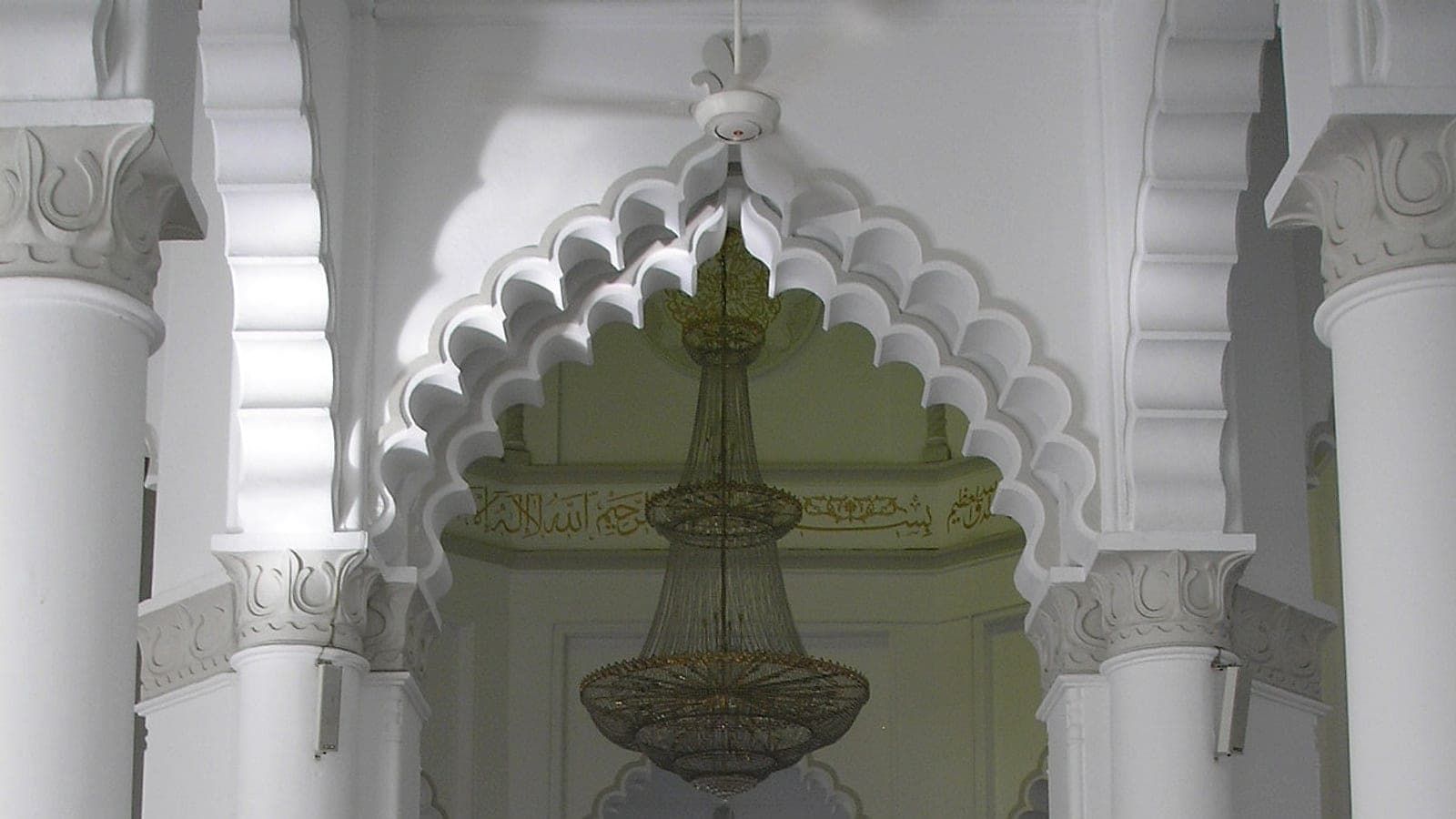
Islamic Heritage Walk
10 stops through 200 years of George Town's Islamic history
About This Walk
This self-guided walking route takes you through the heart of George Town's Islamic heritage quarter — a dense cluster of mosques, tombs, merchant houses, and Islamic schools that has survived largely intact since the early 19th century. The route covers the complete Islamic heritage landscape of the UNESCO World Heritage zone.
Unlike other Asian Islamic heritage sites, George Town's Islamic quarter is a living community. The mosques still serve active congregations. Families have lived in the merchant houses for generations. The madrasah still teaches students. Walking through these streets is a genuine encounter with an unbroken 200-year Islamic tradition.
Walk at a Glance
The Route: 10 Stops
Follow the stops in order for the most coherent historical narrative
Masjid Kapitan Keling (Start)
Begin at Penang's oldest and grandest mosque, built in 1801 by Indian Muslim merchant Cauder Mydin Merican. Take in the Mughal-style white domes before exploring the interior (dress modestly).
Historical note: The original kapitan system assigned community leaders (kapitans) to different ethnic groups. The Indian Muslim kapitan built this mosque as the centrepiece of his community's quarter.
PIMA & Indian Muslim Quarter
Walk north along Jalan Masjid Kapitan Keling to see the Indian Muslim Association building and the cluster of Muslim-owned textile and spice shops that have operated here for over a century.
Historical note: The Jawi Peranakan (Tamil Muslim-Malay mixed) community developed a unique identity in Penang, combining Tamil language with Islamic faith and Malay cultural practices. This street was their commercial heart.
Little India Islamic Market
Explore the Islamic commercial zone within Little India. Browse shops selling traditional Islamic goods, prayer items, halal spices, and Muslim fashion. Try teh tarik at one of the mamak stalls.
Historical note: Muslim traders from South India were among Penang's most important early merchants. Unlike purely seasonal traders, many settled permanently, marrying locally and forming the Jawi Peranakan community.
Syed Alwi Building & Arab Quarter Entrance
Admire the Victorian-Moorish facade of the Syed Alwi building, then turn into the narrow lane of Lebuh Aceh to enter the historic Arab quarter. Notice how the architecture changes as you enter this older neighbourhood.
Historical note: Yemeni Arab traders from the Hadhramaut region were among Penang's wealthiest 19th-century merchants. Their influence extended across the Indian Ocean trading network.
Kampung Arab (Arab Quarter)
Walk through the narrow lanes of the original Arab quarter. Look for old merchant houses with Arabic inscriptions, carved wooden doors, and the distinctive mashrabiya (wooden lattice screens) on upper-floor windows.
Historical note: The Arab and Acehnese community on Lebuh Aceh operated extensive trading networks connecting Penang with the Hadhramaut coast of Yemen, the Swahili coast of East Africa, and ports across Southeast Asia.
Masjid Melayu Lebuh Aceh (Acheen Street Mosque)
Visit Penang's oldest mosque, built in 1808 by an Acehnese Arab merchant. The eclectic Egyptian minaret stands alongside Malay-style prayer hall elements. Enter respectfully (dress code required).
Historical note: The mosque was endowed as a waqf (Islamic charitable trust) by its founder, meaning it could never be sold. This legal instrument protected the site through 200 years of colonial rule and development.
Wali Kundi Tomb
Walk behind the mosque to find the shaded graveyard containing the tomb of Wali Kundi, a revered Islamic scholar from Aceh. Older gravestones with Arabic inscriptions mark the graves of early Muslim settlers.
Historical note: Wali Kundi is believed to have been a Sufi scholar who spread Islamic mystical teachings among the early Penang community. His tomb has been a place of reverence for over 200 years.
Madrasah Mashoor Al-Islamiah
View the exterior of Penang's oldest Islamic school, founded in 1905. The geometric patterns on the facade are fine examples of Islamic architectural decoration applied in the colonial shophouse style.
Historical note: Islamic education was crucial for preserving Muslim identity during British rule. Madrasah Mashoor produced generations of ulama (religious scholars) and community leaders who maintained Islamic practice across the Malay archipelago.
Penang Islamic Museum
Conclude the historical portion of your walk at the Islamic Museum, housed in a beautifully restored Arab merchant's townhouse. The permanent exhibition traces 200 years of Islamic history in Penang.
Historical note: The building was originally the home and trading office of an Acehnese merchant. The restoration preserved original features including the internal courtyard, carved timber, and ceramic tile floors.
Haji Lane Market (End)
End your Islamic heritage walk at the historic Haji Lane market area. Browse traditional Islamic goods and treat yourself to lunch at one of the excellent halal mamak restaurants nearby.
Historical note: Penang was historically the main embarkation point for Malay-Muslim pilgrims from the archipelago heading to Mecca by steamship. This market grew to serve the needs of pilgrims waiting for passage.
Historical Context
Understanding the history behind the sites makes the walk far richer
The Founding Era
Francis Light establishes Penang as a British trading post. Arab, Indian Muslim, and Acehnese traders are among the first settlers. A small wooden mosque serves the early Muslim community on Acheen Street.
The Golden Age of Muslim Commerce
Kapitan Keling Mosque built (1801) by the Indian Muslim kapitan. Acheen Street Mosque founded (1808) by Arab-Acehnese merchant Tengku Syed Hussain. Penang becomes a major waypoint on the Hajj pilgrimage route from Southeast Asia.
Expansion and Consolidation
Arab merchant families expand their trading networks across the Indian Ocean from their Penang base. The Jawi Peranakan (Tamil Muslim-Malay mixed) community establishes a distinct cultural identity. Multiple additional mosques and Islamic schools founded.
Colonial Period
Islamic education expands through madrasahs (religious schools) to preserve Muslim identity under British rule. Madrasah Mashoor founded (1905). Penang becomes an embarkation point for thousands of Malay-Muslim pilgrims on steamships to Arabia.
Independence and Preservation
Malaysian independence (1957) brings state support for Islamic institutions. UNESCO listing (2008) helps preserve the historic Islamic quarter. The Islamic heritage of George Town is now internationally recognised as one of Southeast Asia's finest examples.
All Islamic Heritage Sites
Complete reference list for independent exploration
Wali Kundi Tomb
tombThe oldest surviving Islamic burial site in Penang, containing the tomb of Wali Kundi, a revered Islamic scholar and spiritual figure from Aceh who arrived with the earliest Muslim settlers.
Tip: The compound contains trees estimated to be over 150 years old. The setting is one of the most atmospheric in all of George Town.
Penang Islamic Museum
museumA heritage museum in a restored 19th-century Arab merchant's townhouse, displaying the history of Islam in Penang and the Islamic trade routes that made George Town a major commercial hub.
Tip: The building itself is a heritage shophouse with original features. The exhibition on the Jawi Peranakan community (Tamil Muslim-Malay mixed heritage) is particularly illuminating.
Kampung Arab (Arab Quarter)
trail landmarkThe historic Arab and Acehnese merchant quarter of George Town, centred on Acheen Street (Lebuh Aceh). This compact neighbourhood contains the highest concentration of Islamic heritage in Penang.
Tip: Look for the carved wooden doors and ornate plasterwork on the old merchant houses. Several buildings still bear Arabic inscriptions above their doorways.
Malay Heritage Trail Markers
trail landmarkA series of interpretive heritage markers through the oldest Malay settlements in George Town, tracing the history of the Malay-Muslim community from the founding of Penang to the present day.
Tip: The trail map is available from the Penang Heritage Trust office on Armenian Street. The guided walk takes approximately 2 hours.
Syed Alwi Building
trail landmarkA grand mid-Victorian commercial building built by a prominent Arab-Hadhramaut merchant family who were among Penang's most influential Muslim traders of the 19th century.
Tip: The building facade shows a fascinating blend of Moorish arches and Victorian detailing. Look for the carved crescent moon decorative elements above the second-floor windows.
Penang Indian Muslim Association (PIMA)
trail landmarkThe headquarters of Penang's Indian Muslim community, established in 1935 and still active today. The building houses community services and maintains records of the Jawi Peranakan heritage.
Tip: The association can arrange guided tours of the Indian Muslim heritage sites in George Town. Contact in advance for group visits.
Little India Islamic Quarter
marketThe Islamic commercial zone within Little India, where Muslim-owned shops selling textiles, spices, halal meat, and Islamic goods have operated continuously since the 19th century.
Tip: The best places to buy prayer items, Islamic books in Jawi script, and traditional Malay-Muslim garments are concentrated in this area. Try the Muslim-run mamak stalls for authentic teh tarik and roti canai.
Madrasah Mashoor Al-Islamiah
schoolOne of the oldest Islamic educational institutions in Penang, established in 1905 and still operating as a religious school. It stands as evidence of the deep commitment to Islamic scholarship in colonial-era Penang.
Tip: The school building has beautiful traditional Islamic geometric decoration on its facade. Photography of the exterior is respectfully welcome.
Acheen Street Mosque Historic Compound
mosqueThe entire compound of Masjid Melayu Lebuh Aceh, including the mosque, graveyard, Wali Kundi Tomb, and adjacent Arab merchant houses, representing the most concentrated area of Islamic heritage in Penang.
Tip: The compound is best experienced early morning when light slants through the old trees and the city has not yet woken up. A true hidden gem within the tourist-heavy UNESCO zone.
Haji Lane Islamic Market Area
marketA cluster of traditional shops and stalls run by Muslim traders specialising in Islamic goods, Malay textiles, prayer accessories, and halal food, named after the Haji pilgrims who historically gathered here.
Tip: You can still find traditionally made ihram garments, prayer beads (tasbih), and handwritten Quran-verse calligraphy from craftspeople whose families have been in this trade for generations.
Islamic Architectural Styles You'll See
Mughal
Grand white domes, pointed arches, ornate minarets from North India and Central Asia. Seen at Kapitan Keling Mosque — the dominant style in Penang's oldest grand mosque.
Egyptian Minaret (Eclectic)
The distinctive square-section minaret of Acheen Street Mosque draws from Egyptian mosque design — unusual in Southeast Asia and reflecting the Arab founders' Nile Valley connections.
Indo-Saracenic
A colonial-era fusion of Islamic arches, Indian decorative elements, and Victorian detailing. Found in the facades of Indian Muslim merchant buildings throughout the heritage quarter.
Islamic Heritage Walk FAQs
How long does the Islamic heritage walk take?
The full 10-stop walk covers approximately 3.5km and takes 3-4 hours including time spent at each site. You can do a shorter version covering stops 1-6 (the core Islamic quarter) in about 2 hours. The route is fully walkable and is entirely within the flat George Town heritage zone.
When is the best time to do the Islamic heritage walk?
Early morning (8:30-11am) is ideal. Temperatures are cooler, morning light is excellent for photography, and the mosques are open for visiting before midday prayers. Avoid starting after 11am if you want to visit mosque interiors, as most close for Zohor prayer at 12:30pm. Weekdays are quieter than weekends.
Is the walk suitable for non-Muslim visitors?
Yes, the walk is designed for all visitors interested in Islamic history and architecture. Non-Muslims can visit most sites including the mosque exteriors, the Wali Kundi Tomb compound, the Islamic Museum, and all street-level heritage sites. Mosque interiors require modest dress — robes are provided free at entrances.
What was Penang's role in Islamic trade routes?
From 1786, Penang became a critical node in the Indian Ocean Islamic trade network. Arab traders from Yemen's Hadhramaut coast, Indian Muslims from Tamil Nadu, and Acehnese traders from northern Sumatra all established communities here. Penang served as a staging post for Hajj pilgrims from across the archipelago travelling to Mecca. The wealth generated by this trade funded the mosques, schools, and merchant houses visible today.
Who was Wali Kundi?
Wali Kundi is believed to have been an Acehnese Islamic scholar who arrived in Penang in the early 19th century. He is revered as a wali (saint or Islamic spiritual leader) by both Acehnese and Malay Muslim communities. His tomb behind the Acheen Street Mosque has been a site of visitation for over 200 years. The name "Kundi" refers to a type of gourd, associated with a legend surrounding the saint.
What architectural styles will I see on the walk?
The walk showcases four distinct Islamic architectural traditions: Mughal (Kapitan Keling Mosque's white domes), Malay-traditional (kampung-style prayer halls), Egyptian/Moorish (the distinctive minaret of Acheen Street Mosque), and Indo-Saracenic (the ornate facades of Indian Muslim merchants' buildings). This variety reflects the diverse origins of Penang's Muslim communities.