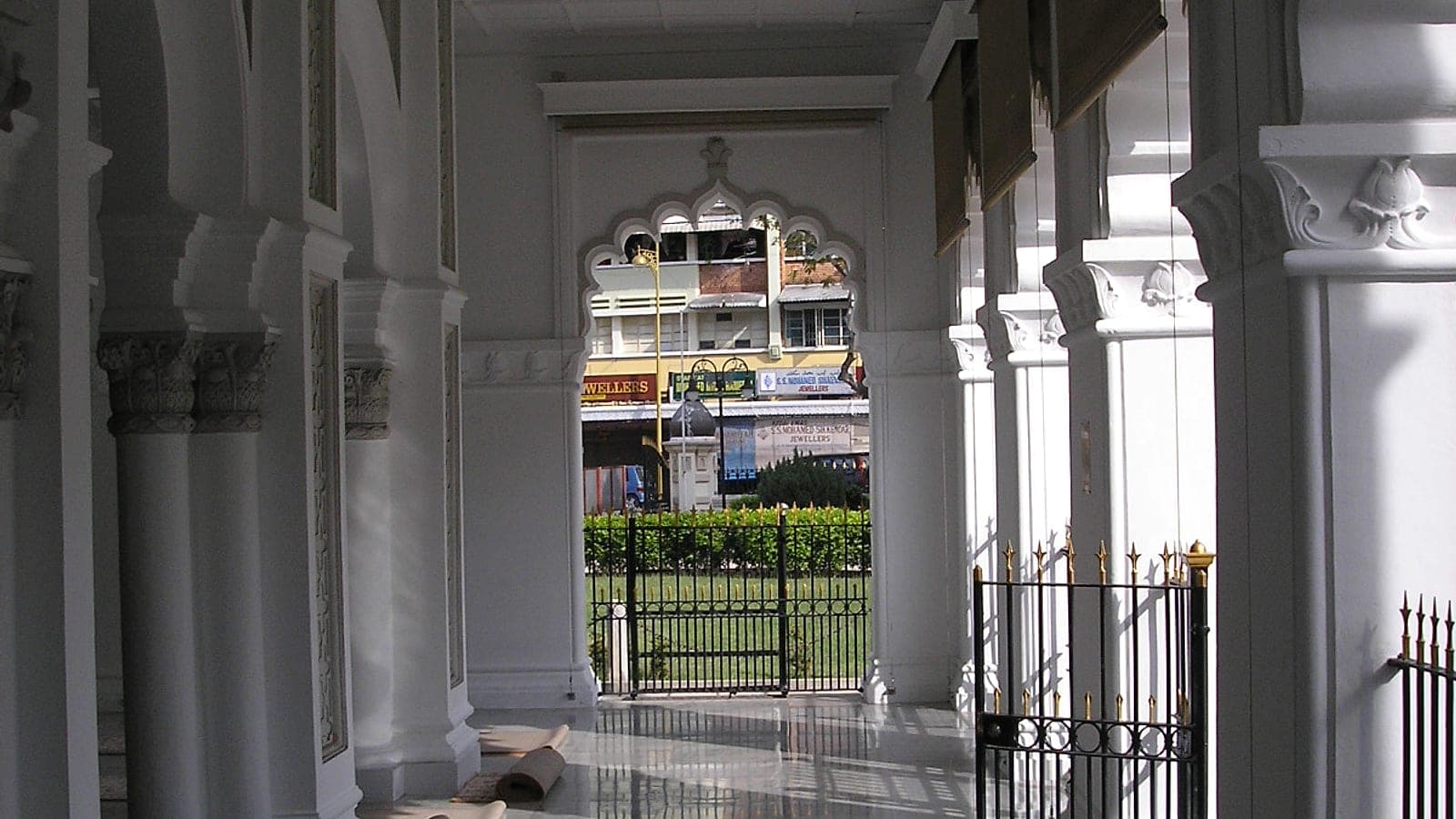
Mosques of Penang
12+ mosques from 1801 to today — GPS, visiting hours, and architecture guide
Penang Mosque Directory
Penang has over 150 mosques and surau across the island and mainland. This directory covers the most historically significant, architecturally distinctive, and visitor-friendly mosques. For each mosque we include GPS coordinates, non-Muslim visiting hours, Friday prayer times, women's facilities, and architectural background.
Historic Mosques
Built before 1950 — Penang's architectural and cultural Islamic heritage
Masjid Kapitan Keling
Est. 1801مسجد كبتان كلينج
The oldest and most architecturally significant mosque in Penang, built by the first Kapitan of the Indian Muslim community. Its white Mughal domes and minarets dominate the George Town skyline.
Historical Background
Founded in 1801 by Cauder Mydin Merican, the first Kapitan (community leader) of the Indian Muslim merchants who settled with Francis Light. Originally a modest timber structure, it was rebuilt in grand Mughal style with white marble and towering domes. The mosque was expanded multiple times throughout the 19th and 20th centuries and remains the spiritual heart of George Town's Indian Muslim community.
Tip: Visit early morning (8:30-9:30am) for the best light on the white facade. The mosque is surrounded by UNESCO heritage shophouses making it perfect for photography.
Masjid Melayu Lebuh Aceh
Est. 1808مسجد الملايو لبوه آتشيه
Penang's oldest surviving mosque, built by Arab traders from Aceh (northern Sumatra). Its eclectic architecture blends Arab, Moorish, and Malay elements and sits in the heart of the George Town's original Malay enclave.
Historical Background
Built in 1808 by Tengku Syed Hussain al-Aidid, an Arab merchant from Aceh who became a prominent trader in early Penang. The surrounding Acheen Street neighbourhood (Kampung Arab) was established as the home of Arab and Acehnese traders who played a vital role in Penang's early Islamic trade network. The mosque features an unusual Egyptian-style minaret added in the 19th century.
Tip: The Wali Kundi Tomb behind the mosque is one of the oldest Islamic burial sites in Penang. The narrow lane behind the mosque leads to a cluster of original Arab merchants' houses.
Masjid Jamek Jelutong
Est. 1935مسجد جامع جيلوتونج
A charming mid-century Malay-style mosque serving the historic Jelutong fishing community. Less visited by tourists, it offers an authentic glimpse into everyday Penang mosque life.
Historical Background
Established in the 1930s to serve the growing Malay fishing community of Jelutong. The mosque retains its original Malay timber architectural elements with a high-pitched roof and carved wooden details, later modernised with a new prayer hall in 2001. It remains one of the best examples of traditional Malay mosque design on the island.
Tip: The weekly Sunday morning farmers' market nearby sells fresh local produce and traditional Malay snacks. Combine with a visit to the Jelutong seafront.
Masjid Al-Hussain
Est. 1919مسجد الحسين
A beautiful Indo-Saracenic style mosque built by the Tamil Muslim community of George Town. Its ornate facade with horseshoe arches and intricate tilework makes it one of the most photogenic smaller mosques in Penang.
Historical Background
Built in 1919 by the Tamil Muslim (Jawi Peranakan) community, Al-Hussain represents the architectural fusion of Islamic, Indian, and British colonial influences that characterises Penang's unique multicultural identity. The mosque was named after Imam Hussain, grandson of the Prophet Muhammad.
Tip: The ornate tilework on the facade is among the finest in George Town. Visit during late afternoon when the sun illuminates the western facade.
Masjid Jamek Air Itam
Est. 1890مسجد جامع آير إيتم
A historic mosque in the hill town of Air Itam, serving a large Malay population near the famous Kek Lok Si Temple. The mosque features traditional Malay architecture and sits amid the lush greenery of the island's interior.
Historical Background
Established in the 1890s to serve the agricultural Malay communities of Air Itam valley. The area around the mosque contains some of the oldest Malay kampung (village) settlements in Penang. The mosque has been restored and expanded while retaining its original Malay architectural character.
Tip: Combine with a visit to nearby Kek Lok Si Temple (10-minute walk) for a unique inter-faith heritage experience. The Air Itam market below the mosque has excellent Malay breakfast options.
Masjid Al-Badar
Est. 1945مسجد البدر
A well-maintained Moorish-style mosque in the commercial heart of George Town, convenient for shoppers and visitors to the Penang Road shopping district. Known for its welcoming atmosphere and frequent Islamic talks.
Historical Background
Built in 1945 to serve the Muslim trading community of the bustling Penang Road commercial area. The mosque has hosted generations of Muslims from diverse backgrounds including Malay, Indian Muslim, and Arab communities who worked in the nearby markets and shops.
Tip: Located steps from the famous Penang Road Cendol stall. Perfect for a prayer break while exploring Little India and the heritage zone.
Masjid Pahang
Est. 1912مسجد فهانج
A graceful early 20th-century mosque combining Moorish and Malay architectural elements. Named after the Pahang community who settled in the area, it features beautiful stained glass windows and ornate carved timber work.
Historical Background
Built in 1912 by migrants from Pahang state who settled in Penang during the early colonial era. The mosque represents the diversity of Muslim communities who made Penang their home. Its eclectic blend of styles reflects the cosmopolitan character of early 20th-century George Town.
Tip: The stained glass windows are best viewed from inside during morning hours when sunlight filters through them. The surrounding Jalan Pahang neighbourhood has excellent Indian Muslim breakfast stalls.
Modern Mosques
Post-1950 mosques serving Penang's growing Muslim population
Masjid Negeri Penang (State Mosque)
Penang's official state mosque and the largest in the island. A striking modern Islamic structure with a massive prayer hall that accommodates up to 10,000 worshippers, rising in the heart of the administrative district.
Tip: Best photographed from the road opposite. The white exterior glows beautifully at sunrise and is particularly dramatic lit up at night during Ramadan.
Masjid Terapung (Floating Mosque)
A striking modern mosque built on reclaimed seafront land along Gurney Drive. The white structure appears to float above the sea at high tide, earning it the name Masjid Terapung (Floating Mosque). It is one of the most photographed mosques in Penang.
Tip: Visit at high tide for the famous floating effect. Sunset photography from the adjacent Gurney Drive esplanade is spectacular with the white mosque in the background.
Masjid Sultan Babul Alam
A peaceful seaside mosque serving the fishing village of Teluk Bahang on the island's northwest coast. Its traditional blue and white design complements the coastal setting near Penang National Park.
Tip: After visiting, explore the National Park mangrove trails 500m away or visit the Entopia butterfly farm nearby. The village seafood restaurants serve excellent Muslim-certified ikan bakar (grilled fish).
Masjid Negeri Seberang Perai
The grand state mosque for Seberang Perai, the mainland portion of Penang state. A striking modern structure with a large golden dome serving thousands of worshippers from the rapidly developing mainland towns.
Tip: Easily visited on the way to or from the mainland via the Second Penang Bridge. Combine with Bukit Mertajam Night Market on Friday evenings.
Masjid Ubudiah Bayan Baru
A large modern mosque serving the rapidly growing Bayan Baru township near Penang International Airport. Its central dome and multiple minarets are visible from across the southern part of the island and from arriving aircraft.
Tip: Conveniently located 5 minutes from Penang International Airport. Ideal for Friday prayers or arrival day worship before heading into George Town.
Mosque Architectural Styles
Penang's diverse Islamic communities brought different architectural traditions from their homelands, resulting in an unusually varied collection of mosque styles.
Mughal
Grand white domes, pointed arches, and ornate minarets derived from the great mosques of North India and Central Asia. Best example: Masjid Kapitan Keling.
Indo-Saracenic
A British colonial-era fusion of Islamic, Indian, and Gothic architectural elements. Horseshoe arches, decorative tilework, and ornate facades. Best example: Masjid Al-Hussain.
Moorish
Derived from the Islamic architecture of North Africa and Spain. Characteristic horseshoe arches, geometric patterns, and decorative tilework. Common in early 20th-century Penang mosques.
Malay Traditional
High-pitched timber roofs, carved wooden details, and natural materials reflecting pre-Islamic Malay architectural traditions adapted for mosque use.
Modern Islamic
Contemporary designs incorporating Islamic geometric patterns and large domes in reinforced concrete. Typically built from the 1970s onwards to serve expanding urban populations.
Eclectic
Unique blends of multiple architectural traditions — common in Penang given its multicultural history. Elements from Arab, Indian, Malay, and colonial British traditions combined.
Mosque Visiting Etiquette
Penang mosques warmly welcome respectful non-Muslim visitors. Follow these guidelines.
Remove your shoes
Shoes must be removed at the mosque entrance. A shoe rack is provided. You may carry your shoes inside in a bag.
Dress modestly
Arms, legs, and (for women) hair must be covered. Robes and head coverings are available at most mosque entrances at no charge.
Avoid prayer times
Do not enter during the five daily prayer times. Mosque staff will inform you when prayer is imminent. Friday midday prayer closes mosques to visitors for approximately 1.5 hours.
Speak quietly
The mosque is a place of worship. Keep voices low. Switch mobile phones to silent mode.
Ask before photographing
Ask permission before photographing interiors or worshippers. Do not photograph anyone in prayer. Exterior photography is generally welcome.
Do not enter prayer halls without permission
Some mosques designate specific areas for non-Muslim visitors. Respect these boundaries and ask staff if you wish to see the prayer hall.
Friday Prayer Guide for Visitors
For Muslim Visitors
- Friday Zohor prayer begins approximately 12:30pm at all mosques
- The first azan (call) is for the sermon (khutbah); the second is for prayer
- Masjid Kapitan Keling and Masjid Negeri have the largest Friday congregations
- Arrive 30 minutes early for popular mosques to find parking
- The prayer + sermon typically lasts 60-90 minutes
- Women pray in designated sections — all mosques have women's areas
For Non-Muslim Visitors
- Plan around midday on Fridays — mosques are closed 12:00pm-2:30pm
- Many Muslim-owned shops and restaurants close temporarily during Friday prayer
- Observing the congregation arriving and leaving is a cultural experience
- Do not walk through mosque grounds during prayer time
- Friday afternoons (post-prayer) are excellent visiting times as mosques are freshly cleaned
- The Little India area quietens significantly during Friday prayer
Mosque Visiting FAQs
Can non-Muslims visit mosques in Penang?
Yes, most mosques in Penang welcome non-Muslim visitors during designated visiting hours (typically 9am-12pm and 2:30pm-5pm). Visiting is not allowed during the five daily prayer times, and the Friday Zohor prayer (approximately 12:30pm-2pm) closes the mosque to visitors. Modest dress is required — many mosques provide robes and head coverings at the entrance for free.
What should I wear to visit a mosque in Penang?
Both men and women must cover arms and legs fully. Women must also cover their hair with a headscarf. Shoes must be removed at the entrance. Most Penang mosques provide robes (jubah) and head coverings free of charge for visitors who are not dressed modestly. Avoid wearing shorts, sleeveless tops, or short skirts.
What time is Friday prayer in Penang mosques?
Friday Zohor prayer (Solat Jumaat) is held at approximately 12:30pm and lasts until around 2:00-2:30pm. During this time, mosques are closed to non-Muslim visitors and many Muslim-owned businesses temporarily close. The exact start time varies slightly by mosque — listen for the first azan (call to prayer) which precedes the sermon.
Which is the oldest mosque in Penang?
Masjid Melayu Lebuh Aceh (Acheen Street Mosque), built in 1808, is the oldest surviving mosque in Penang. Masjid Kapitan Keling was established in 1801 (making it the oldest by date), but has been substantially rebuilt and expanded. Both are located within the George Town UNESCO World Heritage zone.
Is photography allowed inside Penang mosques?
Photography policies vary by mosque. Masjid Kapitan Keling and Masjid Negeri allow photography in designated areas but prohibit photography during prayer times. Masjid Melayu Lebuh Aceh allows exterior photography and the graveyard compound. Always ask permission before photographing worshippers or prayer halls. Exterior photography is generally fine at all mosques.
How do I know when prayer times are in Penang?
Prayer times in Penang are broadcast publicly via mosque loudspeakers five times daily. You can also download the e-Solat Malaysia app (official government app) for exact daily prayer times by location. Prayer times shift slightly each day throughout the year. Approximate daily schedule: Fajr 5:30am, Zohor 1:00pm, Asar 4:15pm, Maghrib 7:20pm, Isyak 8:30pm.