On this page
Penang for Senior Travellers: Low-Exertion, High-Reward
A practical guide to Penang for older travellers. Accessible attractions, excellent medical infrastructure, comfortable hotels, and why Penang is one of Southeast Asia's best senior destinations.
Penang is unusually well-suited to older and senior travellers. The heritage zone is compact enough to explore without a car. The best activities — temple visits, hawker meals, a funicular ride up Penang Hill, afternoon tea at a colonial hotel — require modest physical exertion. And if medical support is ever needed, Penang is Malaysia's leading medical tourism destination with JCI-accredited international hospitals close to the city centre.
Penang gives senior travellers access to world-class food, genuine heritage, and comfortable infrastructure without demanding the stamina of beach or jungle destinations elsewhere in Southeast Asia.
Travellers 60+, visitors with mobility considerations, couples looking for a relaxed pace, anyone wanting quality experiences without the need for physical endurance
Why Penang Works Well for Seniors
The heritage zone's scale is its first advantage. George Town's UNESCO-listed core covers roughly 3km north to south — walkable in sections, and easily navigable by the free CAT bus, trishaw, or Grab when you've covered enough ground for the day. Most sites are adjacent: temples, street art, clan houses, and hawker centres cluster within short walking distances of each other.
The climate deserves honesty: Penang is warm (28–33°C) year-round, with high humidity. The practical response is to schedule the outdoors early — before 11am and after 4pm — and use air-conditioned museums, the E&O Hotel lobby, or a hawker centre table as a midday retreat. This rhythm fits naturally into a senior travel pace.
Medical infrastructure is more robust than elsewhere in the region. Penang has four internationally-accredited hospitals within the urban area — more per capita than most Southeast Asian cities — and English-speaking medical staff are standard. This is one reason Penang attracts medical tourists from across Asia.
Low-Exertion Highlights
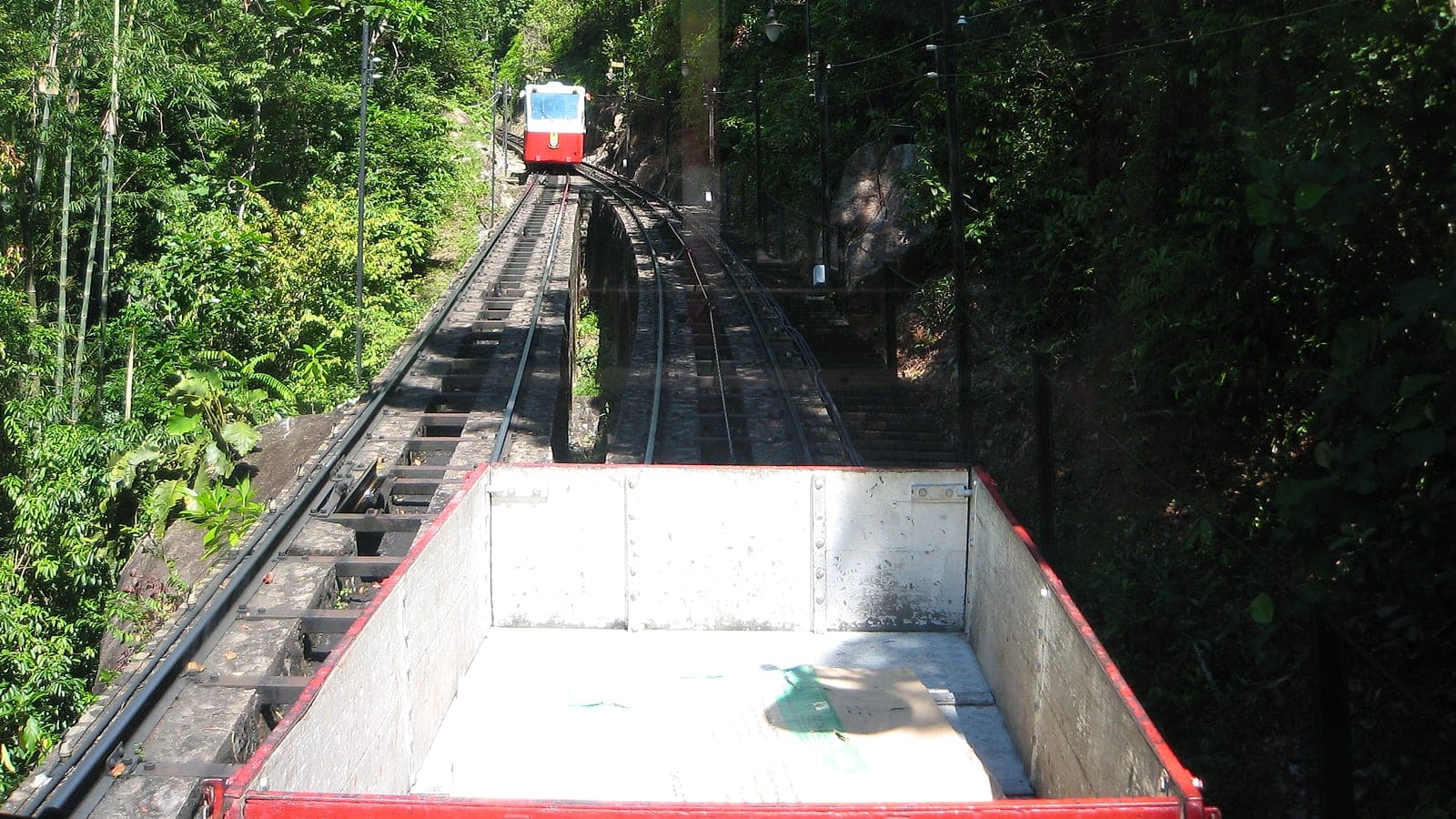
Penang Hill Funicular is one of the best value activities on the island. The Swiss-built train takes five minutes to ascend 833 metres; the summit is 5–7°C cooler than the coast. The view across George Town to the Penang Bridge on a clear morning is exceptional. Book tickets online — the queue at the station can be long. Round trip RM 30 for foreigners. There are lifts and flat viewing areas at the top.
Trishaw tour of George Town covers the heritage zone without walking. Trishaws are three-wheeled cycle rickshaws that can accommodate one or two passengers. A 1.5-hour guided loop through the heritage streets, past the clan jetties, street art, and temples is available from touts near the Padang (esplanade). Agree the price before you set off — roughly RM 40–60 per trishaw for the standard route.
Kek Lok Si Temple has inclinators — small outdoor covered escalators — connecting the lower courtyard to the upper pagoda level. The grounds are extensive and you can see the best of the temple without climbing steps. The 30-metre bronze Guan Yin statue at the summit requires the inclinator (RM 2). Morning visits are cooler; come before 10am if possible.
Afternoon tea at the Eastern & Oriental Hotel is the best sit-down experience in Penang. The E&O is a colonial-era hotel on the waterfront with high ceilings, sea views from the terrace, and a proper high tea service. Prices are RM 80–120 per person. Reserve in advance, particularly on weekends.
Pinang Peranakan Mansion is one of the most satisfying indoor experiences in the heritage zone. The restored mansion of a 19th-century Straits Chinese magnate is densely filled with antique furniture, ceramics, gilded screens, and original fittings. The rooms are entirely walkable without stairs. Allow 1.5–2 hours.
Timing matters more than location
In Penang's heat, the same activity feels entirely different at 8am versus 1pm. Temple visits, jetty walks, and market exploration should be morning activities. Afternoons are for climate-controlled spaces (museums, hotel lobbies, air-conditioned restaurants) and rest. Evenings re-open everything.
Medical Facilities
Penang Adventist Hospital is the closest international hospital to the George Town heritage zone (10 minutes by Grab from Love Lane). JCI-accredited, English-speaking staff throughout, international patient department with insurance coordination.
Gleneagles Penang is part of Singapore's Parkway Pantai network — familiar to travellers from Singapore or Indonesia who have used Gleneagles elsewhere. Strong in cardiology and orthopaedics.
Island Hospital in Tanjung Tokong is the largest private hospital in Penang. Full specialist range.
All three have 24-hour emergency departments. Pharmacies (Guardian, Watsons) are in every major mall and most neighbourhood streets in George Town — prescription medication refills for common conditions are usually straightforward.
Travel insurance for Malaysia
Confirm that your travel insurance covers pre-existing conditions if relevant, and that it includes emergency evacuation cover. Penang's hospitals are good; medical fees for international patients without insurance can be substantial. Most insurers rate Malaysia as a Tier 1 destination (lower cost) compared to Singapore or Hong Kong.
Where to Stay
The heritage zone has hotels across every price point, and proximity to the food and sites matters more than brand name.
Eastern & Oriental Hotel is the benchmark luxury property — colonial seafront hotel with butler service, a proper swimming pool, and rooms in the original 1885 wing. Accessible rooms available on request.
Bayview Hotel Georgetown is the most accessible mid-range option in the heritage core. Modern lifts, wide corridors, and a central location. Accessible rooms available.
Campbell House is a boutique hotel in a restored heritage shophouse on Campbell Street — the right street for nasi kandar at Hameediyah. More character than the larger hotels; fewer accessibility features but a ground-floor option.
For Batu Ferringhi, the beach resort hotels (Shangri-La Rasa Sayang, Hard Rock Penang) are purpose-built with lifts, pools, accessible pathways, and beach wheelchairs on request. Appropriate if the beach is the primary draw.
Getting Around
Grab is the most practical transport option for longer distances — clean, air-conditioned cars, clear pricing upfront, and you don't need to negotiate. Within the heritage zone, walking short distances (10–15 minutes) between sites is comfortable in the mornings. The free CAT bus reduces the need to walk the full zone; it runs every 20 minutes from 6am to 11pm.
For a slower paced day, a hired Grab car for the full day (ask the driver via app message or through your hotel) costs RM 150–200 and gives flexibility without committing to set tours. See our getting around guide for full transport options including accessible routes.
A 4-Day Senior Outline
Day 1 — Arrive, orient, eat. Check in, walk to waterfront, evening at Chulia Street night hawkers. Light first evening.
Day 2 — Heritage morning. Early trishaw tour before 10am (cooler). Pinang Peranakan Mansion. Afternoon at E&O Hotel for tea. Evening walk on the esplanade.
Day 3 — Penang Hill + Kek Lok Si. Grab to lower funicular station by 9am. Ascend, spend 1.5 hours at summit. Down by funicular. Grab to Kek Lok Si (15 minutes away). Temple grounds on the inclinators. Return to George Town by noon for lunch.
Day 4 — Slow day. Pulau Tikus morning market for breakfast (Grab there, 12 minutes from George Town). Goddess of Mercy Temple. Penang Museum. Final hawker meal at Gurney Drive.
Keep reading
Guides that pair well with this one.
Penang With Elderly Parents: A Practical Planning Guide
Planning a Penang trip with parents aged 65+? This guide covers accessibility, heat management, accommodation with lifts, lower-exertion itineraries, and why Penang's medical infrastructure makes it one of Southeast Asia's safest destinations for older travellers.
10 min readplanningPenang for Couples: Romantic Things to Do, Stay, and Eat
The best Penang experiences for couples — sunset at the Esplanade, dinner in a restored heritage building, a durian orchard drive to Balik Pulau, boutique hotels with character, and a city that rewards slowing down together.
9 min readplanningPenang for Korean Visitors: Café Trail, Street Art & Food Guide
Korean travellers' guide to Penang. Visual café trail, Ernest Zacharevic street art locations, heritage photo spots, souvenir guide, halal food options, and practical info for visitors from Seoul, Busan, and Daegu.
11 min readplanningPenang vs Melaka: Which Malaysian Heritage City?
Both are UNESCO World Heritage Sites. Both have Straits Chinese shophouses, colonial history, and good food. But Penang and Melaka are distinct experiences — here's which one suits your trip.
7 min read