On this page
Free Things to Do in Penang: A Practical Guide to Exploring Without Spending
The best free activities in Penang — heritage walks, street art, temples, beaches, and markets. Honest about what costs and what genuinely doesn't.
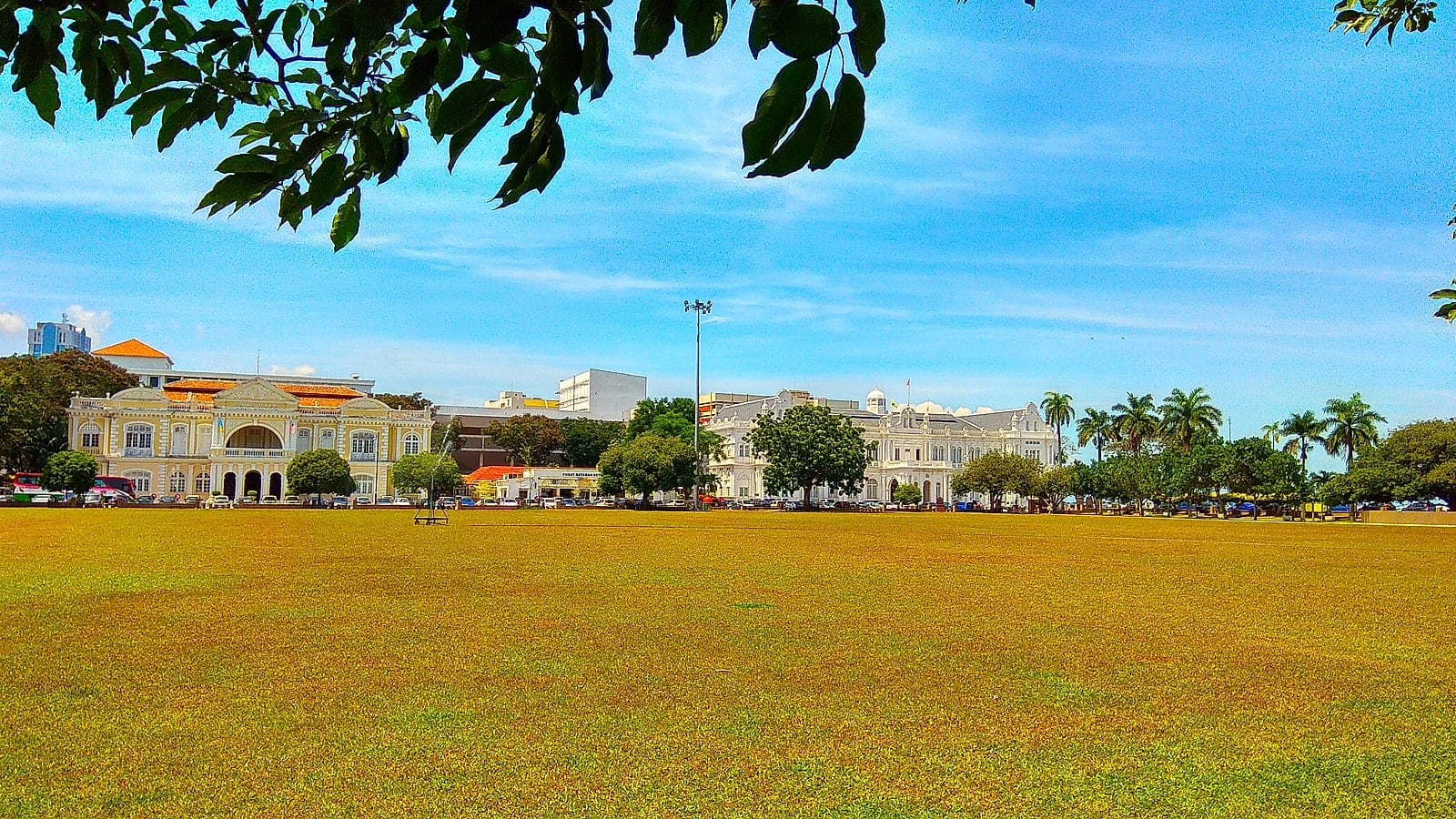
Penang is one of the few cities in Southeast Asia where the attraction itself — a UNESCO-listed living heritage zone built over 200 years — costs nothing to enter. You don't need to pay to see the best of George Town. The streets, temples, street art, jetties, and colonial architecture are all right there, accessible on foot. This guide covers what's genuinely free, what's partially free, and where the line sits.
Most of Penang's genuinely compelling experiences are free. The paid attractions — Penang Hill funicular (RM 30), Cheong Fatt Tze Mansion interior tours, some museums — are worthwhile but not essential. A well-planned free day in George Town is more satisfying than a paid tour.
Budget travellers, backpackers, day-trippers from KL or Singapore, anyone who wants to explore Penang without a fixed activity itinerary
The Heritage Zone: The Whole Point Is the Walk
The George Town UNESCO Heritage Zone covers roughly 1.7km at its core, bounded by the seafront to the east and the commercial district to the west. It was listed in 2008 for its exceptional collection of living heritage — shophouses, clan associations, religious buildings, and communities that have been here for 200+ years. Walking it costs nothing.
Armenian Street (Lebuh Armenian) is the natural starting point. It's where the most-photographed street art is, where the Cheong Fatt Tze Mansion's blue walls front the street, and where the rhythm of the heritage zone — narrow lanes, five-foot ways, open workshop fronts — is most compressed. You can walk the full length in 10 minutes, but give it an hour.
Love Lane (Lorong Love) runs parallel to Armenian Street and is quieter. It's named after the mistresses of Armenian Street merchants who were housed here — the architecture is intact, the lane is barely 4m wide, and it connects directly to Lebuh Chulia, the backpacker spine of George Town.
Lebuh Chulia is the longest street in the heritage core, running from the waterfront nearly to Penang Road. Shophouses from the 1880s through the 1950s sit alongside modern guesthouses that have moved in without altering the facades. Walk the full length — roughly 1.2km — and you'll pass through five different eras of the city's history.
Jalan Masjid Kapitan Keling (the long road running south through the heritage zone) concentrates the city's religious buildings in a single stretch: Masjid Kapitan Keling (the oldest mosque on the island), Sri Mahamariamman Temple, Goddess of Mercy Temple, and St George's Church. Free to walk past all of them; free to enter most.
The Penang Tourism office near Fort Cornwallis
Free printed walking maps of the heritage zone, including the street art locations and clan jetty routes, are available at the Penang Tourism Information Centre near Fort Cornwallis on Lebuh Light. Pick one up before you start walking — it's more useful than trying to navigate by phone in the heritage core.
Heritage Buildings: What's Free to View and What Costs
Cheong Fatt Tze Mansion (Blue Mansion) — Church Street Pier / Lebuh Leith. The exterior is free and worth seeing: the indigo-blue walls, Chinese baroque columns, and wrought-iron details make it one of the most photographed buildings in Malaysia. Interior guided tours cost RM 22–25 and run three times daily. The exterior alone gives you a clear sense of the architecture; the interior tour adds the courtyard and history. Both are worth your time for different reasons — but if you're on a strict budget, the street view is genuinely satisfying.
Penang Peranakan Mansion — Church Street (Lebuh Gereja). The yellow-and-green facade and ornate entry gates are visible and free to photograph from the street. Entry to the museum inside costs RM 20. Skip the interior if budget is the constraint; include it if you're interested in Peranakan culture — the collection is extensive.
Fort Cornwallis — Esplanade, Lebuh Light. The outer ramparts, cannons, and grounds along the waterfront are free to walk. The inner fort (with the lighthouse and interpretive panels) charges RM 20. The outer area gives you the cannon placements and sea views; the inner section fills in the 1786 founding history. Both are short visits — 30 minutes combined if you pay, 15 minutes if you don't.
St George's Church — Lebuh Farquhar. The oldest Anglican church in Southeast Asia (1818), and free to enter during opening hours. The interior is simple — white plaster, colonial timber pews — but the building has been in continuous use for over 200 years.
Temples: Free Entry, Genuine Atmosphere
George Town's temples are not tourist reconstructions. They're working religious buildings that have been in continuous use for 150–200 years, and entry to most of them is free. The only rule that applies everywhere: remove shoes before entering.
Goddess of Mercy Temple (Kuan Yin Teng) — Jalan Masjid Kapitan Keling. Built in the early 1800s, this is the oldest and most atmospheric Chinese temple in Penang. It operates continuously — you'll find worshippers at almost any hour. On the 1st and 15th days of the Chinese lunar calendar, the temple distributes free vegetarian food (mainly rice, vegetables, tofu) to anyone who lines up. This is a genuine act of religious charity, not a tourist programme — join respectfully, eat simply, leave a donation if you feel moved to.
Sri Mahamariamman Temple — Jalan Masjid Kapitan Keling, directly south of Kuan Yin Teng. A Dravidian Hindu temple with a painted gopuram (tower) above the entrance. Free entry; remove shoes at the gate. The interior is active with daily puja; the smell of jasmine and incense garlands is immediate. Best visited in the morning when light hits the gopuram directly.
Masjid Kapitan Keling — corner of Jalan Masjid Kapitan Keling and Lebuh Buckingham. The oldest mosque in George Town (1801, rebuilt 1910). Non-Muslims are welcome to enter outside of prayer times; dress modestly and request a robe at the entrance if needed. The Moorish architecture — white facade, yellow trim, single minaret — is more restrained than the Hindu and Chinese temples nearby.
Kek Lok Si Temple — Air Itam, 4km southwest of George Town. The largest Buddhist temple in Southeast Asia, and the lower levels and gardens are entirely free. You can walk through the turtle liberation pond, the courtyard, the main prayer halls, and the lower gardens without paying anything. The cable car to the giant Kuan Yin statue (RM 2 up, RM 2 down) and the pagoda tiers (RM 2–10 depending on level) are paid. The free section alone takes 45–60 minutes to explore properly and gives a clear sense of the temple's scale. Take RapidPenang Bus 201 from Komtar (RM 1.40).
Lunar calendar timing
The free vegetarian food at Goddess of Mercy Temple falls on the 1st and 15th of the Chinese lunar calendar — roughly every two weeks, but not on fixed Gregorian dates. Check a lunar calendar app before planning around this. The queue forms early morning and runs until food is exhausted, typically by 10am.
Street Art: The Full Free Trail
The street art trail that made George Town internationally recognisable is entirely free. It started with Lithuanian-born artist Ernest Zacharevic's commissions in 2012 and has expanded significantly since.
"Children on a Bicycle" — Armenian Street (Lebuh Armenian), near the junction with Lorong Carnarvon. The most reproduced image in modern Penang tourism: two children on a real bicycle mounted to the wall, painted into a mural. Arrive before 9am to photograph without a crowd.
"Boy on a Motorbike" — Lebuh Chulia, near the intersection with Love Lane. A young boy sits on a real Royal Enfield mounted to the wall. The positioning means afternoon light hits it well for photography.
Zacharevic's other works are scattered through the heritage zone: look on Carnarvon Street, Ah Quee Street, and along the back lanes off Armenian Street. The works vary from large figurative murals to small caricature pieces.
The Mirror Works — steel rod sculptures mounted on walls throughout the heritage core. These three-dimensional caricatures were commissioned as part of the George Town World Heritage Incorporated's "Arts of the Streets" project and occupy 52 locations. Each depicts a scene from heritage-zone life: a peddler, a water-carrier, a woman hanging laundry. The Penang Tourism walking map marks all 52 locations.
The full street art circuit takes 2–3 hours if you find all the major pieces. The most concentrated section — the dozen or so works between the junction of Armenian Street and Love Lane, north toward Carnarvon Street — takes about an hour.
Clan Jetties: Living Communities on Stilts
The Clan Jetties at Pengkalan Weld (on the seafront at the southern end of the heritage zone) are free to walk and rank among the most atmospheric places in George Town. Six jetties survive: Chew, Tan, Lee, Lim, Mixed, and the Hokkien-Malay Jetty. Each was originally settled by a single Chinese clan whose descendants still live there.
Chew Jetty is the largest and most visited — a 300m wooden walkway over the sea, lined with clan houses, a small temple, and families who have lived on the water for five and six generations. Go early (before 8.30am) to find the community at its most ordinary: fishing boats, morning tea, cats on railings. By 10am the tour groups arrive.
Tan Jetty next door is quieter, shorter, and less photographed. The residents are more likely to be going about their day undisturbed.
The jetties can get crowded on weekends and public holidays. A Tuesday morning visit is noticeably different from a Saturday afternoon.
Nature and Open Space: Free and Substantial
Penang Botanic Gardens — Jalan Kebun Bunga (Waterfall Road), Pulau Tikus. Free entry; open daily from 7am to 8pm. The gardens cover 72 hectares and have been in continuous operation since 1884, making them among the oldest maintained botanical gardens in Malaysia. Features: a waterfall in the back section (the original reason for the location), long-tailed macaques throughout (don't feed them, keep food out of sight), heritage rubber trees, and a lily pond. Take RapidPenang Bus 10 from Komtar. A relaxed circuit of the main paths takes 1–1.5 hours.
Penang National Park — Teluk Bahang, northwest tip of the island. Free to enter; register at the park office near the bus stop on Jalan Teluk Bahang. The jungle trails to Muka Head Lighthouse (6km return) and the beaches at Pantai Kerachut and Teluk Duyong are free to walk. The boat to Monkey Beach costs extra (RM 30–50 per boat, negotiated at the jetty) — but walking in on the trail is free and takes about 2 hours each way. Take RapidPenang Bus 101 from Komtar to Teluk Bahang (RM 3.40, ~50 minutes).
Penang Hill jungle trail — for the physically prepared only. The funicular from Bukit Bendera station costs RM 30 for foreigners (round trip), but the jungle trail up is entirely free. It's 5.5km with 820m of elevation gain — a genuine 1.5–2 hour climb on maintained but steep paths. The trail starts near the Penang Botanic Gardens. Bring water, wear proper shoes, and go early (before 8am) to avoid heat.
Beaches: All Free
Every beach in Penang is publicly accessible and free. The main ones:
Batu Ferringhi — the longest developed beach on the island. RapidPenang Bus 101 from Komtar (RM 2.70, ~40 minutes). The beach itself has no entry fee; water sports and beach chairs are paid. Swim from any point on the open sand.
Tanjung Bungah — quieter than Batu Ferringhi, 5km closer to George Town on the same bus route. Less developed, more local in feel on weekdays.
Pantai Kerachut — inside Penang National Park, reachable by jungle trail (free, 2 hours walk) or boat (paid). A turtle nesting beach; cleaner and quieter than the resort beaches.
The Gurney Drive Esplanade
Gurney Drive Esplanade — the seafront promenade along Persiaran Gurney, roughly 4km north of the heritage core. Free to walk; best in the early evening when the sea breeze picks up and the hawker stalls adjacent to the esplanade open. The esplanade itself is a 1km paved walkway with sea views; the food stalls are among the more tourist-oriented hawker options on the island (prices are slightly higher than inland hawker centres, but still cheap by any standard).
Free and Very Cheap: Chowrasta Market
Chowrasta Market — the intersection of Penang Road and Jalan Chowrasta, open mornings. Free to walk through. It's a wet market, dry goods market, and hawker centre in one building, with vendors selling dried seafood, tropical fruits, pickled vegetables, and traditional kuih that have been operating here for decades. Not a tourist attraction in the staged sense — just a working market. Budget RM 5–15 if you want to buy anything; the pickled nutmeg and dried mango are the local recommendation.
What This Adds Up To
A full day focused on free activities in George Town looks like this: morning at Chowrasta Market (free to browse, RM 6 for breakfast at the hawker section), 2 hours on the street art trail, 45 minutes through the temple corridor on Jalan Masjid Kapitan Keling, lunch at a hawker centre (RM 8–12), afternoon at the Clan Jetties, and an evening walk along Gurney Drive Esplanade. Total spend: RM 20–30, mostly food.
For a second day: free CAT bus to the Botanic Gardens, morning walk (1–1.5 hours), take Bus 101 to Batu Ferringhi, swim, take the same bus back. Total transport: RM 5.40. Bring your own food or buy from the beach stalls.
The budget guide has the full daily cost breakdown including accommodation and paid activities, and getting around covers the free CAT bus routes in detail. For the full attractions picture — paid and free — see the main directory.
The real free thing
The most valuable free thing in Penang is the density of everything. In the heritage core, three different religious buildings, a century-old shophouse street, a cluster of street art, and a living clan community are all within a 15-minute walk of each other. The configuration itself — this specific mix of cultures and architecture surviving intact — is what makes Penang worth visiting, and it costs nothing to be in it.
Keep reading
Guides that pair well with this one.
Best Photography Spots in Penang: A Location-by-Location Guide (2026)
The definitive photography guide to Penang. Ernest Zacharevic murals, Cheong Fatt Tze Blue Mansion, Clan Jetties at sunrise, Penang Hill at golden hour, and hidden heritage lanes — with exact locations, best light times, and practical tips.
9 min readculturePenang for Art Lovers: Street Art, Galleries, and Living Heritage
Georgetown's street art scene is one of Southeast Asia's most distinctive — murals, wrought-iron caricatures, clan house interiors, and contemporary galleries. This is where to find them and how to see them properly.
7 min readcultureFamous People Connected to Penang — Artists, Scientists, and Revolutionaries
Penang has produced and shaped a surprisingly influential roster of notable people — from the founder of modern China to Nobel-level scientists and award-winning filmmakers. Here's who came from, or was formed by, this island.
6 min readfoodBest Restaurants in George Town, Penang (2026)
The restaurants worth booking a table at in Penang's UNESCO heritage zone — from Nyonya tasting menus and colonial dining rooms to old-school Hainanese chops houses and the kopitiam that hasn't changed its recipe since 1940.
6 min read