On this page
Penang for British Travellers: Flights, Practicalities & What to Expect (2026)
Everything UK visitors need to know before flying to Penang — flights from London, visa-free entry, costs in GBP, and why Penang suits British travel style.
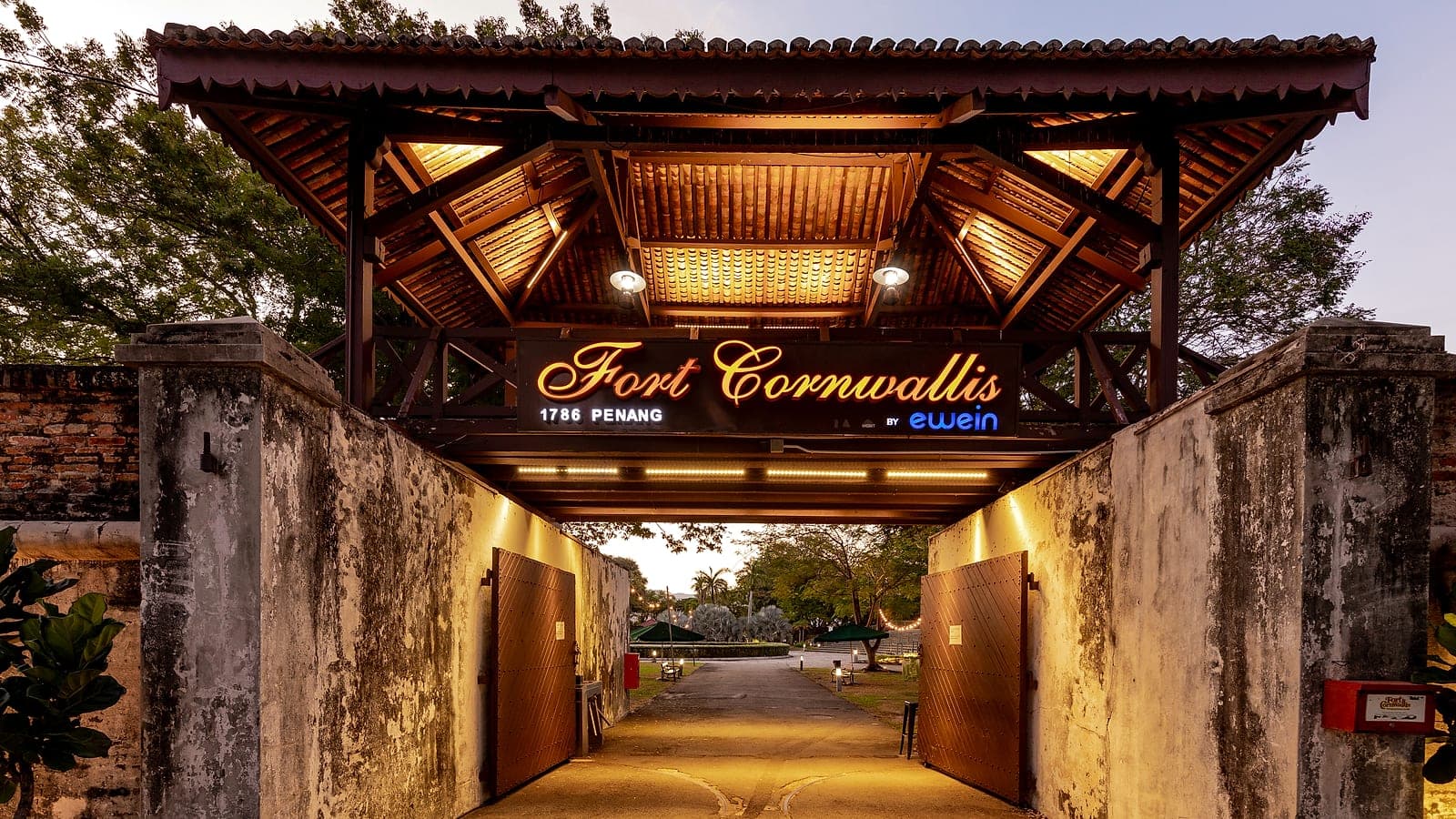
Penang and Britain have history — literally. The island was the first British settlement in Southeast Asia, established in 1786 when Francis Light of the East India Company negotiated a lease from the Sultan of Kedah and renamed it Prince of Wales Island. That history is visible today in ways no other Southeast Asian destination can match: the colonial architecture of George Town, Fort Cornwallis at the seafront, St George's Church, the Eastern & Oriental Hotel. It also explains something more functional: English is genuinely spoken here, not just in tourist zones.
None of that makes Penang a nostalgia trip or a British theme park. It's a living Malay, Chinese, and Indian city that moved on from colonial administration a long time ago. But for British visitors, arriving in a place where the road signs are in English, cars drive on the left, and the plugs fit without an adaptor does make the practical side of travel easier than in most of Southeast Asia.
This guide covers the specifics British visitors ask about: which routes to fly, what the journey actually takes, what things cost in pounds, what to sort before leaving, and what Penang delivers and doesn't deliver compared to expectations shaped by other Asian destinations.
UK travellers — first-timers to Malaysia or Penang — who want flight routing, honest costs in GBP, entry requirements, and an accurate read on what Penang is like before booking
Getting There
There are no direct flights between the UK and Penang. Every routing involves at least one connection.
The Standard Route: London → Kuala Lumpur → Penang
The most direct option is London Heathrow to Kuala Lumpur (KUL/KLIA) on Malaysia Airlines, which operates daily non-stop flights. Flight time is approximately 12–13 hours. From KLIA, a domestic AirAsia flight to Penang International Airport (PEN) takes 45–55 minutes. Total end-to-end journey, including a standard connection time, is typically 16–18 hours.
Malaysia Airlines (MH) is the main carrier on this route. British Airways operates a codeshare on some MH services, which means you can book through BA and earn Avios, but you're flying on a Malaysia Airlines aircraft. Check both MH and BA directly, and compare on Google Flights or Skyscanner for date flexibility.
Economy fares: typically £600–900 return on advance purchase (3+ months ahead). Closer to departure, fares rise significantly. Business class is available on MH at considerably higher prices; the aircraft is generally comfortable in economy for the duration.
The Alternative: London → Singapore → Penang
Singapore Changi is another option — fly LHR to SIN (Singapore Airlines, British Airways direct; around 13 hours), then connect to Penang on Scoot, AirAsia, or Batik Air (1.5 hours). This adds time and a connection but can work out cheaper on certain dates, and Singapore Changi is a more pleasant airport for connections than KLIA. Total journey is 18–21 hours.
Some travellers fly into KL or Singapore, spend two or three days, and then continue to Penang — treating it as a multi-city trip rather than a direct run. This approach genuinely helps with the flight time. Spending a night in KL before the Penang leg breaks the journey into more manageable pieces and adds context to the trip.
London Gatwick
Gatwick has fewer options on this route. Most non-stop flights to KL operate from Heathrow. Check availability, but expect to either connect through a European hub or use Heathrow.
KL to Penang by Train or Bus
If you land at KLIA and aren't in a hurry, the ETS (Electric Train Service) from KL Sentral to Butterworth (Penang's mainland terminal) takes approximately 3.5–4 hours and costs RM 80–120 (roughly £13–20). The train is air-conditioned and comfortable, and the journey through the Malaysian countryside is pleasant after a long flight. From Butterworth, a 15-minute ferry crosses to George Town. Buses from KL take a similar time and are cheaper; the Aeroline and Transnasional services are the main operators.
This overland option works well if you want a day in KL before heading north, or if you simply don't want another flight.
Visa and Entry
UK passport holders receive 90 days visa-free entry to Malaysia. No e-visa, no online registration, no fee. You present your passport at the immigration counter, complete the arrival card (available on the plane or at the airport), and receive the entry stamp.
What immigration officers may ask for: proof of onward or return travel (have your return flight booking accessible), and occasionally evidence of accommodation for the first night. In practice, most British passport holders clear immigration without difficulty.
Your passport should be valid for at least 6 months beyond your intended departure from Malaysia.
Currency and Costs in GBP
The Malaysian ringgit (RM or MYR) is the local currency. As of 2026, the exchange rate is approximately 1 GBP = 6 MYR — check xe.com or Google before travel for the current rate. This makes Malaysia comfortable for British visitors in a way that most European destinations are not.
Reference costs in pounds:
- Hawker meal (full plate of char kway teow or laksa): RM 8–15 (£1.30–2.50)
- Coffee at a kopitiam: RM 2.50–4 (£0.40–0.65)
- Decent mid-range hotel in George Town: RM 150–300 per night (£25–50)
- Heritage boutique hotel or design hotel: RM 350–600 per night (£60–100)
- The Eastern & Oriental Hotel (Penang's grand colonial hotel): from RM 800–1,200 per night (£135–200)
- Beer at a licensed bar or restaurant: RM 15–25 (£2.50–4)
- Grab ride across George Town: RM 8–15 (£1.30–2.50)
A couple travelling with comfortable mid-range accommodation, eating a mix of hawker and sit-down restaurants, and doing paid activities can realistically spend £80–140 per day combined. Budget travellers staying in guesthouses and eating exclusively at hawker stalls can do it for £35–55. Against UK travel costs this is straightforwardly excellent value.
Getting cash — ATMs are widely available in George Town and at Penang Airport. Most will accept UK Visa and Mastercard debit/credit cards; check your bank's overseas withdrawal fee before travel (Monzo, Starling, and Chase UK are all usable in Malaysia without foreign transaction fees). Avoid changing money at airport booths, which charge a significant spread. Money changers in George Town's main commercial areas offer much better rates. DuitNow QR (Malaysia's domestic QR payment system) is widely used but requires a Malaysian bank account, so UK visitors should carry some ringgit cash for hawker centres and smaller vendors.
Health and Safety
Vaccinations — No mandatory vaccinations are required to enter Malaysia from the UK. The NHS Travel Health page recommends hepatitis A and typhoid as sensible precautions. Malaria is not a risk in Penang (it's an urban island, not rural jungle). Dengue fever is present in Malaysia — use DEET mosquito repellent, particularly in the early morning and late afternoon when mosquitoes are most active.
Travel insurance — Your EHIC or GHIC card does not work in Malaysia. Travel insurance with medical cover is required. Private hospital care in Penang is excellent and affordable by UK standards — a GP consultation at Gleneagles Penang or Penang Adventist Hospital costs RM 200–350 (£33–58), a fraction of what equivalent private care would cost in the UK. The hospitals are modern and English-speaking. That said, for anything serious, insurance with medical evacuation cover matters.
Water — Don't drink tap water. Bottled water is cheap and available everywhere (RM 1–2 for 600ml). Restaurants and hawker stalls use filtered or boiled water for cooking and drink preparation.
Safety — Penang is a safe city. George Town in particular is a relaxed, walkable urban environment where tourist safety incidents are uncommon. Standard precautions apply: watch your belongings in crowded hawker areas, don't leave bags unattended, use Grab rather than unmarked taxis. The city functions well as a pedestrian destination day and night.
Electricity — Malaysia uses Type G plugs: the same three-pin standard as the UK. No adaptor needed. Voltage is 240V 50Hz, matching the UK, so British appliances work directly.
Why Penang Suits British Travellers
The practical compatibility is real. English is Penang's second language — not a tourist-facing gesture but a functional part of daily life. Road signs, restaurant menus, government notices, and most conversations with shopkeepers, hotel staff, and Grab drivers happen in English. For British travellers this removes a friction that exists in Thailand, Vietnam, or Indonesia.
Left-hand driving feels immediately normal. After a long flight from the UK, arriving somewhere where traffic makes sense on instinct is a small but genuine comfort.
The colonial architecture — George Town's heritage zone contains a density of well-preserved colonial-era buildings that is genuinely unusual. Fort Cornwallis at the seafront was built on the site where Francis Light first landed; it's not a grand fortress by European standards, but it's historically significant and freely accessible. St George's Church, built in 1818, is the oldest Anglican church in Southeast Asia — still functioning, architecturally straightforward, and worth the ten minutes. The Eastern & Oriental Hotel, established in 1885, is one of Asia's remaining colonial grand hotels in the tradition of Singapore's Raffles. It's worth visiting for a drink even if you're not staying; the Somerset Wing has been well-restored. The hotels page covers accommodation options including the E&O.
The heritage area also has excellent examples of Penang's Straits Eclectic architecture — the Anglo-Chinese hybrid shophouse style that emerged from the meeting of British colonial planning and Chinese merchant building traditions. Nothing like it exists in the UK.
The food — Penang's hawker food is the main reason serious food travellers make this journey. Char kway teow, assam laksa, hokkien mee, cendol — these dishes are Penang originals with a quality ceiling that exceeds what's available in most Malaysian restaurants in the UK. For British visitors who've eaten Penang-style dishes at home, eating them here is a noticeable difference. For those who haven't, the hawker centres at Gurney Drive, New Lane, and Kimberley Street are a reliable starting point.
The kopitiam culture — old coffee shops with marble-topped tables, charcoal-toasted bread, soft-boiled eggs, and strong local coffee — has some passing resonance with British café culture in its appreciation for a simple, well-executed hot drink and somewhere to sit. The atmosphere is entirely different, but the instinct to build social life around a beverage and a counter is recognisable.
Penang's history is part of the itinerary, not a footnote — The colonial period is visible enough that visiting it is worth doing honestly. Penang became the first British settlement in Southeast Asia when Francis Light took possession in 1786, attracted by its natural harbour and strategic position. The Malay, Chinese, and Indian communities who made George Town what it is arrived largely in the context of British colonial trade policy. The architecture and institutions British visitors find intriguing were built on that foundation. Fort Cornwallis and the surrounding Esplanade are the physical centre of this history and worth spending an hour at.
Suggested Itineraries
5 nights — Fly in, 4 nights George Town (heritage walks, food exploration, day trip to Penang Hill), 1 night Batu Ferringhi (beach resort area). Fly home from Penang.
8 nights — 2 nights KL (overnight from Heathrow, recover from jet lag, see the city), train to Penang, 4 nights George Town, 2 nights Langkawi (35–40 minute flight from Penang; the old direct ferry is discontinued, so by sea you go overland via the Kuala Kedah ferry). The Penang–Langkawi pairing works well: heritage city followed by a quieter, beach-oriented island.
10 nights — Add Ipoh between KL and Penang (1.5 hours by train from Penang). Ipoh has its own excellent hawker food, colonial old town, and limestone cave temples. A night there on the way to or from Penang is worth it.
Practical Logistics
Penang Airport to George Town — Grab is the simplest option (RM 25–40, approximately 30 minutes to the heritage zone). A fixed-price airport taxi counter operates for those who prefer it (RM 40–50). Bus 401E runs from the airport to Komtar (the main bus hub in George Town) for RM 2.70 — practical if you have compact luggage and no time pressure.
Getting around George Town — The Heritage Zone is walkable. Most of the main sites, hawker centres, and hotels are within a 20-minute walk of each other. For anything further, Grab is cheap and reliable. See the getting around page for full transport options including ferries, buses, and the Rapid Penang network.
Jet lag — The time difference between the UK and Malaysia is UTC+8, meaning Malaysia is 7–8 hours ahead (8 hours during GMT, 7 during BST). This is a significant adjustment. Arriving in the evening, avoiding daytime sleep on the first day, and getting outside in daylight on day one helps. Many travellers find the westward return journey harder than the outbound.
Best time to visit — Penang's weather is tropical year-round: approximately 32°C, high humidity. The northeast monsoon (November–January) brings heavier rain to the northeast coast; the southwest monsoon (May–September) is less intense. No month is genuinely off-limits, but April–October tends to be drier on the island's west coast (where George Town and Batu Ferringhi sit). Rain in Penang is typically heavy and brief rather than all-day.
SIM card — Available at Penang Airport from Maxis, Celcom, and Digi. A tourist SIM with 10GB data costs approximately RM 30–50 (£5–8). Alternatively, set up an eSIM from a UK provider (Airalo or Ubigi cover Malaysia) before departure — this works from the moment you land. See the SIM card guide for detail on which networks have best coverage.
Keep reading
Guides that pair well with this one.
Penang for Australian Travellers: Flights, Visas & What to Expect (2026)
Everything Australians need to know before visiting Penang — flights from Melbourne, Perth, Sydney, visa-free entry, currency, health, and what makes Penang worth the trip.
7 min readtravel-tipsPenang for American Tourists: Flights, Costs & What to Expect (2026)
Everything US visitors need to know before flying to Penang — visa-free entry, flight routes, costs in USD, tipping (don't), and why Penang rewards the American traveller who leaves the resort track.
7 min readtravel-tipsPenang for German Travellers: Flights, Costs & What to Expect (2026)
Everything German visitors need before flying to Penang — visa-free entry for EU/Schengen, flight routes from Frankfurt and Munich, costs in Euros, and why Penang suits the German travel style.
7 min readtravelPenang Airport (PEN) to George Town: Transport Guide 2026
How to get from Penang International Airport to George Town — Grab, bus, taxi, and car rental options with prices, journey times, and arrival tips.
6 min read