On this page
The History of Char Kway Teow — Penang's Most Famous Dish
Char kway teow was working-class food invented by fishermen and farmers. Here's how a cheap noodle dish from pushcart vendors became one of the most discussed street foods in Asia.
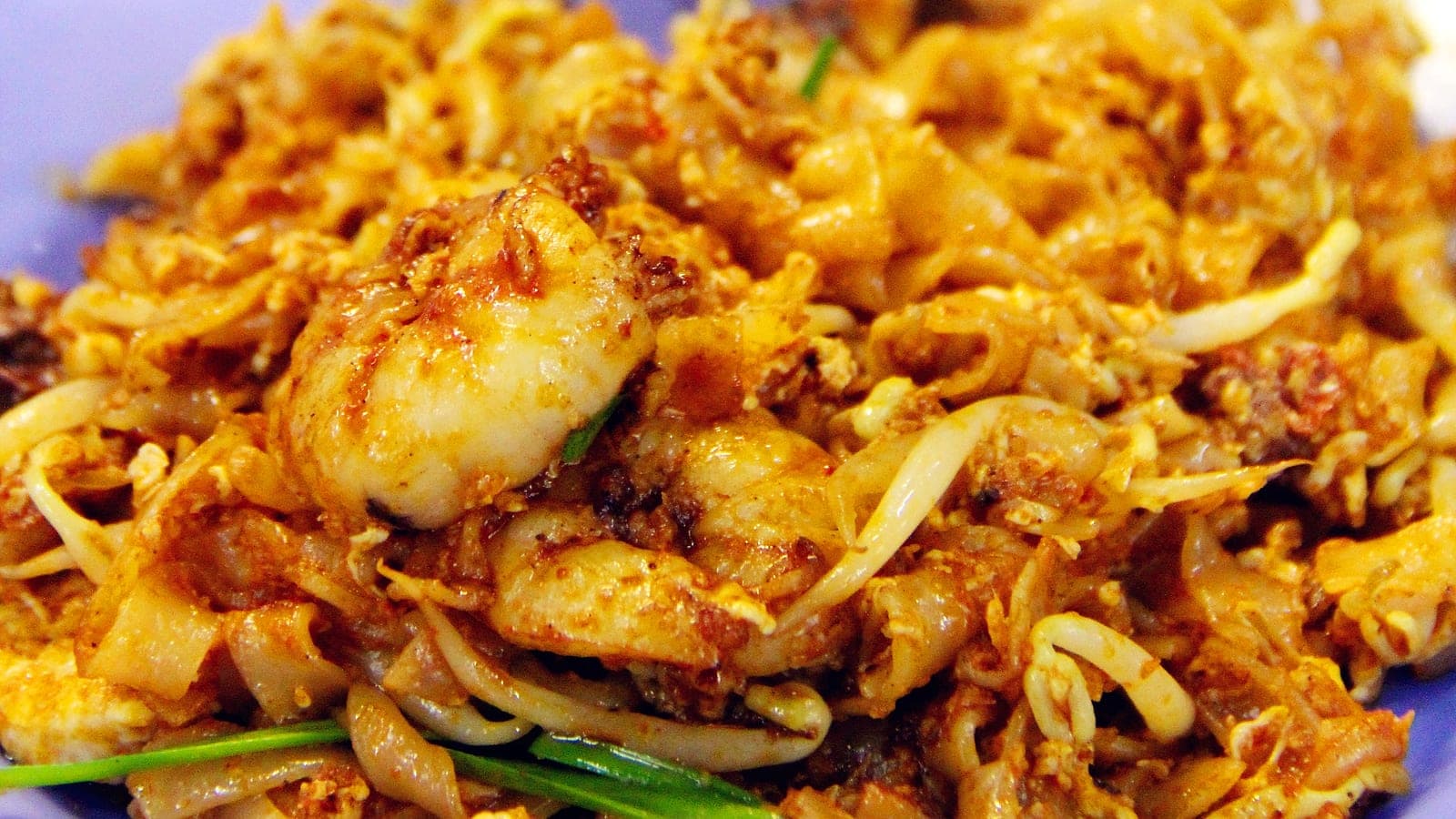
Char kway teow is Penang's signature dish — the one food that even people who have never visited the island know by name. It appears on best-of-Asia food lists, in every travel magazine that has ever covered Malaysia, and in the arguments of Penangites abroad who insist that no version elsewhere is as good as the one they grew up eating.
The name is Hokkien: char (炒) means stir-fried, kway teow (粿條) means flat rice noodles. It is a simple name for a dish that has become disproportionately famous.
The Origin: Working-Class Food
Char kway teow was invented as fuel for labourers. The earliest versions were sold from pushcarts and shoulder poles by Chinese immigrants — particularly Teochew Chinese from Guangdong province — in the street markets of George Town in the early 20th century. The dish was cheap, fast to cook, calorie-dense, and filling: exactly what a dock worker, farmer, or rickshaw puller needed for a half-hour break.
The original ingredients were dictated by cost and availability: flat rice noodles (cheaper than egg noodles), cockles (abundant in Penang's tidal flats), bean sprouts, eggs, and soy sauce. Lard was used because it was cheaper than cooking oil and produced a better flavour. The wok was iron, seasoned by years of use, heated over a wood or charcoal fire.
This is what char kway teow tasted like before it became famous. The essentials have not changed.
Why Penang's Version Is Different
Char kway teow exists in many forms across Malaysia and Singapore, but the Penang version has specific characteristics that distinguish it from all others:
Lard. The Penang style is cooked in pork fat rendered from the crispy crackling (chee yau char) that sits on the side of the wok. The cook scoops a spoonful into the wok before each batch. The fat gives the dish its characteristic richness and a different quality of smokiness than vegetable oil produces. Many modern stalls offer a non-lard option, but traditionalists consider this a different dish.
Cockles. Fresh, just-cooked blood cockles (see hum) are added near the end. They should be barely warm inside — still slightly raw at the centre. Overcooked cockles are rubbery. Good char kway teow has them perfectly timed.
Wok hei. The Cantonese term (鑊氣) for the smoky, slightly charred flavour that comes from cooking in a very hot wok. It can only be achieved in a seasoned iron wok over extremely high heat — conditions that domestic hobs cannot replicate. It is perishable: eat char kway teow hot, at the stall, within two minutes. Takeaway loses the wok hei entirely.
Kway teow and yellow noodles mixed. The classic Penang version uses a mixture of flat rice noodles and thin yellow egg noodles (mee). Some stalls offer a choice. The mix is traditional.
The lard debate
Penangites are not shy about the lard. The standard response to "is there lard in this?" is "yes, makes it better." Muslim visitors should note that halal char kway teow exists (using vegetable oil and chicken sausage instead of pork products) but is a different dish to locals. Gurney Drive hawker centre has both options clearly labelled.
The Social Rise
For most of the 20th century, char kway teow was a cheap everyday food. The vendors who sold it were typically poor men supplementing fishing or farming income. The dish's status began to shift in the 1980s and 1990s as Penang developed economically and its food culture was increasingly recognised by food writers and travellers.
The process was circular: as the dish gained reputation, prices rose; as prices rose, the best vendors could afford better ingredients; better ingredients improved quality; improved quality attracted more attention. By the 2000s, a plate of char kway teow at a well-known stall cost significantly more than a plate of rice and curry — a complete inversion of its origins.
The vendors who benefited most from this were the children and grandchildren of the original pushcart sellers. Several families have been making char kway teow for three and four generations, cooking the same dish at the same hawker centres their grandparents started, now charging fifty times the original price and being written about in international newspapers.
Where to Eat the Real Thing
For the full picture on where to eat char kway teow and how it fits into the broader street food landscape, see our Penang food guide. The Penang Tourism Board also publishes seasonal hawker guides worth checking before you visit.
The most discussed stalls are:
Siam Road Char Kway Teow — consistently rated among Penang's best. One cook, one wok, small portions cooked individually, long queue. Worth it. Closed some weekdays — check recent reports.
New Lane Hawker Centre (Jalan Macalister) — several good options in an old-school night market setting. More accessible than single-stall destinations. Goes until late.
Lorong Selamat — the most photographed and most debated option. Tourist-friendly location (off Jalan Burmah), consistent quality, often busy with international visitors. Penangites argue about whether it's still as good as it was.
Sisters Char Kway Teow (Armenian Street area) — run by two sisters (later one sister) for decades. Reliable, not overhyped, popular with locals.
The rules
- Eat at the stall, not on the way out — wok hei dies in 90 seconds. 2. Ask for teh tarik or kopi from the drinks vendor nearby — never take a plate of char kway teow without something to drink. 3. If there's no queue, it may be a sign. 4. Lunch service ends by 2–3pm at most good stalls. Evening options are more limited.
The Dish as Identity
If you are planning a trip around the food, use our Penang itinerary builder to map out a hawker-centred day.
Char kway teow's fame has made it a proxy for a broader cultural conversation. It is claimed by Penang as a marker of local identity in the face of globalisation and the homogenisation of Malaysian food culture. When Penangites abroad say "the char kway teow there is not the same," they are talking about the dish, but also about the loss of the specific combination of Chinese dialect community, open-fire cooking, and accumulated technique that produced it.
Several of Penang's best char kway teow vendors are elderly. The question of who will take over — and whether the next generation can be convinced that this is a career worth pursuing — is a genuine concern.
The dish was cheap food made by poor people for poor people. That is still its best version. The tourist fame has been good for prices and bad for the queues, but the best plates of char kway teow in Penang are still being cooked in the same iron woks, by people who learned from their grandparents, over fire.
That is what you are eating when you eat it.
Keep reading
Guides that pair well with this one.
Dishes Invented in Penang — and Where to Try the Originals
Char kway teow, Penang laksa, cendol, lor mee — several of Malaysia's most iconic dishes were invented or perfected in Penang. Here's the origin story and where to eat the real thing.
6 min readfoodGeorge Town Food Trail: The Complete Walking Guide (2026)
Walk George Town's best hawker stalls, kopitiams, and street food stops in order. Morning laksa, Hokkien mee, char kway teow, cendol — with addresses, hours, and a mapped route through the heritage zone.
9 min readplanning7 Days in Penang: The Complete Itinerary
A full week in Penang done properly — George Town's heritage zone, hawker breakfasts, Balik Pulau countryside, Batu Ferringhi, hill walks, day trips, and the meals that make the island worth returning to.
12 min readfoodPenang for Food Lovers: The Complete Eating Guide
The definitive guide to eating in Penang — from dawn hawker breakfasts to late-night char kway teow. Where to eat, what to order, and the unwritten rules of the hawker centre.
8 min read