On this page
Penang for Food Lovers: The Complete Eating Guide
The definitive guide to eating in Penang — from dawn hawker breakfasts to late-night char kway teow. Where to eat, what to order, and the unwritten rules of the hawker centre.
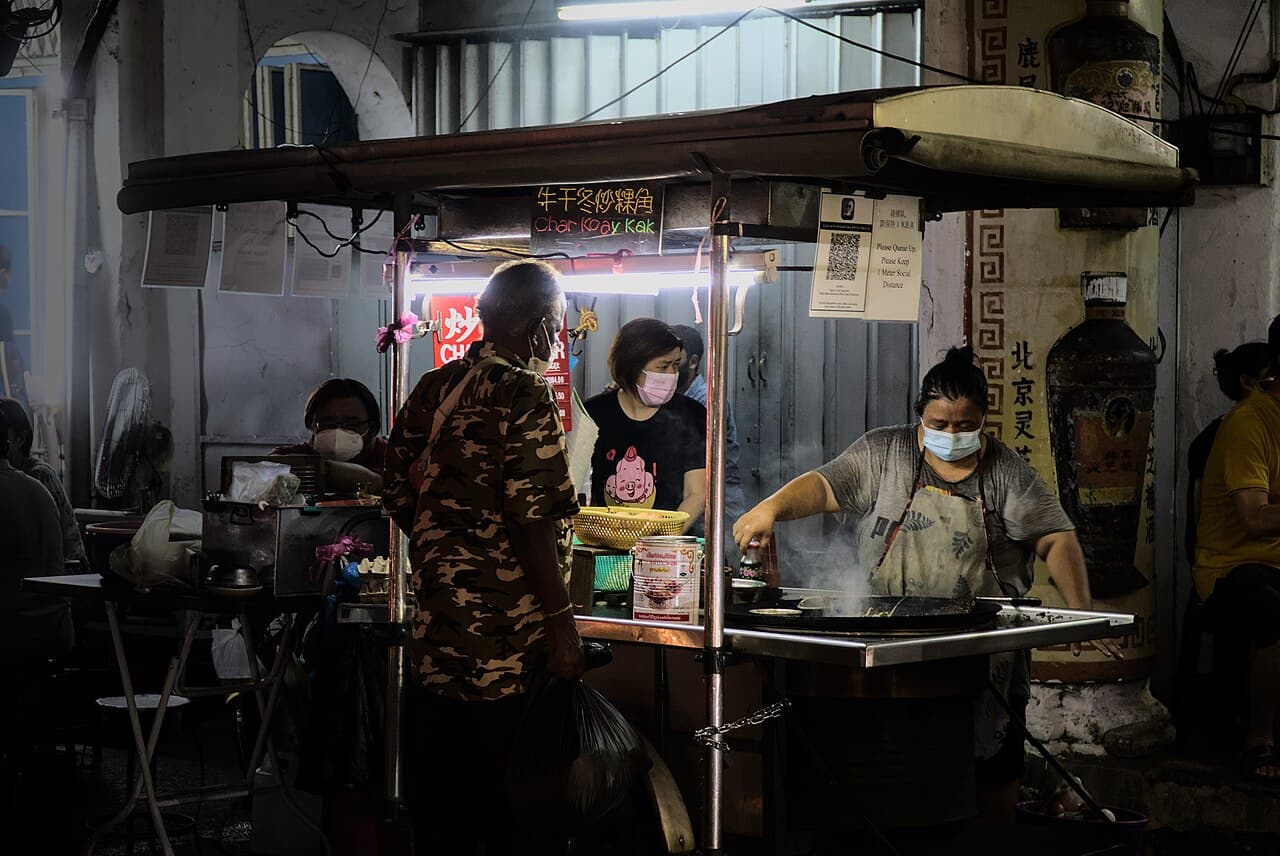
Penang is consistently ranked among the world's best food destinations — and for good reason. The island sits at a crossroads of Malay, Chinese, Indian, Nyonya, and Thai culinary traditions that have been layering flavours for over 500 years. This isn't fusion food. It's something older and more interesting than that.
This guide covers everything you need to eat well in Penang: which dishes to prioritise, where to find them, and the hawker centre rules that separate tourists from regulars.
The Dishes You Must Eat
Before planning where to go, know what you're looking for. These are the dishes Penangites are fiercely proud of — and will correct you about if you've eaten an inferior version elsewhere.
Char Kway Teow
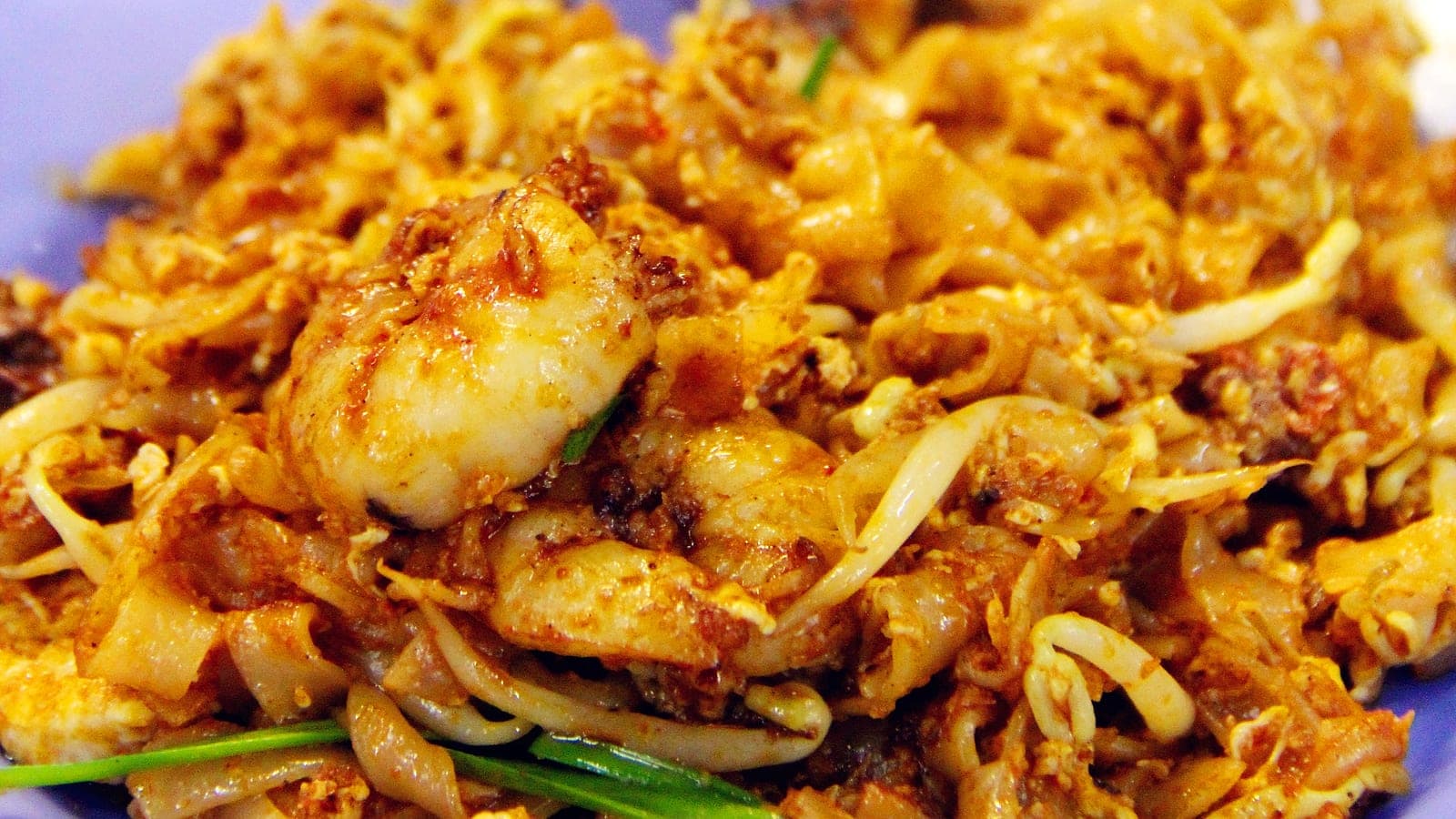
Flat rice noodles wok-fried over fierce heat with prawns, cockles, egg, bean sprouts, and Chinese sausage. The Penang version is darker and more complex than what you'll find in KL — lard is traditional, and the best stalls use it. The wok hei (breath of the wok) from a charcoal stove is impossible to replicate at home.
Where to start: Sisters Char Kway Teow at Lorong Selamat. Expect a 30-minute queue on weekends. Worth it exactly once — after that you'll find your own neighbourhood stall.
Assam Laksa
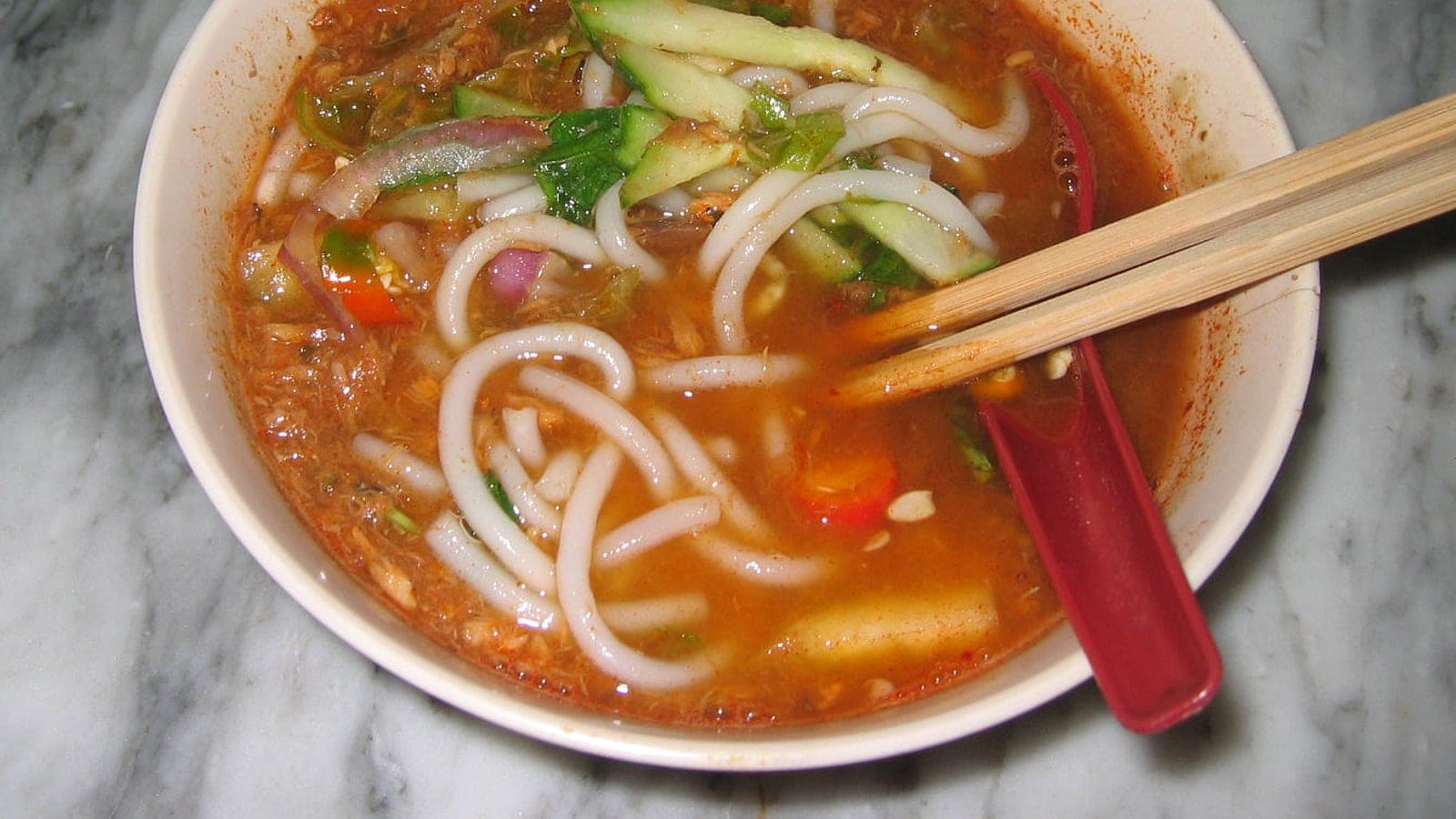
Sour, fishy, intensely aromatic soup made with mackerel, tamarind, and a paste of shrimp, lemongrass, chilli, and galangal. Served with thick rice noodles, sliced onion, cucumber, pineapple, and a dollop of prawn paste. Nothing like coconut laksa. This is the definitive Penang dish — read more about its origins in the history of assam laksa.
Where to start: Air Itam Market. The stall near the bottom of the hill has been operating for decades.
Ayer Itam
Kek Lok Si & local living
The Air Itam market is the best single destination for assam laksa in Penang. Go between 11am and 1pm — stalls wind down by early afternoon and the best ones sell out. The market is 15 minutes from Georgetown by Grab (RM8–12).
Hokkien Mee (Prawn Noodle Soup)
A rich, deep-red prawn and pork broth with yellow noodles, bee hoon, hard-boiled egg, kangkung, and crispy shallots. The broth is simmered for hours — good versions have a prawn sweetness that's clean and not muddy. Not to be confused with KL's Hokkien mee, which is a different dish entirely.
Nasi Kandar
Rice with a rotating selection of curries ladled on top — the more curries, the more flavours. Penang's nasi kandar has a tradition of "banjir" (flooding) — you ask them to drench your rice with a mixture of all the curry gravies. Eaten for breakfast, lunch, and dinner by Penangites without apology.
Georgetown
UNESCO World Heritage Zone
Line Clear at Penang Road is the most famous nasi kandar in Georgetown — open from around 7pm until the food runs out (usually 2–3am). Pelita on Jalan Burmah is better for daytime. Both are worth visiting.
Cendol
A dessert that appears simple and is harder to get right than it looks: shaved ice with coconut milk, green rice-flour jelly strips (the cendol), and dark gula melaka (palm sugar). The Penang version is served with red beans and sometimes durian. The palm sugar quality makes or breaks it.
Where: Penang Road Teochew Cendol is the benchmark. Queue up, eat standing, ignore the heat.
How Hawker Centres Work
If you've not eaten at a Malaysian hawker centre before, a few things to know:
Finding a seat: Grab a table first, then order. Put something on the table — a bag, an umbrella, a packet of tissues — to signal it's taken. This is universally understood.
Ordering system: Walk to each stall individually. Different stalls serve different dishes. You'll often have food arriving from 3–4 stalls in sequence. This is normal and expected.
Drinks: The drinks stall is usually separate and will take your full table order. Tell them where you're sitting. Teh tarik (pulled milk tea), kopi-o (black coffee with sugar), and fresh coconut are the standards.
Payment: Each stall is a separate business. Pay each stall separately. Almost all accept cash only; a few accept QR Pay now. Keep small notes.
Timing: The best hawker food comes out between 7–9am (breakfast stalls), 11:30am–1:30pm (lunch), and 6–9pm (dinner/supper). Many stalls are closed in the afternoon.
Local tip
The most sought-after stalls — Lorong Selamat char kway teow, Joo Hooi assam laksa, New Lane hokkien mee — often sell out before 9am and again by 1:30pm. Arriving 10–15 minutes before a stall opens is normal and expected. If you see a queue at a stall that hasn't opened yet, that's your signal it's worth waiting for.
Breakfast in Penang
Penangites treat breakfast with the same seriousness as dinner. The morning meal is not toast and eggs — it's a full hawker expedition.
The classic Penang breakfast rotation:
- Char kway teow or hokkien mee at the neighbourhood stall your taxi driver recommends
- Roti canai with dhal and curry at a mamak (Indian-Muslim) stall, eaten with teh tarik
- Chee cheong fun — silky steamed rice rolls with shrimp paste and sweet sauce
- Kopitiam coffee and toast with kaya (coconut jam) and butter
Georgetown
UNESCO World Heritage Zone
For the classic kopitiam breakfast experience, try Sin Guat Keong on Cintra Street or any of the old-school kopitiams around Chulia Street. Order kopi-o (black) or kopi (with condensed milk), half-boiled eggs, and kaya toast. Eat slowly. This is the most Penang thing you can do at 8am.
The Nyonya Food Tradition
Nyonya (Peranakan) cuisine is a distinct cooking tradition born from the intermarriage of Chinese settlers and local Malay communities. It's not hawker food — it's home cooking that occasionally surfaces in restaurants.
Key dishes to look for:
- Nyonya kuih — steamed coconut cakes, pandan-scented, often pastel coloured. Buy them at morning markets, not tourist shops.
- Ayam pongteh — braised chicken with fermented soybean and potatoes. Salty-sweet, deeply savoury.
- Pie tee — crispy pastry shells filled with spiced turnip and prawn.
- Inchi kabin — fried chicken marinated in coconut milk and spices. Penang's answer to fried chicken.
Where to find it: Auntie Gaik Lean's Old School Eatery (Georgetown) is the benchmark for sit-down Nyonya food. Book ahead. Expect to spend RM80–120/person.
Fruit in Penang
Penang's tropical fruit game is serious. The island is in the middle of durian country, and the surrounding region produces some of the best fruit in Malaysia.
Durian season runs roughly May–July and again November–January. If you're visiting during this window, eat it at a roadside stall, not from a hotel buffet. Musang King is the premium variety — expect to pay RM30–80/kg depending on grade.
Balik Pulau
Rural Penang, durian country
Balik Pulau on the western side of the island is Penang's durian heartland. During season, roadside stalls appear along the main road through town. The variety here is different from what's sold in Georgetown — older orchards, more complex flavour. Rent a scooter or hire a Grab and make a half-day of it.
Other fruit worth seeking out: snake fruit (salak), rambutan, mangosteen, and cempedak (a jackfruit relative with a more intense flavour). Morning markets always have the freshest selection.
Budget: What Food Actually Costs
Penang food is exceptionally affordable if you eat where locals eat.
| Setting | Per meal | Notes |
|---|---|---|
| Hawker stall | RM 6–15 | One dish + drink |
| Kopitiam | RM 8–18 | Breakfast or lunch |
| Mamak restaurant | RM 8–20 | Roti canai + curry + teh tarik |
| Mid-range restaurant | RM 25–60 | Air-con, menu, table service |
| Nyonya fine dining | RM 80–150 | Set menu, pre-book |
The expensive meals are still cheap by regional standards. A full Nyonya lunch for two at a good restaurant costs less than a main course at a Singapore restaurant.
FAQ
What is the best hawker food in Penang?
There's no single best — the honest answer is that hawker food quality is neighbourhood-dependent, and the best stall near your accommodation is often better than the famous tourist-facing one across town. Char kway teow, assam laksa, and hokkien mee are the three dishes with the highest ceiling and the most variation between stalls.
Is Penang food suitable for vegetarians?
With effort, yes. Many hawker dishes contain lard, shrimp paste, or pork stock, but vegetarian Indian food (banana leaf rice, dosa, idli) is widely available at Indian stalls. Penang has a strong Buddhist vegetarian restaurant scene, particularly around the temples in Georgetown and Ayer Itam. Tell your server you're vegetarian — "saya tak makan daging" (I don't eat meat) is understood everywhere.
When is the best time to visit for food?
Penang eats year-round, but the Penang International Food Festival (usually October) is worth timing a trip around. Check visitpenang.gov.my for current festival dates and hawker trail maps before you visit. The George Town Festival (nine or ten days spanning late July and early August; 1–9 August in 2026) also runs food programming — in 2026 that was Kopi & Karya, a trail of festival menus across ten local cafés. Durian season (May–July) is a separate argument for timing entirely.
Is street food safe to eat?
Yes. Penang's hawker food safety record is good, and stalls that have been running for decades have earned that longevity. The main risk is over-ordering and eating too much — a real problem. Drink bottled water, and don't eat ice from unknown sources late at night (though most ice in established stalls is machine-made and fine).
How do I get around to eat?
Grab is reliable and cheap for short distances (RM 5–15 within Georgetown). For a food tour of multiple neighbourhoods in one day, hire a driver for a half-day (RM 80–150). The George Town hawker scene is walkable within the heritage zone. Renting a scooter is the most efficient option for covering the whole island, including Balik Pulau and Batu Ferringhi. See our getting around guide for full transport options.
Keep reading
Guides that pair well with this one.
Best Hawker Centres in Penang: Where Locals Actually Eat (2026)
Penang's hawker centres range from tourist-facing esplanade spots to residential courts where nobody speaks English and the food is better. Here's how to navigate both.
8 min readfoodDishes Invented in Penang — and Where to Try the Originals
Char kway teow, Penang laksa, cendol, lor mee — several of Malaysia's most iconic dishes were invented or perfected in Penang. Here's the origin story and where to eat the real thing.
6 min readfoodBest Restaurants in George Town, Penang (2026)
The restaurants worth booking a table at in Penang's UNESCO heritage zone — from Nyonya tasting menus and colonial dining rooms to old-school Hainanese chops houses and the kopitiam that hasn't changed its recipe since 1940.
6 min readfoodGeorge Town Food Trail: The Complete Walking Guide (2026)
Walk George Town's best hawker stalls, kopitiams, and street food stops in order. Morning laksa, Hokkien mee, char kway teow, cendol — with addresses, hours, and a mapped route through the heritage zone.
9 min read