On this page
Armenian Street George Town — Complete Guide
Lebuh Armenian is the most-photographed street in Penang. Here's what's actually on it, what's nearby, and how to see it without just following the mural trail.
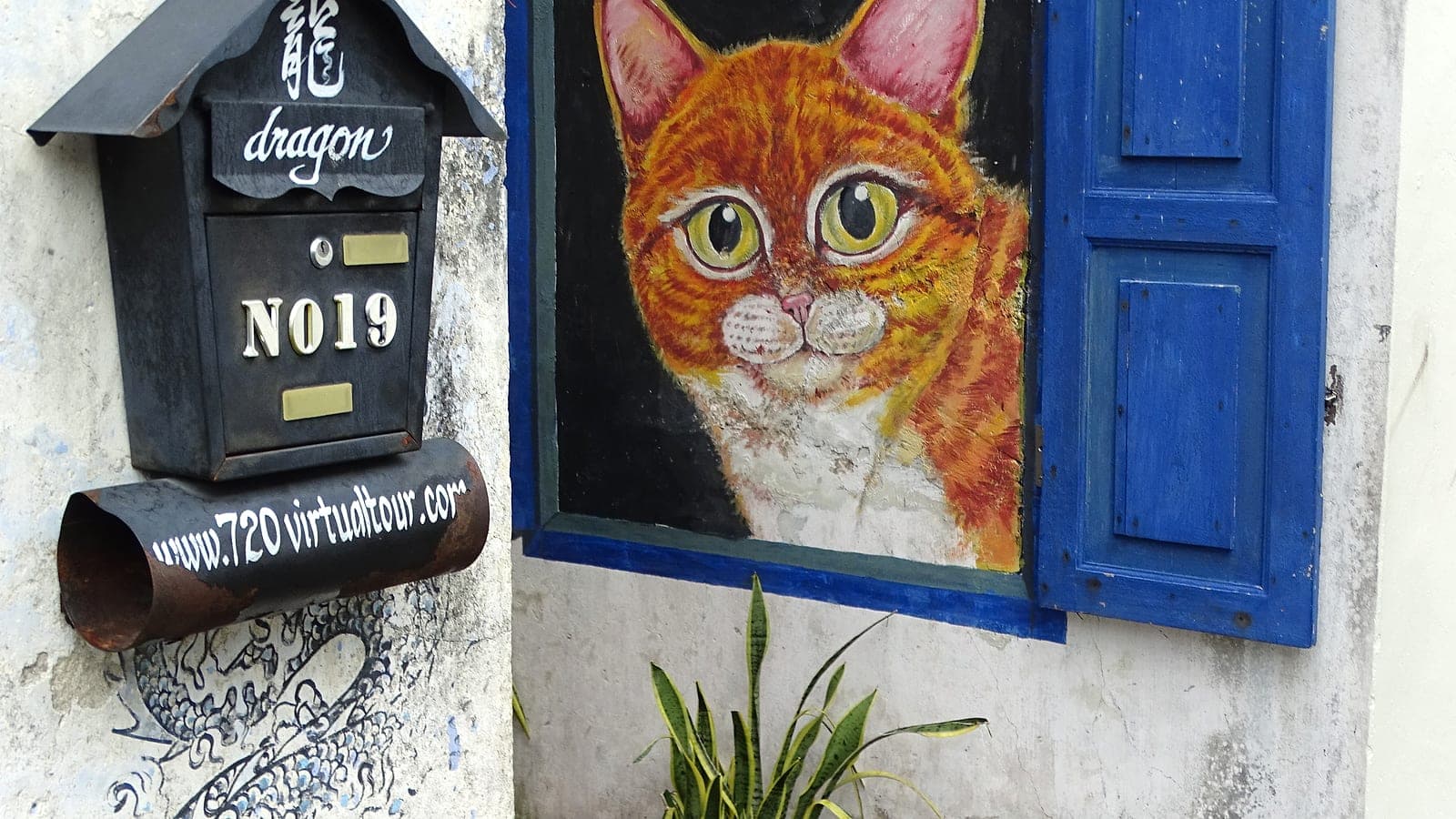
Lebuh Armenian (Armenian Street) is the most Instagrammed street in Penang — and possibly in Malaysia. The Ernest Zacharevic murals from 2012 turned it into a pilgrimage site. But Armenian Street has been significant for far longer than that, and the murals are only one layer of what makes it worth visiting.
What's Actually on Armenian Street
Kuan Yin Teng (Goddess of Mercy Temple) — The oldest Chinese temple in Penang, at the eastern end of Armenian Street near Jalan Masjid Kapitan Keling. Built in 1728 by the earliest Hokkien and Cantonese settlers, it remains an active place of worship. The temple burns joss sticks constantly; the smoke is part of the texture of the street. Free entry; remove shoes.
Syed Alatas Mansion — At 128 Armenian Street, a restored 19th-century merchant's mansion that now houses community organizations. The building's Moorish-inflected architecture reflects the wealthy Arab-Malay merchant class that settled in George Town.
Penang Heritage Area (towards Lebuh Armenian's west end) — The street transitions from the busiest heritage zone into more residential territory as it heads west, past clan associations and traditional trades that still operate — coffin-makers, medical halls, clan association offices.
The Murals — Yes, they're worth seeing. The Boy on Bicycle at number 85 is the main event. The Kids on Swing at the Lorong Love corner is equally well-executed and has the advantage of being slightly less photographed. The steel-wire sculptures (depicting Penang trades and street life) are dotted throughout the street.
The Zacharevic Murals: History and Context
In 2012, Lithuanian-born street artist Ernest Zacharevic was commissioned by George Town Festival as part of the "Arts of the Streets" project, a broader initiative to animate the UNESCO George Town heritage zone through public art. His assignment was to create murals that were integrated with the architecture and the street's social life — not just painted on walls, but in conversation with them.
The most famous works are the "Children on a Bicycle" mural at the corner of Lebuh Armenian and the adjacent lane — two children, rendered in paint, riding a bicycle that is an actual rusting bicycle mounted to the wall. The bicycle is real; the children are painted around it. This was deliberate: Zacharevic wanted the art to be interactive, not just observed. Visitors straddle the bicycle to photograph themselves "riding" with the painted children.
"Boy on Bike" — One of the standalone painted boys, showing a child riding a bicycle against the white plaster wall of a shophouse. The simplicity is part of the effect: the scale is roughly life-size and the warm palette complements the aged wall.
Alongside the painted murals, the Arts of the Streets project added 52 steel rod caricature sculptures throughout the George Town heritage zone. These are small, cartoonish figurines made from bent rods and wire — depicting historical Penang street life: a char kway teow hawker, a trishaw rider, children playing five-stones. They are mounted at eye level on walls and posts throughout Armenian Street and the surrounding lanes. Most tourists miss them while hunting for the bigger murals; they repay slower walking.
The secondary murals on Muntri Street and the lanes off Armenian are less visited and often just as photographically interesting with far fewer crowds.
The Buildings Themselves
Armenian Street is a near-intact stretch of Straits Chinese shophouses — two-storey, with covered five-foot ways (pedestrian walkways under the first-floor overhang). The ground floors have been occupied continuously since the 1800s: clan associations, medical halls, coffin-makers, traditional trades.
The upper floors are mostly residential; you can hear families going about their day above the tourist-facing ground level. This living continuity — not a museum, not a heritage set — is what makes George Town distinct from other heritage cities in the region. The same shophouses that Hokkien traders operated from in the 1850s now contain heritage cafés and boutique guesthouses, but the bones of the street are unchanged.
The five-foot way (covered walkway) is a characteristic feature of the Straits Chinese shophouse: the ground floor is set back from the street line, and the upper floor overhangs to create a covered pedestrian corridor. In the pre-air-conditioning era, these walkways were the social infrastructure of the street — a shaded place to conduct business, socialise, and shelter from rain.
Adjacent Streets Worth Combining
Lorong Love (Love Lane) — Running parallel to Armenian Street, connects to the Kids on Swing mural location. Narrower, quieter, and has several of George Town's better guesthouses in restored shophouses.
Lebuh Chulia (Chulia Street) — One block south, the traditional backpacker strip with cheap guesthouses, cafés, and the night hawker market that runs from 6pm.
Jalan Masjid Kapitan Keling (Pitt Street) — The parallel road to the east with the Kapitan Keling Mosque, Sri Mahamariamman Temple, and St. George's Church all within 200 metres of each other. Called "Harmony Street" in tourism materials because of the density of different religious buildings. Little India begins here, running south from the mosque.
Clan Jetties — A 10-minute walk south from Armenian Street, the clan jetties are a cluster of wooden stilt villages built over the sea by different Chinese clan groups — Chew Jetty, Lim Jetty, Tan Jetty. Still inhabited. A genuinely distinct experience from the street art zone and worth combining in the same morning.
Food and Drink Nearby
Kopitiam on Lebuh Armenian — There are several traditional coffee shops at the eastern end of the street. These are the real deal: old-school kopi (half-and-half coffee with condensed milk), toast with kaya, and soft-boiled eggs cracked into a bowl with soy sauce and white pepper. Breakfast here before the tour groups arrive is one of the better starts to a morning in George Town.
Ikan Bakar stalls at the western end — As Armenian Street transitions to the quieter residential end, you'll find charcoal grilled fish (ikan bakar) stalls operating in the evenings. These serve fresh fish and seafood grilled over charcoal with sambal, eaten at shared tables. Not fine dining — correct food in the correct place.
Lebuh Chulia night market — A 2-minute walk south, the evening hawker market on Chulia Street covers the full range of Penang hawker food: char kway teow, hokkien mee, popiah, rojak. Open from approximately 6pm.
Best Time to Visit
7am–9am: The street is at its most local — morning coffee at the kopitiam on the corner, temple morning prayers, traders opening their shutters. The murals are photographer-accessible before the tour groups arrive.
Midday to 3pm: The hottest and most crowded part of the day. The murals will have queues.
Late afternoon (4pm–sunset): The light on the eastern-facing murals improves, tour groups thin out, and the temple activity picks up again as evening prayer approaches.
Local tip
The Zacharevic bicycle boy mural is on Lebuh Armenian itself — easy to photograph at 7am with almost no foot traffic. By 10am on weekends you'll be waiting for gaps between tour groups. The secondary murals on Muntri Street and the side lanes off Armenian are less visited and just as good photographically. Most George Town hotels are within 10 minutes' walk.
Practical Notes
The street is always open — there are no gates or admission fees to walk Armenian Street. The Kuan Yin Teng temple has its own opening hours (approximately 7am–7pm), and some of the clan association buildings are only accessible during certain hours or by arrangement.
Photography: The murals are on public-facing walls and can be photographed freely. Inside the Kuan Yin Teng temple and the Syed Alatas Mansion, ask before pointing a camera at worshippers or people going about their business.
Trishaw rides: Trishaw riders will offer to take you along Armenian Street for RM 20–40. This is genuine fun as an experience; it's not a transport necessity given the street is 300 metres long. The trishaws operate from a stand near Fort Cornwallis and are a legitimate part of the Penang streetscape — the steel rod caricature sculptures include a trishaw rider, which gives you a sense of how central they were to the historic street economy.
Getting there: Armenian Street is in the core of the George Town heritage zone, easily walkable from any hotel in the central area. From Komtar (the main bus hub), it's approximately 15 minutes on foot heading east. There is no dedicated parking; if arriving by car, the open-air lots near the Esplanade or along Weld Quay are the closest options.
Keep reading
Guides that pair well with this one.
George Town Street Art Guide: Every Mural Worth Finding (2026)
A street-by-street guide to Penang's famous murals — Zacharevic's iron cartoons, the Armenian Street pieces, and how to walk the full trail in half a day.
10 min readneighborhoodsLebuh Chulia (Backpacker Street) — Budget Traveller's Guide to George Town
Lebuh Chulia is George Town's traditional budget traveller base. Here's what the street actually offers, where to stay, and how to use it as a base without getting stuck in the tourist bubble.
4 min readneighborhoodsLittle India Penang — What to See, Eat, and Explore
George Town's Little India district is one of the oldest Tamil commercial areas in Malaysia. Here's what makes it distinct and how to spend a few hours exploring it properly.
7 min readpracticalGeorge Town Walking Guide: Routes, Neighbourhoods & Tips for First-Timers (2026)
How to walk George Town for your whole stay — five named loops covering heritage, street art, food, clan houses, and the colonial waterfront, plus heat and shade-hopping tips.
10 min read