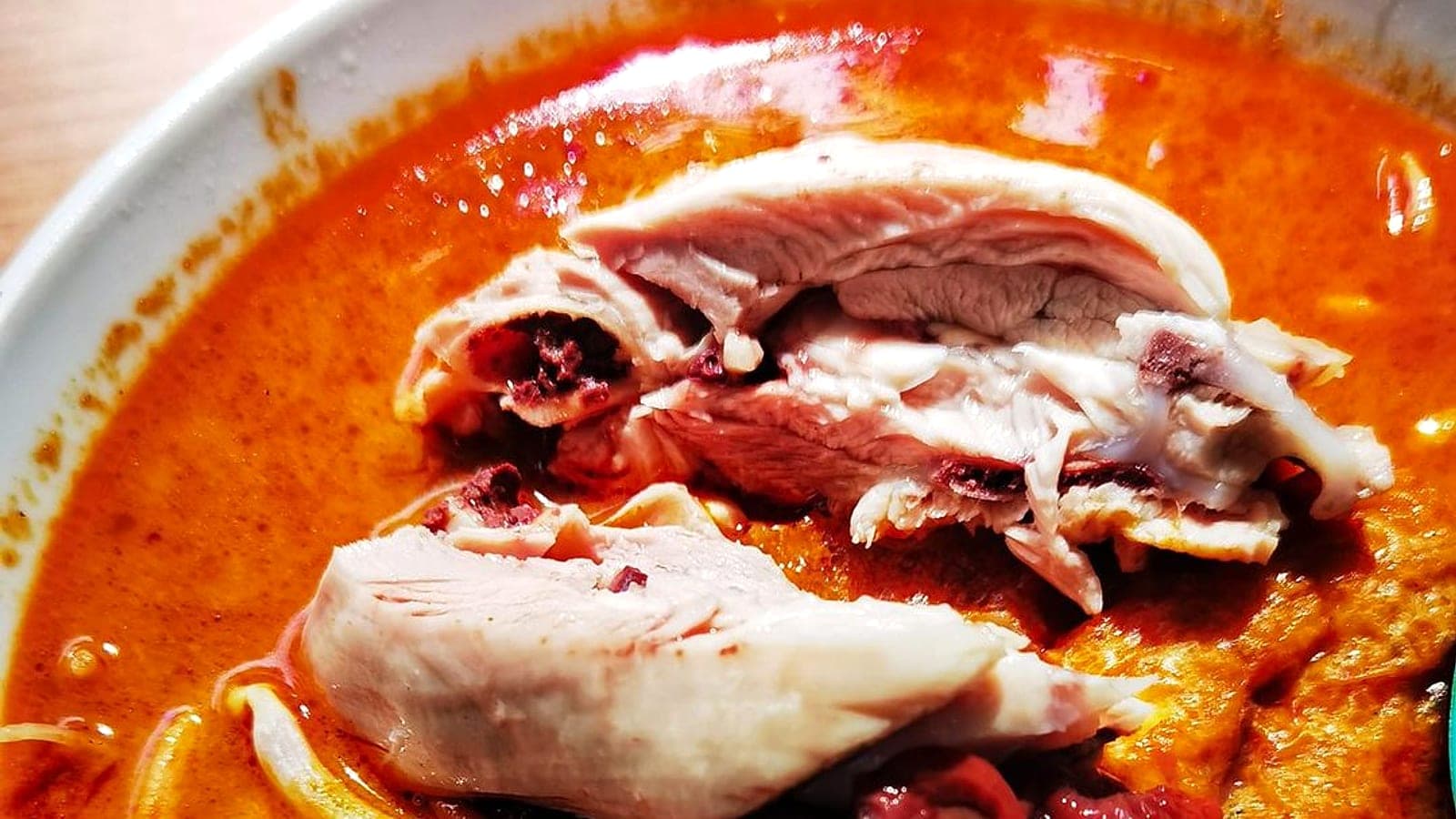
Curry Mee
Penang's creamy coconut curry noodle soup with blood cockles
What is Curry Mee?
Yellow noodles and rice vermicelli swimming in a rich, fragrant coconut curry broth with a subtle heat. Topped with blood cockles (the controversial ingredient), tofu puffs, fish cakes, boiled egg, and fresh herbs. The sauce is thick and creamy from coconut milk, with warm spices like turmeric, cumin, and coriander. It's comfort food at its finest - warm, satisfying, and deeply flavored.
History & Origins
Curry mee evolved in Penang as a fusion dish combining Chinese noodle techniques with Indian curry spices brought by Indian Muslim traders. The key distinguishing ingredient is the blood cockle (kerang), which adds a briny, mineral richness. The dish became popular in the 1970s and 80s among workers needing affordable, filling meals. Today, it's recognized as a quintessential Penang hawker dish, though it can be found in other Malaysian states.
Key Ingredients
How to Order
Top 5 Spots to Try Curry Mee
Sister Curry Mee (Jalan Burma)
Why it's the best: THE legend. Operating since 1960s. Deep, complex coconut curry broth with generous cockles. Locals queue from opening. The sauce has depth that takes hours to develop. Cash only, sells out by 1pm.
Chulia Street Curry Mee
Why it's the best: Strong competition for Sister's. Excellent broth with fresh cockles. Less crowded than the main stall but equally delicious. Great for lunch.
New Lane Hawker Centre Curry Mee
Why it's the best: Multiple curry mee vendors to compare. Convenient location if exploring other dishes. Good quality, less famous but popular with locals.
Joo Hooi Cafe Curry Mee
Why it's the best: Upscale kopitiam setting with cleaner environment. Good for those uncomfortable with hawker stall seating. Creamy broth with good quality cockles.
Gurney Drive Curry Mee
Why it's the best: Popular evening option on Gurney Drive. Fresh ingredients daily. Good alternative if other spots are closed. Less crowded than older stalls.
Variations to Try
Extra Cockles
Request additional blood cockles for more briny flavor and umami. These are the star ingredient for true curry mee lovers.
Spicy Version
Ask for "pedas" or bring your own sambal to add heat. The creamy curry balances beautifully with spice.
Seafood Upgrade
Some stalls offer versions with prawns, squid, or additional fish cakes for more protein.
Creamier Version
Ask for more coconut milk ("tambah santan") for a richer, creamier sauce.
Dietary Information
Insider Tips
- 1Sister's Curry Mee opens at 7am and sells out by 1pm - go early if you want to be sure to get it
- 2The blood cockles (kerang) are the defining ingredient - many tourists are squeamish about them, but they're worth trying. They add a distinctive briny flavor.
- 3The broth should be thick and creamy from coconut milk - not too watery. Ask for "kuah banyak" if you want more sauce.
- 4Mix the noodles well with the sauce to get good curry flavor in each bite
- 5Add sambal chili paste gradually to adjust spice level - the curry is naturally mild
- 6The fish cakes and tofu puffs absorb the curry flavor beautifully - don't skip them
- 7Curry mee is typically a lunch or breakfast dish - most stalls close by 6pm
- 8The curry spice comes from a paste made fresh daily - fresh curry mee has a brighter, more aromatic flavor than day-old versions
- 9Try it with a cold drink to cool your mouth between bites - the creamy coconut is rich
- 10Penang's curry mee is different from curry laksa - curry mee is creamier and milder
Related Dishes
Eat it on a guided food tour
Local guides take you to stalls you'd never find solo — including the best spots for Curry Mee.
Ready to taste authentic Penang food?
Explore more dishes or find the best hawker centres and restaurants