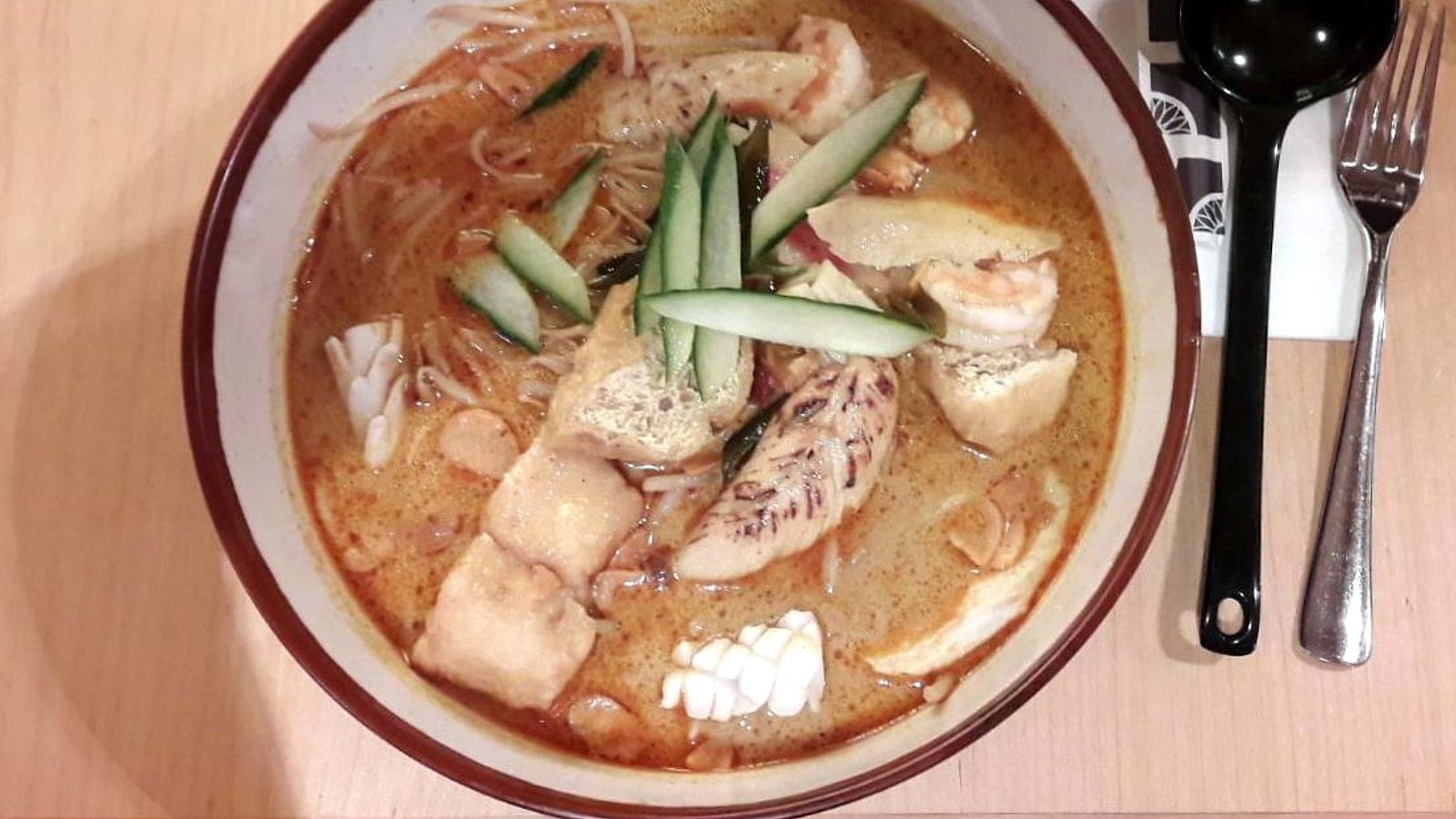
Curry Laksa
Penang's rich coconut curry noodle soup - the heartier, creamier sibling of assam laksa
What is Curry Laksa?
A luxuriously rich coconut curry noodle soup that showcases Penang's love affair with spice and coconut milk. Known locally as curry mee in most parts of Penang, curry laksa features yellow noodles and rice vermicelli swimming in a thick, fragrant broth made from coconut milk, dried shrimp, and a complex spice paste of chillies, lemongrass, galangal, and belacan. The dish is crowned with cockles, prawns, tofu puffs, cuttlefish, bean sprouts, and a generous dollop of fiery sambal chilli paste that you stir into the broth. The interplay between the creamy coconut base and the sharp heat of the sambal is what makes this dish unforgettable.
History & Origins
Curry laksa has deep roots in the Peranakan (Straits Chinese) culinary tradition, where Chinese noodle soups met Malay curry spicing. In Penang, the dish evolved distinctly from other Malaysian versions - Penang's curry laksa is thicker, spicier, and always includes cockles and a sambal topping. The term "curry laksa" and "curry mee" are used interchangeably in Penang, though purists argue that laksa implies the addition of coconut milk while mee simply means noodles. The dish has been a morning and lunchtime staple at kopitiam and hawker stalls across the island for generations, with many famous stalls operating for over 50 years.
Key Ingredients
How to Order
Top 5 Spots to Try Curry Laksa
Sister's Curry Mee (Jalan Burma)
Why it's the best: Arguably the most famous curry mee in Penang. Run by sisters who've been perfecting the recipe for decades. The broth is intensely fragrant with a perfect coconut-to-spice ratio. Sells out by noon on weekends. Cash only.
Heng Huat Curry Mee
Why it's the best: Old-school kopitiam setting with consistently excellent curry mee. Good balance of spice and creaminess. Known for generous cockle portions. Less tourist-heavy than Jalan Burma.
Tiger Lane Curry Mee
Why it's the best: A local favourite for decades. The sambal here is particularly good - fragrant and not just blindingly hot. Simple setting, authentic flavour. Nearby to Siam Road char kway teow for an evening return trip.
Chulia Street Curry Mee
Why it's the best: Convenient George Town location in the heart of the heritage zone. Good for tourists staying nearby. Solid, reliable bowl with fresh ingredients daily.
Pitt Street Curry Mee
Why it's the best: Hidden gem near the Kapitan Keling Mosque. Less crowded than the famous stalls. Thick, hearty broth with plenty of toppings. Good value for money.
Variations to Try
With pig blood cubes
The traditional old-school version includes cubes of coagulated pig blood for extra richness and iron. Increasingly rare but still found at heritage stalls.
Extra sambal
Ask for more sambal on top for serious heat lovers. The chilli paste is freshly made daily at good stalls and transforms the dish when stirred in.
Dry curry mee
Some stalls offer a dry version where the noodles are tossed in the curry paste with less broth. The flavour is more concentrated and intense.
Prawn-heavy version
Premium stalls offer an upgraded version with larger, fresh prawns for an additional RM 2-4. Worth it for prawn lovers.
Dietary Information
Insider Tips
- 1Stir the sambal into the broth before eating - it transforms the entire flavour profile
- 2In Penang, "curry mee" and "curry laksa" refer to the same dish - don't be confused by menus
- 3The best curry mee stalls are morning operations - arrive before 10am for the freshest bowl
- 4Cockles are a defining ingredient - skip them only if you have a shellfish allergy
- 5Ask for "tambah santan" (extra coconut milk) if you prefer a creamier, less spicy version
- 6The tofu puffs soak up the broth like sponges - eat them last for maximum flavour
- 7Pair with iced coffee (kopi ais) or iced tea (teh ais) to balance the richness
- 8Many locals eat curry mee for breakfast - it's a hearty way to start the day
Related Dishes
Eat it on a guided food tour
Local guides take you to stalls you'd never find solo — including the best spots for Curry Laksa.
Ready to taste authentic Penang food?
Explore more dishes or find the best hawker centres and restaurants