Language & Communication in Penang
Languages spoken, essential phrases, food ordering tips, and communication advice
Languages Spoken in Penang
Penang is a multilingual melting pot with several languages in daily use
Bahasa Malaysia (Malay)
UniversalThe national language. Official signage, government services, and formal settings use Malay.
English
Very HighWidely spoken, especially in tourism, business, and urban areas. Most Penangites are bilingual.
Hokkien
CommonThe dominant Chinese dialect in Penang. You will hear it at hawker centres and traditional shops.
Mandarin
CommonSpoken by the Chinese community, especially younger generations. Used in Chinese schools and media.
Tamil
ModerateSpoken by the Indian community. You will hear it in Little India and at Indian temples.
Cantonese
Less CommonLess common than Hokkien but spoken by some Chinese residents, especially older generations.
Good News for English Speakers
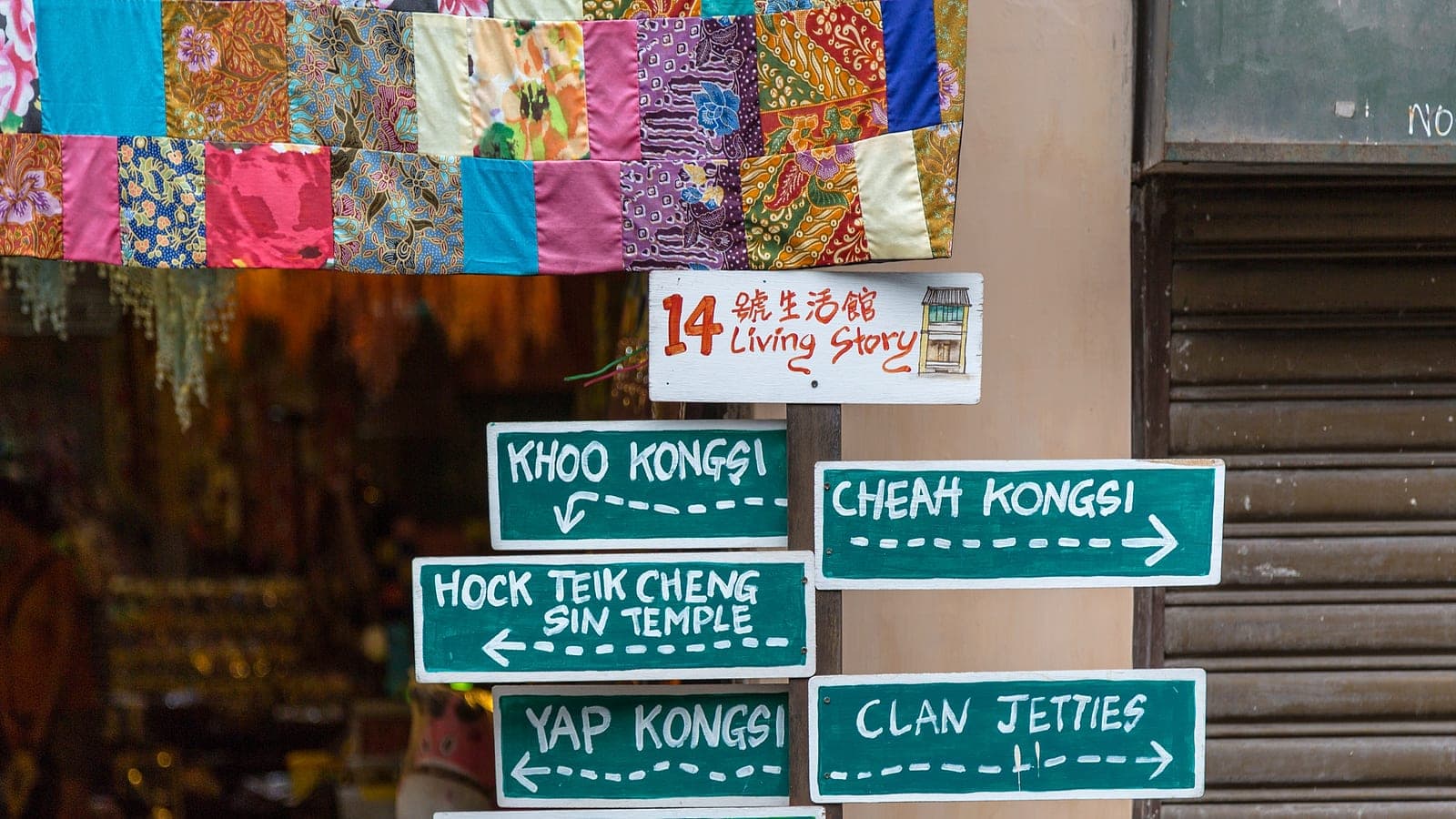
Penang has one of the highest English proficiency rates in Malaysia. Signs, menus, and public announcements are usually in both Malay and English. You can navigate Penang entirely in English without any issues. That said, learning a few local phrases will earn you smiles and warmer interactions.
Essential Malay Phrases
Basic phrases that will help you connect with locals
suh-LAH-mat PAH-gee
suh-LAH-mat puh-TAHNG
tuh-REE-mah KAH-see
SAH-mah SAH-mah
mah-AHF
yah / TEE-dak
buh-RAH-pah
MAH-hal
MOO-rah
SAH-yah TEE-dak FAH-ham
BOH-leh TOH-long
dee MAH-nah
Numbers in Malay
Useful for ordering food, bargaining, and understanding prices
Satu
SAH-too
Dua
DOO-ah
Tiga
TEE-gah
Empat
UM-pat
Lima
LEE-mah
Enam
UH-nam
Tujuh
TOO-joo
Lapan
LAH-pan
Sembilan
sum-BEE-lan
Sepuluh
suh-POO-loo
Food Ordering Phrases
Essential phrases for hawker centres and kopitiam
SAH-yah nak OR-der
suh-DAP
PUH-das
TEE-dak PUH-das
KOO-rahng MAH-nis
KOH-song
BOONG-koos
MAH-kan SEE-nee
KEE-rah
AH-yer
Hokkien Food Terms
Decode the names of Penang's famous dishes
Many of Penang's famous dishes have Hokkien names. Understanding these terms helps you decode menus and know what you're ordering!
char
Fried (e.g., Char Koay Teow = fried flat noodles)
kway
Rice cake or noodle
tiao
Strip/noodle (koay teow = flat rice noodles)
mee
Wheat noodles (Hokkien Mee = prawn noodles)
lor
Braised/stewed (Lor Bak = braised pork)
bahk
Pork/meat
kway chap
Flat rice noodles with braised pork offal
jiu hoo
Dried cuttlefish
AH-sam
Tamarind/sour (Asam Laksa)
curry mee
Curry noodles (with blood cubes and cockles)
Recommended Translation Apps
Download before your trip for offline use
Google Translate
Camera translation, offline mode, voice input
Microsoft Translator
Conversation mode, phrasebook, offline support
iTranslate
Voice translation, dictionary, verb conjugations
Frequently Asked Questions
Do I need to learn Malay to visit Penang?
No, English is widely spoken in Penang, especially in tourist areas, hotels, restaurants, and shops. However, learning a few basic Malay phrases like "terima kasih" (thank you) is appreciated by locals and enhances your experience.
What language is spoken at hawker centres?
You will hear a mix of Hokkien, Malay, and English at hawker centres. Most vendors understand English for ordering. Pointing at dishes or using numbers works perfectly. Some menus are in Chinese characters, but English descriptions are common.
What is Manglish?
Manglish is Malaysian English, which includes unique local expressions and grammar patterns. Common examples: "lah" (emphasis particle), "can or not?" (is it possible?), "already" at end of sentences (I eat already = I have eaten). It's friendly and fun!
How do I order food in Penang?
Simply point and say what you want, or use the dish name. Add "satu" (one) or "dua" (two) for quantity. For drinks, specify "kosong" (plain) or "kurang manis" (less sweet). Say "bungkus" for takeaway. Most vendors are patient with tourists.
Why do people speak Hokkien in Penang?
Penang has a large Chinese population, many descended from Hokkien-speaking immigrants from Fujian province, China. Hokkien is the dominant Chinese dialect here, unlike Kuala Lumpur where Cantonese is more common. It's part of Penang's unique identity.
Can I use English in taxis and with Grab drivers?
Yes, most Grab drivers speak basic to fluent English. The app handles communication anyway with pickup/dropoff locations. Traditional taxi drivers may have varying English levels, but showing your destination on a map works well.
Ready to Explore Penang's Food Scene?
Now that you know the lingo, dive into our food guides and discover where to eat the best dishes.