On this page
Sustainable Travel in Penang: A Practical Guide
Penang has some of the best conditions for low-impact travel in Southeast Asia — walkable heritage zones, buses, fresh local food, and a protected biosphere on the hill. Here's how to make the most of them.
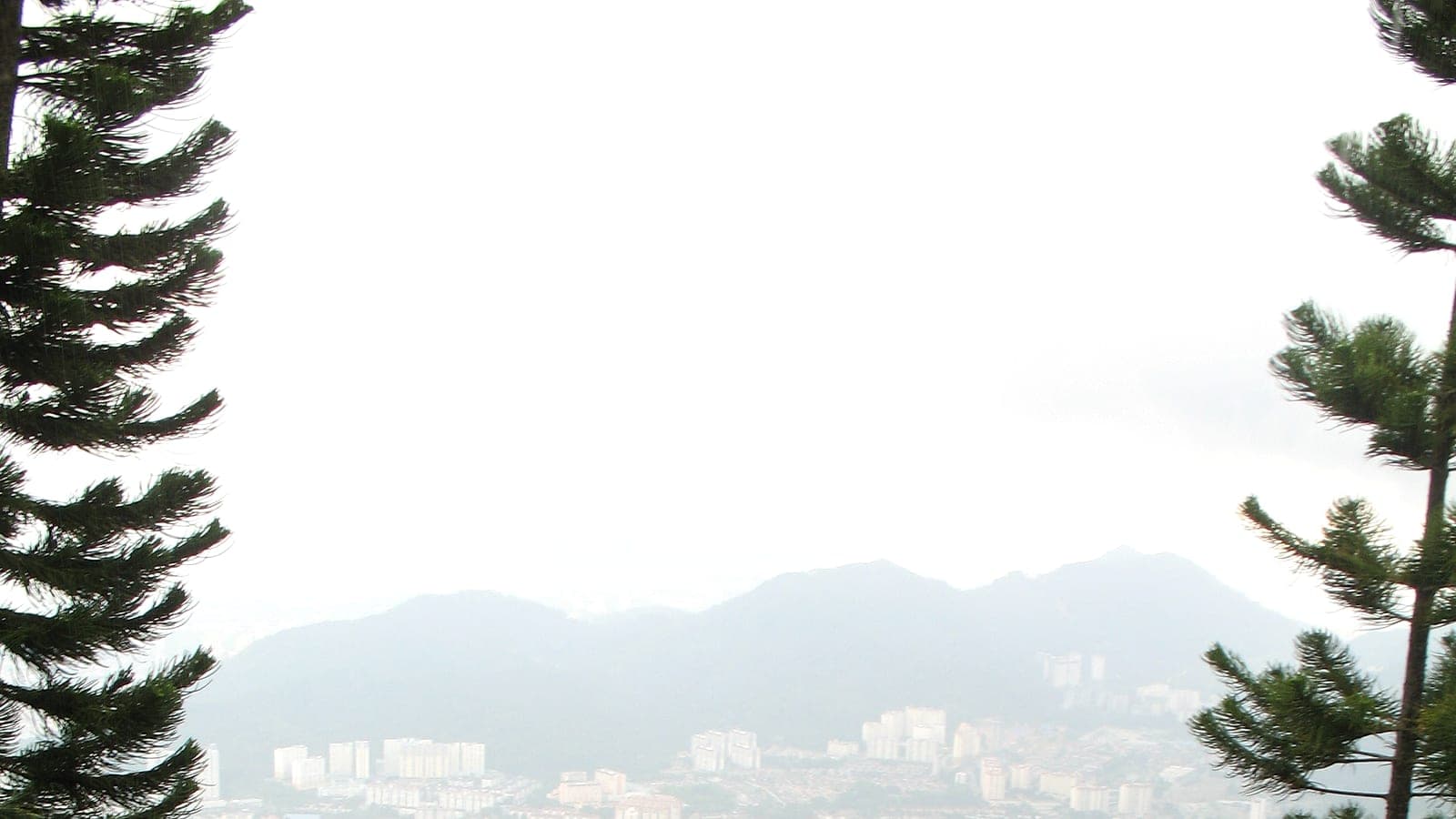
Sustainable travel in Penang isn't a matter of compromising your trip — it's largely a matter of making choices that align with how the city already works. George Town is designed for walking. The food system runs on fresh produce from wet markets and boats. Public transport covers the most-visited zones. The island's biggest ecological asset — Penang Hill — is protected and actively managed.
This guide focuses on practical choices rather than aspirational statements.
Travellers who want to visit without contributing unnecessarily to traffic, plastic, and food-chain waste. Also useful for anyone planning longer stays who want to understand Penang's environmental commitments and active initiatives.
Getting Around Without a Car
Walking Georgetown
Georgetown's UNESCO heritage zone is 2.5 square kilometres and almost entirely flat. Walking is the correct mode of transport within it — the roads are often too narrow for comfortable driving, the five-foot ways (covered sidewalks under shophouses) keep you shaded, and everything worth seeing is within 20 minutes on foot of everything else.
Grab a free map from the Penang Tourism office on Lebuh Pantai. The heritage zone walking circuit is well-signed with colour-coded routes.
Five-foot way rule
Georgetown's shophouse architecture includes a five-foot way — a covered walkway running continuously along the building frontage. In Penang's heat, these are not optional. A direct sun walk between sites in midday heat is genuinely unpleasant. Plan routes that stay under the five-foot ways.
Rapid Penang Buses
Rapid Penang operates the island's bus network. Coverage is reasonable for Georgetown, Gurney, Batu Ferringhi, and the airport — less reliable for Balik Pulau or inland routes.
Key routes:
- 101 — Georgetown to Batu Ferringhi (beach route, ~45 min, RM2.70)
- 204 — Georgetown to Ayer Itam (Air Itam market, ~25 min, RM1.50)
- 401E — Georgetown to Airport (45 min, RM2.70)
- Penang Island-Butterworth Ferry — RM1.20, 15 minutes, operates until midnight
RapidKL's MyRapid card works on Penang buses. Top up at ferry terminal or convenience stores. Cash is accepted on most buses but coins only for exact change.
Georgetown
UNESCO World Heritage Zone
The Weld Quay bus terminal (next to the ferry terminal) is the hub for most intercity routes. The Komtar terminal on Jalan Dr Lim Chong Eu is the second major hub. Plan routes from one of these two points. Google Maps has reasonably accurate Rapid Penang schedules.
Ferry to Butterworth
The Penang-Butterworth ferry is one of the most pleasant public transport experiences in Malaysia. The crossing takes 15 minutes, runs frequently from 5:30am to midnight, and costs RM1.20 (the return from Butterworth to the island is free — the toll is collected only one-way).
From Butterworth you can connect to the ETS (electric train) for KL or Hatyai. The ferry terminal and the Butterworth train station are connected by a covered walkway. Check KTM rail schedules for the Butterworth–KL ETS service if you're planning an onward train journey.
Eating Sustainably
Wet Markets Over Supermarkets
Penang's wet markets — particularly Chowrasta Market on Jalan Penang and Campbell Street Market — sell produce sourced from local farms and boats, with minimal packaging. Fish arrives in the morning from local fleets; vegetables from Cameron Highlands and local farms. Buying here is meaningfully different from buying from a supermarket's supply chain.
As a visitor, you're unlikely to be cooking your own food. But knowing where local food comes from helps you choose which hawker centres and restaurants to prioritise — those sourcing locally (most traditional hawker stalls do, by default) over those using imported frozen ingredients.
Georgetown
UNESCO World Heritage Zone
Chowrasta Market (Jalan Penang, Georgetown) operates from around 7am to 1pm. The ground floor is wet market; upper floors sell dried goods, fabric, and household items. The rojak and laksa stalls at the front of the building are excellent. Arrive before 10am for the best produce selection.
Hawker Culture as Sustainable Food System
The traditional hawker system is, by most measures, an efficient food distribution network: small operators, no significant food waste (menus are short, everything sells), ingredients sourced close to market, no single-use packaging for eat-in meals.
The plastic problem at hawker centres is real — takeaway orders generate significant single-use plastic. Eating in (rather than ordering takeaway) avoids this almost entirely. Bring a reusable cup if you drink a lot of takeaway beverages.
Food Waste
Penang has a documented food waste problem at festivals and night markets. Check our itinerary builder to plan around hawker centre timing so you're not over-ordering under time pressure. The best approach is to order what you'll finish. Hawker portions are generally reasonable — but the temptation to order 8 dishes "to try" often results in half-finished plates. Order in sequence rather than all at once.
Penang Hill: Malaysia's First Biosphere Reserve
Penang Hill (Bukit Bendera) sits at 833m above sea level and covers 12.48 square kilometres of protected primary rainforest — the oldest in Southeast Asia, untouched since Gondwanaland. In 2021, UNESCO designated it as a Biosphere Reserve under the Man and Biosphere Programme.
Biosphere Reserve status
A UNESCO Biosphere Reserve is not the same as a World Heritage Site. It's a designation for living landscapes where human activity and biodiversity conservation coexist. Penang Hill's status recognises the extraordinary biodiversity on its slopes — over 300 bird species, numerous endemic plants, and wildlife corridors connecting to the Titiwangsa Range.
How to Visit
The funicular railway runs from the lower station in Air Itam to the summit at approximately 15-minute intervals (busier on weekends). Ticket: RM30 adults, RM15 children. Book at penanghill.gov.my to avoid queues. The ride takes 5 minutes.
At the summit: The Habitat (a managed forest walk with canopy treetop walk, additional fee), the Penang Hill Biosphere Foundation's education centre, a small mosque, David Brown's Restaurant (heritage colonial building, views), and several basic food stalls.
Lower slopes: The Penang Botanic Gardens, at the foot of the hill, are free to enter and excellent. The Moon Gate entrance on Jalan Air Terjun is the most scenic approach.
Penang Hill
Highland escape, cooler temps
The funicular lower station is in Air Itam — 20 minutes from Georgetown by Grab (RM12–18). Don't take a tourism shuttle that drops you at the entrance and charges RM40 for the privilege. Grab to Air Itam funicular station, then take the official funicular up. The last funicular down is 9:30pm; aim to descend by 8pm if using Grab back to Georgetown.
Wildlife on the Hill
The forest on and around Penang Hill is genuinely rich. Dusky langurs (leaf monkeys) are common on the lower slopes and sometimes visible from the funicular. Long-tailed macaques are frequent near food stalls — don't feed them. Flying lizards, monitor lizards, and various squirrel species are regularly sighted on the boardwalks.
Birders visiting the summit at dawn can often spot over 50 species before 9am. The Habitat (operating from 9am–6pm) runs guided nature walks.
Accommodation
Eco-Lodges and Responsible Properties
Penang doesn't have a large eco-lodge scene — its tourism infrastructure is built around heritage hotels in Georgetown. However, several properties have made genuine sustainability commitments:
The Edison (Georgetown) — Heritage renovation project that preserved the original shophouse structure, uses energy-efficient systems, and participates in the Penang Heritage Trust's certification programme.
Muntri Grove (Georgetown) — A group of restored Peranakan-heritage apartments managed as long-term stays. Low-footprint model, no daily housekeeping, minimal single-use plastics.
For sustainability-focused stays, also look at independently owned heritage guesthouses (as opposed to chain hotels) — they typically have lower per-guest resource use, employ local staff, and contribute to the conservation of the heritage zone.
Reducing Single-Use Plastic
Penang, like most of Malaysia, generates significant single-use plastic. Markets and hawker centres use plastic bags by default. Bottled water is everywhere. Here's what to actually do about it.
Bring a reusable water bottle. Fill it at your hotel before leaving — Georgetown's tap water is treated and safe when filtered. Cafes along Armenian Street and Chulia Street (including China House, Jing-Si Books & Café, and most specialty coffee shops) will refill a reusable bottle for free or RM1. A filter bottle (LifeStraw, GRAYL) removes any residual concern entirely.
Carry a reusable bag. Take it to Chowrasta Market on Jalan Penang and Campbell Street Market. When you're handed a plastic bag, say "tiada plastic" (no plastic bag) and swap it for your bag. Most vendors comply immediately — the habit is well established at the wet markets and spreading at the night markets.
Eat in at hawker centres, don't take away. Eating in eliminates polystyrene containers and plastic cutlery entirely. At Georgetown's hawker centres (New Lane, Gurney Drive, and Sia Boey), you eat on trays with proper utensils — zero single-use packaging. Takeaway orders are where the plastic accumulates.
Skip bottled water at 7-Eleven. The convenience stores are everywhere and RM1 plastic bottles add up fast. One reusable bottle and the cafes above cover all your hydration needs for significantly less waste.
Plastic-free Penang efforts
The state government banned single-use plastic bags at supermarkets in 2019. Several Georgetown cafes — including Macallum Connoisseurs and the cafes inside Hin Bus Depot — have switched entirely to biodegradable packaging. Hin Bus Depot Art Centre (31 Jalan Gurdwara, Georgetown) runs periodic beach clean-up events open to visitors — check their Facebook page for current dates.
Frequently Asked Questions
Is the water safe to drink in Penang? Tap water is treated and technically safe, but most locals filter or boil it before drinking. Using a filtered bottle (LifeStraw, GRAYL) is the most sustainable option for visitors.
Are there volunteer programmes in Penang? Several. The Penang Heritage Trust runs volunteer events for heritage building documentation and conservation. The Penang Hill Biosphere Foundation runs citizen science bird surveys. Both accept short-term international volunteers.
Is Penang Hill suitable for children? Yes. The funicular is straightforward and children enjoy it. The Habitat's boardwalks are well-maintained and accessible. Allow 3–4 hours at the summit for a relaxed visit.
How do I report environmental violations I see? The Penang State Environment and Water Management Office accepts reports. For wildlife distress (injured animals, illegal wildlife trade), contact the Department of Wildlife and National Parks (PERHILITAN): 1-300-80-1575.
Keep reading
Guides that pair well with this one.
Penang Taxi and Grab Guide
Grab is the right way to get around Penang. Here's what it costs, where taxis still make sense, and how to get from the airport to George Town without getting ripped off.
3 min readtransportHat Yai to Penang: Bus, Train, Car & Taxi Options (2026)
Getting from Hat Yai to Penang — bus via Padang Besar or Bukit Kayu Hitam, the cross-border KTM Komuter train, private taxis, and what to expect at the Thai-Malaysia border crossing.
6 min readtravelPenang Airport (PEN) to George Town: Transport Guide 2026
How to get from Penang International Airport to George Town — Grab, bus, taxi, and car rental options with prices, journey times, and arrival tips.
6 min readitinerariesDay Trips from Penang: Ipoh, Langkawi, Cameron Highlands & More (2026)
Using Penang as a base, you can reach Ipoh in 2 hours, Cameron Highlands in 3, and Langkawi in 4. Here's what each trip involves and whether it's worth a day.
9 min read