On this page
Penang Temple Guide: Kek Lok Si, Sri Mahamariamman & More (2026)
A guide to Penang's major temples — Buddhist, Hindu, Taoist, and the multi-faith harmony of Pitt Street. Opening hours, dress codes, and what to actually look for.
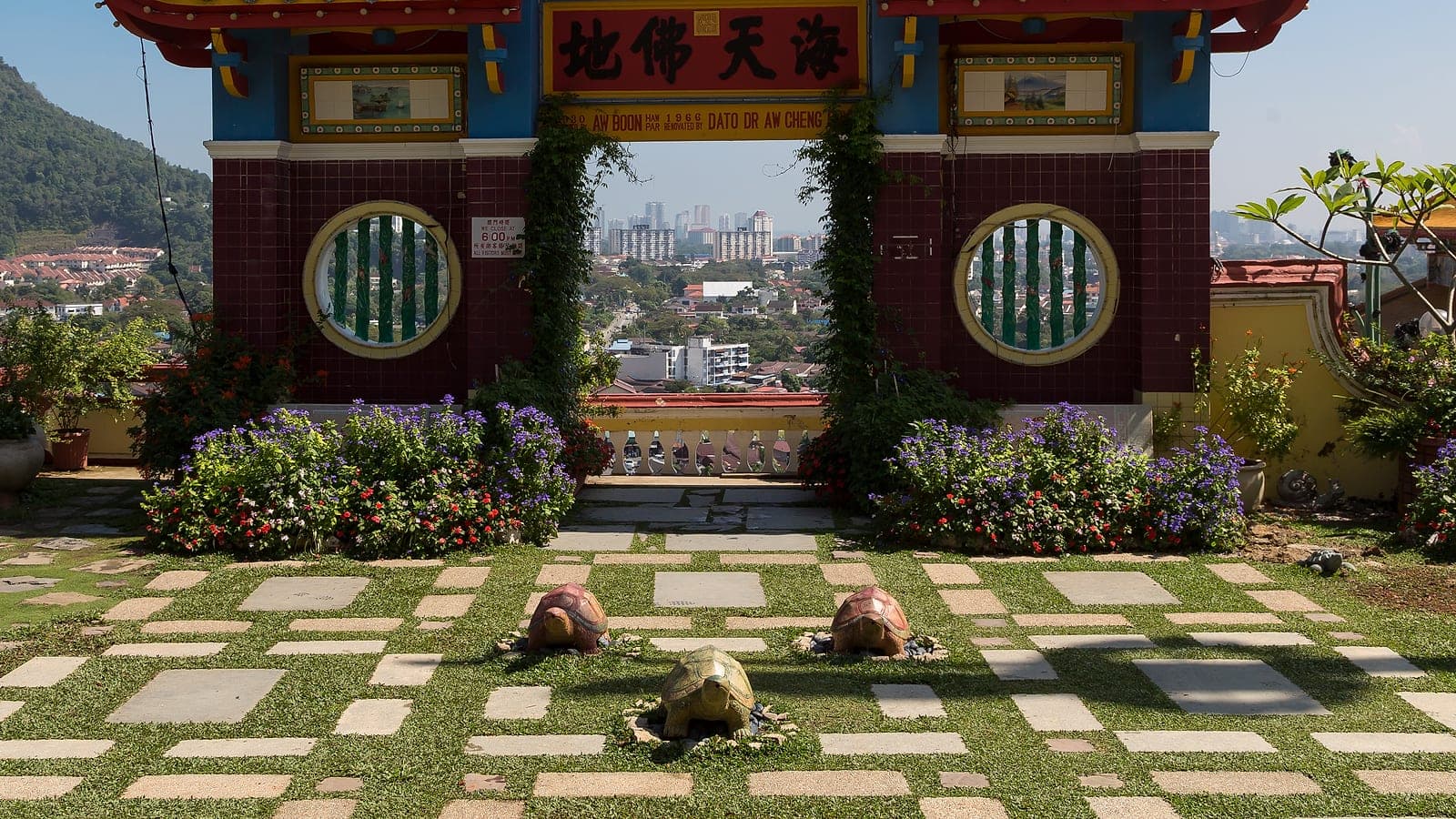
Penang's religious geography tells the story of how the island was settled. When Francis Light opened the port in 1786, traders, labourers, and merchants arrived from across South Asia, China, and the Malay archipelago. Each community built its places of worship, and many of those buildings are still standing and still in use.
The result is one of the densest concentrations of active religious sites in Southeast Asia — Buddhist, Taoist, Hindu, Muslim, and Christian — within a few square kilometres of each other. This guide covers the major temples and what makes each worth visiting, along with practical information for respectful visits.
This guide covers the major Buddhist and Hindu temples, the Taoist clan temples, and the Harmony Street cluster in George Town. It includes dress code guidance, opening hours, and honest notes on which temples are most worth your time.
Travellers interested in culture and architecture, visitors who want to understand Penang beyond the food, anyone spending more than two days in George Town and looking for experiences beyond the hawker trail
Kek Lok Si Temple, Air Itam
Kek Lok Si is the largest Buddhist temple complex in Southeast Asia — a sprawling hillside compound in Air Itam, about 7 kilometres from central George Town. Construction began in 1891 and has continued in various phases ever since; the result is a layered complex that mixes Chinese, Malay, and Thai Buddhist architectural styles across multiple levels.
What you're looking at — The approach from the bottom takes you past a covered walkway lined with stalls selling incense, figurines, and offerings. The main pagoda, Pagoda of Ten Thousand Buddhas, is a seven-storey tower that combines octagonal Chinese tiers with a Thai stupa at the top. Higher on the hill is the 30.2-metre bronze statue of Guan Yin (Goddess of Mercy), which was completed in 2002 and is now the most prominent element of the complex when viewed from below.
The funicular — A small covered funicular (cable-car style) takes visitors from the base of the Guan Yin statue to the viewing platform. At RM 2 each way, it's worth taking at least one direction.
Thaipusam — Kek Lok Si is one of the focal points for the Tamil Hindu festival of Thaipusam, which in Penang involves a procession through George Town and up the hill. If you're visiting in late January or February, check whether Thaipusam falls during your visit — the procession is one of the more remarkable spectacles in Malaysia.
Practical notes — No entrance fee to the main complex; donations are accepted. Some specific sections charge a small fee (RM 2–5). Dress modestly — shoulders and knees covered. Sarongs are available at the entrance if needed. Open daily from approximately 8:30am to 5:30pm; until 9:30pm during Chinese New Year. Getting there: Grab from George Town (RM 15–20) or Rapid Penang buses 201, 203, 204.
Sri Mahamariamman Temple, George Town
Built in 1833, Sri Mahamariamman is the oldest and most prominent Hindu temple in Penang. Located on Lebuh Queen (Queen Street) in George Town, the temple is dedicated to the goddess Mariamman and is the starting and ending point for Penang's Thaipusam procession.
The gopuram — The tower above the entrance (gopuram) is the most immediately visible element — a layered structure covered with painted sculptures of Hindu deities, done in the South Indian Dravidian style. The detail is dense: multiple tiers of figures, each with a specific narrative function in Hindu iconography. It was renovated and expanded in the 20th century and is in good condition.
Interior — The main hall houses the principal shrine to Mariamman, along with shrines to other deities. The priests conduct regular puja (prayer rituals) throughout the day. If you arrive during a puja, wait respectfully outside the inner sanctum and watch from the perimeter — you'll be allowed to observe without needing to participate.
Thaipusam here — This temple is the beginning point of the Thaipusam procession, which travels several kilometres through George Town to Waterfall Temple in the afternoon. The scene outside Sri Mahamariamman in the early morning of Thaipusam — kavadi (decorated frames) being assembled, devotees in various states of trance preparation, enormous crowds — is intense and worth witnessing if your timing allows.
Practical notes — Free entry; modest donations accepted. Shoes off before entering (racks are available). Shoulders and knees covered. Open daily 6am–12pm and 4pm–9pm.
Kapitan Keling Mosque — Harmony Street
Strictly speaking a mosque, not a temple, but Kapitan Keling belongs in any guide to Penang's religious architecture. Built around 1801 and reconstructed in the 1910s in a Mughal-influenced style, it is one of the most beautiful buildings in George Town.
The facade — a wide archway framed in white with decorative brickwork, topped with a yellow dome — is one of the most photographed sights in the Heritage Zone. Non-Muslim visitors can enter the outer courtyard (outside prayer times); the interior of the prayer hall is not accessible to non-Muslims. Dress modestly and enter quietly.
Dharmikarama Burmese Buddhist Temple
The only Burmese Buddhist temple in Malaysia, established in 1803 in the Pulau Tikus area (about 4 kilometres from central George Town). The architecture is distinctly different from the Chinese Buddhist style — a white exterior, gilded Burmese-style stupas, and statues of Chinthe (guardian lion-dogs) at the entrance.
Inside, the prayer hall contains a 5-metre reclining Buddha and multiple painted scenes from the life of the Buddha in Burmese style. The temple is quieter than Kek Lok Si and sees fewer tourists — worth visiting if you have time and want to compare Buddhist temple styles.
Practical notes — Free entry. Shoes off. Open daily approximately 8am–6pm.
Harmony Street: Pitt Street Cluster
The stretch of Jalan Masjid Kapitan Keling (known historically as Pitt Street, now commonly called Harmony Street) has four major places of worship within roughly 150 metres of each other: Kapitan Keling Mosque, Sri Mahamariamman Temple, St George's Church (Anglican, 1818), and Goddess of Mercy Temple.
This proximity — four different faith communities, four different religious traditions, side by side in a working port city — is not coincidental. The street layout reflects Penang's colonial practice of assigning commercial and residential quarters by ethnicity and religion. The result, accidental or not, is that Harmony Street gives you a compressed lesson in the settlement history of the island in a single walk.
Goddess of Mercy Temple (Kuan Yin Teng) — The oldest Chinese temple in Penang (1728), dedicated to Guan Yin, the Bodhisattva of compassion. The building is a working temple that sees local worshippers throughout the day. The incense smoke, the sound of prayer, and the layered altar arrangements are the most immediate experience of active Chinese folk religion in the Heritage Zone. Free entry; respectful observation welcomed.
Khoo Kongsi Clan Temple
Not a temple in the strictly religious sense but a kongsi — a clan association building — the Khoo Kongsi on Cannon Square is one of the finest surviving examples of southern Chinese clan architecture in the world. Built by the Khoo clan (a Hokkien Chinese clan whose members arrived in Penang as early traders), it was reconstructed after a fire in 1901.
The carved and gilded facade, the tiled roof with its dragon ridgelines, and the painted interior columns are the visual peak of clan temple architecture in Penang. There is a small museum inside that explains the function of clan associations in the overseas Chinese community.
Practical notes — RM 10 entry fee. Open daily 9am–5pm (closed during prayer days). The surrounding Cannon Square, with its row of clan houses, is also worth walking slowly.
Planning a Temple Day
A half-day walking tour of the Heritage Zone temples — Goddess of Mercy Temple, Harmony Street cluster, Khoo Kongsi, Sri Mahamariamman — covers the densest concentration without needing transport. Allow 3–4 hours at a comfortable pace.
Kek Lok Si requires a separate half-day. The most efficient approach is to Grab to Air Itam in the morning, spend 2–3 hours at the complex, and return to George Town for lunch. The Dharmikarama Burmese Temple can be added to this outing if you're in the Pulau Tikus area (it's en route between Batu Ferringhi and George Town).
Temperature and timing — All these sites are most comfortable in the morning (before 11am) or late afternoon (after 4pm). Midday temple-visiting in Malaysian heat is unpleasant and potentially risky. Bring water, wear light clothing, and carry a small sarong.
Keep reading
Guides that pair well with this one.
Little India Penang — What to See, Eat, and Explore
George Town's Little India district is one of the oldest Tamil commercial areas in Malaysia. Here's what makes it distinct and how to spend a few hours exploring it properly.
7 min readculturePenang for Art Lovers: Street Art, Galleries, and Living Heritage
Georgetown's street art scene is one of Southeast Asia's most distinctive — murals, wrought-iron caricatures, clan house interiors, and contemporary galleries. This is where to find them and how to see them properly.
7 min readcultureFamous People Connected to Penang — Artists, Scientists, and Revolutionaries
Penang has produced and shaped a surprisingly influential roster of notable people — from the founder of modern China to Nobel-level scientists and award-winning filmmakers. Here's who came from, or was formed by, this island.
6 min readculturePenang Architecture Guide: Shophouses, Colonial Mansions & Heritage Streets (2026)
George Town has more surviving pre-war architecture than almost any city in Southeast Asia. Here's how to read the buildings — what each style means, and which streets are worth walking.
8 min read