On this page
Penang + Ipoh Food Trail: 3–4 Days in Malaysia's Greatest Food Cities (2026)
Two of Malaysia's greatest food cities, 2 hours apart. Penang for hawker culture, Ipoh for white coffee and bean sprout chicken. Here's the full food trail.
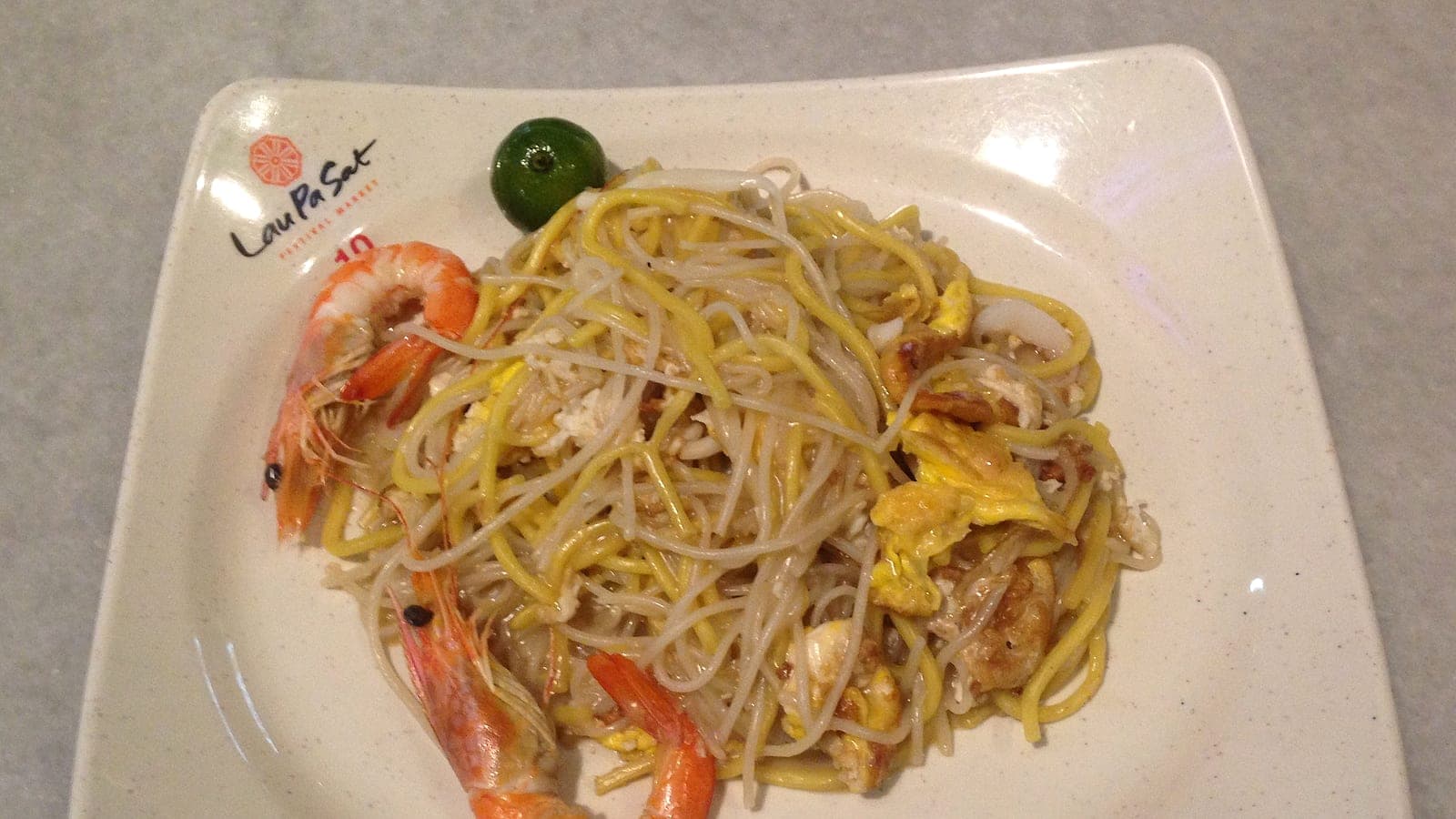
Malaysia has three food cities that serious eaters talk about: KL, Penang, and Ipoh. KL is the capital and the obvious destination. Penang is the one people come back for — one of Southeast Asia's great hawker cultures, a UNESCO heritage city, and a food density per square kilometre that is difficult to match anywhere in the region. Ipoh is the one that people discover on their second or third Malaysia trip and then wish they'd known about earlier.
The two are 120km apart and 2 hours by bus. They do not duplicate each other. Penang's food culture is Hokkien-influenced — char kway teow, Hokkien mee, assam laksa, cendol. Ipoh's is Cantonese and Hakka — white coffee, bean sprout chicken, flat rice noodle (hor fun) in clear broth, dim sum served from 6am. Different ingredients, different preparations, different meal rhythms. Doing both in one trip gives you a more complete picture of Malaysian Chinese food culture than either city can offer alone.
This guide is a food-first itinerary. It names the specific stalls, the specific dishes, and the specific times you need to be there. It covers the bus connection, the logistics of moving between cities, and how much to budget for food in both.
Food-focused travellers with 3–5 days in Malaysia; anyone who has done Penang and wants to add Ipoh; travellers who prefer eating to sightseeing and want a practical day-by-day plan
The Food Logic: What You're Eating in Each City
Understanding the distinction between the two food cultures makes the trip more rewarding and prevents you from ordering the wrong things in each city.
Penang is the origin city for several dishes now found across Malaysia: assam laksa (fish-sour tamarind broth with rice noodles — nothing like the coconut-based laksa you get elsewhere), char kway teow (wok-fried flat rice noodles with Chinese sausage, egg, and bean sprouts — Penang's version uses lard and is different from the KL style), cendol (pandan-noodle dessert in coconut milk and palm sugar), and Hokkien mee (prawn broth noodle). These are breakfast and lunch dishes; George Town's best stalls operate in the morning and afternoon and close early.
Ipoh does different things well. White coffee is the drink — roasted with margarine rather than sugar and wheat, producing a lighter, caramel-forward cup. Bean sprout chicken is the signature dish: poached chicken over bean sprouts grown in Ipoh's limestone-filtered water, with clear soup and flat rice noodles. Dim sum is a cultural institution — Ipoh's dim sum scene predates Penang's and the morning sessions (6–9am) are the best single food event in either city. None of this overlaps with what you ate in Penang.
Suggested Route
Two nights in Penang, one night in Ipoh covers the essentials without rushing. Three nights in Penang, two nights in Ipoh is better if you can afford the time — the extra days let you explore beyond the headline stalls and eat at a slower pace.
| Days available | Penang | Ipoh | Notes |
|---|---|---|---|
| 3 days | 2 nights | 1 night | Doable but tight; prioritise the must-eat list |
| 4 days | 2 nights | 2 nights | The recommended split |
| 5 days | 3 nights | 2 nights | Ideal — a relaxed pace in both cities |
Penang: 2–3 Nights
Day 1 — Arrival and First Evening
Arrive George Town by afternoon. Drop your bags and walk to Gurney Drive Hawker Centre for a first-evening meal that samples several Penang dishes at once: char kway teow (order from the dedicated stall, not the general noodle stall), Hokkien prawn mee, satay, and rojak (fruit salad in shrimp paste dressing). This is not the most atmospheric location in Penang, but the range and reliability make it the right introduction for a first evening.
Budget: RM 30–40 for a full meal for two with drinks.
Day 2 — The Full Penang Food Day
This is the day you structure around eating. Build your timing around stall hours.
7am — Joo Hooi Café, Penang Road: Assam laksa. Joo Hooi is one of the original Penang Road laksa references — the version here is properly sour from tamarind, with a fish-forward broth and rice noodles, topped with pineapple, cucumber, onion, and a smear of prawn paste. Arrive by 7:30am on weekends; it runs out. RM 6.
9am — Teochew Chendul Stall, Penang Road: The walk from Joo Hooi to this stall takes four minutes. Chendul (sometimes spelled cendol) is not a breakfast dish in any logical sense, but the queue at this stall starts forming mid-morning. Pandan noodles, coconut milk, palm sugar, shaved ice. RM 3.50 and worth every cent.
12pm — Kimberley Street for Lunch: The area around Kimberley Street and Jalan Penang has several lunchtime options worth choosing between. Duck koay teow th'ng (flat rice noodles in clear duck broth) is one of the more underrated Penang dishes; the stalls near Toh Soon Café serve it from midday. Economy rice — pick-from-the-display Chinese cafeteria style — is fast, cheap, and genuinely good in the coffee shops along this stretch.
3pm — Chowrasta Market, Penang Road: The wet and dry market that has operated here since 1890. The dry goods section upstairs has the best selection of Penang food souvenirs: dried cuttlefish, prawn crackers, preserved nutmeg, keropok. Penang nutmeg juice (the fresh-pressed version from the stalls near the market) is worth trying — sweet-sour from the fresh fruit with a slight woody bitterness.
5pm — Lorong Selamat for Char Kway Teow: The single most-referenced char kway teow address in Penang. The stall is operated by the same woman who has been cooking here for decades; the version is traditional — lard, Chinese sausage, cockles, egg, bean sprouts, in a well-seasoned wok. Arrive no later than 5pm on weekdays; 4:30pm on weekends. The stall sells out. RM 7–8 per plate. No substitutions, no modifications — order it as it comes.
Day 3 Morning — Kopitiam Breakfast and Departure
7am — Toh Soon Café, Campbell Street: The Penang kopitiam experience at its most specific. Coffee poured from height (the pouring aerates the coffee and cools it to drinking temperature). Soft-boiled eggs in a bowl with dark soy and white pepper. Kaya (coconut jam) toast on charcoal-toasted bread. This is breakfast in George Town as it has been served for three generations. RM 8–12 for the full set. Cash only; arrives fast; you eat and leave.
After breakfast, check out and take Penang Ferry to Butterworth (RM 1.70, 5 minutes) to catch the bus to Ipoh.
Getting from Penang to Ipoh
Bus from Penang Sentral (Butterworth) is the standard route. From Georgetown Jetty, walk to Penang Sentral (the bus terminal directly adjacent to the Butterworth Ferry Terminal) — 5 minutes on foot.
| Detail | Information |
|---|---|
| Route | Penang Sentral → Ipoh Amanjaya Bus Terminal |
| Duration | 2 hours |
| Cost | RM 15–25 one way |
| Operators | CatchExpress, Transnasional, KKKL |
| Frequency | Roughly hourly |
Book via Easybook.com or at the Penang Sentral counter. The 8am and 9am departures on weekend mornings fill up — book the night before if you're leaving on a Saturday or Sunday.
From Ipoh Amanjaya (the bus terminal, 8km north of Old Town), take Grab to the Old Town: RM 10–15, 15 minutes. The Grab supply in Ipoh is reliable during the day; less so after 10pm.
Ipoh: 1–2 Nights
Arrival Lunch — Bean Sprout Chicken
Arrive at Ipoh Old Town by midday if you take the 10am bus from Penang Sentral. Go directly to Lou Wong Restaurant on Jalan Yau Tet Shin for the signature Ipoh dish. The formula: poached chicken over bean sprouts, served with flat rice noodles (hor fun), a bowl of clear chicken broth, and soy dipping sauce. The bean sprouts are grown locally in water from Ipoh's limestone aquifer — the mineral content produces a sweeter, crunchier sprout than the standard variety. This is not a marketing claim; you notice the difference. RM 15–20 per person including noodles and soup.
The main competition is Onn Kee, 50 metres away on the same street. Both are busy; Lou Wong has slightly longer queues at peak lunch. The dishes are similar enough that either works if the other has a wait.
Arrive before 12pm for bean sprout chicken
Both Lou Wong and Onn Kee are busiest between 12pm and 1:30pm. If you arrive after 1pm on a weekend, expect a 20–30 minute wait. Weekday lunches are more manageable — arrive at noon and you'll be seated immediately.
Afternoon — Old Town Walk and White Coffee
After lunch, the Ipoh Old Town heritage core is a 30–40 minute walk. Jalan Panglima and Jalan Bandar Timah have shophouses in various states of preservation — less restored than George Town, quieter, with fewer tour groups. The murals exist (Concubine Lane has a few) but they are scattered and secondary to the architecture itself.
Nam Heong on Jalan Bandar Timah for white coffee in the afternoon. Open since 1961, this is where Ipoh white coffee originated — roasted with margarine instead of sugar and wheat, producing a lighter, cleaner cup with a slight caramel note. Order white coffee and a soft-boiled egg set. The Old Town White Coffee chain took both its name and its branding concept from here; the original is worth the detour.
Evening: The night market around Jalan Bandar Timah and Jalan Yang Kalsom runs from about 6pm. Claypot chicken rice, grilled skewers, and the usual Malaysian night market spread. Or return to the bean sprout chicken stalls — they operate in the evening too, and a second visit lets you try the salted chicken (Aun Kheng Lim on Jalan Yang Kalsom does the best version: steamed, not baked, with a ginger-scallion dipping sauce).
Next Morning — Dim Sum (The Reason to Stay Overnight)
This is the single strongest argument for staying overnight in Ipoh rather than doing it as a day trip.
Ming Court on Jalan Leong Sin Nam opens at 6am. By 7am the kitchen is at full pace and the trolley service has started — har gow (prawn dumplings), siu mai (pork and prawn), char siu bao (roast pork buns), egg tarts. The quality is genuinely high; the prices are 20–30% lower than equivalent dim sum in George Town. A full session for two — four or five bamboo steamers, two orders of egg tart, two coffees — costs RM 30–40.
Foh San on Jalan Leong Sin Nam (same street, 200 metres away) is the larger alternative — three floors, wider menu, slightly busier on weekend mornings. Both are valid; both require an early start. By 9am the freshest items are gone. By 10am on weekends the queue for tables is real.
This morning session cannot be replicated on a day trip from Penang — you physically cannot get to Ipoh by 7am on a same-day return unless you take the 5am bus, and the 5am bus does not exist.
Day 2 in Ipoh (Optional Second Night)
Kedai Kopi Sin Yoon Loong on Jalan Bandar Timah for hor fun in the morning — the flat rice noodles in clear chicken broth that Ipoh does better than anywhere else. Arrive by 8am; it runs out by late morning on weekends. RM 8–10.
After that: Sam Poh Tong Cave Temple, 6km south of Old Town (RM 12–15 by Grab). A Buddhist temple built inside a limestone cave — the cave gardens behind the main temple have a small fish pond, a turtle sanctuary, and a cool, shaded walk through the rock formations. Free entry. Non-commercial, not tourist-facing. Worth an hour before heading to the bus terminal for the return.
Practical Notes
Food budget: RM 30–50/day per person covers full meals in both cities without skimping. Penang hawker dishes average RM 5–8 each; Ipoh dishes run slightly cheaper. Dim sum in Ipoh for two: RM 30–40 for a full session.
No car needed: Grab covers both cities. In George Town, most of the eating is walking distance from the UNESCO heritage zone. In Ipoh Old Town, everything is within 15 minutes on foot once you're in the right area. The only exception is Sam Poh Tong cave temple, which is a RM 12–15 Grab from the Old Town.
Timing: Weekday mornings are the best time for hawker food in both cities — less crowded, stall supplies last longer, no school holiday queues. If you're visiting on a weekend, arrive at the headline stalls 30 minutes before the times listed above.
Return from Ipoh: Multiple daily buses from Amanjaya to Penang Sentral (RM 15–25, 2 hours) and to KL TBS (RM 25–40, 2.5 hours, frequent service). The ETS train from Ipoh Sentral also runs to both Butterworth (for Penang) and KL Sentral. Book return tickets at Easybook.com or ktmb.com.my before you leave Penang.
Want to plan the Penang side in detail? Use the itinerary builder to structure the days around your food priorities and schedule. The budget calculator gives a cost breakdown for both cities side by side.
Ready to plan the Penang side of your trip? Build your itinerary → with our trip planner — enter your dates, interests, and dietary preferences for a customised day-by-day plan.
Keep reading
Guides that pair well with this one.
KL + Penang Itinerary: The Perfect 7–10 Day Malaysia Trip (2026)
Malaysia's two great food cities make the ideal combination trip. Here's how to split your time, what to do in each city, and how to travel between them.
12 min readitinerariesMalaysia 2-Week Itinerary: The Perfect Grand Tour (2026)
Two weeks is the ideal length for Malaysia. This day-by-day itinerary covers KL, Penang, Langkawi, and an optional Borneo extension — with realistic pacing.
20 min readitinerariesPenang + Cameron Highlands: 4–5 Day Itinerary (2026)
Penang for food and heritage, Cameron Highlands for tea, cool air, and highland escape. Here's how to combine both in one trip.
9 min readitinerariesDay Trips from Penang: Ipoh, Langkawi, Cameron Highlands & More (2026)
Using Penang as a base, you can reach Ipoh in 2 hours, Cameron Highlands in 3, and Langkawi in 4. Here's what each trip involves and whether it's worth a day.
9 min read