On this page
Penang for Korean Visitors: Café Trail, Street Art & Food Guide
Korean travellers' guide to Penang. Visual café trail, Ernest Zacharevic street art locations, heritage photo spots, souvenir guide, halal food options, and practical info for visitors from Seoul, Busan, and Daegu.
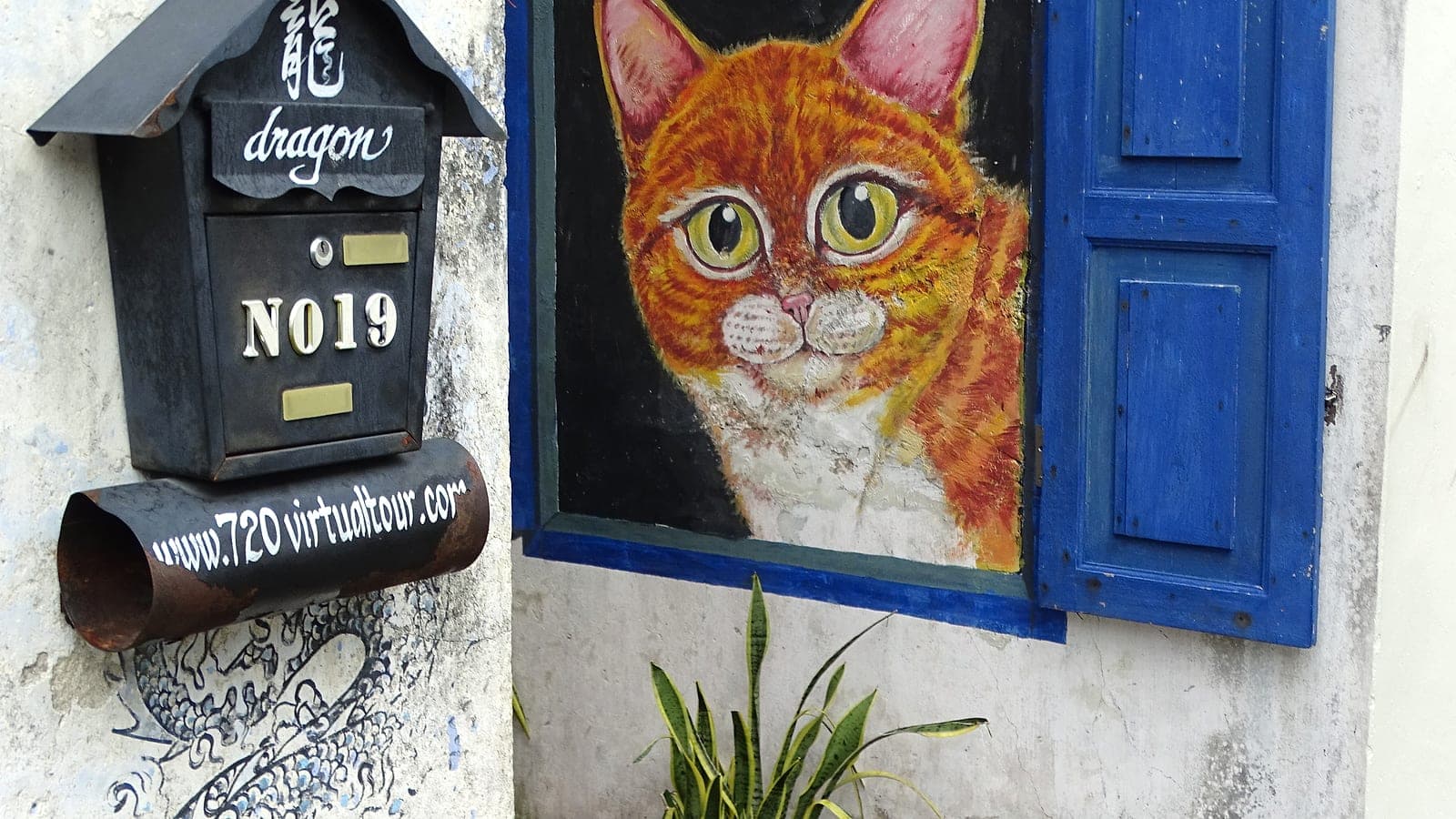
Penang has developed a quiet but significant following among Korean travellers, particularly younger visitors from Seoul and Busan who travel for aesthetics — the kind of layered, photogenic city that rewards a careful eye. The George Town heritage zone delivers it: narrow lanes, indigo-washed walls, wrought-iron art sculptures, pastel Peranakan shophouses, and an independent café scene that photographs as well as any destination in Southeast Asia.
This guide is written specifically for Korean visitors. It covers the visual street art trail, the best cafés for content and atmosphere, where to eat, what to buy, and the practical logistics from arrival to check-out.
George Town is the kind of destination where the content creates itself. Every corner is a composition — tiles, light, weathered wood, and colour. The café scene is small but strong, and the food is genuinely excellent. Two full days is the minimum; three gives you everything on this list comfortably.
Korean travellers from Seoul, Busan, Daegu, and Incheon — particularly 20s–30s solo or couple travellers drawn by café culture, heritage photography, street art, and affordable luxury; includes note on halal options for Muslim Korean visitors
The Street Art Trail
Ernest Zacharevic's murals and iron-rod sculptures are the anchor of the George Town art experience. The Lithuanian artist created these works for the 2012 George Town Festival and they remain the most-photographed street art in Southeast Asia.
The key works (in walking order from Armenian Street):
Kids on Bicycle (Lebuh Armenian) — the most famous image: two children on a real bicycle mounted to a wall mural. The line for photos can be long in the morning; arrive before 9am or after 5pm.
Little Children on a Swing (Lebuh Armenian, opposite side) — mural of children on a swing with a real swing installed. Most accessible with natural light from late afternoon.
Boy on a Motorbike (Lebuh Armenian, further east) — mural of a boy on a real vintage motorcycle. Good golden-hour light.
Big Head (Cannon Street / Lebuh Cannon) — oversized portrait mural, different in scale from the bicycle works.
Clan Jetties mural series (Weld Quay / Pengkalan Weld) — Zacharevic completed a series of boat and water-related murals near the clan jetties. Worth the 15-minute walk south from the main Armenian Street cluster.
Best light for street art photos
George Town's narrow lanes are shaded most of the morning. 8–10am and 4:30–6pm give the softest light on the murals. Midday sun creates harsh shadows on the textured walls. For the Armenian Street works, face north — the light comes from behind the camera in the morning.
Beyond Zacharevic: The George Town street art trail extends beyond his works. The Mirrors George Town series (also 2012 George Town Festival) placed iron-rod silhouette sculptures at culturally relevant spots around the heritage zone — a blacksmith, a trishaw rider, a woman grinding spices. These are on the official Penang Tourism Heritage Trail map, available at the George Town World Heritage Inc. visitor centre on Church Street.
Café Trail: George Town's Best Spaces
The George Town café scene is independent-driven and largely photogenic. These are the most-visited among Korean and East Asian travellers.
China House (153 Lebuh Pantai / Beach Street) — the anchor of the heritage café world. Three interconnected shophouses spanning a full block; the central courtyard is the best photo space. 30+ cakes daily, specialty coffee, and a rotating art exhibition. Open 9am–1am; the late hours make it viable for an evening visit.
Mugshot Café (Lebuh Armenian) — famous for custom toast art: staff draw portraits or Penang landmarks on toast using food-safe coloring. The wait is worth it for the photo. Good brunch menu alongside the novelty. Heritage shophouse interior with original tiles.
The Daily Dose (Lebuh Kimberley) — the strongest single-origin coffee in George Town. Pour-over and cold brew from regional roasters. The interior blends original tiles with clean modern fixtures — a reliable composition. Quiet enough to work; photogenic enough to shoot.
Macallum Convent (Gat Lebuh Macallum) — warehouse-scale café in the Macallum Street arts district, a 10-minute Grab from the heritage core. High ceilings, exposed brick, and communal tables. The food portion sizes are generous. Worth pairing with a walk through the Macallum Street Ghaut neighbourhood for less-photographed murals and independent shops.
Campbell House Café (Lebuh Campbell) — in-house café of the Campbell House boutique hotel. Excellent specialty coffee in a well-restored heritage shophouse setting. Not exclusively a destination café, but the ground floor is open to non-guests and the quality is high.
Café hours caveat
Most George Town independent cafés are closed one day per week and may have reduced hours on public holidays. Check Instagram pages before visiting — they update more reliably than Google Maps. Most are open 8am–6pm, with China House running to 1am.
Heritage Photo Locations
Beyond the street art, George Town has several heritage buildings and streetscapes that photograph well.
Cheong Fatt Tze Blue Mansion — the indigo-blue walls and louvered windows of this 1880s Chinese courtyard mansion are among the most-photographed heritage images in Malaysia. Exterior shots are free; guided tours (RM 17, runs multiple times daily) access the interior courtyard. The "Crazy Rich Asians" filming location. George Town's heritage zone is a UNESCO World Heritage Site — inscribed in 2008.
Seven Terraces (Stewart Lane) — a row of restored Anglo-Indian terraced houses painted in warm ochre tones. The streetscape from the junction is a clean composition. The Kebaya restaurant in the same compound is open for lunch and dinner if you want to photograph the interior.
Clan Jetties (Weld Quay) — stilt-house villages built by Chinese clan associations over the water. The Chew Jetty (largest) has been heavily commercialised; the smaller Lee Jetty and Mixed Jetty retain more authenticity. Early morning is best — residents are going about their day before tour groups arrive.
Penang Hill summit view — the funicular takes 5 minutes and deposits you 821m above sea level with views over the island. The best content is the low-cloud forest and the views back toward the city. Sunrise trips (funicular opens at 6:30am) give clear air before the heat haze builds.
Khoo Kongsi (Cannon Square) — the most elaborate clan association building in Malaysia. The carved roof decorations, painted walls, and ceremonial courtyard are photogenic throughout the day. Entrance RM 10.
Food Guide
Penang's Essential Dishes
Penang food is distinct from mainland Malaysian food and from what most Korean travellers encounter in KL. The key dishes:
Char kway teow — flat rice noodles stir-fried over intense charcoal heat with prawns, cockles, egg, bean sprouts, and dark soy. The smoky flavour (wok hei) is what makes it worth seeking out. Not halal at most traditional stalls.
Asam laksa — sour, tangy mackerel noodle soup with torch ginger and shrimp paste. CNN ranked Penang asam laksa the 7th best food in the world. The Air Itam laksa stall is the benchmark; Joo Hooi Café on Penang Road is more central. Not halal at traditional stalls.
Nasi kandar — rice with a selection of curries ladled over it. The dish has been Penang's signature for over a century. Always halal. Hameediyah (since 1907) and Line Clear are the two most recommended. The right way to order: ask for "banjir" (flood) and they pour all the curry gravies together over your rice.
Chendul — shaved ice with green rice-flour jelly, red beans, and thick palm sugar syrup over coconut milk. The Teochew Chendul stall on Penang Road has been operating since the 1930s.
For Korean Visitors Who Keep Halal
Muslim Korean visitors will find Penang straightforward. All nasi kandar restaurants (Hameediyah, Line Clear, Beratur) are JAKIM halal certified. The entire Gurney Drive Hawker Centre is halal. Mamak restaurants serving roti canai and teh tarik are always halal.
The main hawker dishes to seek out that are reliably halal: nasi kandar, murtabak, roti canai, asam laksa at Muslim-owned stalls (the Air Itam laksa stall is Muslim-owned), satay at Malay hawker stalls, and all dishes at Gurney Drive and Esplanade hawker centres.
Identifying halal stalls
Look for the green JAKIM crescent-and-star logo, a "No Pork No Lard" sign, or "Halal" in English or Malay. Asking "halal tak?" (is it halal?) gets an immediate answer from any stall holder. This is a completely normal question in Malaysia.
Coffee and Dessert
Korean travellers tend to value the café experience highly; the good news is that George Town's specialty coffee scene is strong and the prices are significantly lower than Seoul or Busan. Most independent cafés charge RM 12–18 (approximately KRW 3,500–5,500) for an espresso-based drink. Cold brew and pour-over are standard at The Daily Dose and Campbell House. China House's 30+ cake display changes daily.
Souvenir Guide
What to bring back:
Batik — Malaysia's hand-painted or block-printed fabric. George Town has a handful of genuine batik workshops around the heritage zone. Avoid the mass-produced tourist scarves; go to proper fabric shops on Lebuh Penang or the craft stalls at Chew Jetty where you can see hand-stamping in process. Price: RM 30–150 depending on size and complexity.
Peranakan tiles — reproduction antique encaustic tiles from the Peranakan tradition, available at craft shops on Armenian Street and Penang Road. Small individual tiles make good travel souvenirs; the patterns are distinctive to Penang. Price: RM 15–50 per tile.
Penang spice mixes and curry powders — Little India (Lebuh Pasar / Penang Road junction) has several spice shops selling freshly ground curry blends. Pre-packaged assam laksa spice kits and rendang paste are available and travel well. The flavour profiles are unavailable in Korea. Price: RM 5–20.
Nyonya kuih (Peranakan cakes) — fresh, fragile, and consumed on the day. The best are from Joo Chiat kuih stalls in the heritage zone. Pulut inti (glutinous rice with coconut), ondeh-ondeh (pandan rice balls with palm sugar), and kuih lapis (steamed layer cake) are the most distinctive. Not a long-distance souvenir but worth trying in-situ.
Vintage postcards and prints — the antique shops and postcard stalls on Armenian Street carry original 1940s–1970s Penang photography and hand-coloured postcards. Genuine originals cost RM 20–80; reprints are RM 5–15. Good for wall-framing.
Batik authenticity check
Genuine hand-drawn batik (batik tulis) has slightly irregular pattern edges and no two pieces are identical. Machine-printed "batik" fabric is entirely regular — the pattern is exactly reproduced. If the pattern is perfectly uniform across the whole cloth, it's machine-made. Price difference is significant; both have their place but know what you're buying.
Practical Information
Getting there: No direct Seoul–Penang route. The standard connection is via Kuala Lumpur: Korean Air, Asiana, or AirAsia X Seoul–KL (approximately 6.5 hours), then AirAsia or Malaysia Airlines KL–Penang (55 minutes). Total travel time from Incheon: 9–10 hours with connection. From Busan (Gimhae), the same KL connection applies; Air Busan flies to KL.
Airport to George Town: Grab from Penang International Airport (PEN) to George Town takes 30–40 minutes and costs RM 30–45. No need to negotiate or pre-book.
Mobile data: Local SIM cards (Maxis, Digi, U Mobile) are available at the airport arrivals hall. A 7-day tourist SIM with 20GB data costs RM 30–45. Much more reliable than hotel Wi-Fi for navigation and content upload.
Payment: Most cafés and restaurants accept card (Visa/Mastercard). Hawker stalls and small vendors prefer cash. ATMs at the airport and along Penang Road. Cash: bring USD or exchange at the licensed money changers on Penang Road (better rates than airport).
Accommodation for Korean travellers: The George Town heritage zone is the correct base. For Instagram and café culture, staying on or near Armenian Street, Muntri Street, or Lebuh Chulia puts you within walking distance of nearly everything on this list. Browse hotels in Penang for options in the heritage zone at all price points. Campbell House, Seven Terraces, and The Edison are the premium boutique options. Hotel 1926 Heritage on Muntri Street is the budget-friendly heritage pick.
Weather: Penang is warm and humid year-round. Temperatures: 28–34°C daily. Carry a small umbrella — afternoon rain showers (approximately 30 min) are common and pass quickly. Sunscreen is essential; the equatorial UV is intense even on overcast days.
Two-Day Itinerary
Day 1 — Heritage and Art
Morning (7:30am): Breakfast at a mamak restaurant — roti canai and teh tarik. Spend RM 5–8. Then walk the Armenian Street street art before the tour groups arrive (8:30–10am).
Late morning: Khoo Kongsi clan temple (30–45 min), then the Cheong Fatt Tze Blue Mansion exterior. Guided tour at 11am if you want the interior.
Lunch: Hameediyah on Campbell Street for murtabak and nasi kandar. Halal.
Afternoon: Walk the heritage zone without a plan — Lebuh Chulia, Lebuh Aceh, the clan jetty area. The Penang Road Teochew Chendul stall for dessert (RM 3.50).
Late afternoon: The Daily Dose for coffee, then Mugshot Café for the toast art.
Evening: China House for dinner and cake. The evening atmosphere from 7pm is the best time to be there.
Day 2 — Hill, Beach, and Batu Ferringhi
Morning: Penang Hill funicular. Take the 7am departure to beat the heat and have the summit views to yourself for 30 minutes. Back down by 9am.
Late morning: Drive or Grab to Batu Ferringhi (30 min from George Town). Walk the beach, check the night market vendors (set up from 6pm but the goods are there during the day for browsing).
Afternoon: Long Beach Café for seafood lunch — butter prawns and steamed grouper. RM 30–50 per person.
Late afternoon: Return to George Town, walk Macallum Street Ghaut neighbourhood.
Evening: Gurney Drive Hawker Centre for dinner — char kway teow, laksa, pasembur. All halal stalls. RM 20–30 per person. The sea view from the hawker centre promenade is good at dusk.
Keep reading
Guides that pair well with this one.
Best Photography Spots in Penang: A Location-by-Location Guide (2026)
The definitive photography guide to Penang. Ernest Zacharevic murals, Cheong Fatt Tze Blue Mansion, Clan Jetties at sunrise, Penang Hill at golden hour, and hidden heritage lanes — with exact locations, best light times, and practical tips.
9 min readculturePenang for Art Lovers: Street Art, Galleries, and Living Heritage
Georgetown's street art scene is one of Southeast Asia's most distinctive — murals, wrought-iron caricatures, clan house interiors, and contemporary galleries. This is where to find them and how to see them properly.
7 min readtravelFree Things to Do in Penang: A Practical Guide to Exploring Without Spending
The best free activities in Penang — heritage walks, street art, temples, beaches, and markets. Honest about what costs and what genuinely doesn't.
11 min readplanningPenang for Couples: Romantic Things to Do, Stay, and Eat
The best Penang experiences for couples — sunset at the Esplanade, dinner in a restored heritage building, a durian orchard drive to Balik Pulau, boutique hotels with character, and a city that rewards slowing down together.
9 min read