On this page
Penang for Japanese Tourists: The Complete Guide (2026)
Direct flights from Osaka and Tokyo, Japanese-friendly food, and a city built on multicultural craft make Penang one of Southeast Asia's best destinations for Japanese travellers.
Penang and Japan share an instinct that most cities don't: the belief that everyday craft deserves serious attention. Here, a char kway teow hawker tends the same wok at the same stall for forty years. A Peranakan craftsman restores lacquerwork using techniques brought from the Fujian coast centuries ago. George Town's UNESCO heritage conservation — preserving shophouse facades the way Kyoto's machiya district regulations preserve wooden townhouses — follows a logic that Japanese visitors tend to recognise immediately, even if they can't quite articulate why.
This is not a coincidence. Both cultures built their craft identity from the same raw materials: limited land, dense urban living, and a long tradition of treating the functional as something worth making well.
Penang's George Town offers Japanese visitors a rare Southeast Asian city with genuine cultural weight — UNESCO-listed heritage architecture, serious street food, and a craft tradition that rewards slow looking. Direct flights from Kansai make it more accessible than most of the region.
Japanese travellers from Tokyo, Osaka, and Fukuoka on 4–7 day trips, those interested in heritage craft, street food culture, and multicultural history, and first-time Southeast Asia visitors who want depth over beach resorts
Getting There
The most direct route from Japan is AirAsia X's service between Osaka Kansai (KIX) and Penang International Airport (PEN). The flight takes approximately 7 hours. AirAsia X operates this route on a schedule that varies seasonally — check current frequencies when booking, as the Kansai–Penang connection is established and consistent but not daily on every season.
From Tokyo Narita (NRT) or Haneda (HND), a direct Penang flight does not exist. The standard connection is through Kuala Lumpur International Airport (KUL). Malaysia Airlines and AirAsia both cover the Tokyo–KL leg; Japan Airlines operates KL connections through code-share arrangements. Total travel time from Tokyo, including connection, is typically 9–11 hours depending on layover length. The KL–Penang domestic leg is 50 minutes.
A less common but genuinely enjoyable option: fly into Singapore Changi (SIN) — well-served from Japan — and take an express coach to Penang. Journey time is around 5–6 hours on a comfortable intercity bus, but it adds a day to your trip and is only worth it if you plan to spend time in Singapore separately.
Visa: Japanese passport holders enter Malaysia visa-free for stays up to 90 days. No application needed — present your passport at immigration on arrival.
Why Penang Works for Japanese Visitors
The cultural bridge is real, and it runs deeper than polite marketing language would suggest.
George Town received UNESCO World Heritage status in 2008 — the same year as Melaka — recognised for its "outstanding universal value" as a trading port that layered Malay, Chinese, Indian, Dutch, Portuguese, and British influences over five centuries. The parallel with Kyoto's World Heritage designation is not just cosmetic: both cities are wrestling with the same tension between conservation and living-city development. George Town's Inner and Buffer Zones have strict building guidelines for facade alterations; walk down Muntri Street or Love Lane and you see the result — mid-19th century shophouses in continuous commercial use, unchanged on the outside.
The craft parallel is equally specific. Japan's mingei movement — folk craft as serious aesthetic practice, championed by Yanagi Sōetsu in the 1920s — valued the handmade utilitarian object over fine art. Penang's Peranakan culture produced the same category of object: hand-carved rattan furniture, Nyonya beadwork slippers, gold-thread embroidery on kebaya blouses, hand-painted batik on silk. None of this is heritage-craft-for-tourists. Most of it is still made and used.
Language and Communication
English is the working language for all tourist, hotel, restaurant, and retail interactions in George Town. Menus are almost universally in English; upscale restaurants and heritage hotels typically have English-only menus. No Malay is required, though knowing "terima kasih" (thank you, pronounced teh-ree-mah kah-see) and "berapa?" (how much?) is appreciated at markets.
Chinese menus — in Mandarin characters — appear in traditional kopitiam (coffee shops) and some hawker centres. Japanese visitors with reading ability in Chinese characters will find significant overlap in standard items like 炒粿條 (char kway teow), 福建麵 (Hokkien mee), or 叉燒 (char siu pork). The simplified characters used in Malaysia differ from traditional kanji in specific ways, but the overlap is substantial enough to be genuinely useful.
Japanese signage exists in a small number of luxury hotels and at the airport. Expect none in hawker centres, markets, or heritage-zone shops.
Georgetown
UNESCO World Heritage Zone
The UNESCO-protected inner zone of George Town runs roughly between Jalan Penang, Lebuh Farquhar, and the waterfront — walkable in its entirety. Every major landmark (Armenian Street street art, clan jetties, Sri Mahamariamman Temple, Goddess of Mercy Temple, Masjid Kapitan Keling, the colonial Esplanade) sits within 20 minutes' walk of the others. Plan at least a full day here on foot.
Food for Japanese Palates
Penang's hawker food is complex, layered, and built on a logic of long-cooked broth and precise technique. Japanese visitors who take ramen seriously will find structural parallels — though the flavour profiles diverge sharply in ways worth understanding before you order.
Hokkien Mee (Prawn Mee)
This is the closest Penang dish to a Japanese ramen in concept. A rich pork-and-prawn broth — simmered for hours, dark amber in colour, deeply savoury — is served over thin yellow egg noodles and rice vermicelli, topped with prawns, hard-boiled egg, kangkung (water convolvulus), and crispy fried shallots. The umami depth will be immediately legible; the heat from the sambal chilli on the side is your variable. Order it at Penang Road Famous Prawn Mee (51 Lebuh Carnarvon) or any heritage kopitiam in the morning.
The broth technique differs from tonkotsu — this is clarity over opacity, built on shellfish and pork in equal proportion rather than pure pork bone — but the underlying project (a bowl of noodles where the broth is the point) is the same.
Assam Laksa
Worth a separate mention because Japanese visitors occasionally expect this to be in the same register as Hokkien Mee and are caught off-guard. Assam laksa is a tamarind-based sour fish broth — deeply acidic, pungent from the mackerel, topped with shredded cucumber, raw onion, mint, torch ginger flower, and a black prawn paste (hae ko) dollop that tastes like intensely concentrated fermented seafood. It is one of Penang's most singular dishes. It is not umami-forward in the Japanese sense — it is sour-forward in a way that has no close Japanese analogue. Try it at the Ayer Itam market stalls; approach it as something genuinely new rather than something familiar.
Char Kway Teow
Flat rice noodles stir-fried over very high heat with prawns, cockles, egg, bean sprouts, Chinese sausage (lap cheong), and dark soy. The wok hei — the breath of the wok, that smoky charred quality from a flame-kissed steel pan — is the technique marker here. Japanese visitors familiar with teppanyaki cooking will recognise the same high-heat logic applied to a different mise en place. The best char kway teow in George Town comes from stalls where the cook is working alone, in small batches, at enormous heat. Penang Road area and Campbell Street market are reliable hunting grounds.
Dim Sum
The George Town dim sum tradition — yum cha in the Cantonese manner, served from rolling carts or ordered by tick-sheet — runs every morning from approximately 6am to 11am at heritage kopitiams like Toh Soon Cafe (Lorong Campbell) and Hong Kong Restaurant (Jalan Burma). The chef attention and rotation of delicate preparations (ha gow, siu mai, cheong fun, taro puffs, egg tarts) parallel the omakase logic of a Japanese counter: small, precise, sequential, technique-dependent.
Dietary Notes
Lard is a standard cooking fat in Chinese hawker stalls and is not flagged on menus. If this is a concern, eat at Indian stalls (tandoor, biryani, banana leaf rice), Malay stalls (marked halal, coconut-oil and vegetable-oil based), or ask specifically at Chinese stalls. The halal indicator in Malaysia is an official certification — any stall displaying the JAKIM halal logo uses no pork or lard.
George Town Street Art
Ernest Zacharevic's 2012 street art commission transformed a handful of Armenian Street walls into something that became unexpectedly iconic. The most-photographed piece — "Children on Bicycle" — shows two children riding a real bicycle welded to the wall, the children themselves painted in Zacharevic's loose, warm style. The art has been imitated everywhere since; the originals are on and around Armenian Street (Lebuh Armenian) and are still in good condition.
Alongside the painted murals, a series of smaller rod-iron cartoon installations — installed by local artist Louis Gan — caption George Town's historical vignettes in silhouette form: trishaw pullers, kongsi clan disputes, colonial-era scenes. These are scattered across the heritage zone on building facades; finding them feels like navigating a picture book laid across a city.
Japanese visitors with familiarity with Naoshima island's art-installation model — where contemporary art is embedded in a functioning fishing community rather than isolated in a gallery — will find George Town's model similar in logic, if not in medium or budget.
Craft and Shopping
The Armenian Street corridor and its surrounding blocks hold the most coherent craft shopping in George Town. What distinguishes it from generic tourist-market goods is the actual quality level:
Batik: Penang batik — hand-waxed and hand-dyed on cotton or silk — is available from workshops on Lebuh Pantai and Jalan Masjid Kapitan Keling. Hand-drawn batik (batik tulis) is the higher-quality variant; ask to see the wax-resist process in action at working studios. A quality silk batik sarong runs RM 150–400 depending on complexity.
Peranakan antiques: The antique shops on Armenian Street and Jalan Buckingham stock genuine Nyonya ware — hand-painted porcelain, Peranakan jewellery, embroidered textiles, and lacquerware — alongside reproduction pieces. The distinction between old and reproduction is not always clearly marked; ask, and a reputable dealer will tell you. Prices for genuine pieces start from RM 200 for small items and run considerably higher for intact sets.
Rattan goods: Traditional rattan furniture and baskets from the Little India–adjacent shops on Jalan Masjid Kapitan Keling. Rattan craft in Penang is still commercially viable as a local industry, not just a tourist recreation. A well-made rattan tray costs RM 40–80; a proper rattan chair RM 300–600.
Japanese visitors accustomed to evaluating craft quality — weight, finish, construction logic — will find these things hold up to scrutiny in a way that souvenir-district goods usually don't.
Practical Information
Weather: Penang is hot and humid year-round — daytime temperatures of 30–33°C with high humidity. This is categorically different from Tokyo or Osaka seasonal norms; acclimatise by staying hydrated and scheduling outdoor activity for early morning or late afternoon. The driest and most comfortable months are November through February; the wettest are September and October (northwest monsoon).
Currency: Malaysian Ringgit (MYR). As of mid-2026, RM 1 ≈ ¥30 (roughly RM 35 to ¥1,000). Hawker food costs RM 7–15 per dish; a heritage boutique hotel runs RM 350–700/night; a Grab taxi across George Town costs RM 8–15. Money changers in George Town give better rates than airport counters — the Penang Road area has several licensed changers. Major credit cards are accepted at hotels and restaurants; hawker stalls and market vendors are cash-only.
Transport: Download Grab before you leave Japan and connect a payment card. It functions like a standard Japanese taxi app — request, confirm fare, pay in-app. Most trips within George Town cost RM 8–15. Penang Hill to George Town is RM 20–30. For the beach (Batu Ferringhi), budget RM 30–40 from the heritage zone. The free CAT bus covers the inner heritage zone for short hops between the waterfront and Komtar.
Temple etiquette: Penang's active temples — Hindu, Buddhist, Taoist, and Malay mosque — each have entry conventions. At Hindu and Buddhist temples, remove shoes before entering; follow signage. At mosques, women require a head covering (usually available at the entrance) and both men and women require covered shoulders and legs. The logic parallels Shinto shrine and Buddhist temple etiquette in Japan but the specific rules differ — shoes off is universal; bowing is not expected.
SIM card: Pick up a tourist SIM at Penang International Airport arrivals. Maxis and Digi both have counters. A 15-day tourist plan with 20–30GB data costs RM 25–45.
Best areas to stay:
- George Town heritage zone — Walkable to everything. Boutique hotels in restored shophouses (Macalister Mansion, Campbell House, 23 Love Lane) offer the most distinctive stays.
- Batu Ferringhi — Beach strip 25 minutes north of George Town, with large resort hotels. Better for those who want a pool base; George Town is a Grab ride away.
3-Day Suggested Itinerary
Day 1 — George Town heritage and street art
Morning: Arrive and check in. Breakfast at any heritage kopitiam — teh tarik (pulled milk tea), roti bakar (toast with kaya coconut jam), half-boiled eggs. Walk Armenian Street for the Zacharevic murals and rod-iron installations. Continue to the clan jetties on Weld Quay — stilted wooden houses extending over the harbour, built by Hokkien clans in the 19th century and still occupied by their descendants.
Afternoon: Sri Mahamariamman Temple on Lebuh Queen (1833, active Hindu temple), then north through Little India to the Goddess of Mercy Temple (Kuan Yin Teng, free entry). Late afternoon: Lebuh Pantai batik workshops.
Evening: Gurney Drive hawker centre for char kway teow, Hokkien mee, and cendol (iced coconut milk dessert with palm sugar and pandan jelly). Busy, open-air, zero pretension.
Day 2 — Penang Hill and the north coast
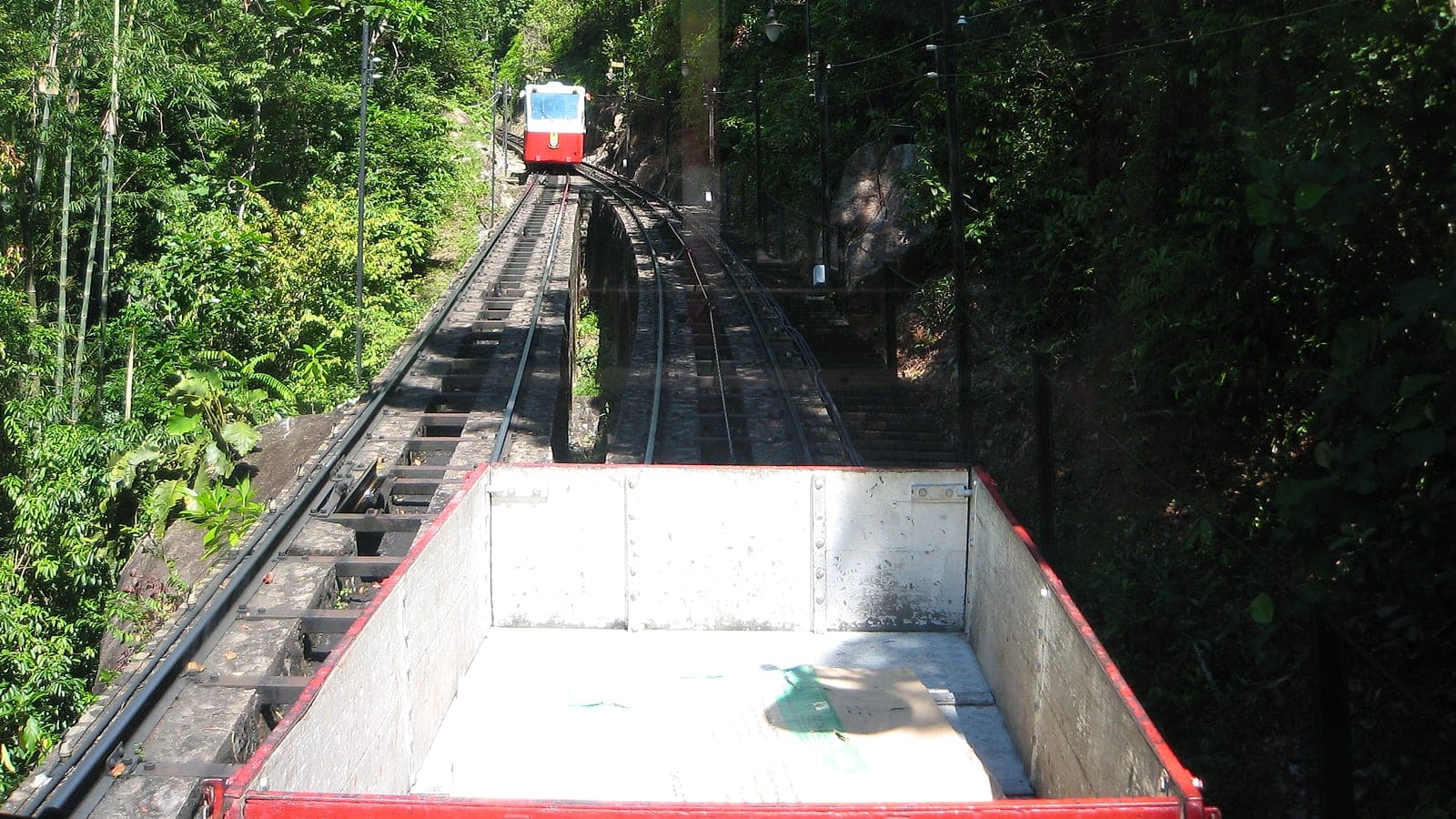
Morning: Grab to Penang Hill funicular station in Ayer Itam. Book tickets online in advance (RM 30 for non-Malaysians, one-way). The ride up takes 10 minutes on a Swiss-engineered cable railway; the hilltop sits at 833 metres and is noticeably cooler than the city. Walk the ridge trail and the colonial-era bungalows.
Afternoon: Descend and stop at Ayer Itam market for assam laksa — this is one of the recommended stalls for the dish. Drive to Batu Ferringhi for the beach. The beach itself is not the main event (it is a working fishing and hotel beach, not a white-sand resort); the appeal is the change of pace and the long beachfront hawker stretch that comes alive at night.
Day 3 — Craft shopping and food trail
Morning: Dim sum breakfast at one of the heritage kopitiams — Toh Soon Cafe (Lorong Campbell) or Hong Kong Restaurant (Jalan Burma). Take time. Order broadly. This is not a fast meal.
Afternoon: Armenian Street and Jalan Buckingham antique shops. Penang Batik on Lebuh Pantai. Rattan goods in the Little India corridor. Budget 3 hours and don't rush.
Evening: Return to a hawker centre for a final plate of char kway teow, or try the nasi kandar tradition — Indian-Muslim rice with rotating curries, served at any of the Hameediyah or Line Clear stalls that have been operating in George Town since before the Second World War.
For more detail on specific food options across the city, the Penang food guide covers the main hawker dishes, areas, and stall recommendations. For itinerary planning tools, the itinerary builder lets you customise by interest and pace.
Keep reading
Guides that pair well with this one.
The Penang 50: Best Experiences in George Town & Beyond
50 Penang experiences worth your actual time — food stalls, heritage buildings, beaches, and hidden corners, with hours, prices, and the detail that matters.
19 min readpracticalGeorge Town Walking Guide: Routes, Neighbourhoods & Tips for First-Timers (2026)
How to walk George Town for your whole stay — five named loops covering heritage, street art, food, clan houses, and the colonial waterfront, plus heat and shade-hopping tips.
10 min readneighborhoodsArmenian Street George Town — Complete Guide
Lebuh Armenian is the most-photographed street in Penang. Here's what's actually on it, what's nearby, and how to see it without just following the mural trail.
7 min readfoodBest Restaurants in George Town, Penang (2026)
The restaurants worth booking a table at in Penang's UNESCO heritage zone — from Nyonya tasting menus and colonial dining rooms to old-school Hainanese chops houses and the kopitiam that hasn't changed its recipe since 1940.
6 min read