On this page
Penang for Indian Tourists: The Complete Guide (2026)
Tamil heritage, Hindu temples, vegetarian food, and affordable flights make Penang one of Southeast Asia's best destinations for Indian travellers.
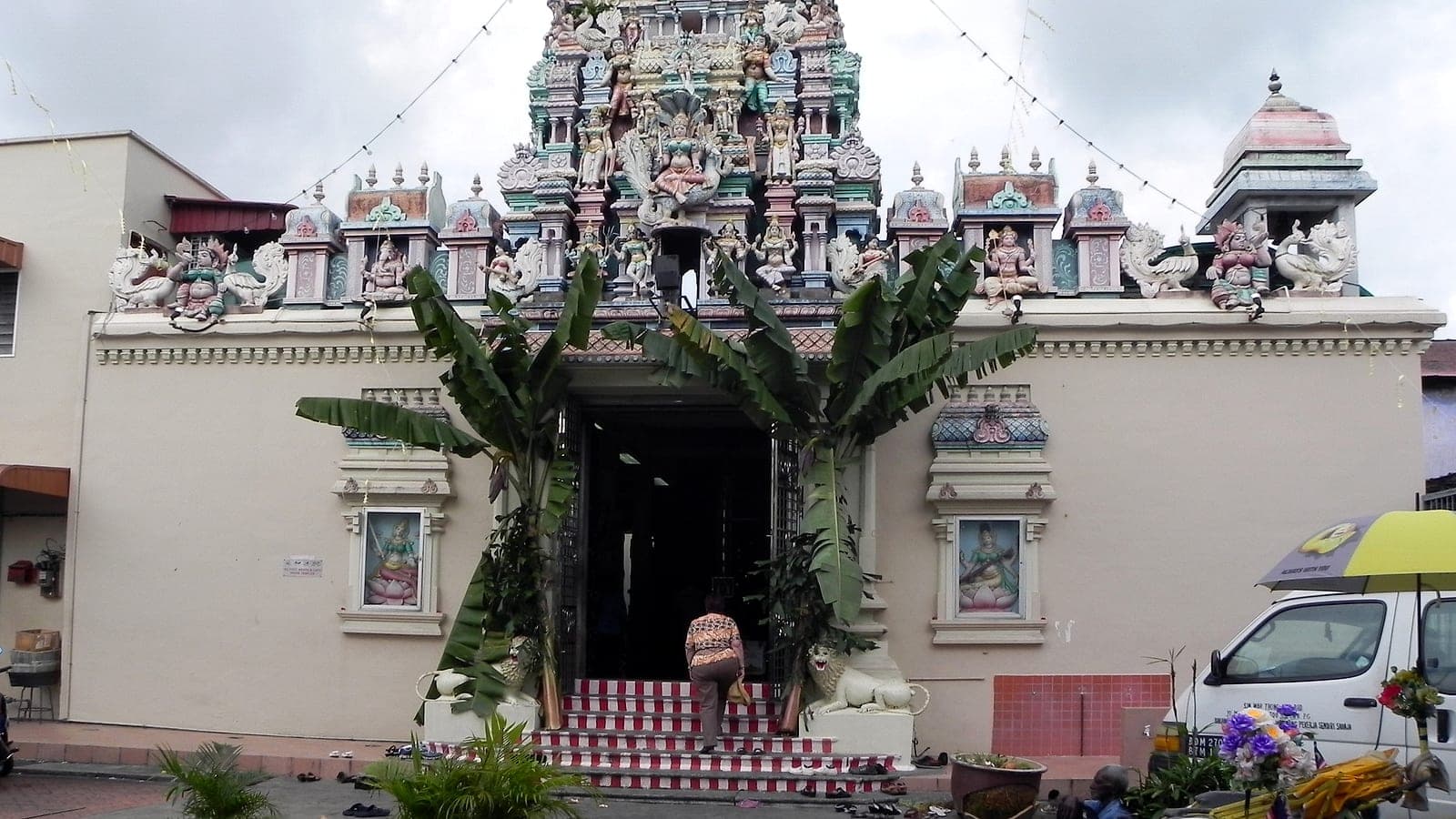
Penang is not a generic Southeast Asia destination for Indian visitors. It is a place where Tamil inscriptions appear on temple gopurams two centuries old, where the spice palette in a curry house feels like something between Chennai and Kuala Lumpur, and where the Chettiar merchant community built much of George Town's commercial history before your grandfather was born. The connection runs deeper than tourism.
For travellers from South India — Chennai, Bangalore, Hyderabad, Coimbatore — Penang is also the most accessible Southeast Asian city that doesn't feel like starting from zero. Language is manageable (English is standard, Tamil is understood in Little India), the food is generous to vegetarians, and the cultural landmarks are recognisable even to first-time visitors.
Penang's Tamil heritage, functional Little India, pure-vegetarian South Indian restaurants, and direct flight connections from Chennai make it one of the most accessible Southeast Asian destinations for Indian travellers — with cultural anchors that most other cities in the region simply don't have.
Indian travellers from South India (particularly Chennai, Bangalore, Hyderabad) on 4–7 day trips, families visiting for heritage and temples, vegetarians seeking variety, and travellers who want a non-generic Southeast Asia first trip
Getting There
The fastest route is direct: AirAsia operates direct flights between Chennai (MAA) and Penang (PEN) approximately four to five times weekly. Flight time is around 3 hours 30 minutes. IndiGo and Batik Air also serve the Chennai–Penang route on certain schedules — check current timetables at booking as frequencies shift seasonally.
From Bangalore (BLR), Hyderabad (HYD), and Mumbai (BOM), the standard connection is via Kuala Lumpur (KUL). Malaysia Airlines and AirAsia both operate the KL–Penang domestic leg; the connection adds roughly 2–3 hours to total travel time. From KL Sentral, you can also take the ETS train to Butterworth (3 hours 20 minutes) and cross to Penang Island by ferry — worth doing once for the experience, not as the default airport option.
Visa: Indian passport holders qualify for Malaysia's e-NTL (electronic No Travel Levy) arrangement, which permits visa-free entry for up to 30 days. Apply through the Malaysian immigration portal before travel. The process takes 24–72 hours and costs approximately RM 50. Confirm current requirements before booking as these arrangements are subject to change.
Tamil and Hindu Heritage
This is where Penang genuinely separates itself from other Southeast Asian cities. The Tamil connection is not decorative — it is structural.
Sri Mahamariamman Temple, Lebuh Queen
Built in 1833, this is one of the oldest Hindu temples in Malaysia and the most important Tamil religious site in Penang. The temple is dedicated to Goddess Mariamman, and the elaborate gopuram at the entrance is covered in hundreds of painted deities — the same visual grammar as a Dravidian temple in Tamil Nadu, relocated to a colonial-era Chinese merchant street.
Entrance is free. Dress modestly (covered shoulders and below the knee). Shoes are removed at the entrance. The temple is active daily with puja at set times — the atmosphere is closest to a working neighborhood temple rather than a tourist site, which is the point.
Nattukkotai Chettiars' Temple (Sri Mahamariamman Temple, Waterfall Road)
The Nattukotai Chettiars — Tamil merchant bankers from Chettinad in Tamil Nadu — were among the most significant commercial figures in colonial Penang. They operated hundis (informal credit networks) across the Straits Settlements, financed the spice and rubber trade, and built temples that reflected their commercial success.
The Chettiar temple on Waterfall Road (formally the Arulmigu Balathandayuthapani Temple) is the largest and most architecturally significant Chettiar institution in Penang. It is also the site of Penang's Thaipusam procession — the largest Thaipusam outside India. During the festival (January or February, depending on the Tamil calendar), kavadi bearers process from Lebuh Queen to this hilltop temple, and attendance runs into the tens of thousands.
Outside festival season, the temple grounds are peaceful and the architecture is worth the Grab ride up.
Little India, George Town
Penang's Little India occupies the streets around Lebuh Pasar, Lebuh Penang, and Jalan Masjid Kapitan Keling. It functions as a working commercial district rather than a heritage enclosure — saree shops, Tamil-language bookstores, spice merchants, banana-leaf restaurants, and South Indian sweet shops operate here as businesses, not attractions.
The Tamil street signs along this corridor are worth pausing for. Most are painted on tiles and date to the early 20th century, when this area was the centre of Penang's Indian business community. The Goddess of Mercy Temple (Kuan Yin Teng) and Masjid Kapitan Keling are both within two minutes' walk of the Little India core — Penang's religious geography is compressed and genuinely multicultural in a way that is unusual anywhere in the world.
Georgetown
UNESCO World Heritage Zone
The cluster of streets between Lebuh Penang and Jalan Masjid Kapitan Keling — a roughly 400-metre square — contains Sri Mahamariamman Temple, the Goddess of Mercy Temple, Masjid Kapitan Keling, and St. George's Church. Four major religions within a five-minute walk. Come in the morning when the temples are active.
Vegetarian and Indian Food
Penang is among the most vegetarian-friendly cities in Southeast Asia, for a structural reason: the Indian community established pure-vegetarian restaurants here over a century ago, and the Buddhist population created a separate parallel vegetarian tradition. Both are visible and easy to find.
Woodlands Restaurant, Jalan Zainal Abidin
The reference point for South Indian vegetarian food in Penang. Woodlands serves the pure-veg South Indian menu that visitors from Tamil Nadu and Karnataka will recognise immediately — thosai, idli, vadai, uttapam, meals (banana leaf or plate), and a rotating selection of gravies. The sambar and rasam are accurately made. The building is modest and air-conditioned; the service is brisk.
Address: 60, Jalan Zainal Abidin (off Jalan Penang). Budget approximately RM 15–25 per person for a full meal.
Komala Vilas, Lebuh Queen
Operating continuously since 1947, Komala Vilas is a George Town institution. The menu is pure-veg South Indian — dosa, meals, tiffin. The thali plate is the right order: rotating gravies served on a banana leaf or stainless plate, unlimited refills on rice and gravy. Prices remain low even by Penang standards (RM 10–18 for a full meal). The restaurant is plainly furnished and often full at lunch.
Dakshin, Penang Road area
For a more upscale South Indian meal — set in proper air-conditioning with attentive service — Dakshin serves the same Tamil Nadu/Andhra repertoire at mid-range prices (RM 35–70 per person). Worth booking ahead on weekends.
Roti Canai as a Familiar Entry Point
Indian visitors from South India often clock immediately that roti canai is a close relative of parotta — flaky layered flatbread eaten with dhal and curry. The Penang version uses slightly different technique and the accompaniments lean toward coconut-based curries rather than Chettinad-style, but the comfort is familiar. Any mamak stall serves it for breakfast and throughout the day. Order roti canai with dhal and a teh tarik (pulled milk tea) — RM 5–8 total.
Vegetarian in hawker centres
At Chinese hawker centres, ask "ada vegetarian?" (is there vegetarian?). Many stalls can prepare vegetable-only versions on request. The reliable no-effort option is to eat at the Indian stalls — banana leaf rice, dosa, and vegetable curries are available at almost all Indian stalls without modification. Buddhist vegetarian restaurants (look for yellow banners) serve strictly plant-based food.
Familiar but Different: Penang's Food Culture
The food in Penang borrows heavily from the same spice lexicon as South Indian cooking — tamarind, curry leaves, mustard seeds, fenugreek, dried red chilli, and coconut milk are all foundational. A Penang fish curry and a Tamil fish curry share more DNA than their appearances suggest.
The divergence is in the layering. Penang cuisine is a Malay-Chinese-Indian-Nyonya fusion that has been cooking together for 200 years. The assam laksa at a hawker centre uses tamarind-based sour fish broth that would be structurally recognisable to anyone who grew up eating pulusu in Andhra Pradesh — but the prawn paste (hae ko) dollop on top is firmly Hokkien Chinese, and the thick rice noodles are from a completely different tradition.
The effect for South Indian visitors is often pleasant disorientation. The flavours are individually legible but the combinations are unfamiliar. This is Penang's food identity: not Indian, not Chinese, not Malay — a synthesis with no clean analogue elsewhere.
Practical Information
Currency: Malaysian Ringgit (MYR). As of mid-2026, INR 100 ≈ MYR 5.5 to 6 (roughly RM 1 = INR 17–18). Money changers in George Town's heritage zone give better rates than airport counters — the Penang Road area has several licensed changers. Major credit cards are widely accepted at hotels and restaurants; hawker stalls are cash-only.
SIM Cards: Pick up a tourist SIM at Penang International Airport on arrival. Maxis, Celcom, and Digi all have counters. A 15-day tourist data plan (10–30GB) costs RM 20–40 and works across the island. Activate before leaving the airport.
Transport: Grab is the standard for getting around. Download the app and connect a card before arrival. Most Grab trips within George Town cost RM 6–15. For Batu Ferringhi from George Town, budget RM 25–35. The free CAT bus covers the heritage zone for short hops.
Language: English is standard for all tourist and service interactions. In Little India, Tamil is understood and appreciated. Malay is the national language; knowing "terima kasih" (thank you) and "tolong" (please/help) is enough.
Best areas to stay:
- George Town heritage zone — for temples, Little India, walkable food scene, and heritage art. Best for first-time visitors.
- Batu Ferringhi — beach strip with resort hotels, 25 minutes from George Town. Better for families who want a pool base.
Budget:
- Budget traveller (hostel, hawker food, Grab): RM 150–250/day
- Mid-range (boutique hotel, mix of restaurants): RM 300–500/day
- Comfort (four-star hotel, restaurants): RM 600–900/day
Festivals Indian Tourists Plan Around
Thaipusam (January or February): The largest Thaipusam celebration outside India takes place in Penang. The procession begins at Sri Mahamariamman Temple on Lebuh Queen and culminates at the Chettiar temple on Waterfall Road. Kavadi bearers (devotees carrying ornate metal structures affixed to their skin) process the full route; participation from the Tamil community is in the thousands. If your dates allow it, this is worth timing a visit around.
Deepavali / Diwali (October or November): Little India transforms — lights are strung along the shophouse streets, sweet shops put out murukku, mixture, and ladoo, and the temples hold extended puja. The atmosphere is familiar for Indian visitors without being identical. Penang's Deepavali has a Straits Settlements character distinct from the South Indian celebration.
Nine Emperor Gods Festival (October): This is a nine-day Taoist festival observed by Penang's Teochew Chinese community. Devotees in white carry palanquins through George Town in processions that run past midnight. Not an Indian festival, but the spectacle is worth witnessing if your visit coincides.
3-Day Suggested Itinerary
- Day 1 morning: Arrive, check in George Town. Breakfast at Woodlands or Komala Vilas. Walk to Sri Mahamariamman Temple on Lebuh Queen. Continue to Little India — saree shops, spice merchants, sweet stalls.
- Day 1 afternoon: Armenian Street street art and clan jetties. Dinner at a hawker centre — try nasi kandar and roti canai.
- Day 2 morning: Grab to Waterfall Road — Chettiar temple and Penang Botanic Gardens. Return through Ayer Itam market for assam laksa.
- Day 2 afternoon: Penang Hill funicular (book online, RM 30 one-way for non-Malaysians). Hill station views. Return for dinner at Gurney Drive hawker centre.
- Day 3: Choose your pace — Batu Ferringhi beach by RapidPenang bus (Route 101, RM 2.70) or a half-day to Kek Lok Si Temple in Ayer Itam. For planning options across neighbourhoods, use our itinerary builder.
For a deeper food walk through Indian Penang, the halal and Indian food guide covers the main Indian-Muslim and South Indian restaurant options across the island.
Keep reading
Guides that pair well with this one.
Living in Penang: The Expat Guide to Moving Here
Penang is consistently ranked among Asia's best places for expats to live. This guide covers cost of living, neighbourhoods, healthcare, international schools, and the practicalities of making Penang your home.
9 min readpracticalGeorge Town Walking Guide: Routes, Neighbourhoods & Tips for First-Timers (2026)
How to walk George Town for your whole stay — five named loops covering heritage, street art, food, clan houses, and the colonial waterfront, plus heat and shade-hopping tips.
10 min readpracticalPenang Currency and Cash Guide
The Malaysian Ringgit, where to exchange it, how much cash to carry, and whether you need cash at all. Updated for 2026.
3 min readpracticalPenang with Kids: The Family Travel Guide (2026)
Butterfly farms, Penang Hill, beach days at Batu Ferringhi, and hawker food that children actually eat — the practical guide for families visiting Penang.
13 min read