On this page
Penang for American Tourists: Flights, Costs & What to Expect (2026)
Everything US visitors need to know before flying to Penang — visa-free entry, flight routes, costs in USD, tipping (don't), and why Penang rewards the American traveller who leaves the resort track.
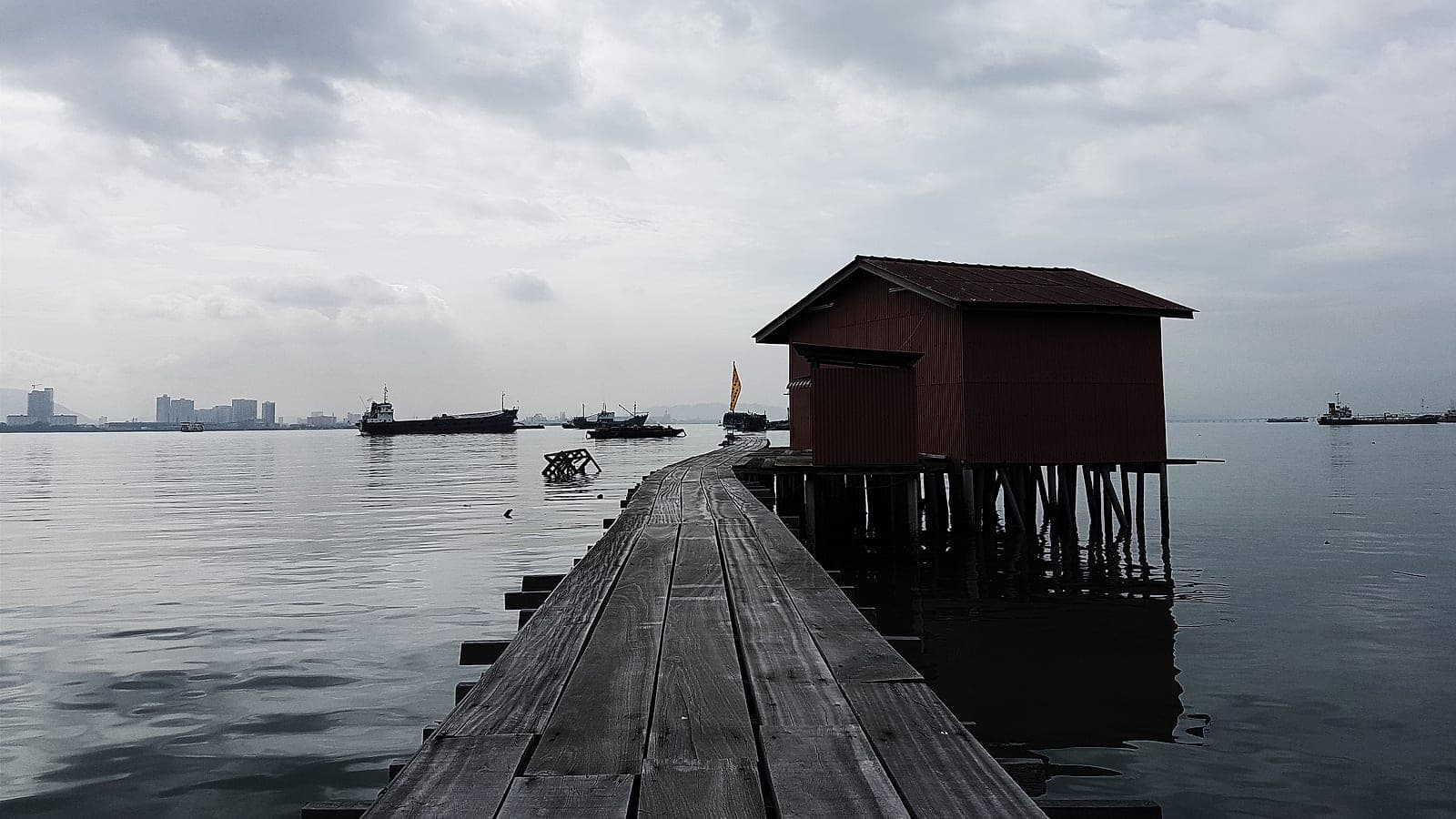
Penang does not appear on most American travel shortlists. That is not because it should not be there — it is because South and Southeast Asia gets marketed to US travellers as a collection of obvious stops (Bangkok, Bali, Singapore), and Penang sits slightly outside that circuit. This is, in practice, an advantage. George Town's UNESCO heritage zone, the food scene, and the island beaches are operating without the infrastructure saturation of Bali or the pricing of Singapore.
American travellers who come here tend to come back. The combination of English as a functional everyday language, extreme value for USD, safety levels that compare well with US cities, and food that is genuinely unlike anything available in America — these add up to a travel experience that is hard to replicate elsewhere in the region.
Penang is visa-free for US passport holders for 90 days. The airport has direct connections via Kuala Lumpur and Singapore from major US hubs. The Malaysian Ringgit makes Penang dramatically cheaper than what most Americans are used to — a meal that would cost $18 in the US costs $3.50 here. The island is small enough to navigate confidently in a few days.
American travellers visiting Southeast Asia for the first time or adding Penang to an existing regional itinerary
Visas and Entry
US citizens do not need a visa for Malaysia. Entry is visa-free for up to 90 days for tourism and business purposes. You receive your stay permission at the immigration counter on arrival — there is no pre-application required, no e-visa, no approval to wait for.
What you need:
- A valid US passport with at least 6 months' validity beyond your planned departure date
- A return or onward flight ticket (immigration officers may ask to see this, though many do not)
- Sufficient funds for your stay (no specific amount, and rarely checked)
Entry through Penang International Airport (PEN) routes through Malaysian immigration — straightforward. If entering via Kuala Lumpur International Airport (KLIA) and then taking a domestic flight to Penang, you clear immigration at KLIA and the Penang leg is a domestic flight.
Health requirements: As of 2026, no mandatory vaccinations are required for entry from the US. Confirm this with official sources before travel as requirements can change.
Getting to Penang from the United States
There are no non-stop flights from the US to Penang. All routes involve a connection, typically in Kuala Lumpur or Singapore.
East Coast US → Penang: The most common routing is through Kuala Lumpur (KLIA). Malaysia Airlines flies JFK–KUL non-stop. From KLIA, domestic Malaysia Airlines or AirAsia flights to Penang take 1hr and depart frequently. Total trip including connection: approximately 22–24 hours.
West Coast US → Penang: Korean Air and Japan Airlines hub through Seoul and Tokyo respectively, then connect to KLIA or Singapore. Alternatively, Singapore Airlines routes through Singapore (Changi), with a connection to Penang by Malaysia Airlines, Scoot, or Firefly. Total trip from LAX: 20–24 hours depending on connections.
Typical fares: Business class US–KUL on Malaysia Airlines runs $2,500–4,500 depending on season. Economy runs $700–1,200. Positioning to Penang from KL adds RM100–250 each way on domestic airlines. Book the KUL–PEN segment separately for flexibility.
Alternative approach: Fly into Singapore (more flight options from the US, often cheaper) and take the AirAsia or Scoot SIN–PEN connection (1hr, frequently RM100–200 one way). Singapore has some of the best connection infrastructure in the region — you clear immigration once in Singapore and the domestic Malaysian leg from Singapore is straightforward.
Currency and Costs in USD
The Malaysian Ringgit (RM) trades at approximately 4.4–4.7 per USD (check current rates before travel). This means everything in Penang is dramatically cheaper than the US equivalent.
Practical reference:
| Item | Cost in RM | USD equivalent |
|---|---|---|
| Hawker meal (one dish + drink) | RM8–15 | $1.75–3.25 |
| Restaurant lunch | RM20–35 | $4.50–7.50 |
| Restaurant dinner (mid-range) | RM50–90 | $11–20 |
| Beer at a bar (pint) | RM18–28 | $4–6 |
| Grab ride across George Town | RM8–12 | $1.75–2.60 |
| 4-star hotel (per night) | RM250–450 | $55–100 |
| Boutique heritage hotel | RM350–600 | $75–130 |
American travellers regularly underestimate how far their dollar goes here. A couple can eat extremely well — three meals a day at good local places — for $25–35 combined. Adding drinks, Grabs, and entrance fees, a full day in Penang can cost $50–70 for two people without staying at hostels.
ATMs and cash: CIMB, Maybank, and HSBC ATMs are widely available in George Town. Most US debit cards work — your bank's international withdrawal fee applies. Credit cards are accepted at hotels, most restaurants, and shops; smaller hawker stalls and market vendors are cash only. Arriving with RM300–500 in cash (exchanged at airport or hotel) is practical.
Tipping: Malaysia does not have a tipping culture. At hawker stalls, no tip is expected or necessary. At restaurants with service staff, rounding up slightly or leaving RM2–5 if the service was good is appreciated but not required. Tipping the way Americans do in the US (15–20%) would confuse most restaurant staff. Don't feel obligated.
Weather and When to Go
Penang is in the tropics, 5 degrees north of the equator, and is warm year-round (28–34°C, roughly 82–93°F). There is no cold season. Humidity is high throughout the year.
Best months for US travellers: November through February is slightly cooler and drier on the east (Batu Ferringhi) coast. March through May is consistently dry and one of the better times to visit. The monsoon season on the northwest coast (October through December) brings more rain, mainly afternoon thunderstorms rather than all-day rain.
What to wear: Light, breathable clothing. Shorts and t-shirts are appropriate for everything except mosques and some temples, which require covered shoulders and knees. Many temples provide sarongs at the entrance. Sun protection is more important than rain protection for most of the year.
Language
English is widely spoken in Penang — more so than in most of Southeast Asia outside Singapore. Menu boards in restaurants are typically in English. Street signs are bilingual (Malay and English). Hotel and shop staff throughout George Town speak functional to fluent English.
On residential streets and at wet markets, older vendors may communicate primarily in Hokkien or Malay. A translation app works for these situations, though pointing and nodding handles most transactions.
Penang Hokkien — the local Chinese dialect that functions as the street language of George Town — is unrelated to Mandarin and will not help if you have studied Chinese. Knowing a few Malay words (terima kasih = thank you, minta maaf = excuse me) is appreciated but not required.
Safety
Penang has a low violent crime rate relative to most US cities. The practical concerns are petty theft (bag snatching on motorbikes was more common in older parts of the city — hold bags close on narrow streets) and traffic. Road accidents are the primary safety concern for tourists — Penang traffic moves fast and does not observe the pedestrian right-of-way rules American travellers expect. Cross at marked crossings and assume drivers will not stop automatically.
Tap water in Penang is technically treated but most locals drink bottled or filtered water. Drinking bottled water is standard practice for visitors. Food safety is not a significant concern — street food in Penang is cooked at high temperatures and turnover is fast, which keeps food-borne illness risk low.
Practical Logistics
Phone: A local SIM (Maxis, Celcom, or Digi, available at the airport for RM20–35 with data) is the best option. Alternatively, check whether your US carrier offers an international plan covering Malaysia.
Power: Malaysia uses a Type G plug (UK three-pin square). American devices require an adapter. Most hotel rooms will have USB charging ports; bring an adapter for anything that needs a UK-style socket.
Time zone: Malaysia Standard Time (MST) is UTC+8. US East Coast (EST) is 13 hours behind; US West Coast (PST) is 16 hours behind. Practical note: if calling home to the US, afternoon calls from Penang reach the US East Coast in the morning of the same calendar day.
Getting around Penang: Grab (the regional Uber equivalent) is the practical choice for distances over 15 minutes on foot. The George Town heritage zone is walkable. The hop-on hop-off bus covers tourist sites. Renting a car is worthwhile only if you plan to leave George Town — city driving is congested and parking is difficult.
Keep reading
Guides that pair well with this one.
Penang for German Travellers: Flights, Costs & What to Expect (2026)
Everything German visitors need before flying to Penang — visa-free entry for EU/Schengen, flight routes from Frankfurt and Munich, costs in Euros, and why Penang suits the German travel style.
7 min readtravel-tipsPenang สำหรับนักท่องเที่ยวไทย: เดินทาง วีซ่า และสิ่งที่ต้องรู้ (2026)
คู่มือฉบับสมบูรณ์สำหรับนักท่องเที่ยวชาวไทยที่จะไปเยือนปีนัง — วิธีเดินทาง วีซ่า ค่าใช้จ่าย และสิ่งที่ควรรู้ก่อนเดินทาง
6 min readtravelPenang for Australian Travellers: Flights, Visas & What to Expect (2026)
Everything Australians need to know before visiting Penang — flights from Melbourne, Perth, Sydney, visa-free entry, currency, health, and what makes Penang worth the trip.
7 min readtravelPenang for British Travellers: Flights, Practicalities & What to Expect (2026)
Everything UK visitors need to know before flying to Penang — flights from London, visa-free entry, costs in GBP, and why Penang suits British travel style.
11 min read