On this page
Penang Coffee Guide: Kopitiams, Local Roasters & What to Order (2026)
Penang has two parallel coffee cultures — the century-old kopitiam tradition and a newer specialty scene. Both are worth your time, for different reasons.
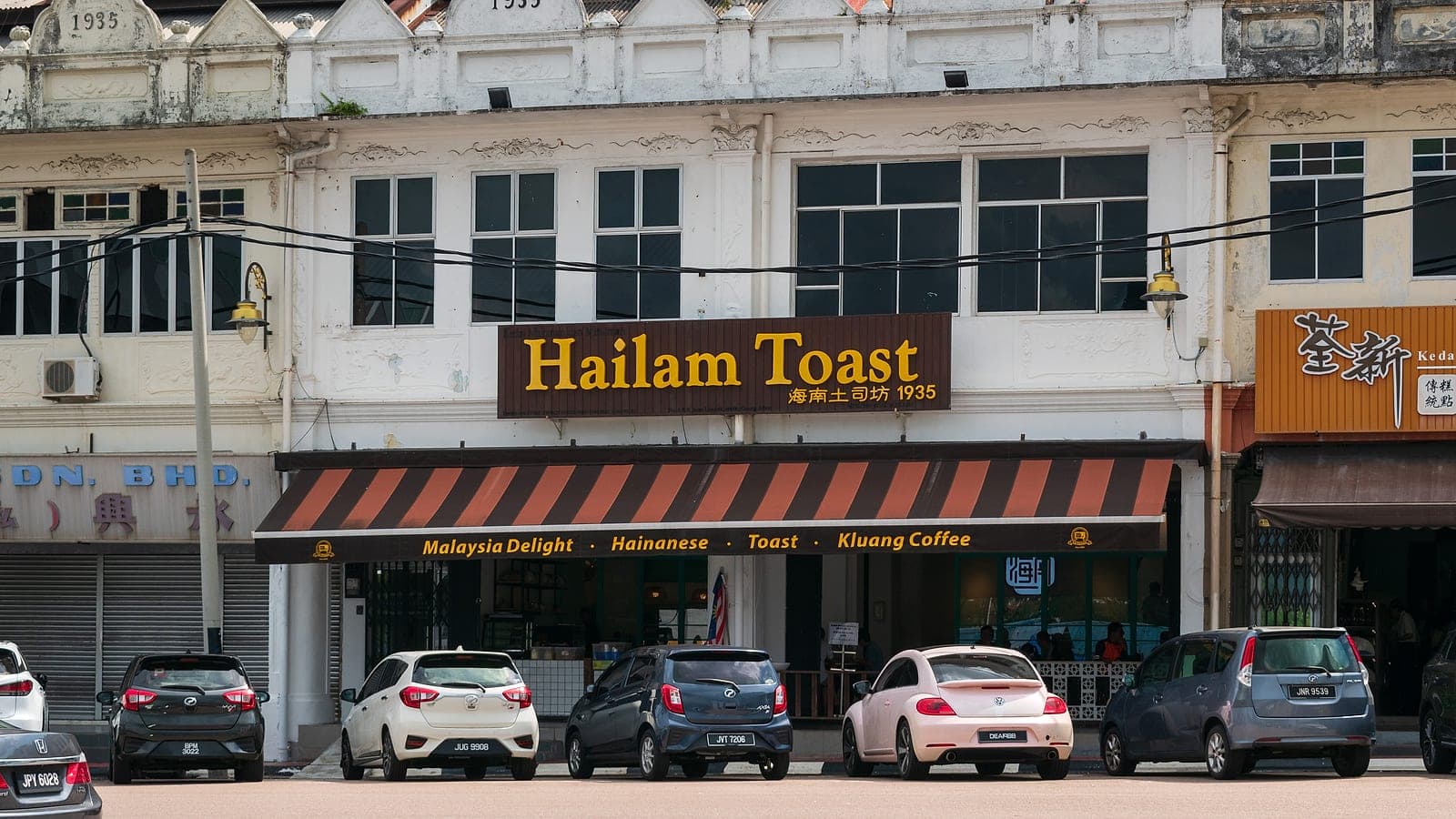
Penang does not have one coffee culture. It has two, running in parallel, used by the same people for different parts of the day and different moods entirely. The kopitiam tradition — Hainanese-roasted Robusta, brewed through a cloth sock, served in ceramic cups on marble-top tables — is over a hundred years old and functions more as a social institution than a food stop. The specialty cafe scene is maybe fifteen years old, focused on the coffee itself, and draws a different kind of attention.
Neither culture is trying to replace the other. Most Penang residents move between both without much thought about it: kopitiam at 7:30am for breakfast, specialty flat white at 10:30am if they want one, back to kopi the next morning. Understanding both is the difference between a visitor who enjoys Penang's coffee and one who misses half of it.
Penang's kopitiam coffee is one of Southeast Asia's most distinctive coffee traditions: Hainanese-style Robusta, roasted with butter and sugar, brewed through a cloth sock, served in ceramic cups. The specialty cafe layer on top of that is newer and smaller, but genuinely good. This guide covers both, including what to order, where to go, and how to spend one morning covering the full range.
Coffee-curious travellers who want to understand Penang's local coffee scene — from old-school kopitiam rituals to the newer specialty roasters — without needing a background in specialty coffee
What Kopitiam Coffee Actually Is
"Kopi" is the Malay and Hokkien word for coffee. The kopitiam — kopi (coffee) + tiam (shop in Hokkien) — is the coffee shop format brought to the Straits Settlements by Hainanese migrants in the late 19th century. Hainanese immigrants, who arrived later than the Hokkien and Cantonese communities and found most trades already occupied, became the dominant group in the coffee and bread trade. The technique they brought with them has barely changed.
Kopitiam coffee uses Robusta beans — not the Arabica that specialty coffee focuses on. The roasting process is the defining step: the beans are roasted with butter and sugar, sometimes with wheat, which produces a thick caramelised coating on each bean. The result is a coffee that is intensely bitter, slightly sweet from the caramelisation, and with an aftertaste that is nothing like a espresso. Some people find it too bitter; most people who grew up with it find everything else thin by comparison.
The brewing method is a cloth filter — a cotton bag on a metal ring called a kain tapisan or "coffee sock" in English. Hot water is poured through the grounds in the sock; the brew drips into a ceramic pot below. The process is fast and makes a very concentrated brew. The pot stays hot by sitting in a second pot of hot water.
The cups are small, white, and ceramic — never paper. They come with a saucer. The saucer is not decorative: it is traditional to pour coffee from the cup into the saucer to cool it, then drink directly from the saucer. You see this less often now, mostly among older patrons, but the saucer is still always there.
The Ordering Vocabulary
Kopitiam coffee has a precise ordering system. Get this right and you will order confidently at any kopitiam in Penang (and across Malaysia and Singapore, where the same system applies):
- Kopi — coffee with condensed milk. The standard, sweet version. If you order "kopi" with no qualifier, this is what you get.
- Kopi-O — black coffee with sugar but no milk. Stronger on the bitterness, less sweet.
- Kopi-O kosong — black coffee, no sugar, no milk. The purist option; not sweet at all, and very bitter.
- Kopi C — coffee with evaporated milk instead of condensed milk. Evaporated milk is less sweet and slightly lighter. The "C" comes from Carnation, the evaporated milk brand that became the generic term.
- Kopi peng — iced coffee with condensed milk. "Peng" means ice in Hokkien. The same coffee, poured over ice in a plastic cup.
- Kopi C peng — iced coffee with evaporated milk.
The same system applies to tea: Teh (milk tea), Teh-O (black tea with sugar), Teh-O kosong (plain black tea), Teh C (evaporated milk tea), Teh peng (iced milk tea). If you want teh tarik — the pulled milk tea with the frothy top — you generally need to ask for it specifically, as it is more of a mamak stall staple than a kopitiam offering.
One practical note: at most kopitiams, the person taking orders will simply nod or call out "kopi?" at you when you sit down. Answer with your order. If you are unsure, pointing at what the person next to you is drinking and saying "same" works perfectly.
What to Eat With the Coffee
A kopitiam breakfast is not coffee-with-a-snack-option. The coffee and the food are designed together, and ordering one without the other misses the point.
Kaya toast is the anchor. White bread — sometimes wholemeal — is toasted on a charcoal grill until it has visible char marks and is genuinely crisp. It is spread with kaya (a jam made from coconut milk, eggs, and sugar, cooked down to a thick green or brown paste) and a thick slab of cold salted butter. The combination of the bitter coffee and the sweet-fatty toast is why this particular breakfast has lasted a hundred years.
Half-boiled eggs come as a pair, cracked into a small bowl. They are not poached and not soft-boiled in the British sense — the white is barely set and translucent, the yolk completely liquid. They are seasoned at the table with soy sauce and white pepper. The standard way to eat them is to dip the kaya toast into the egg bowl between bites. The combination sounds questionable and tastes correct.
The full kopitiam breakfast — one kopi, two pieces of kaya toast, two half-boiled eggs — costs RM 5–8 at most places. It is not a light meal in the sense of being insubstantial; it is a light meal in the sense of being done in twenty minutes so you can get on with the day.
The Benchmark Kopitiams
Georgetown
UNESCO World Heritage Zone
The most visited kopitiams are clustered in and around the George Town heritage zone — Lorong Campbell, Penang Road, and Lebuh Carnarvon are all within fifteen minutes' walk of each other. Go before 9am for the full experience; the best spots are often out of food before 10:30am.
Toh Soon Cafe — Lorong Campbell (off Jalan Penang). The most famous kopitiam in Penang, and genuinely worth the reputation. The cafe operates in a narrow alley between two shophouses — there is no indoor space, just plastic tables set up in a covered passageway. The alley fills up by 8am. Open from approximately 7:30am until the food sells out, which on weekday mornings can be as early as 10am. The charcoal-grilled kaya toast here is the standard by which others get measured. Cash only; no menu — you order by telling whoever stops at your table. Arrive before 8am to guarantee a seat.
Kek Seng — Penang Road. Large, noisy, quintessentially Penang. The ceiling fans are original; the marble-top tables are worn smooth from decades of use. Popular with older locals who have been coming here for years, and increasingly with visitors who want the full experience without hunting for an alley. The coffee is good, consistent, and served quickly. The footprint is big enough that you can usually find a seat even after 8:30am.
Tek Sen Restaurant — Lebuh Carnarvon. Primarily known as a lunch restaurant for Hokkien cuisine, but opens at 7:30am for breakfast. The morning crowd is mostly regulars. The coffee is better than the room suggests, and the kaya toast comes with charcoal marks that are appropriate rather than performative. Worth going specifically for the coffee even if you plan to have a second breakfast elsewhere for the food.
Sin Guat Keong — Campbell Street. Long-established, larger than it looks from the street. Known locally for the combination of Hokkien Mee and morning coffee — the char-grilled prawn noodle soup makes an unconventional but effective pairing with kopi-O if you are hungry enough for it.
The Specialty Coffee Layer
The specialty cafe scene in Penang is real and genuinely good, though still smaller in footprint than the kopitiam world. It arrived in George Town around the early 2010s, grew alongside the heritage tourism boom, and has settled into a consistent group of places that are not just doing "Third Wave performative" but actually making good coffee.
Bertam Coffee is Penang's most serious roaster. Single-origin focus, seasonal offerings, proper attention to extraction. If you care about where the beans are from, how they were processed, and whether the grind-to-water ratio is dialled in, Bertam is where you go. The George Town location is the right one for most visitors. Expect pour-over and espresso options.
Ome by Spacebar — Magazine Road area. The space is well-designed without being precious about it. Good pour-over options and espresso, proper milk alternatives, and a clientele that skews toward the remote-work/digital-nomad end of the visitor demographic. Coffee here is technically confident — not the place for a "just give me a flat white" visit, though they do that well too.
China House — Beach Street. A large heritage building across multiple interconnected shophouses with a full all-day menu, a substantial cake counter, and competent espresso. The coffee is not the sole reason to come, but it is good enough to justify stopping here as part of a morning walking around the heritage zone. Better for a mid-morning break than as a dedicated coffee stop.
VCR — the Kuala Lumpur specialty coffee chain has a George Town presence. Strong espresso, reliable flat whites, knows what it is doing. Worth knowing about if you need a familiar specialty-cafe format without the queue that builds at the more Penang-specific places on weekends.
The Ipoh White Coffee Difference
Ipoh — three hours south by ETS train — is the home of kopi putih, white coffee. The technique is different: Ipoh white coffee uses a lighter roast with margarine instead of butter, and is usually served with condensed milk. The result is less bitter, slightly creamier, and considerably more approachable if you find kopitiam coffee too aggressive.
Some Penang kopitiams have added an Ipoh-style white coffee to their offering. The two are distinct enough that it matters which you order: if you ask for "white coffee" expecting the Ipoh version and the place only does standard kopi, you will get condensed milk coffee regardless. When specifically mentioned on the menu or chalkboard, Ipoh white coffee at a Penang kopitiam is usually worth ordering — it is not a concession to tourists but a genuine alternative the locals also drink.
Timing: When to Go and When to Skip It
Kopitiams live and die by their morning hours. The coffee sock is freshest early — a sock that has been used for four hours makes a rougher, more bitter brew than one that has just been set up. The food runs out before the coffee does, but both peak in the 7:30–9am window.
Best time: 7:30am–9am. Seats are available if you are early enough, the coffee is at its best, and the full breakfast is on.
Acceptable: 9am–10:30am. Still good coffee at most places. Food options narrowing; some popular dishes sold out. Still worth going.
Avoid: After 10:30am at destination kopitiams. The stock is depleted, the sock is tired, and you are mostly there for the ambience rather than the product. Better to switch to a specialty cafe at this point in the morning.
Specialty cafes run the opposite schedule. Most open between 9am and 10am. They are at their least crowded in the 10am–12pm window, which makes that slot the natural handoff point from kopitiam to specialty, if you want both in one morning.
A George Town Coffee Walk
This covers both traditions in one half-morning and costs approximately RM 20–30 total for the coffee and food:
7:30am — Toh Soon Cafe, Lorong Campbell. Arrive early enough to get a seat. Order kopi and kaya toast. Half-boiled eggs if you are hungry. This is the kopitiam at its most concentrated form: the alley, the charcoal smoke, the marble, the ceiling fans from the building above.
8:30am — Walk to Kek Seng, Penang Road. Ten minutes on foot through the heritage zone. Sit down for a second kopi or kopi-C if you want to compare styles side by side. Kek Seng's coffee is more consistent across the morning than Toh Soon's, which can vary if you arrive late.
9:30am–10am — Armenian Street and surrounds. Walk off the breakfast through the heritage streets. The street art is here, the clan jetties are a ten-minute detour south, and the main temple corridor along Lebuh Pitt is worth the detour.
10:30am — Ome by Spacebar or Bertam Coffee. Pick whichever matches your mood. Ome for a flat white in a comfortable space; Bertam if you want to taste what a single-origin pour-over from a dedicated roaster actually does. By this point you have spent a morning with both halves of Penang's coffee culture, on a route that covers most of the heritage zone on foot.
Total distance: roughly 2km. Total cost: RM 20–30. Total caffeine intake: probably more than you planned.
For food that works alongside your morning coffee walk, the George Town heritage walk guide covers the main streets in detail. For the broader breakfast scene beyond kopitiams, the Penang food guide has the full picture across hawker centres, mamak stalls, and restaurant options.
Keep reading
Guides that pair well with this one.
Best Restaurants in George Town, Penang (2026)
The restaurants worth booking a table at in Penang's UNESCO heritage zone — from Nyonya tasting menus and colonial dining rooms to old-school Hainanese chops houses and the kopitiam that hasn't changed its recipe since 1940.
6 min readfoodBest Hawker Centres in Penang: Where Locals Actually Eat (2026)
Penang's hawker centres range from tourist-facing esplanade spots to residential courts where nobody speaks English and the food is better. Here's how to navigate both.
8 min readfoodVegetarian & Vegan Food Guide to Penang (2026)
Penang has one of the strongest vegetarian food traditions in Southeast Asia — a century-old Chinese Buddhist vegetarian scene, South Indian pure-veg restaurants, and a newer plant-based cafe layer.
12 min readpracticalPenang for Japanese Tourists: The Complete Guide (2026)
Direct flights from Osaka and Tokyo, Japanese-friendly food, and a city built on multicultural craft make Penang one of Southeast Asia's best destinations for Japanese travellers.
12 min read