On this page
Penang Luxury Travel Guide: High-End Hotels, Fine Dining & Private Experiences
The best of Penang for luxury travellers. Heritage hotels, fine dining, private tours, spa treatments, and the experiences that make Penang a genuinely elevated destination.
Penang occupies an unusual position in the luxury travel landscape. It's one of the few places in Southeast Asia where colonial-era heritage hotels have survived intact — not reconstructed, not themed, but operating as hotels since the 19th century. The food culture that draws budget travellers is exactly the same food culture that serious luxury travellers fly in for: the same char kway teow, the same cendol, the same nasi kandar. Luxury in Penang is mostly about where you sleep and what you do with your time — the food is democratic. The same heritage properties anchor the island's destination-wedding and honeymoon scene, if you are travelling for either.
Penang's luxury offer is quieter than its regional competitors. No pool villas competing with each other, no beach clubs performing exclusivity. The appeal is colonial grandeur, genuinely excellent food, and a UNESCO city to explore at whatever pace you choose.
Luxury travellers from Singapore, Hong Kong, Europe, Middle East, and Australia seeking heritage stays, serious food culture, and low-key sophistication without the crowds of Bangkok or Bali
Where to Stay
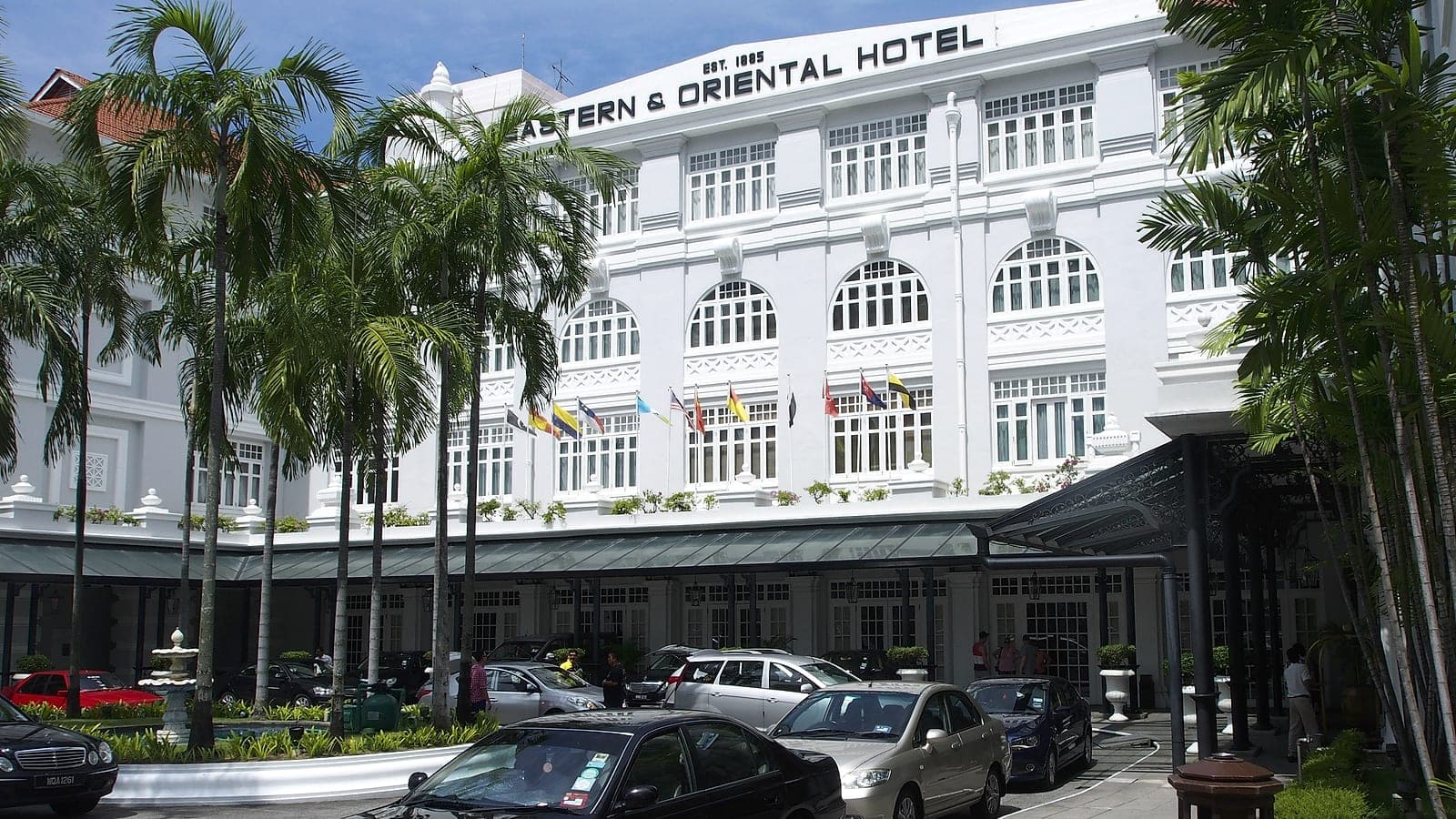
The Eastern & Oriental Hotel is Penang's landmark luxury property. The original wing dates to 1885, opened by the Armenian Sarkies Brothers who also built the Raffles in Singapore and the Strand in Rangoon. The seafront location on the northern edge of the heritage zone puts you within walking distance of the city while maintaining a remove from its noise. Heritage Wing suites have their original proportions, dark wood floors, and sea views through tall windows. Service standards are those of a grand hotel.
Practical notes: request a Heritage Wing room rather than the newer Victory Annexe. The Planters Lounge is the correct choice for sundowners — teak furniture, ceiling fans, and views of the Strait of Malacca. High tea in the Sarkies Corner restaurant should be booked in advance, particularly on weekends.
Cheong Fatt Tze — The Blue Mansion is the alternative for travellers who want to sleep inside the heritage rather than adjacent to it. The indigo-blue Hakka merchant's mansion was built in 1880 by Cheong Fatt Tze, who was once described as the last of the Mandarins and is sometimes called the Rockefeller of China. The mansion has 16 rooms spread across the original courtyard buildings. There is no pool, no fitness centre, no spa — what you're buying is the architecture, the antiques, and the courtyard breakfast. It fills early; book months ahead.
Shangri-La Rasa Sayang at Batu Ferringhi is the luxury beach option. A different mood entirely from the heritage zone — mature gardens, multiple pools, a spa with a full treatment menu, and the most reliable stretch of beach on the island. Appropriate for travellers who want sun and sea as their primary activity, with city day trips. The property is 25 minutes from George Town; arrange a private driver for day visits rather than depending on Grab.
Heritage hotel context
The E&O and Blue Mansion operate as colonial-era properties, which means rooms vary significantly by location and original use. Ask specifically when booking: sea-facing rooms at the E&O, courtyard rooms at Blue Mansion. Front-facing Heritage Wing rooms at the E&O are worth the premium over rear-facing rooms.
Fine Dining
Kebaya at Seven Terraces hotel is the most serious Peranakan (Straits Chinese) restaurant in Penang. Peranakan cooking is one of the most technically demanding cuisines in Southeast Asia — the spice pastes, slow braises, and fermented prawn pastes used in traditional Nyonya cooking are genuinely difficult to reproduce, and the kitchen at Kebaya does it properly. Set menus only; book at least two days ahead.
The Dining Room at E&O Hotel is formal, seafront, and the correct venue for a celebratory dinner in Penang. The kitchen produces Western and Asian dishes with consistent technical quality. The wine list is the most serious in Penang.
Auntie Gaik Lean's Old School Eatery occupies an interesting position: it's not fine dining in the white-tablecloth sense, but the quality of the Peranakan home cooking is exceptional and the experience of eating in a heritage shophouse interior is as considered as any restaurant in the city. Lunch only; reserve well in advance. Locals and serious food travellers both go here.
For hawker food — which should be on your itinerary regardless of hotel tier — the answer is the same stalls everyone goes to: Lorong Selamat for char kway teow, Penang Road for cendol, Hameediyah on Campbell Street for nasi kandar. No amount of luxury accommodation changes the answer to "where is the best food in Penang."
Private Experiences
Heritage architecture walk with a historian. The Penang Heritage Trust (PHT) offers specialist tours of the UNESCO-listed core with guides who can explain building typology, clan history, and colonial planning in depth. Contact PHT directly for private arrangements. The standard 3-hour tour covers the Fort Cornwallis area, the main ethnic quarter streets, and the clan house interior that's off the public route.
Private cooking class — Peranakan focus. Several George Town cooks offer half-day private lessons covering Nyonya spice paste preparation, traditional laksa from scratch, and kuih (cake) techniques. The content varies by instructor; ask specifically about working with traditional techniques rather than simplified demonstrations.
Chartered boat — Penang harbour. Charter a private vessel for a sunset circumnavigation of the island or an early morning trip across to Butterworth and back with breakfast on the water. Not whale-watching or resort boat trips — a working harbour view of George Town from the sea, with a skipper who knows the channels. Arrangements through the E&O concierge or local tour operators.
Spa and Wellness
Rasa Sayang Spa at Shangri-La is the most complete spa offering in Penang — full treatment menu, private couple's villas, and treatments using local ingredients (lemongrass, ginger, Borneo jungle herbs). A full-day programme is available.
E&O Hotel spa is smaller but appropriate if you're staying there — accessible from the room without a separate car trip.
Traditional Chinese medical massage is available throughout George Town at modest prices. The heritage zone has several established TCM shops that offer tui na (Chinese therapeutic massage) and reflexology. These are not luxury spa settings but they are often more skilled in specific techniques than resort spas. Ask your hotel concierge for a recommendation.
The Penang luxury calculus
Penang is significantly less expensive than Singapore, Hong Kong, or Bangkok for comparable quality. The E&O at RM 800–1,200 per night (USD 170–255) would be a RM 3,000+ property in Singapore's equivalent tier. The same food quality — arguably higher — is available at RM 10 per dish. The value proposition for quality travellers is real: you spend on where you sleep, you eat for nothing.
Practical Notes for Luxury Travellers
Getting there: Direct flights from Singapore (~55 min, multiple daily). From Kuala Lumpur (~45 min). From Hong Kong (direct or via KL). E&O Hotel arranges airport transfers at arrival — worth using.
Duration: Three nights minimum for a heritage-focused stay. Four nights allows Penang Hill, a Balik Pulau half-day, and a proper cooking class without rushing. Browse luxury hotel options to find the right property before booking.
What doesn't exist: Penang has no private overwater villas, no Aman resort, and no butler-to-every-room operation of the Maldives type. If those are the expectation, Langkawi or Langkawi-area properties may be more appropriate. Penang's luxury is architectural and culinary, not amenity-competitive.
Keep reading
Guides that pair well with this one.
George Town vs Batu Ferringhi: Where to Stay in Penang?
Penang has two very different stay options: George Town's heritage city and Batu Ferringhi's beach strip. Here's which one suits your trip — and why most first-timers get it wrong.
3 min readactivitiesBatu Ferringhi Guide: Penang's Beach Strip Explained
Batu Ferringhi has Penang's best beach hotels, a famous night market, and water sports — 30 minutes from Georgetown by bus. Here's what to expect.
9 min readfoodBest Restaurants in George Town, Penang (2026)
The restaurants worth booking a table at in Penang's UNESCO heritage zone — from Nyonya tasting menus and colonial dining rooms to old-school Hainanese chops houses and the kopitiam that hasn't changed its recipe since 1940.
6 min readtravelPenang Honeymoon Guide: Romantic Hotels, Experiences & Restaurants (2026)
Planning a honeymoon in Penang? Heritage boutique hotels, candlelit dinners in George Town, sunset views, and beach escapes — a practical romantic guide for couples.
7 min read