On this page
Little India Penang — What to See, Eat, and Explore
George Town's Little India district is one of the oldest Tamil commercial areas in Malaysia. Here's what makes it distinct and how to spend a few hours exploring it properly.
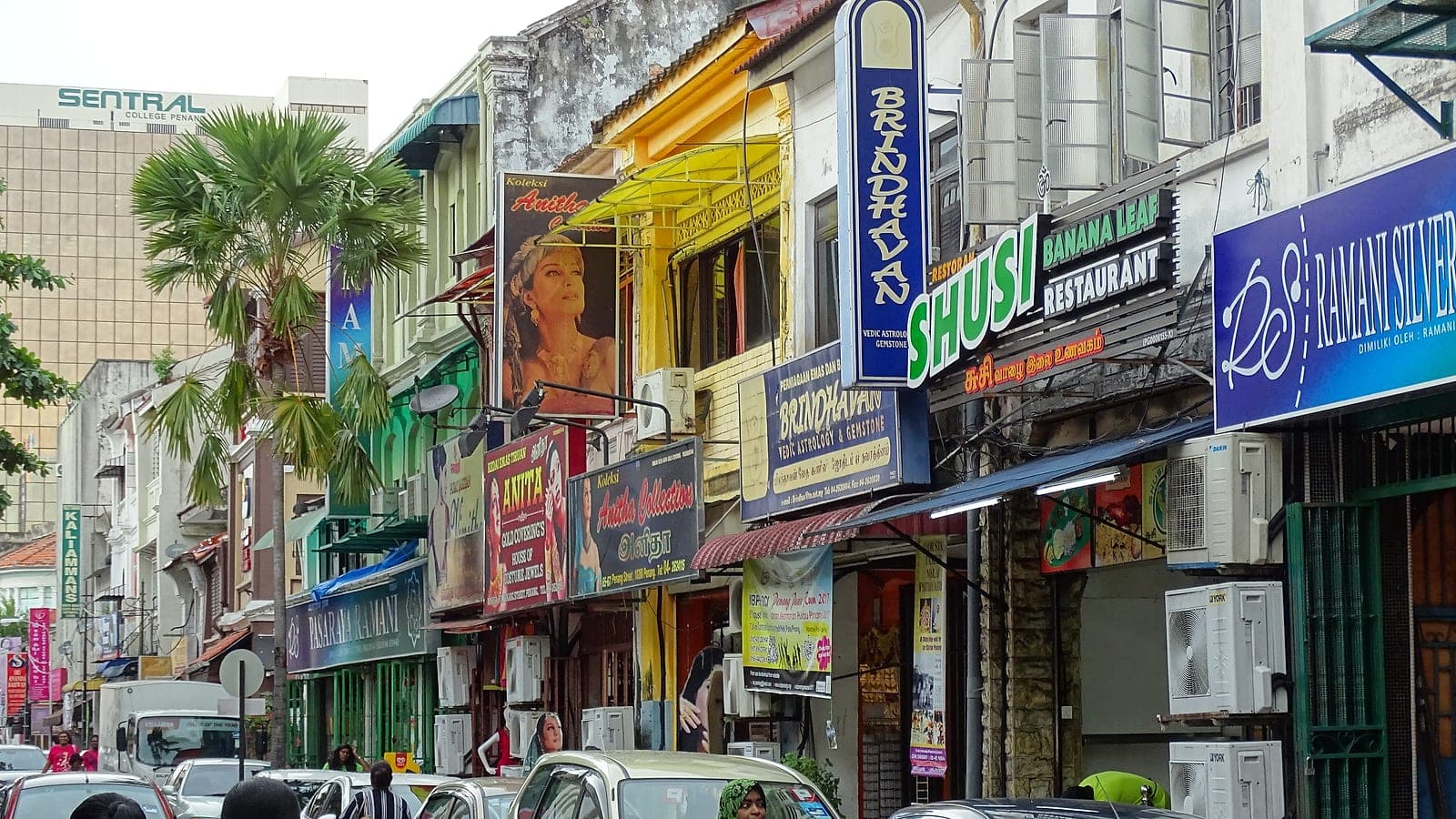
Penang's Little India is concentrated on and around Jalan Masjid Kapitan Keling (formerly Pitt Street) and Jalan Penang (Penang Road), roughly from the Kapitan Keling Mosque down to the Sri Mahamariamman Temple.
The area has been the centre of Penang's Tamil Indian commercial and cultural life since the early 19th century, when South Indian Muslim and Hindu traders settled near the waterfront. Unlike some "Little India" districts that have become shopping zones for tourists buying saris and samosas, Penang's retains genuine commercial activity for the local Tamil community — gold jewellery shops, fresh flower garland stalls, fabric merchants, and traditional Ayurvedic medicine outlets operating alongside the restaurants and temples.
The Main Streets
Jalan Masjid Kapitan Keling is the spine of the district. The name references the Kapitan Keling Mosque at the northern end — "Keling" being the old Malay term for South Indian traders. The street runs north–south through the George Town heritage zone and has the highest density of Indian commercial activity: flower stalls in the early morning, fabric shops, the two major religious sites (the mosque and the Hindu temple), and several of the best banana leaf rice restaurants in Penang.
Jalan Penang (Penang Road) intersects the district to the north and is where Chowrasta Market operates. More mixed in character than Jalan Masjid Kapitan Keling, it includes the famous Penang Road cendol stall at one end.
Key Sites
Sri Mahamariamman Temple (Queen Street) — The main Hindu temple in George Town, dedicated to the goddess Mariamman. Originally established in 1833 by Tamil immigrants from South India. The gopuram (entrance tower) was rebuilt in the 1990s and is covered in painted deities. The temple is active — morning and evening prayers with music and incense are worth timing your visit around if possible.
Free entry. Remove footwear before entering. Photography is generally permitted in the outer areas; ask before photographing inside the inner sanctum.
Kapitan Keling Mosque — At the northern end of the Little India district, the Kapitan Keling Mosque was founded around 1801 by Chulia Muslim traders from South India's Coromandel Coast. The "kapitan" was the community leader (a title given by the British to leaders of different ethnic communities in early colonial Penang).
The present structure, rebuilt in Mughal style in the early 20th century, is one of Malaysia's most beautiful mosques. Visitors can enter outside prayer times. Modest dress required; women should cover their heads (scarves provided at the entrance).
Chowrasta Market (Jalan Penang) — While not directly on the Little India streets, Chowrasta Market at the northern end of Jalan Penang is where Tamil produce vendors, dried goods stalls, and traditional grocery traders have operated for over a century. The ground floor is a wet market (fish, meat, vegetables); the upper floors have dried goods, textiles, and preserved foods. Visit in the morning when the produce is freshest.
Food in Little India
Woodlands Restaurant (Jalan Masjid Kapitan Keling) — Woodlands is the oldest vegetarian Indian restaurant in Penang, serving South Indian vegetarian food in the traditional style: dosas, idli, thali meals on banana leaves, and fresh coconut chutney. Open from early morning. The vegetarian banana leaf rice at lunch is the main event: a banana leaf covered with steamed rice, three or four vegetable curries, rasam (thin pepper soup), and papadum, all included in the price. Approximately RM 10–15.
Sri Ananda Bahwan (Jalan Penang) — Another South Indian vegetarian restaurant with a full menu: dosas, idli, thali, and fresh coconut chutney. Open from 7am. RM 8–15 for a full vegetarian meal.
Banana leaf rice stalls (Jalan Masjid Kapitan Keling) — Beyond the named restaurants, several smaller operators on and off Jalan Masjid Kapitan Keling serve banana leaf rice at lunch. These are typically open 11am–2:30pm and serve non-vegetarian options as well — chicken curry, fish curry, fried fish — alongside the standard vegetable side dishes.
Hameediyah Restaurant (Campbell Street, 5 minutes' walk) — One of the oldest nasi kandar restaurants in Penang, established 1907. The curries are authentic North Indian Muslim style. Open for breakfast and lunch. Queue outside on weekends.
Mamak stalls throughout the district — Open from morning until late (sometimes 24 hours), serving roti canai, teh tarik, and murtabak (stuffed flatbread). The stalls don't always have signs in English; look for the griddle and the flatbreads.
Penang Road Famous Cendol — At the north end of the district, this stall has been serving cendol (shaved ice with coconut milk and palm sugar) since 1936. Queue is always there; it moves quickly. RM 4–8.
Local tip
Banana leaf rice restaurants serve lunch only — typically 11am to 2:30pm, sometimes 3pm. Come on a weekday for the fuller spread of curries; weekends bring larger crowds and the better side dishes sell out faster. Expect to pay RM 12–18 per person with three to four curries, rasam, and papadum included. Cash is standard.
What to Buy
Jasmine garlands and flower offerings — The flower stall vendors along Jalan Masjid Kapitan Keling sell fresh jasmine garlands and marigold offerings for temple visits. These are bought by local Hindus for daily puja (worship) and can be purchased by visitors to bring to the Sri Mahamariamman Temple. Priced at RM 2–5 per garland.
Silk and fabric — Several fabric merchants on and around the district sell Indian silk fabric, sari material, and embroidered cloth. Quality ranges from everyday cotton to silk saris for ceremonial occasions. Bargaining is acceptable; prices are not fixed.
Gold jewellery — South Indian gold jewellery (22-karat, traditionally worked) is sold by several goldsmiths in the area. Designs follow South Indian wedding and festival conventions: heavier, more elaborate, and more yellow-gold in tone than the Chinese and Malay jewellery sold elsewhere in George Town. Browse even if you're not buying — the craftsmanship is distinct.
Festival Calendar
Thaipusam (January/February, exact date varies by Tamil calendar): The annual Hindu festival dedicated to Lord Murugan. In Penang, the procession routes from the Sri Mahamariamman Temple on Queen Street and travels to the Nattukotai Chettiar Temple on Waterfall Road. Kavadi (large decorated frames) are carried by devotees who have fasted and undergone ritual preparation for the preceding days. Some kavadi-bearers pierce their skin with hooks and skewers as a demonstration of faith and devotion. One of the most intense religious events in Malaysia — the combination of music, colour, and the physical endurance of the devotees makes it unlike anything else in the region. Visitors are welcome; respectful observation from the roadside is the norm.
Deepavali (October/November, exact date varies): In the weeks before Deepavali (the Festival of Lights), the Little India district transforms into a shopping and preparation zone. Stalls selling oil lamps (diyas), decorative rangoli powders, new clothing, sweets, and festival goods fill the pavements. The street is at its most atmospheric in the evenings, when the shops stay open late and the lights go on. The Penang Tourism Board typically lists Deepavali events and bazaar locations in advance.
Ponggal (January): The Tamil harvest festival, quieter than Thaipusam or Deepavali from a visitor perspective, but marked by the preparation of sweet rice (ponggal) in clay pots at the temple. If you're in the area in mid-January, the Sri Mahamariamman Temple will have preparations worth looking in on.
Best Time to Visit
Morning (7am–10am): The district is commercial and active — produce deliveries to Chowrasta Market, temple morning prayers, kopitiam breakfast crowds, flower vendors doing their busiest trade. The most authentic time to walk through. The jasmine garland sellers are most active from 6am onward; by 10am the morning rush is over.
Lunch (11am–2pm): The best time for banana leaf rice — full spread, fresh curries, maximum choice. Arrive by 12:30pm to avoid the end-of-day sell-out on the best side dishes.
Pre-festival evenings: The days before Deepavali and the night before Thaipusam bring the most atmospheric evening activity — shopping, preparations, and the buildup of energy that precedes major religious events.
Getting There and Combining with Other Areas
Little India sits in the core of the George Town heritage zone and is easily combined with the adjacent areas. The Kapitan Keling Mosque at the north end connects directly to the "Harmony Street" religious corridor — within 200 metres of the mosque, you can also visit the Sri Mahamariamman Temple and St. George's Church, representing three faiths on the same street.
From Little India, Armenian Street (the mural zone) is a 5-minute walk west. The clan jetties are 10 minutes south on foot. The entire core of the Penang food scene — including the Lebuh Chulia night hawker market — is within walking distance.
Arrive by trishaw or on foot; parking in the heritage zone is limited and the narrow streets make walking significantly more practical than driving.
Keep reading
Guides that pair well with this one.
Penang Temple Guide: Kek Lok Si, Sri Mahamariamman & More (2026)
A guide to Penang's major temples — Buddhist, Hindu, Taoist, and the multi-faith harmony of Pitt Street. Opening hours, dress codes, and what to actually look for.
7 min readneighborhoodsArmenian Street George Town — Complete Guide
Lebuh Armenian is the most-photographed street in Penang. Here's what's actually on it, what's nearby, and how to see it without just following the mural trail.
7 min readneighborhoodsLebuh Chulia (Backpacker Street) — Budget Traveller's Guide to George Town
Lebuh Chulia is George Town's traditional budget traveller base. Here's what the street actually offers, where to stay, and how to use it as a base without getting stuck in the tourist bubble.
4 min readculturePenang for Art Lovers: Street Art, Galleries, and Living Heritage
Georgetown's street art scene is one of Southeast Asia's most distinctive — murals, wrought-iron caricatures, clan house interiors, and contemporary galleries. This is where to find them and how to see them properly.
7 min read