On this page
Famous People Connected to Penang — Artists, Scientists, and Revolutionaries
Penang has produced and shaped a surprisingly influential roster of notable people — from the founder of modern China to Nobel-level scientists and award-winning filmmakers. Here's who came from, or was formed by, this island.
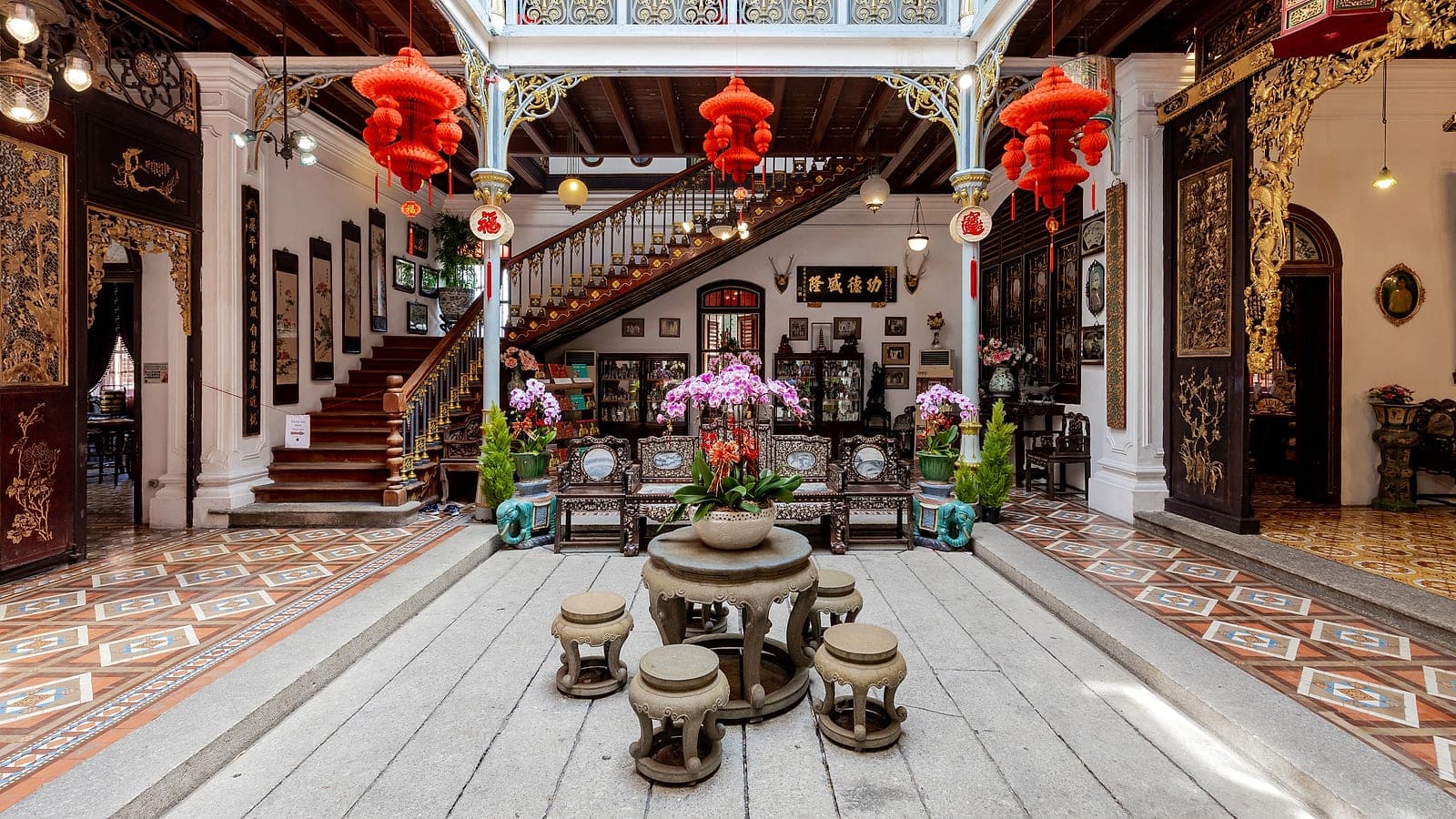
Penang is a small island, but its outsized role in regional history produced an outsized roster of notable people. The free port that Francis Light established in 1786 attracted merchants, scholars, and reformers from across Asia — and the institutions those communities built produced generations of educated, ambitious graduates who went on to shape the 20th century across the region.
This guide covers people both born in Penang and those closely connected to it — educated here, based here during formative periods, or who claim the island as part of their identity. The distinction is noted for each person.
Dr. Sun Yat-sen — Founder of the Republic of China
Sun Yat-sen wasn't born in Penang, but the island was central to his revolutionary career. He used George Town as a base for fundraising and organising among the Hokkien merchant community, and in November 1910 he convened the Penang Conference at 120 Armenian Street — the meeting that planned the Guangzhou Uprising of April 1911. That uprising failed militarily but galvanised the revolutionary movement; the Qing dynasty fell six months later.
The building on Armenian Street is now the Dr. Sun Yat-sen Museum, one of only a handful of sites in Southeast Asia with a direct documented connection to the events that ended 2,000 years of Chinese imperial rule.
Tan Siew Sin — Malaysia's Longest-Serving Finance Minister
Born in Malacca but educated at the Penang Free School — the oldest English-language school in Southeast Asia — Tan Siew Sin served as Malaysia's Minister of Finance from 1959 to 1974, making him the longest-serving finance minister in the country's history. He presided over Malaysia's early economic development and the creation of Bank Negara Malaysia. His family, the Tan Cheng Lock dynasty, were the most prominent Peranakan political family in Malaysia's founding generation.
(Born in Malacca, but the Penang Free School was central to his education and the institutional network that shaped his career.)
Lim Chong Eu — The Man Who Built Modern Penang
Chief Minister of Penang from 1969 to 1990, Lim Chong Eu is the architect of the Penang that exists today. When he took office, Penang had just lost its free port status and was in economic decline, haemorrhaging businesses and skilled workers to Singapore. He reversed this by convincing Intel, Motorola, Robert Bosch, and dozens of other multinationals to establish manufacturing operations in the Bayan Lepas Free Trade Zone.
Within a decade, Penang had become Malaysia's primary electronics manufacturing hub — a reputation it holds to this day. The Penang Second Bridge (now named after Sultan Abdul Halim) and the Penang State Museum are among the infrastructure projects he championed.
Jimmy Choo — The Shoes
Jimmy Choo was born in Penang in 1948 and trained as a cobbler under his father before moving to London to study at the Cordwainers College. He opened his first atelier in Hackney in 1986, initially making shoes for the fashion press. His celebrity client list grew through the 1990s, including Princess Diana. The Jimmy Choo brand — now a luxury global conglomerate — was co-founded with Vogue accessories editor Tamara Mellon in 1996.
He no longer has a formal association with the brand bearing his name but continues to design privately.
Lat — Malaysia's Most Beloved Cartoonist
Mohd Nor Khalid, known universally as Lat, was born in Perak (not Penang) but became the defining voice of Malaysian popular culture through his autobiographical comic strips. His work — particularly Kampung Boy (1979) and Town Boy (1981) — captures Malaysian childhood and the country's rapid modernisation through the 1960s and 70s with a warmth and specificity that made him beloved across racial and generational lines.
(Born in Kerian, Perak; his work is closely associated with the wider Peninsular Malaysian Chinese and Malay experience rather than Penang specifically. Included here because his influence on how Malaysia sees itself is inextricably linked to the multicultural communities — Peranakan, Chinese, Malay — that Penang exemplifies.)
Kampung Boy has been translated into multiple languages and adapted for animation. Lat was awarded the title Datuk in 1994.
Datuk Michelle Yeoh — One of Penang's Most Famous Connections
Born in Ipoh and raised partly in Penang, Michelle Yeoh (Yeoh Choo Kheng) attended school in George Town and began her career as a dancer before transitioning to film in the mid-1980s. Her work in Hong Kong action cinema through the late 1980s and 1990s — particularly Police Story 3: Supercop (1992) and Yes, Madam (1985) — established her as one of the genre's most technically accomplished performers.
(Born in Ipoh, but closely associated with Penang through her schooling years and her own public statements about the island as part of her background.)
Her international breakthrough came with Tomorrow Never Dies (1997) and Crouching Tiger, Hidden Dragon (2000). In 2023 she won the Academy Award for Best Actress for Everything Everywhere All at Once, becoming the first Malaysian and the first Asian woman to win the award.
She has spoken publicly about Penang as part of her background and identity, and the city has claimed her enthusiastically.
The Penang Free School Graduate Network
Several prominent Malaysians attended the Penang Free School, founded in 1816 as the first English-language school in Southeast Asia. Its alumni include multiple Malaysian cabinet ministers, senior judiciary figures, and business leaders across the region. The school is still operating on Green Lane in George Town.
Where to visit
The Dr. Sun Yat-sen Museum at 120 Armenian Street is free to enter (Tue–Sun, 9am–5pm). The Penang Free School on Green Lane is a functioning school, not open to visitors, but the colonial-era main building is visible from the road.
Lillian Too — Queen of Feng Shui
Born in Penang, Lillian Too became one of the world's most commercially successful feng shui authors after publishing her first book in 1993. She has since written over 100 books on feng shui and has built the Wofs.com online platform into a significant resource. She trained as an MBA at Harvard and worked as a banker before turning to feng shui full-time.
Her success is a product of Penang's specific religious and cultural mix — Chinese metaphysical traditions absorbed alongside Western education, a combination that the island's Anglo-Chinese school system produced in unusual concentration.
A City That Punches Above Its Weight
Penang's influence on Malaysian and regional history is disproportionate to its size. The free port created wealth; the wealth funded schools; the schools produced graduates; the graduates went out and shaped the 20th century. George Town's UNESCO listing in 2008 recognised this layered heritage — but the names above are a reminder that what came out of Penang's communities was just as significant as what they built.
Keep reading
Guides that pair well with this one.
Penang for Art Lovers: Street Art, Galleries, and Living Heritage
Georgetown's street art scene is one of Southeast Asia's most distinctive — murals, wrought-iron caricatures, clan house interiors, and contemporary galleries. This is where to find them and how to see them properly.
7 min readculturePenang Temple Guide: Kek Lok Si, Sri Mahamariamman & More (2026)
A guide to Penang's major temples — Buddhist, Hindu, Taoist, and the multi-faith harmony of Pitt Street. Opening hours, dress codes, and what to actually look for.
7 min readfoodBest Restaurants in George Town, Penang (2026)
The restaurants worth booking a table at in Penang's UNESCO heritage zone — from Nyonya tasting menus and colonial dining rooms to old-school Hainanese chops houses and the kopitiam that hasn't changed its recipe since 1940.
6 min readplanningPenang for Couples: Romantic Things to Do, Stay, and Eat
The best Penang experiences for couples — sunset at the Esplanade, dinner in a restored heritage building, a durian orchard drive to Balik Pulau, boutique hotels with character, and a city that rewards slowing down together.
9 min read