On this page
Living in Penang: The Expat Guide to Moving Here
Penang is consistently ranked among Asia's best places for expats to live. This guide covers cost of living, neighbourhoods, healthcare, international schools, and the practicalities of making Penang your home.
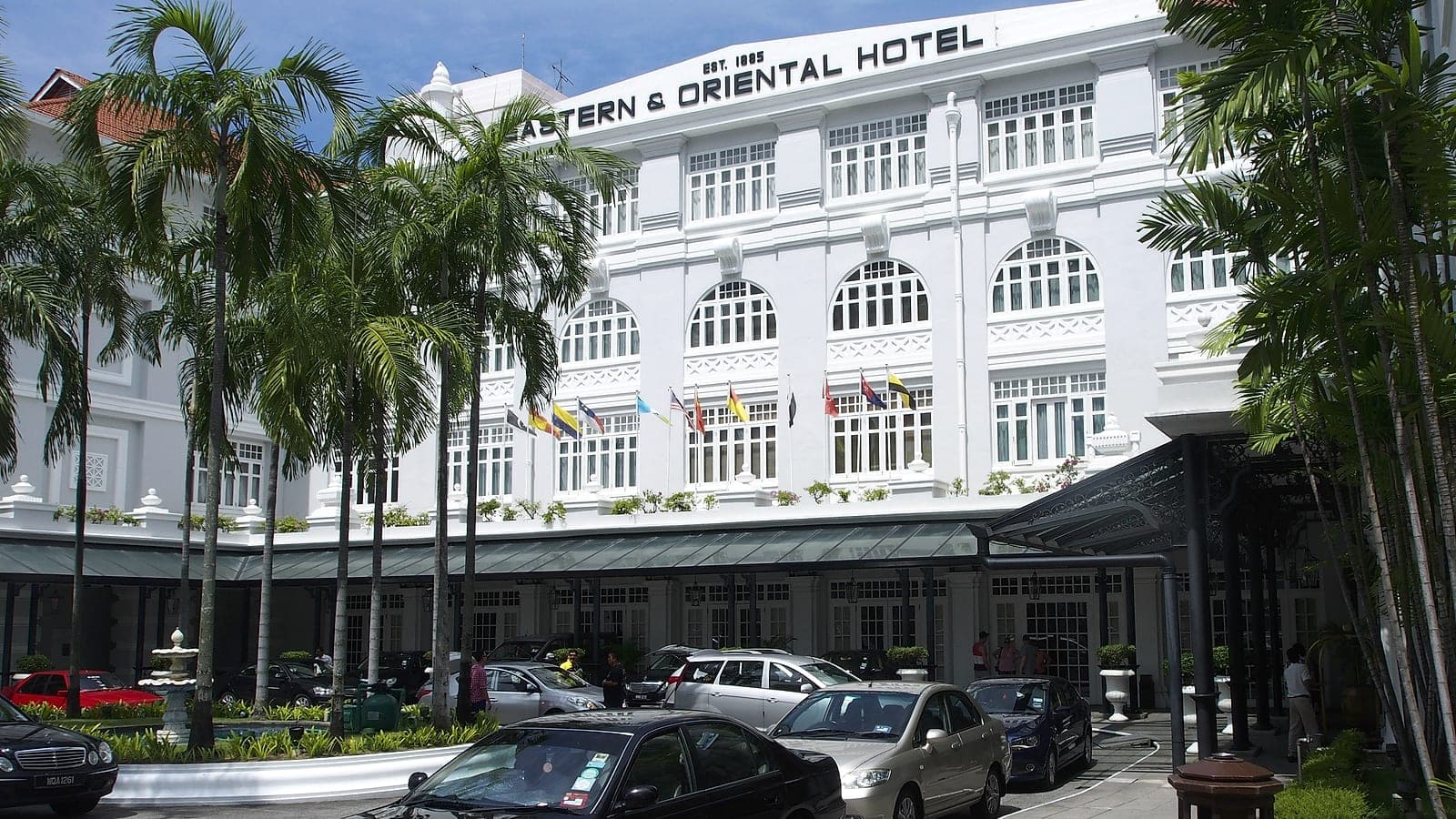
Penang has been drawing expats for decades — retirees from Britain and Australia who discovered it in the 1990s, digital nomads who arrived for the food and stayed for the cost of living, regional professionals relocated by multinational companies based in Bayan Lepas. The mix is genuine and the community is well-established. The Penang Tourism Board maintains a useful relocation resources section on their website.
What makes Penang different from KL or Bangkok as an expat base: it's a city that works. The food is exceptional, the healthcare is good, English is widely spoken, and the cost of living is meaningfully lower than Singapore or Hong Kong while retaining most of the quality-of-life markers those cities offer. The trade-off is that it's quieter — not sleepy, but not a regional capital.
Retirees, semi-remote workers, and families relocated to Penang's tech and manufacturing corridor. Less ideal for those who need fast connections to multiple regional capitals — KL is a better hub for frequent travellers.
Cost of Living
Penang is considerably cheaper than Singapore and moderately cheaper than KL for most line items. The figures below are 2026 estimates for a comfortable (not luxurious) lifestyle.
| Category | Monthly Cost (RM) | Notes |
|---|---|---|
| 1-bed apartment (Georgetown) | 1,200–2,500 | Older walk-up vs newer condo |
| 2-bed condo (Gurney/Tanjung Bungah) | 2,500–5,000 | With pool and gym |
| Hawker meals (daily) | 400–700 | 3 meals/day at hawker centres |
| Groceries (expat standard) | 600–1,000 | Mix of wet market and supermarket |
| Car (depreciation + running) | 800–1,500 | Proton/Perodua ownership |
| Healthcare (private) | 200–600 | Without major procedures |
| Total (comfortable single) | 5,000–9,000 | |
| Total (comfortable family of 4) | 10,000–18,000 | Including international school |
The hawker advantage
Penang's hawker food is genuinely excellent and genuinely cheap — RM5–8 per meal. Expats who embrace hawker eating (breakfast at a kopitiam, lunch at a hawker centre, dinner at a mamak) can eat extremely well for under RM700/month. This one habit meaningfully changes the monthly cost calculation.
Neighbourhoods to Consider
Georgetown (Inner City)
Living in a restored heritage shophouse or a newer apartment block within the UNESCO-listed zone. Walkable to restaurants, cafes, art galleries, and most services. Limited parking. Street noise is part of the deal.
Best for: People who want cultural density and don't own or need a car. Remote workers who want a distinctive daily environment.
Typical rent: RM900–3,500/month depending on condition and whether it's a heritage unit.
Gurney Drive / Gurney Paragon Area
The upmarket residential and commercial zone north of Georgetown. Gurney Plaza and Gurney Paragon malls, direct sea-facing apartments, and proximity to some of Penang's best restaurants. Car-dependent but well-serviced.
Best for: Families, professionals relocated by companies, people who want city conveniences with more space.
Typical rent: RM2,000–8,000/month (condo).
Tanjung Bungah
Beach-adjacent, quieter than Georgetown, popular with long-term expats. A mix of older bungalows and newer condos. The sea is swimmable (conditions permitting). 20 minutes to Georgetown by car.
Best for: Families with children, people prioritising a quieter environment, those with a car.
Typical rent: RM2,500–6,000/month (condo, usually with pool).
Batu Ferringhi
Beach strip, north coast
Batu Ferringhi is popular with holiday rentals but less practical for long-term living — it's 45 minutes from Georgetown, the beach is crowded with beach-vendor touts during peak season, and the supporting infrastructure (medical, schools) is mostly back in Georgetown. Most long-term expats avoid it as a primary residence.
Bayan Lepas / Bayan Baru
Close to the industrial zone and airport. Practical for people working in manufacturing or tech. Less character than Georgetown but good value and good infrastructure.
Best for: People whose work is in the industrial corridor. Families prioritising school access over neighbourhood aesthetics.
Healthcare
Penang's private healthcare is excellent by regional standards and genuinely affordable compared to Singapore. See also our medical tourism guide for detailed hospital profiles. The main private hospitals are:
Penang Adventist Hospital (Georgetown) — The preferred choice for many expats. JCI-accredited, strong cardiac and oncology departments, English-speaking staff throughout. A standard GP consultation runs RM80–120.
Gleneagles Penang (Burmah Road) — Part of the Parkway network, strong general medicine and specialist coverage. Slightly more expensive than Adventist.
Island Hospital (Georgetown) — Newer facilities, good general and specialist care. Popular for maternity.
Lam Wah Ee Hospital — Chinese-founded mission hospital, more affordable than the JCI hospitals, strong internal medicine reputation.
Public hospitals (Penang General Hospital, Hospital Seberang Jaya) are free or near-free for Malaysian residents and very low cost for others, but wait times and amenities differ significantly from private.
Health insurance
Private health insurance is strongly recommended. A basic plan covering hospitalisation and specialist visits runs RM200–600/month depending on age and coverage level. AXA, Prudential, and Great Eastern all have dedicated expat products. Purchase before arriving or within 90 days — waiting periods apply for pre-existing conditions.
International Schools
The international school landscape has grown significantly over the past decade, driven by the tech corridor's demand for expat staff accommodation.
Dalat International School (Tanjung Bungah) — American curriculum. K–12. Long-established, strong community, Christian-affiliated but non-denominational in practice. Waiting list exists for popular year groups.
Uplands International School (Tanjung Bungah) — British curriculum (IGCSE, A-Level). Well-regarded for university preparation. Smaller than Dalat but more intimate.
Straits International School (multiple campuses) — IB curriculum. Growing network with campuses in Georgetown and Bayan Lepas. More affordable than Dalat and Uplands.
St Xavier's Institution — Malaysian national school with history back to 1852, popular with local Chinese families and some long-term expats who want their children in the local system. Not an international school but worth knowing about.
Fees range from RM2,500–5,500/month for international curriculum schools. Most require an application and interview process; popular year groups (Year 1, Year 7, IB Year 1) fill early.
Visa and Residency
Malaysia My Second Home (MM2H)
The main long-term visa route for people not taking local employment. It was restructured in July 2024 into three categories, set by the size of a fixed deposit held in a licensed Malaysian bank:
| Category | Fixed deposit | Pass | Property purchase | Fee |
|---|---|---|---|---|
| Silver | USD 150,000 | 5 years | RM 600,000 min | RM 1,000 |
| Gold | USD 500,000 | 15 years | RM 1,000,000 min | RM 3,000 |
| Platinum | USD 1,000,000 | 20 years | RM 2,000,000 min | RM 200,000 |
Every category requires you to be 25 or older, to buy a residence after approval and hold it for ten years, and to spend 90 cumulative days a year in Malaysia. Up to half the deposit can later be withdrawn for an approved home purchase, education, medical or tourism spending.
Two things people still get told that are no longer true: there is no offshore-income requirement — MOTAC's terms state that requirements for offshore income "for every category are dropped" — and there is no separate over-50s track with lower thresholds. Silver and Gold confer no right to work locally; Platinum is the only category where business, investment and employment are permitted.
A fourth category exists for the Special Economic and Financial Zones: age 21+, USD 65,000 (ages 21–49) or USD 32,000 (50+). It ties you to designated zones in Johor, so it is not a Penang route.
Verify before you commit money
Figures here are quoted from MOTAC's Terms and Regulations for New Participants, stamped accurate as of 22 July 2024, and the SEZ/SFZ terms issued January 2025. Rules have changed repeatedly since 2021 and consultancy sites frequently still publish the scrapped pre-2024 requirements. Confirm anything you are about to act on with the One Stop Centre (mm2h.gov.my) or a MOTAC-licensed agent.
Employment Pass (EP)
If you're working for a Malaysian employer or have set up a local company, the Employment Pass is the standard route. Minimum monthly salary requirements apply (varies by employer category). Your employer typically handles this process.
Digital Nomad (DE Rantau)
Malaysia launched the Digital Nomad Pass (DE Rantau) in 2022. Requirements: proof of employment or contract with non-Malaysian company, minimum monthly income of USD 24,000/year, and health insurance. 12-month pass, renewable.
Practical Notes
Banking: CIMB, Maybank, and Hong Leong Bank all have expat-friendly account opening processes. Bring passport, entry stamp, and proof of address. CIMB offers accounts in SGD and USD without the usual foreign currency conversion friction.
Transport: Public transport exists (Rapid Penang buses, ferry to Butterworth) but is not comprehensive enough for daily commuting outside Georgetown. See our getting around guide for a full breakdown of routes and options. A car is practical for most lifestyles. Grab is reliable and cheap — RM15–25 from Georgetown to Gurney, RM35–50 to the airport.
Language: English is widely used in commercial and professional contexts. Mandarin/Hokkien are useful in Georgetown's older business districts. Malay is the national language and useful for government transactions. You can live comfortably on English alone.
Georgetown
UNESCO World Heritage Zone
The Penang Expatriates Facebook group (65,000+ members) is the most active expat community resource on the island. Practical questions about housing, schools, medical, and immigration typically get answered within a few hours. Penang Monthly magazine publishes useful long-form expat community content.
Frequently Asked Questions
Is Penang safe to live in? Yes. Penang has consistently lower crime rates than KL. Standard urban precautions apply — bag snatching by motorcyclists is the most common crime affecting expats, primarily in Georgetown. Keep bags on the wall side when walking, not the road side.
Can I work in Penang on a tourist visa? No. Working without an appropriate visa is illegal and subject to deportation. The DE Rantau pass is the correct route for remote workers. Tourist visa holders (social visit pass) cannot legally work for Malaysian or non-Malaysian employers.
How is the internet? Good to excellent in most residential areas. Unifi (TM) is the main ISP for fixed broadband — 500Mbps plans run RM200/month. Starlink is available and popular in areas with weak wired coverage. Mobile data (Maxis, Celcom, Digi) is adequate for video calls.
Is Penang a good base for travelling the region? Reasonable, not great. Penang International Airport has direct routes to KL, Singapore, Bangkok, Kuala Lumpur, and several Chinese cities. For broader Southeast Asia travel, KL is a meaningfully better hub with more direct routes. Penang works well if your travel is primarily regional within Malaysia and Thailand.
Keep reading
Guides that pair well with this one.
George Town Walking Guide: Routes, Neighbourhoods & Tips for First-Timers (2026)
How to walk George Town for your whole stay — five named loops covering heritage, street art, food, clan houses, and the colonial waterfront, plus heat and shade-hopping tips.
10 min readpracticalPenang Currency and Cash Guide
The Malaysian Ringgit, where to exchange it, how much cash to carry, and whether you need cash at all. Updated for 2026.
3 min readpracticalPenang with Kids: The Family Travel Guide (2026)
Butterfly farms, Penang Hill, beach days at Batu Ferringhi, and hawker food that children actually eat — the practical guide for families visiting Penang.
13 min readpracticalPenang for Indian Tourists: The Complete Guide (2026)
Tamil heritage, Hindu temples, vegetarian food, and affordable flights make Penang one of Southeast Asia's best destinations for Indian travellers.
9 min read