On this page
Dishes Invented in Penang — and Where to Try the Originals
Char kway teow, Penang laksa, cendol, lor mee — several of Malaysia's most iconic dishes were invented or perfected in Penang. Here's the origin story and where to eat the real thing.
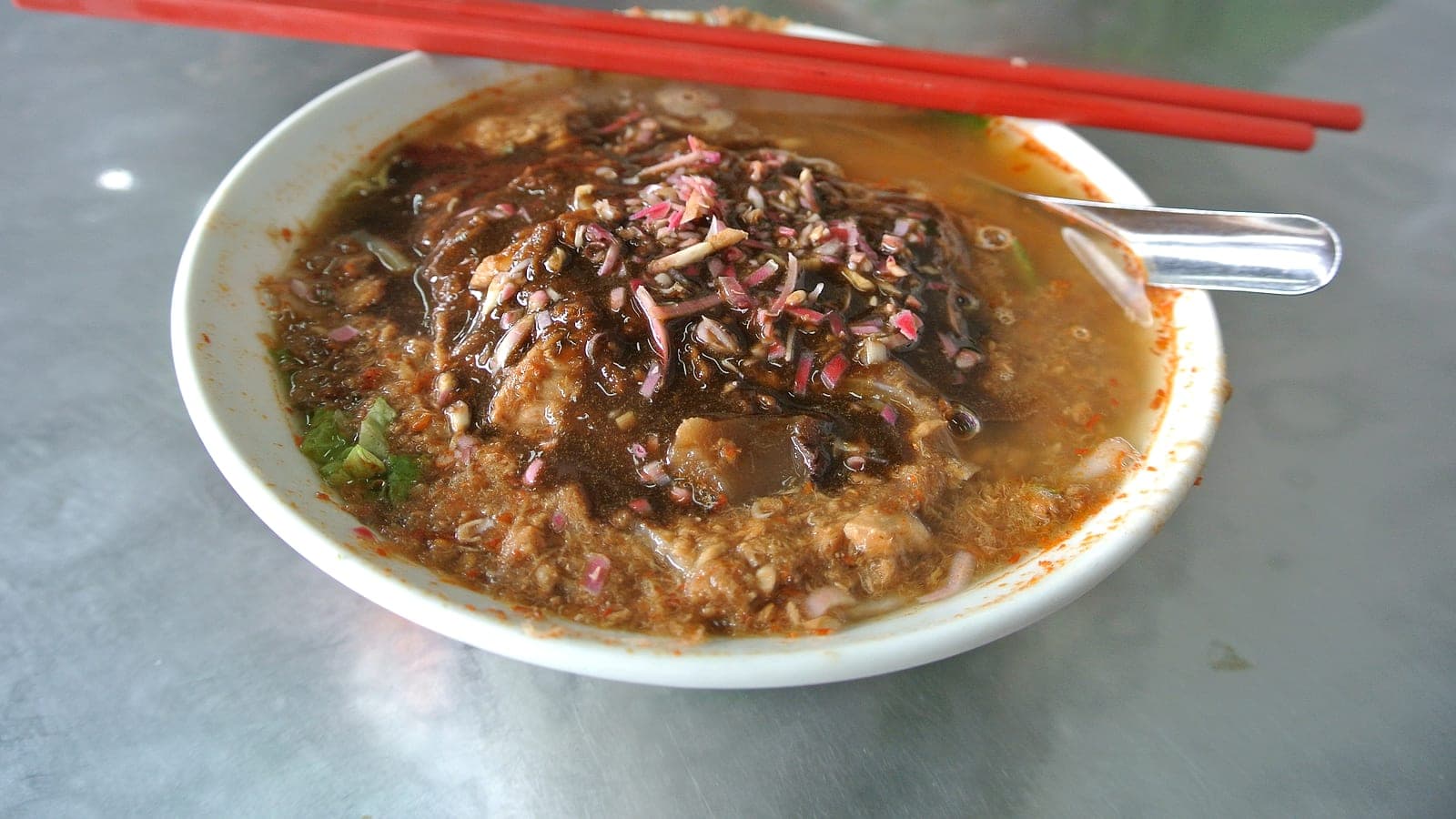
Malaysia's street food reputation is built partly on Penang. The island's specific combination of Hokkien Chinese, Malay, Indian, and Peranakan food cultures — all operating in the same market stalls, hawker centres, and coffee shops — produced dishes that spread across the country and eventually the world. Several of them were invented or took their definitive form here. The Penang Tourism Board runs an annual food festival (usually October) worth timing a trip around.
Here's the origin story and where to find the real thing.
Char Kway Teow — The King
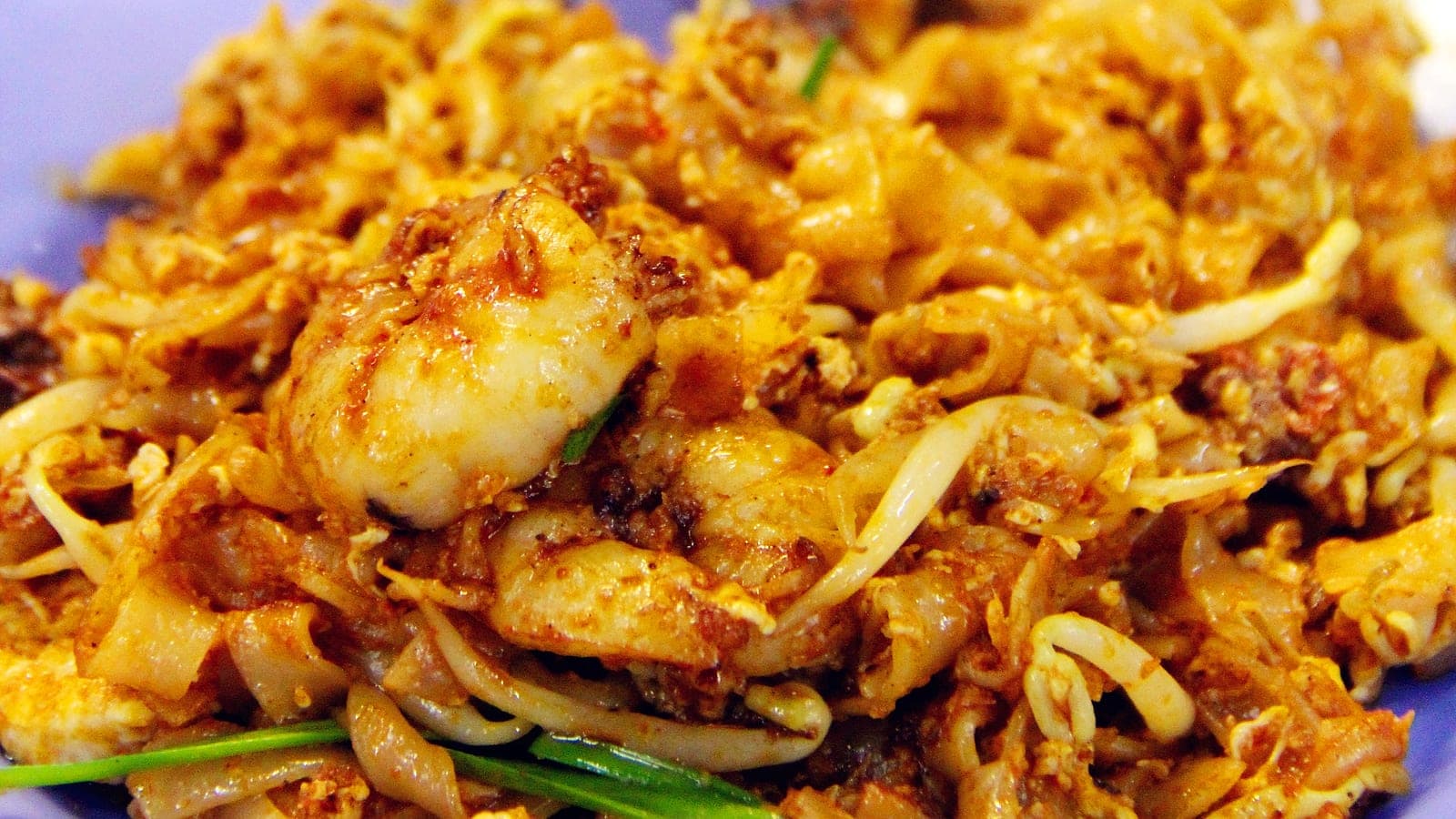
Char kway teow (炒粿條, stir-fried flat rice noodles) is the dish most closely associated with Penang. The name means "stir-fried rice cake strips" in Hokkien — flat, wide noodles cooked in a blazing-hot wok with prawns, cockles, bean sprouts, eggs, and dark soy sauce. The defining characteristic of the Penang version is the lard — cooked in pork fat rendered from the skin crackling that sits on the side — and the smokiness that comes from cooking in a heavily seasoned cast-iron wok over very high heat. This is what the Cantonese call wok hei (the breath of the wok).
The dish originated as working-class food. Chinese labourers and farmers needed a cheap, calorie-dense meal. The original vendors were fishermen who sold it off pushcarts. As prosperity spread, the dish evolved: tiger prawns replaced small prawns, fresh cockles became a marker of quality, and the price climbed with the reputation.
Where to eat it: Penang Road Famous Teochew Chendul and Lorong Selamat are both overhyped. Locals go to Sisters Char Kway Teow (Armenian Street area) or the hawker stalls at New Lane Hawker Centre (Jalan Macalister) after 6pm. The rule: look for a single-dish stall with a long queue, a heavy iron wok, and visible lard crackling.
Local knowledge
Char kway teow is a lunch dish in Penang — most good stalls close by 2pm. If you're going in the evening, New Lane and Gurney Drive are your best options. The breakfast version exists but is rare.
Penang Laksa (Asam Laksa) — The Sharp One
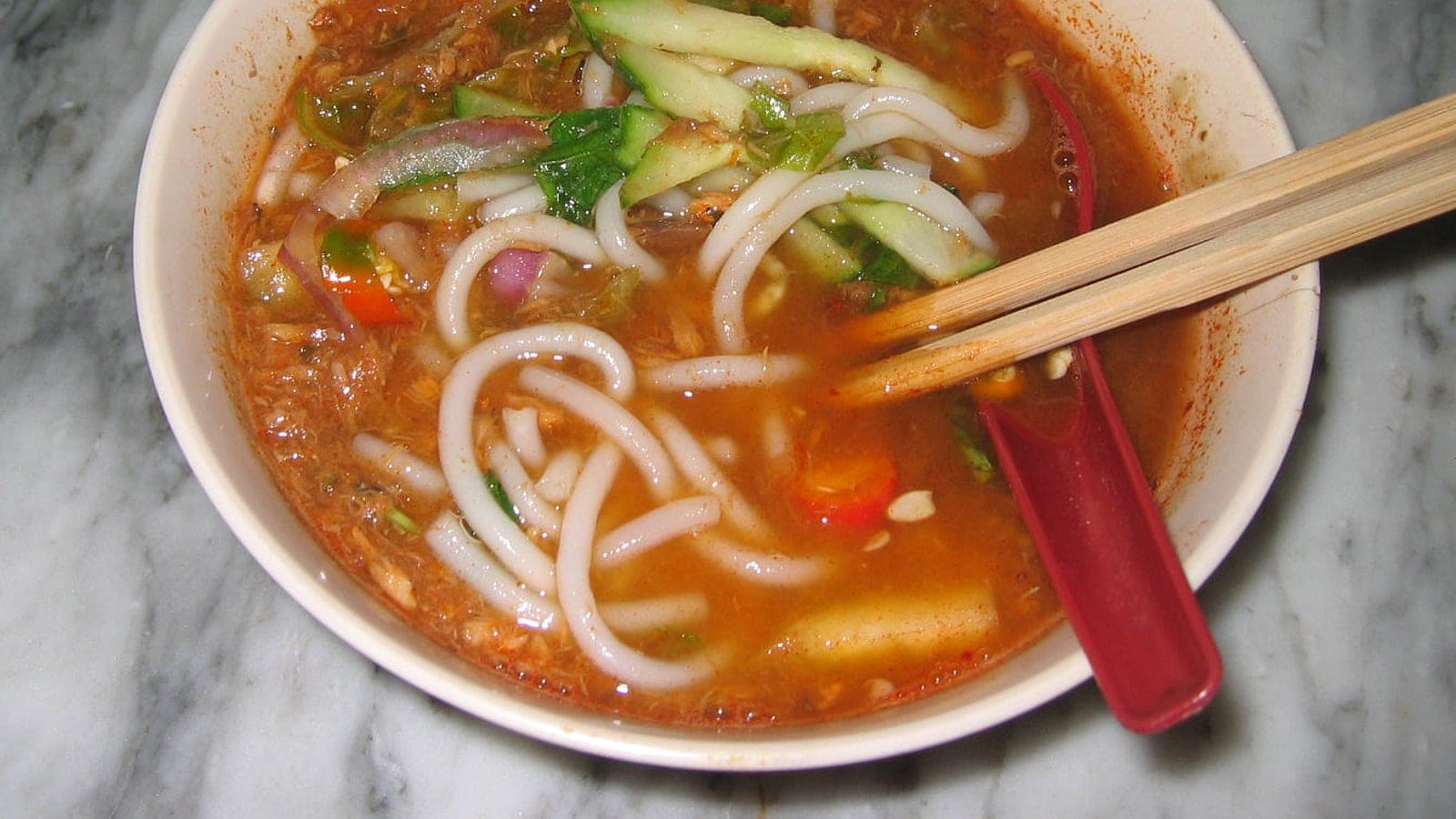
Penang laksa is not like the creamy coconut laksa you'll find in Kuala Lumpur or Singapore. It's a sour, pungent, intensely flavoured fish-based broth made with mackerel, tamarind, torch ginger flower (bunga kantan), lemongrass, and shrimp paste (belacan). The noodles are thick, round rice noodles. It is topped with pineapple, cucumber, mint, red onion, and a thick black prawn paste dolloped on top.
It was voted one of the top 50 foods in the world by CNN Travel. It tastes nothing like anything else.
The dish is a Peranakan creation — the meeting point of Malay souring techniques (tamarind, torch ginger) and Chinese noodle culture. The version served on Air Itam Road is considered the definitive one.
Where to eat it: Ayer Itam Laksa at the base of the Kek Lok Si temple steps is the benchmark. Queue before 11am. Gurney Drive hawker centre has multiple options that are more accessible for visitors who don't want to navigate to Air Itam.
Cendol — The Cold One
Cendol is a dessert: shaved ice over coconut milk, green pandan jelly worms (cendol), red beans, and palm sugar syrup (gula Melaka). It exists across Southeast Asia but the Penang version is considered the definitive one, served at Penang Road Famous Teochew Chendul (not the char kway teow place — different stall, same street).
The key is the quality of the gula Melaka — a dark, smoky palm sugar that comes from Melaka. Cheap cendol uses refined sugar syrup; good cendol uses the real thing, which has a depth that the sugar version entirely lacks.
Where to eat it: Penang Road Famous Teochew Chendul on Penang Road has been operating since the 1930s. There's always a queue. The shaved ice is fresh and fine, and the portion is generous.
Hokkien Mee (Prawn Mee)
Penang Hokkien mee is a prawn-based noodle soup: a deep orange broth made by boiling prawn heads and shells for hours, combined with yellow egg noodles and rice vermicelli, topped with peeled prawns, pork slices, hard-boiled egg, bean sprouts, and water spinach (kangkung). A sambal belachan sits on the side.
It is unrelated to the Hokkien mee you'll find in Kuala Lumpur, which is a stir-fried dark soy noodle dish. The naming difference is a constant source of confusion.
Where to eat it: Penang Prawn Mee (original stall) on transfer road. Kassim Mustafa on Macalister Road for a halal version. The dish is breakfast food — most good stalls close by 11am.
Lor Mee — The Thick One
Lor mee is a dish of yellow egg noodles in a thick, starchy, dark-brown gravy made from pork or chicken broth, five-spice powder, and tapioca starch, topped with braised pork belly, fish cake slices, hard-boiled egg, and fried fish crackers. It's finished at the table with black vinegar and chilli sauce.
It is distinctly Hokkien Chinese and is found almost exclusively in Penang and Singapore (where it exists in a different form). The gravy's texture — thick, slightly gelatinous, almost glossy — is the dividing line between a good bowl and a mediocre one.
Where to eat it: The hawker centres along Jalan Burma and Jalan Macalister are the best hunting ground. Look for stalls specifically labelled lor mee rather than multi-dish stalls.
Nasi Kandar — Not Invented Here, But Perfected Here
Nasi kandar was brought to Penang by Tamil Muslim immigrants from South India in the 19th century. The name comes from the kandar — a shoulder pole that vendors used to balance two pots of rice and curry as they walked the streets. It is now a serious food category in its own right: plain white rice loaded with multiple curries (fish, mutton, chicken, squid), with a splash of mixed curry gravy poured over the top in a technique called banjir (flooding).
Where to eat it: Line Clear Nasi Kandar on Penang Road (open 24 hours), Nasi Kandar Beratur on Macalister Road (queue mandatory), or Tajuddin Hussain in Padang Kota. See our dedicated nasi kandar guide for more options.
The eating schedule
Char kway teow and prawn mee: breakfast–lunch. Penang laksa: lunch. Cendol: any time as relief from the heat. Lor mee: breakfast. Nasi kandar: 24 hours, but the best curries are gone by midnight.
The Pattern
What unites these dishes is the Penang food system: a dense urban environment where multiple ethnic food traditions shared the same markets and coffee shops for over two centuries. Malay souring techniques appear in Chinese-style broths. Indian spice sensibilities show up in street dishes sold by Chinese vendors. The Peranakan community absorbed and synthesised all of it.
The result is a local food culture that no other city in Malaysia, or arguably Southeast Asia, has replicated.
Keep reading
Guides that pair well with this one.
George Town Food Trail: The Complete Walking Guide (2026)
Walk George Town's best hawker stalls, kopitiams, and street food stops in order. Morning laksa, Hokkien mee, char kway teow, cendol — with addresses, hours, and a mapped route through the heritage zone.
9 min readfoodThe History of Char Kway Teow — Penang's Most Famous Dish
Char kway teow was working-class food invented by fishermen and farmers. Here's how a cheap noodle dish from pushcart vendors became one of the most discussed street foods in Asia.
6 min readfoodPenang for Food Lovers: The Complete Eating Guide
The definitive guide to eating in Penang — from dawn hawker breakfasts to late-night char kway teow. Where to eat, what to order, and the unwritten rules of the hawker centre.
8 min readplanning7 Days in Penang: The Complete Itinerary
A full week in Penang done properly — George Town's heritage zone, hawker breakfasts, Balik Pulau countryside, Batu Ferringhi, hill walks, day trips, and the meals that make the island worth returning to.
12 min read