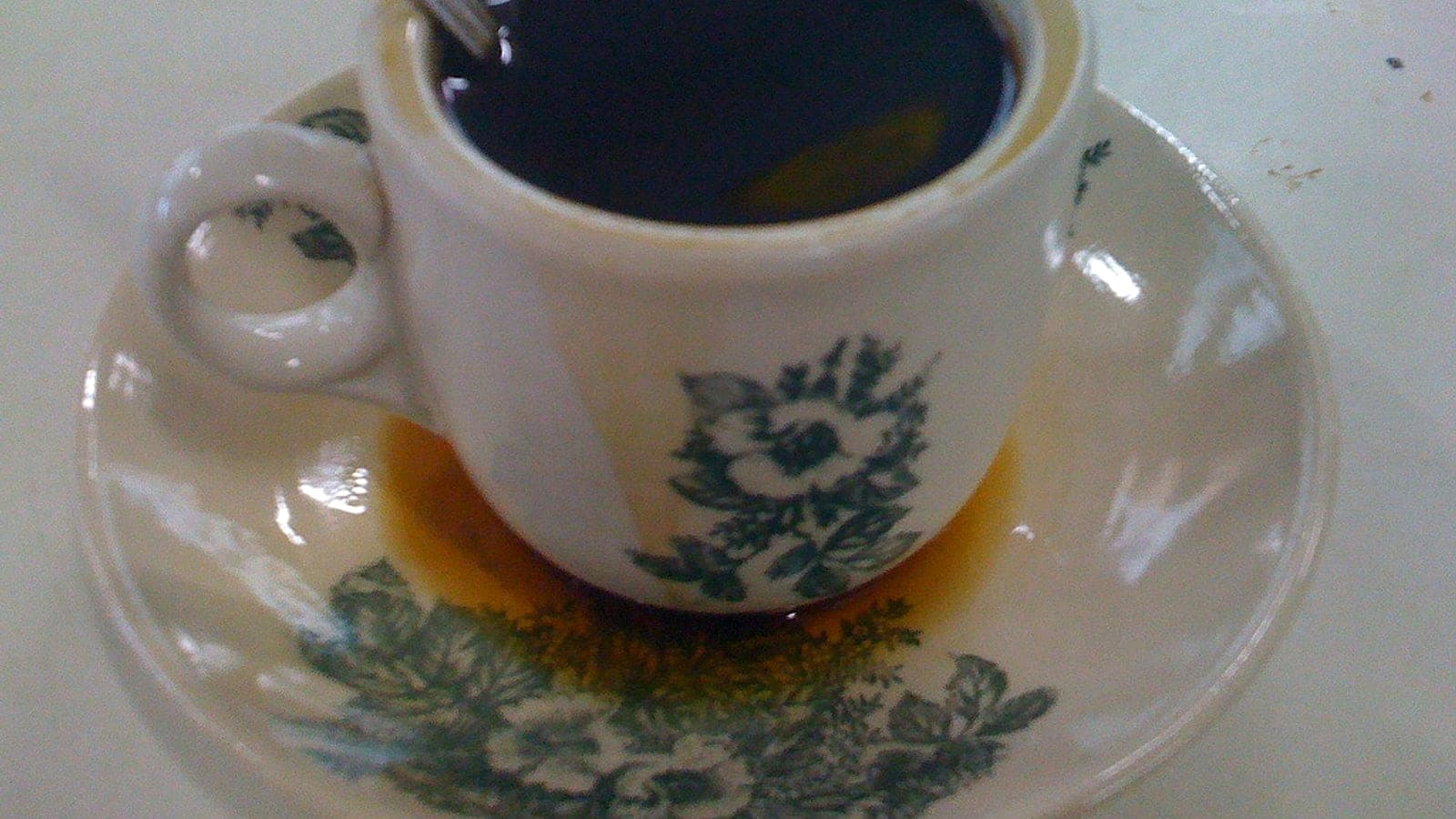
Kopi Penang
Traditional Penang coffee roasted with margarine and sugar for a uniquely rich brew
What is Kopi Penang?
Kopi Penang is not just coffee - it is a ritual, an identity, and a taste that defines the island's kopitiam (coffee shop) culture. Unlike Western coffee, Penang kopi is made from Liberica or Robusta beans roasted with margarine (or butter) and sugar in a large wok, giving it a distinctive caramelised, slightly smoky, and intensely aromatic character. The brewed coffee is dark, strong, and thick - nothing like the mild drip coffee tourists might be used to. It is then strained through a cloth "sock" filter into a cup, and typically served with a generous pour of condensed milk or evaporated milk. The result is a sweet, bold, full-bodied brew that fuels Penangites from dawn until late afternoon. Every old-school kopitiam has its own secret roasting blend, and locals are fiercely loyal to their favourite.
History & Origins
Coffee culture in Penang dates to the British colonial era, when Hainanese immigrants were employed in British households as cooks and servants. They learned to make coffee for their colonial employers but adapted the technique to local tastes and available ingredients. Unable to afford quality Arabica beans, Hainanese coffee makers developed the unique roasting method of wok-frying Robusta beans with margarine and sugar to mask the bitterness and add body. This technique spread to the Hainanese-run kopitiams (from the Hokkien words "kopi" for coffee and "tiam" for shop) that proliferated across Penang in the early 1900s. Many of Penang's most famous kopitiams have been family-run for three or four generations, with roasting recipes guarded as closely as any Michelin-starred restaurant's secret sauce.
Key Ingredients
How to Order
Top 5 Spots to Try Kopi Penang
Toh Soon Cafe
Why it's the best: Hidden in a back alley, this tiny kopitiam is a Penang legend. Famous for kopi and charcoal-toasted bread with kaya. The kopi is thick, strong, and perfectly balanced. Open-air alley seating adds to the charm.
Kedai Kopi Sin Hwa
Why it's the best: Old-school kopitiam that has been serving kopi since the 1940s. They roast their own beans. The kopi-o here is famously strong - not for the faint-hearted. True heritage coffee.
Kopi Chulia (多春茶座)
Why it's the best: Another heritage kopitiam with traditional kopi preparation. Great charcoal toast and half-boiled eggs alongside excellent coffee. A complete Penang breakfast experience.
Joo Hooi Cafe
Why it's the best: Famous for hokkien mee but the kopi is excellent too. A kopitiam that has been operating for decades. The kopi pairs perfectly with a bowl of prawn mee.
Any old-school kopitiam
Why it's the best: The magic of Penang kopi is that even unremarkable-looking kopitiams serve incredible coffee. Look for old shophouses with the sock filter and manual brewing. Avoid modern cafes for the authentic experience.
Variations to Try
Kopi (with condensed milk)
The default order. Strong coffee with sweet condensed milk. Rich, sweet, and bold. This is what most Penangites drink daily. Served hot in a ceramic cup.
Kopi-O (black with sugar)
For those who want to taste the coffee itself without milk. Still sweetened with sugar unless you specify "kosong" (empty). The roasted margarine flavour comes through strongly.
Kopi-C (with evaporated milk)
A lighter, less sweet option using evaporated milk instead of condensed. More subtle milk flavour. Preferred by those who find regular kopi too sweet.
Kopi peng (iced)
Any kopi variation poured over ice. Perfect for Penang's afternoons. The ice dilutes the strength slightly, making it more refreshing. Very popular.
Dietary Information
Insider Tips
- 1Learn the ordering system: Kopi (condensed milk), Kopi-O (black + sugar), Kopi-C (evaporated milk), Kopi-O kosong (black, no sugar)
- 2Add "peng" to any order for iced, or "gao" for extra strong
- 3The best kopitiams roast their own beans - you can often smell the roasting from the street
- 4Pair with charcoal-toasted bread with kaya (coconut jam) and half-boiled eggs for the quintessential kopitiam breakfast
- 5Kopi is served sweet by default - specify "kurang manis" (less sweet) or "kosong" (no sugar) if needed
- 6Old-school kopitiams close by 4-5pm - this is a morning and early afternoon drink culture
- 7The cloth sock filter is key to the smooth texture - paper filters produce a different result
- 8Penang kopi is much stronger than typical Western drip coffee - start with kopi-C (evaporated milk) if you prefer milder coffee
- 9Bring cash - most heritage kopitiams do not accept cards or e-wallets
Related Dishes
Eat it on a guided food tour
Local guides take you to stalls you'd never find solo — including the best spots for Kopi Penang.
Ready to taste authentic Penang food?
Explore more dishes or find the best hawker centres and restaurants