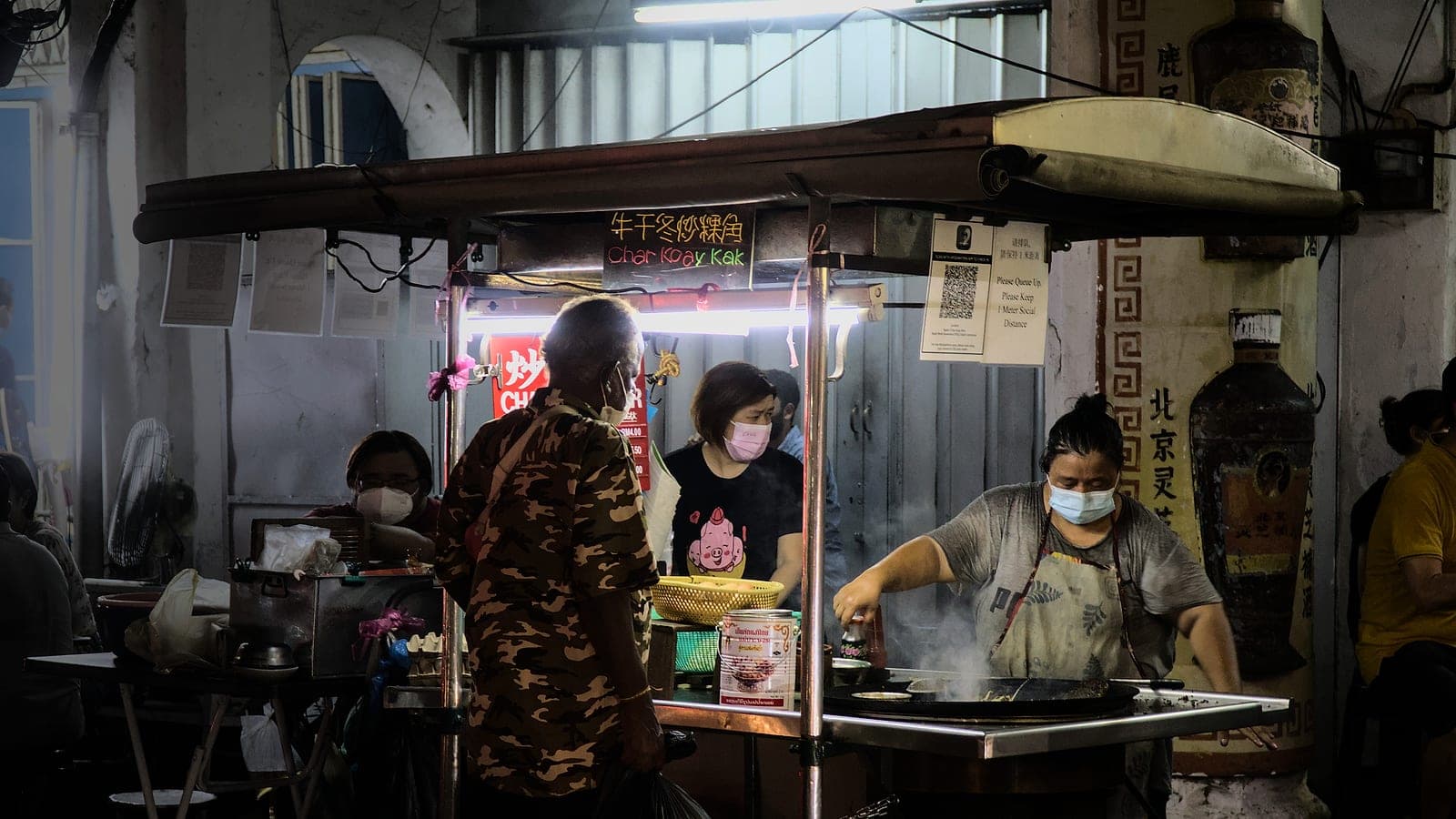
Char Koay Kak
Penang's crispy stir-fried rice cake cubes with egg and bean sprouts
What is Char Koay Kak?
Char koay kak is one of Penang's most beloved hawker dishes - cubes of steamed rice flour cake (koay kak) stir-fried in a blazing hot wok with egg, bean sprouts, chives, preserved radish (chai poh), and a generous splash of dark soy sauce. The magic happens when the rice cake cubes hit the searing wok: the outside turns golden and crispy while the inside stays soft and chewy. The dark soy sauce caramelises and coats each cube, while the egg binds everything together. It is a study in contrasting textures - crunchy edges, pillowy centres, and snappy bean sprouts.
History & Origins
Char koay kak originated with the Teochew (Chaozhou) community in Penang, who brought the tradition of steamed rice cakes from southern China. The "koay kak" (rice cake) was originally a plain, white steamed block made from rice flour - cheap, filling, and easy to prepare. Hawkers in Penang began stir-frying cubes of these cakes with whatever ingredients were affordable - eggs, bean sprouts, and preserved radish (chai poh). The dish became a breakfast and supper staple across George Town. Today, the best char koay kak stalls still make their own koay kak fresh daily rather than buying factory-produced versions, and the difference in texture is immediately noticeable.
Key Ingredients
How to Order
Top 5 Spots to Try Char Koay Kak
New Lane Hawker Centre Char Koay Kak
Why it's the best: The most famous char koay kak stall in Penang. Makes their own koay kak fresh daily. Incredible wok hei and perfectly crispy cubes. Always a queue but moves fast.
Kimberly Street Char Koay Kak
Why it's the best: Right alongside the famous char kway teow stalls. Excellent charcoal-wok version. The contrast between crispy edges and soft centre is spot on.
Lebuh Chulia Morning Market
Why it's the best: Morning option for breakfast char koay kak. Very traditional, homemade koay kak. Locals queue here before work. Cash only.
Padang Brown Char Koay Kak
Why it's the best: Neighbourhood favourite with generous portions. Both black and white versions available. Good if you want to try both styles in one sitting.
Pulau Tikus Market Stall
Why it's the best: Early morning market stall with very traditional recipe. The uncle has been frying for 30+ years. Freshly steamed koay kak cut to order.
Variations to Try
Black version (hitam)
Stir-fried with dark soy sauce, giving the cubes a deep brown caramelised colour and sweet-savoury flavour. This is the most popular version in Penang.
White version (putih)
Without dark soy sauce - lighter, with more emphasis on the natural rice cake flavour, egg, and chai poh. Less common but preferred by some regulars.
With chilli
Add sambal or chilli paste for a spicy kick. Not traditional but widely available. Ask for "mau pedas" when ordering.
Duck egg version
Some premium stalls use duck eggs for a richer, more orange-yolked result. Slightly more expensive but adds noticeable richness.
Dietary Information
Insider Tips
- 1Always order the "hitam" (black/dark soy sauce) version for the full Penang experience - the caramelisation is what makes it special
- 2Go for stalls that make their own koay kak rather than factory-bought - the texture is noticeably better (softer inside, crispier outside)
- 3Ask for extra egg (tambah telur) - it helps bind the dish and adds richness
- 4Best eaten piping hot straight from the wok - the crispy edges go soft within minutes
- 5This is primarily an evening dish in Penang, but some morning market stalls serve it for breakfast
- 6Pair with a cold soy milk (tau chui) or iced barley water for the classic hawker combo
- 7If a stall asks "hitam atau putih?" (black or white), go black for your first time
- 8Bring cash - all the best stalls are cash only
Related Dishes
Eat it on a guided food tour
Local guides take you to stalls you'd never find solo — including the best spots for Char Koay Kak.
Ready to taste authentic Penang food?
Explore more dishes or find the best hawker centres and restaurants