Liberation of Penang — September 1945
Royal Marines landed in Penang on September 3, 1945, the day after the Japanese garrison signed its surrender aboard HMS Nelson, ending 3 years, 8 months of Japanese occupation. The community's wartime experience permanently reshaped Penang's relationship with British colonial rule.
On September 2, 1945, the Japanese garrison in Penang signed its surrender aboard HMS Nelson, the same day Japan formally surrendered aboard USS Missouri in Tokyo Bay. The next day, September 3, Royal Marines landed in George Town, ending 3 years and 8 months of Japanese occupation. The liberation was met with scenes of extraordinary relief — residents who had survived on rationed food, banana money inflation, and under constant threat poured into the streets. The returning British found a city largely intact structurally, but economically devastated and deeply scarred by the violence of the occupation. For the Asian communities who had been explicitly abandoned in December 1941, the liberation did not restore pre-war trust in British colonial authority. Penang's anti-colonial consciousness, which would culminate in independence a decade later, was significantly shaped by the lived experience of occupation and abandonment.
Insider Tips
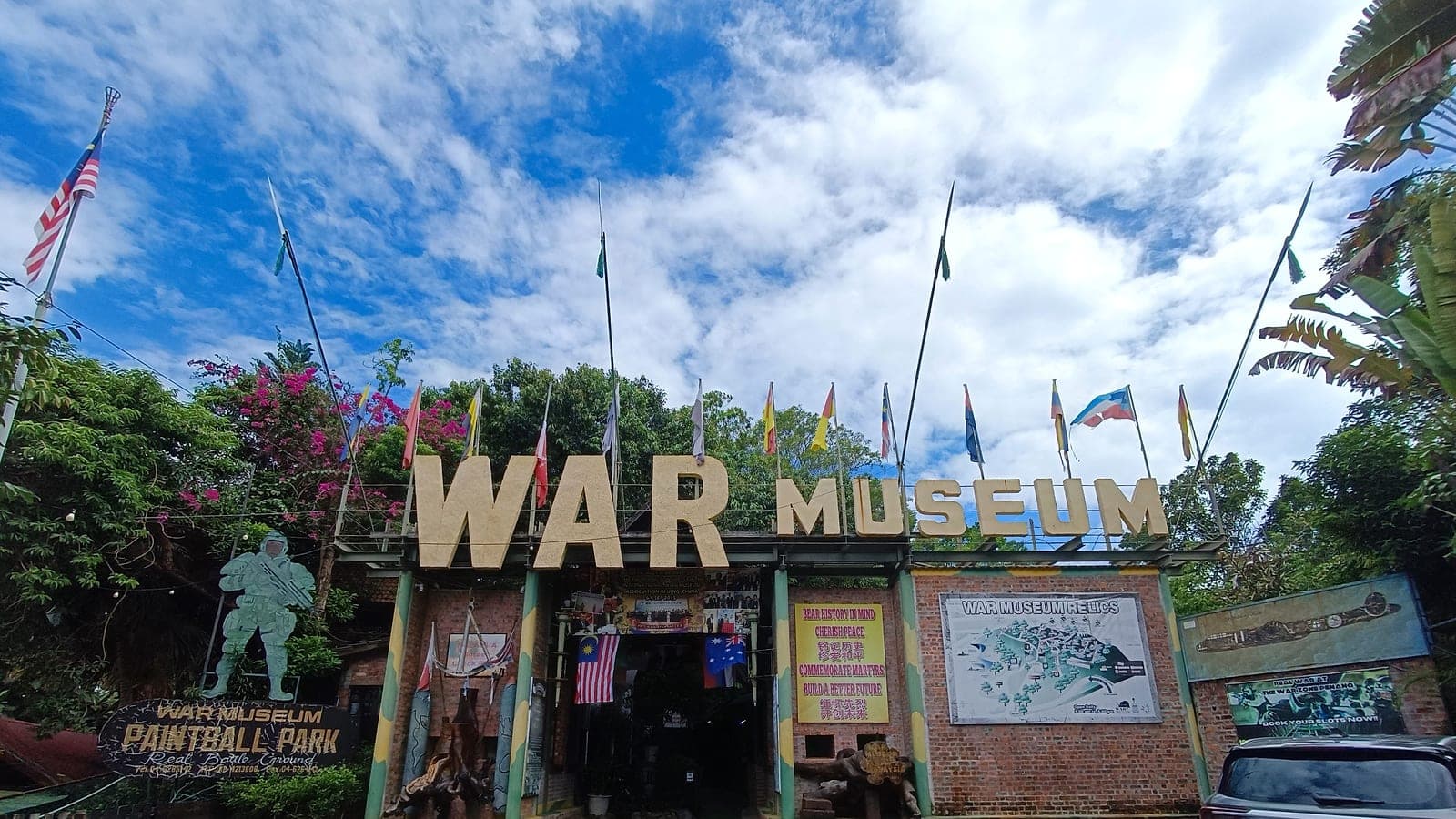
- 1The Penang War Museum at Batu Maung covers both the occupation and liberation in detail
- 2The Penang Museum on Farquhar Street has a WWII gallery with liberation-era photographs and personal accounts
- 3The Japanese Cemetery on Jalan Batu Gantung is a rarely-visited but historically significant site from the occupation period
- 4The Sook Ching Memorial at Gurney Drive marks where civilians were brought for screening during the occupation
Related Events
Kek Lok Si Temple Founded — 1891
Founded 1891
Kek Lok Si, Malaysia's largest Buddhist temple, was founded in 1891 by Abbot Beow Lean on a hillside in Air Itam. Construction spanned decades; the 30-metre Kuan Yin statue was added in 2002.
Penang Street Art — Ernest Zacharevic Murals, 2012
2012
In 2012, Lithuanian artist Ernest Zacharevic painted interactive murals in George Town that went globally viral. The street art programme transformed the UNESCO heritage zone into one of Asia's best outdoor art destinations.
Cheong Fatt Tze Mansion (Blue Mansion) Built — 1897
Built 1897–1904
Built between 1897-1904 by one of Asia's richest men, the Blue Mansion on Leith Street blends Qing dynasty architecture with Scottish ironwork and English stained glass. A UNESCO Award-winning restoration turned it into a boutique hotel.
When
September 3, 1945
🏛 Historical event — 1945
Add to Calendar
Where
George Town (Penang island)